
COMPETITIVE:
Lowering the levy to 15% would slightly raise exports and industrial production from projected declines of 5.75% to 7.5% and 1.3% to 1.4% respectively
By Meryl Kao / Staff reporter
The impact of the US’ “reciprocal” tariffs on Taiwan’s exports, industrial output and employment has largely eased after the levy was lowered from 20 percent to 15 percent, giving Taiwanese manufacturers a competitive advantage, Deputy Minister of Economic Affairs Ho Chin-tsang (何晉滄) said yesterday.
The lower tariffs, not stacked on existing duties, would lift Taiwanese exports to the US by 0.04 to 0.08 percent, reversing an earlier projected decline of 5.75 to 7.5 percent, according to an analysis conducted a government-affiliated think tank, Ho said at a meeting of the legislature’s Economics Committee.
The adjustment is expected to reverse the impact on industrial output, turning an estimated annual decline of 1.3 to 1.4 percent into a modest increase of between 0.01 and 0.02 percent, he said.
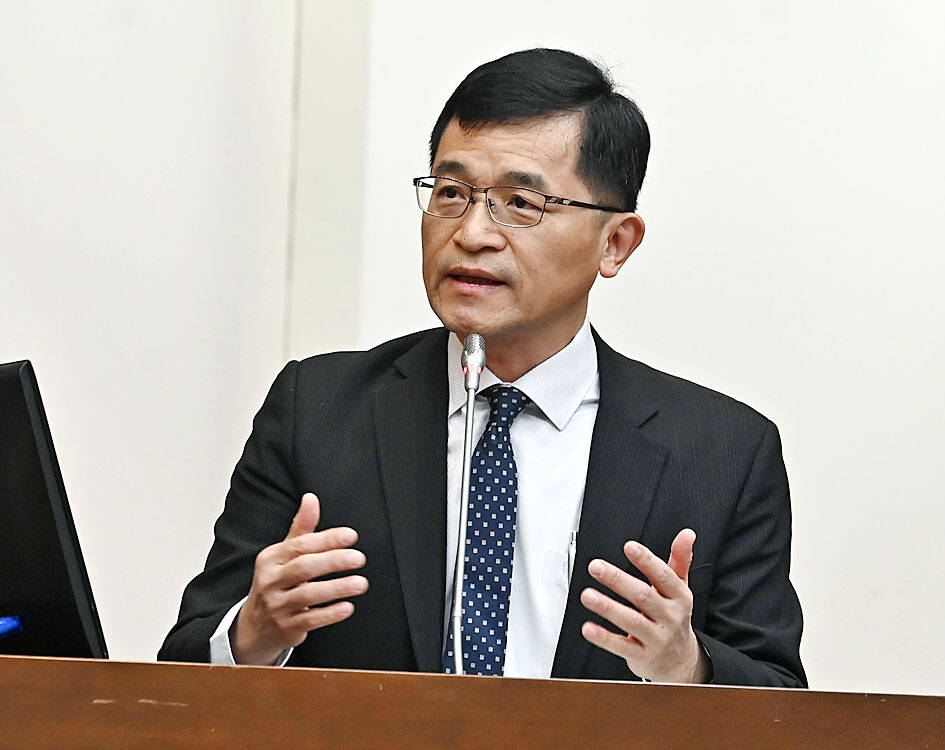
Photo: Wang Yi-sung, Taipei Times
In terms of overall economic growth, the effect on Taiwan’s GDP is projected to shift from a contraction of between 0.3 and 0.78 percent to a slight increase of about 0.01 percent, Ho said.
The new rate is expected to reverse the impact on industrial employment, turning an estimated loss of 36,000 jobs into a net increase of 206 to 329 positions, he said.
Under the new tariff framework, Taiwan is equal with Japan and South Korea, representing a relative gain for Taiwanese manufacturers, as it reduces the burden of having higher tariffs than the two countries, Ho said.
The lower tariff rate is expected to enhance the competitiveness of local manufacturers relative to peers in countries that still face higher US tariffs, such as Mexico, Vietnam and China, he said.
Automotive components are included in the latest tariff negotiations, with the rate dropping from 26.25 percent to 15 percent, a move that has already begun to help manufacturers regain orders, Ho said, citing an auto parts maker who immediately traveled to the US to secure orders after learning of the new rate.
In the high-tech sector, Taiwan has become the first country to secure most-favored-nation tariff treatment for semiconductors and related products, he said.
Based on the agreement, Taiwanese businesses are to invest up to US$250 billion in the US and the government would provide credit guarantees of up to US$250 billion to support the investments.
State-run CPC Corp, Taiwan (台灣中油) has signed a memorandum of understanding with an Alaska-based liquefied natural gas developer to secure a stable supply of natural gas, with the deal still under evaluation, Ho said.
If the investment is finalized, Taipei would ask Washington to count it as part of the US$250 billion investments under the tariff negotiation framework, he said.
The planned US$250 billion investment would not crowd out domestic investment, as the funds would be deployed gradually based on client demand rather than all at once, he said.
Major high-tech firms such as Taiwan Semiconductor Manufacturing Co (台積電) are continuing to expand their investments in Taiwan, underscoring that overseas spending would not hinder local development, he added.