
A committee built from Israel’s enemies, conflict financiers, and open antagonists is being sold as “neutral mediation.” In today’s diplomacy, absurdity isn’t a flaw — it’s the model.
A Peace Board in Name Only
Traditionally, peace does not begin with irony.
When serious conflicts require mediation, there is a fairly uncontroversial rulebook. Mediators are expected to be neutral, detached from the battlefield, and—most importantly—uninvested in the outcome beyond the cessation of violence itself. Neutrality is not a decorative virtue in mediation; it is the entire point. Without it, mediation collapses into advocacy wearing a borrowed suit. This is why, historically, countries like Switzerland are entrusted with such roles. Not because they are morally superior, but because they are structurally boring. No militias to bankroll. No ideological crusades to advance. No enemies to avenge. Switzerland’s greatest geopolitical offense is excessive punctuality. In mediation, that counts as credibility.
Against this backdrop, the composition of President Trump’s so-called Gaza peace board is… innovative.
Rather than neutral brokers, the board includes states that have long defined themselves in opposition to Israel. Countries whose diplomatic output consists largely of condemnations, threats, and moral lectures delivered from a safe distance. Actors who are not external to the conflict, but emotionally, ideologically, and in some cases financially entangled in it. Qatar, for instance, now presents itself as a peacemaker. This is not new—only increasingly audacious. For years, Doha has perfected the art of playing every side simultaneously: hosting Western diplomats while offering safe haven and financial channels to Islamist actors, including Hamas. It is a model of diplomacy where mediation and militancy are not contradictions, merely parallel business lines. The same hands that bankroll “resistance” now extend themselves as neutral arbiters of peace.
We are assured this dual role is not a conflict of interest, but a qualification.
The logic appears to be that proximity to the problem—indeed, partial responsibility for sustaining it—somehow confers unique insight into solving it. That the financier understands the fire better than the firefighter. That neutrality is outdated, and involvement is evidence of wisdom. Thus, a peace board is assembled not around detachment, but around grievance; not around distance, but around alignment. We are invited to believe that this inversion is not only acceptable, but visionary.
Peace, it seems, has evolved. It no longer requires neutrality—only a press release explaining why neutrality is unnecessary.
And so, before a single proposal is tabled, before negotiations even begin, the board succeeds in one respect: it demonstrates that in modern diplomacy, common sense is no longer a prerequisite. It is, at best, optional.
From Disqualification to Credential
There are many ways to assemble a board meant to advance peace. One is to choose neutral actors — the traditional model — and the other is to choose actors who, by any reasonable definition, are invested in conflict. The second option apparently now qualifies as innovative diplomacy.
Across large swathes of the Muslim world, hostility toward Israel is not intermittent or peripheral; it is pervasive and openly expressed in political rhetoric and public life. Surveys have repeatedly found extremely low favorable views of Israel and Jewish people among populations in many predominantly Muslim countries, with only a fraction expressing positive opinions. This animosity has historic roots, has been amplified by long-standing narratives, and regularly manifests in political speeches and religious forums. When the intended role of this peace board is to mediate conflict, one might expect its members to at least resist the very enmity that fuels it. Instead, we have chosen states with well-documented records of condemnations and antagonism toward Israel — not just passive observers but frequent, vocal opponents.
Consider the patrons of this board. Some of its members are nations whose policy posture toward Israel is defined less by diplomacy and more by consistent denunciation. Establishing hostile rhetoric as a qualification for peacebuilding is like appointing chess champions as referees in a checkers tournament — technically within the same realm, but utterly misplaced. Then there are the states whose ties to Israel’s adversaries move past rhetoric into active enablement. These are not casual critics; they are financial and political backers of groups explicitly committed to armed opposition. Embedding such actors in a mechanism supposedly dedicated to peace raises a simple question: can someone who has been part of the problem credibly be part of the solution? Or is such credibility now redefined as being close enough to know what it looks like — even if you funded it yourself?
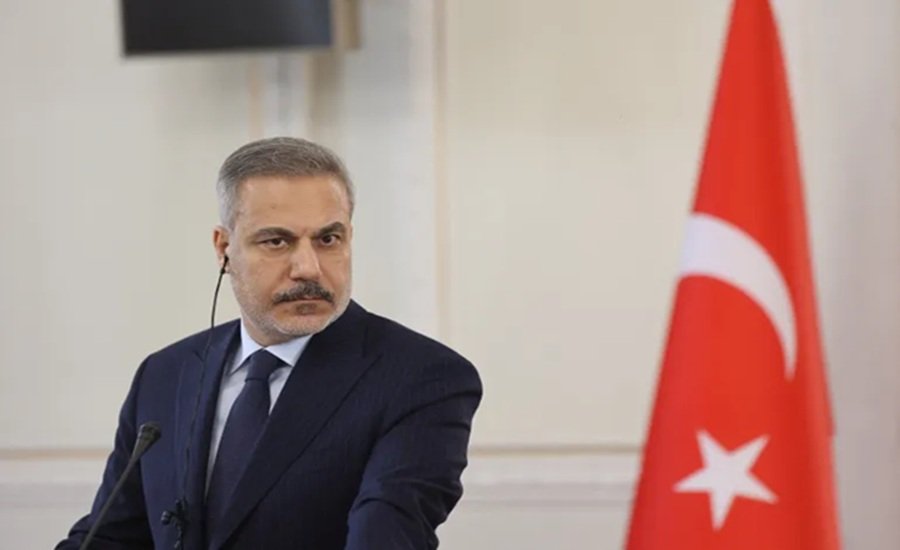
And then there are leaders whose statements go beyond disputes over territory or policy and veer into direct threats. During the war in Gaza, Turkey’s president Erdoğan publicly suggested that his country might use force against Israel, referencing past military involvements in other regions as potential precedents for action. Now we are told that assembling these very actors into a board dedicated to peace constitutes not a conflict of interest, but a strategic realignment. Hostility is apparently the new qualification. Opposition becomes insight. And threats are now part of the diplomatic toolkit. In this new lexicon, the adversary of my enemy is not just my friend — he is my mediator.
In other words: if you can’t beat Israel, you might as well be on its “peace board.”
Everlasting Peace, Sponsored by Magical Thinking
Every ambitious project requires a launch event, and the Gaza Peace Board received one worthy of a tech startup unveiling a revolutionary app. There were speeches. There was pageantry. There were phrases like historic, transformational, and a new dawn for the Middle East. Hope and dignity were generously promised, as though they were items waiting to be distributed once the ribbon was cut. According to its architects, this board will not merely reduce tensions or manage disputes. It will deliver everlasting peace. Not a ceasefire. Not de-escalation. Peace — permanent, durable, and apparently immune to human nature.
Such confidence would be impressive if it were not so familiar.
We have heard this language before. It appears at every summit where hard problems are replaced with soft adjectives. Rosier future. Path forward. Turning point. Words that sound decisive while carefully avoiding the inconvenience of specifics. The language of aspiration is deployed precisely because the language of reality would be far less marketable. What is striking is not the optimism, but the mismatch between promise and design. A board populated by hostile states, ideological actors, and conflict stakeholders is introduced as the mechanism through which harmony will emerge. The theory seems to be that enough ceremony can compensate for structural absurdity. That symbolism, properly staged, can substitute for logic.
This is peace by branding.
The board does not solve contradictions; it airbrushes them. It does not reconcile interests; it declares them reconciled. Like a corporate mission statement taped over a leaking pipe, it reassures everyone that the problem has been acknowledged — which is apparently the same thing as being fixed. We are asked to suspend disbelief and embrace the narrative: that enemies will behave like neutral brokers, that financiers of conflict will become custodians of calm, and that leaders who traffic in threats will suddenly discover restraint — all because a committee has been ratified and photographed.
Magical thinking is not a bug here; it is the operating system.
In this worldview, peace is inevitable because it has been announced. Failure is inconceivable because failure would be awkward. And skepticism is dismissed as cynicism — the last refuge of those stubborn enough to notice that nothing fundamental has actually changed. The board promises a future so bright it requires sunglasses. Unfortunately, it also requires forgetting everything we know about incentives, ideology, and history.
Everlasting peace, we are told, is finally within reach. All it took was lowering the standards for mediation, elevating wishful thinking to policy, and mistaking optimism for strategy.
The miracle, it seems, is not that peace might fail — but that anyone still pretends to be surprised when it does.
Victor Satya is a writer and communications professional based in Kenya whose work examines Israel–Africa relations, Jewish affairs, and the global landscape surrounding Israel. He writes on issues ranging from the aftermath of October 7 and the rise of antisemitism to Israel-related developments across the West and Europe. With a background in research, storytelling, and digital strategy, he aims to bring clear, grounded perspectives to conversations on Israel, Jewish life, and intercultural dialogue.