
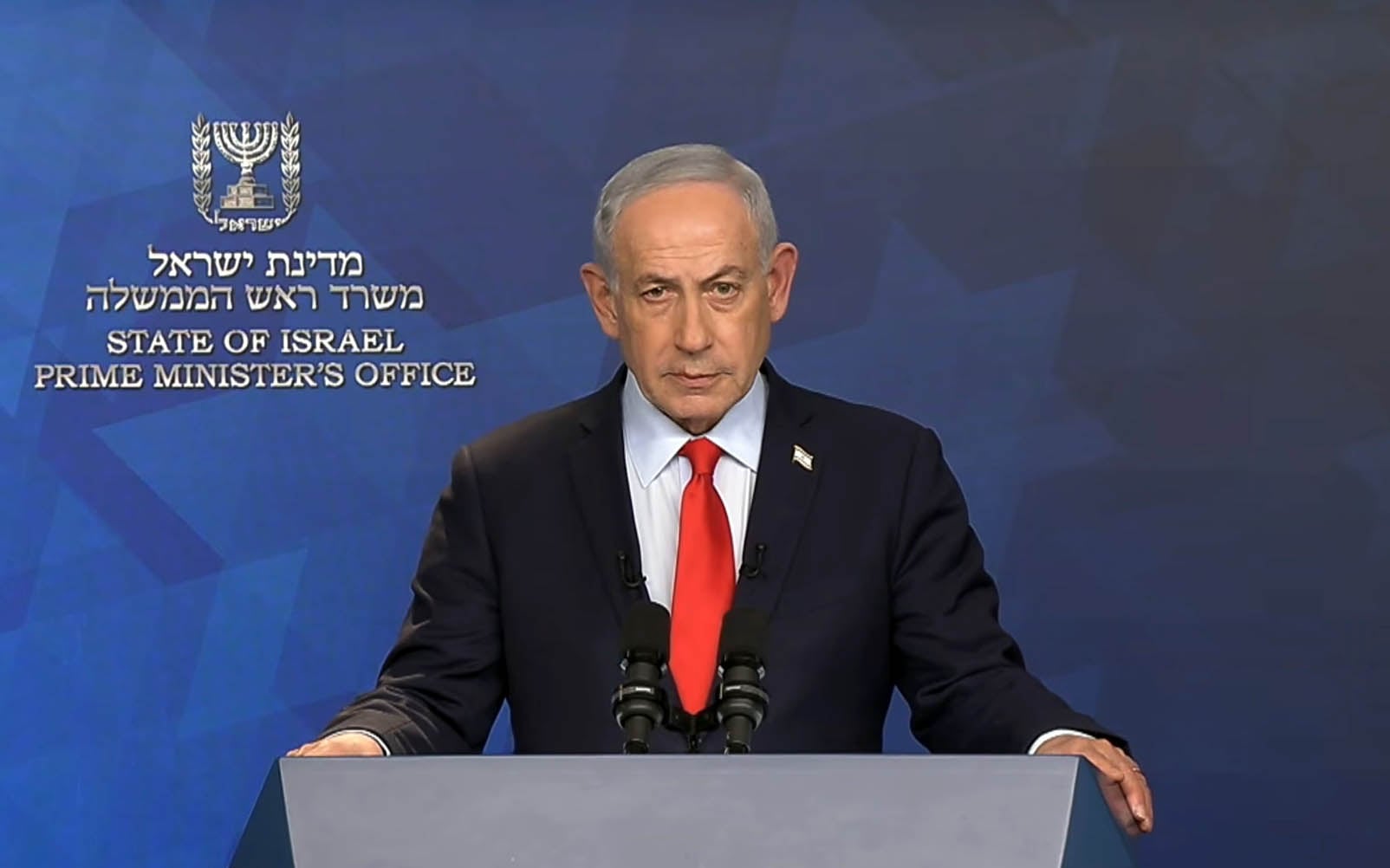
In the latest sign that a normalization deal between Israel and Saudi Arabia is not going to be signed any time in the foreseeable future, Prime Minister Benjamin Netanyahu said on Tuesday that he is closely following Riyadh’s recent shift toward Turkey and Qatar.
“We expect from anybody who wants normalization or peace with us that they not participate in efforts steered by forces or ideologies that want the opposite of peace,” Netanyahu said at a press conference in response to a question by The Times of Israel.
Normalization between Israel and Saudi Arabia seemed to be a question of when, not if, before the October 7, 2023, invasion of southern Israel by Hamas and the subsequent war. Two Israeli ministers made unprecedented visits to the desert kingdom in the weeks before the attack, and the Biden White House was pushing hard for a deal.
Riyadh adopted a harder line on normalization during the war, insisting that Israel commit to Palestinian statehood, which Netanyahu opposes, and which the Israeli public is even less likely to accept in the wake of the Hamas attack.
US President Donald Trump repeatedly expressed hope that Riyadh would join the Abraham Accords, which normalized ties between Israel and several Arab nations in 2020, during the president’s first term. After the October 2025 ceasefire in Gaza, Trump reportedly told Saudi Crown Prince Mohammed bin Salman that he expects him to move toward normalization with Israel now that the fighting was over.
Get The Times of Israel’s Daily Edition
by email and never miss our top stories
By signing up, you agree to the terms
But Saudi Arabia has been pursuing a dramatic realignment in the Middle East in recent months, including heightening its rivalry with the United Arab Emirates, one of Israel’s closest allies in the region.
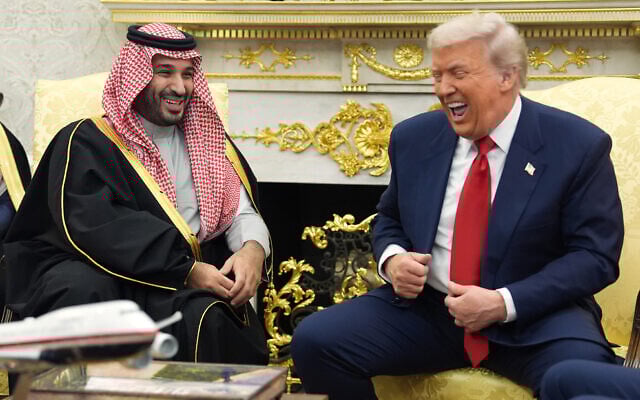
US President Donald Trump (right) meets with Saudi Arabia’s Crown Prince Mohammed bin Salman in the Oval Office of the White House in Washington, November 18, 2025. (Evan Vucci/AP)
In December, MBS signed a series of agreements with Qatari Sheikh Tamim Al-Thani, and discussed deepening defense cooperation. Saudi Arabia is also reportedly in talks with Turkey — one of Israel’s leading regional rivals — to join a mutual defense pact that includes Pakistan.
Both Turkey and Qatar are mediators of the US-brokered Gaza ceasefire, and their leaders have forged close partnerships with Trump since his return to office. In the years before the war, Qatar provided hundreds of millions in dollars to stabilize Hamas-ruled Gaza that top Israeli officials had sought and expressed their appreciation for, a policy that has faced intensive scrutiny in Israel following the October 7 atrocities.
As MBS has moved away from the UAE and toward Turkey and Qatar, Saudi media has also taken a hostile turn against Israel and Jews of late.
“There’s been a clear Saudi shift of late in rhetoric, in heavily criticizing Israel, and in policy, especially in countering UAE,” said Michael Makovsky, President and CEO of the Jewish Institute for National Security of America.
Such efforts “reject the legitimacy of the State of Israel, and nurture all kinds of forces that attack the State of Israel,” said Netanyahu at the Tuesday press conference.
He went on to say that he’d be “happy to have a normalization agreement with Saudi Arabia,” provided “they want normalization and peace with a secure and strong Israel.”
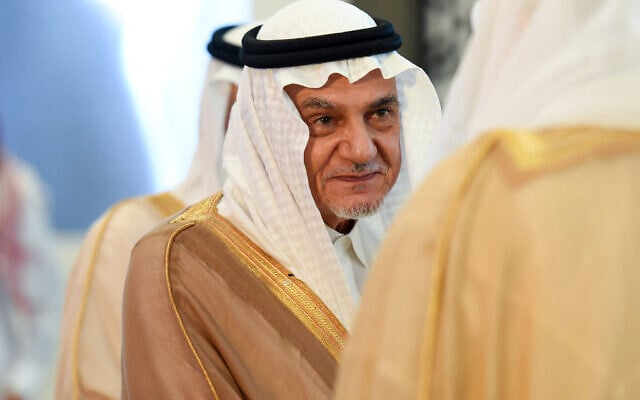
Saudi Arabia’s former intelligence minister Prince Turki bin Faisal al-Saud attends the meeting of foreign ministers of the Gulf Cooperation Council (GCC) in the Saudi capital of Riyadh on March 30, 2017. (FAYEZ NURELDINE / AFP)
In December, Saudi Arabia’s former intelligence chief said that Riyadh is currently not even entertaining the idea of normalizing relations with Israel and will only do so if Jerusalem begins acting like a “normal country.”
“Saudi Arabia is not considering a normalization deal with Israel. Should Israel become a normal country with normal acceptance of international law, then Saudi Arabia will consider normalization,” he said in an interview.
In November, Trump was reportedly left “disappointed and angry” after a “tense” exchange with MBS over normalization with Israel during their White House meeting.
Citing two senior American officials and an additional source familiar with the conversation, Channel 12 news said Trump was the one to raise the issue, urging the crown prince to move forward immediately with normalization. In response, Bin Salman pushed back, saying that while he isn’t against normalization in principle, widespread anti-Israel sentiment in Saudi Arabia following the war in Gaza doesn’t allow for the move at this time.
The first Trump administration and its successor, the Biden administration, tried to persuade Saudi Arabia to join the Abraham Accords. But those hopes were dashed first by opposition from the crown prince’s father, King Salman, during Trump’s first term and then by MBS himself following the October 7 Hamas attack.
Is accurate Israel coverage important to you?
If so, we have a request.
Every day during the past two years of war and rising global anti-Zionism and antisemitism, our journalists kept you abreast of the most important developments that merit your attention. Millions of people rely on ToI for fact-based coverage of Israel and the Jewish world.
We care about Israel – and we know you do too. So we have an ask for this new year of 2026: express your values by joining The Times of Israel Community, an exclusive group for readers like you who appreciate and financially support our work.
Already a member? Sign in to stop seeing this
You appreciate our journalism

You clearly find our careful reporting valuable, in a time when facts are often distorted and news coverage often lacks context.
Your support is essential to continue our work. We want to continue delivering the professional journalism you value, even as the demands on our newsroom have grown dramatically since October 7.
So today, please consider joining our reader support group, The Times of Israel Community. For as little as $6 a month you’ll become our partners while enjoying The Times of Israel AD-FREE, as well as accessing exclusive content available only to Times of Israel Community members.
Thank you,
David Horovitz, Founding Editor of The Times of Israel