
In ancient times, the Colosseum offered a spectacle of conflict that entertained the masses while slowly eroding the empathy of the audience. Today, the Colosseum has been digitized and shrunk to the size of a smartphone.
We are living through the era of the “Reverse-Incentive Podcast.” For a growing number of creators, whatever is bad for the world—division, scandal, and societal decay—is objectively good for the subscriber count. For those of us who see ourselves as stewards responsible for bringing more of God into the world, engaging with this content is more than a distraction; it is an obstacle to our primary mission.
The View from the Frontlines
I have seen this dynamic play out firsthand while working with Jews and Christians on the frontlines in post-October 7th Israel. During the Iranian phase of the war, the disparity between “media reality” and “lived reality” became a chasm.
I remember visiting the Bat Yam area with several clergy right after Iranian missiles hit residential buildings. The destruction was undeniable: nine people were killed and roughly 200 were injured. It was a tragedy that demanded our grief and our prayers.
However, the legacy and new media machines didn’t just report the tragedy; they looped it. While podcasters and news anchors ran the destruction on a continual reel to keep eyes glued to screens, they ignored the larger miracle: over 10 million people woke up each day and kept going. When media outlets profit from a “doom and gloom” loop, they strip away the context of resilience. They sell a version of the world where the fire is everything, and the fact that the nation is still standing—and still seeking the Divine—is merely a footnote.
The Profit of Polarization
The business model is simple: outrage and fear equal retention. When a commentator spends sixty minutes convincing you that your neighbor is your enemy or that the world is on the brink of total collapse, your cortisol levels spike. You click, you share, and you subscribe to find out what to fear next.
This creates a perverse incentive where creators are financially rewarded for making the world seem darker than it is. As people of faith, we are called to reveal the Divine presence in even the darkest corners. We must ask ourselves: Can we truly fulfill our role as stewards of God’s light while subsidizing the architects of darkness and polarization?
Practical Steps for a Media Fast
Changing our media diet requires more than just willpower; it requires a tactical shift. Here is how to practically move away from “outrage-bait”:
The “Divine Reflection” Audit: Ask yourself after an episode: Do I feel better equipped to bring God’s peace into my community, or am I just filled with a hollow sense of dread? If the result is consistently agitation without an avenue for holiness, it’s time to unsubscribe.
Look for the “10 Million”: If a creator shows you a “continual reel” of destruction without ever mentioning the resilience and the quiet acts of heroism on the ground, they aren’t giving you the truth—they’re giving you a product designed to keep you hooked.
Follow the Money: Check if the creator relies on “emergency” sponsorship or “prepper” marketing. If their income depends on you being terrified of societal collapse, they have a vested interest in keeping you afraid rather than faithful.
The 24-Hour Rule: Before sharing a “bombshell” podcast clip, wait a full day. Outrage has a short half-life. If it doesn’t seem important 24 hours later, it was likely just noise designed to capture your attention and displace your peace.
Choosing Presence Over Proximity
We often mistake “being informed” with “being agitated.” But our shared values call us to a different path—one of discernment, steady hands, and an unwavering focus on the Holy. When we stay glued to the “continual reel” of disaster, we aren’t just losing our peace; we are participating in a transaction. Our attention is the product, and our outrage is the currency. Every time we engage with content designed to make us feel hopeless, we help a stranger financially benefit from our fear. We are effectively paying a “worry tax” to creators who have calculated that keeping us in a state of spiritual unrest is the most efficient way to pay their bills.
By hitting the “Unsubscribe” button on those who profit from the world’s burning, we aren’t burying our heads in the sand. We are refusing to fund the matches. We are making a conscious decision to stop enriching the brokers of chaos and instead invest our attention—the most valuable resource we have—into things that build up rather than tear down. The algorithm may want your outrage, and the creators may want your credit card, but the world needs your ability to bring God into the room. It’s time we stopped paying for the privilege of being afraid and started being the stewards we were called to be.
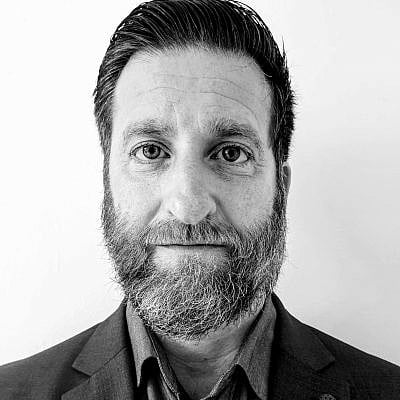
Author and an interfaith bridgebuilder, David Nekrutman is the Executive Director for The Isaiah Projects. For his contribution in advancing Jewish-Christian relations, Israel’s Ministry of Foreign Affairs Department of World Religions has recognized him as a Goodwill Ambassador of Jewish-Christian Relations for the State of Israel. Besides graduating from Oral Roberts University in 2018 with a master’s in biblical literature, David Nekrutman is part of The Chosen’s Jewish Advisory Board.