
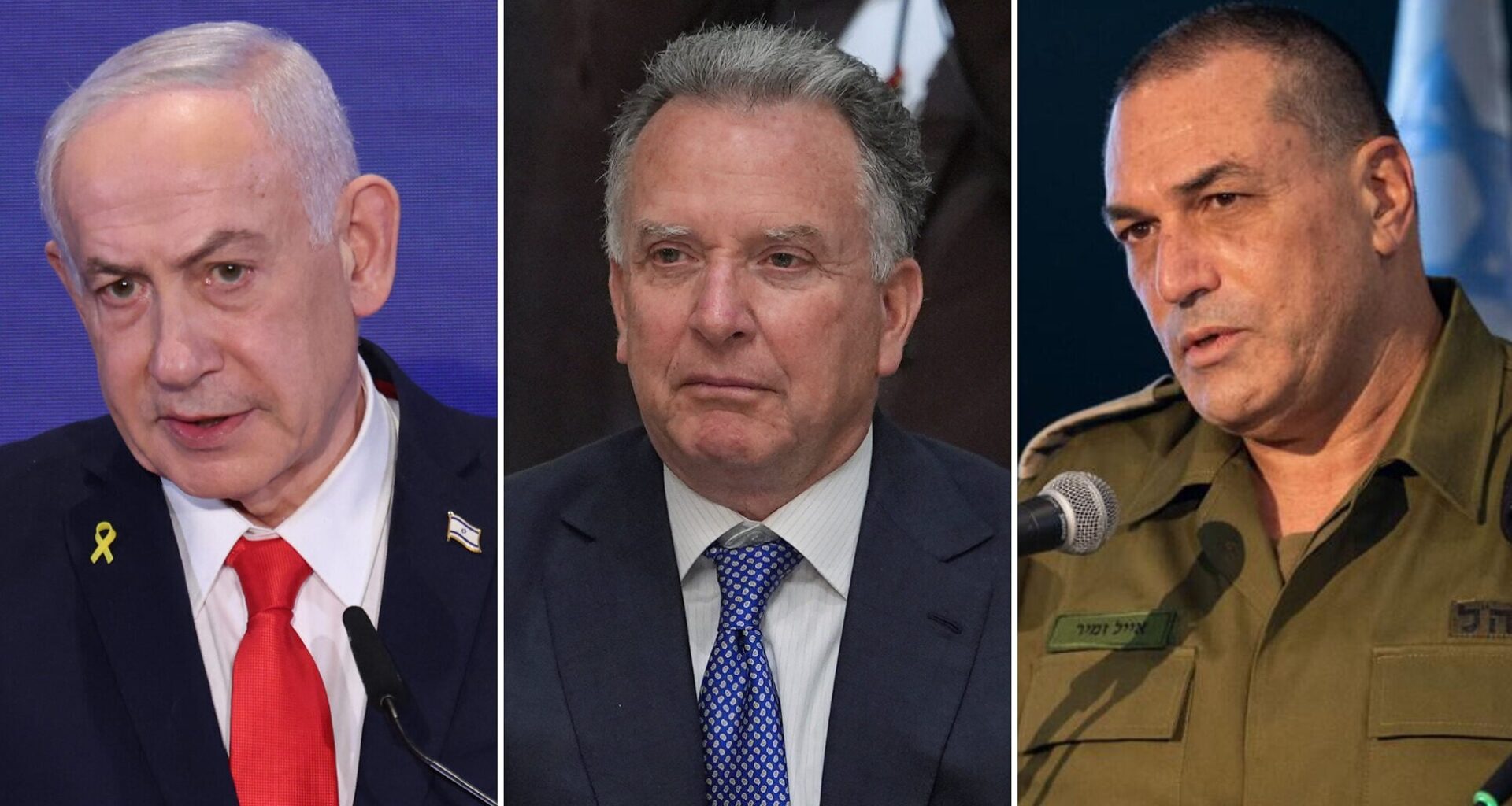
US envoy Steve Witkoff is expected to arrive in Israel on Tuesday for meetings with Prime Minister Benjamin Netanyahu and Israel Defense Forces Chief of Staff Lt. Gen. Eyal Zamir, according to two senior Israeli officials.
The discussions will likely concern Iran, after Zamir was in Washington DC over the weekend for a series of discussions with American defense officials regarding the Islamic Republic.
Meanwhile, Iranian media said on Monday that Iranian President Masoud Pezeshkian ordered the start of nuclear talks with the US after President Donald Trump said he was hopeful for a deal to avert military action against the Islamic Republic.
Following the Iranian authorities’ deadly response to anti-government protests that peaked last month, Trump threatened military action and ordered the dispatch of an aircraft carrier group to the Middle East.
While piling pressure on Iran, Trump has maintained that he is hopeful of making a deal. Tehran has also insisted it wants diplomacy, while vowing an unbridled response to any aggression.
Get The Times of Israel’s Daily Edition
by email and never miss our top stories
By signing up, you agree to the terms
“President Pezeshkian has ordered the opening of talks with the United States,” the news agency Fars reported, citing an unnamed government source.
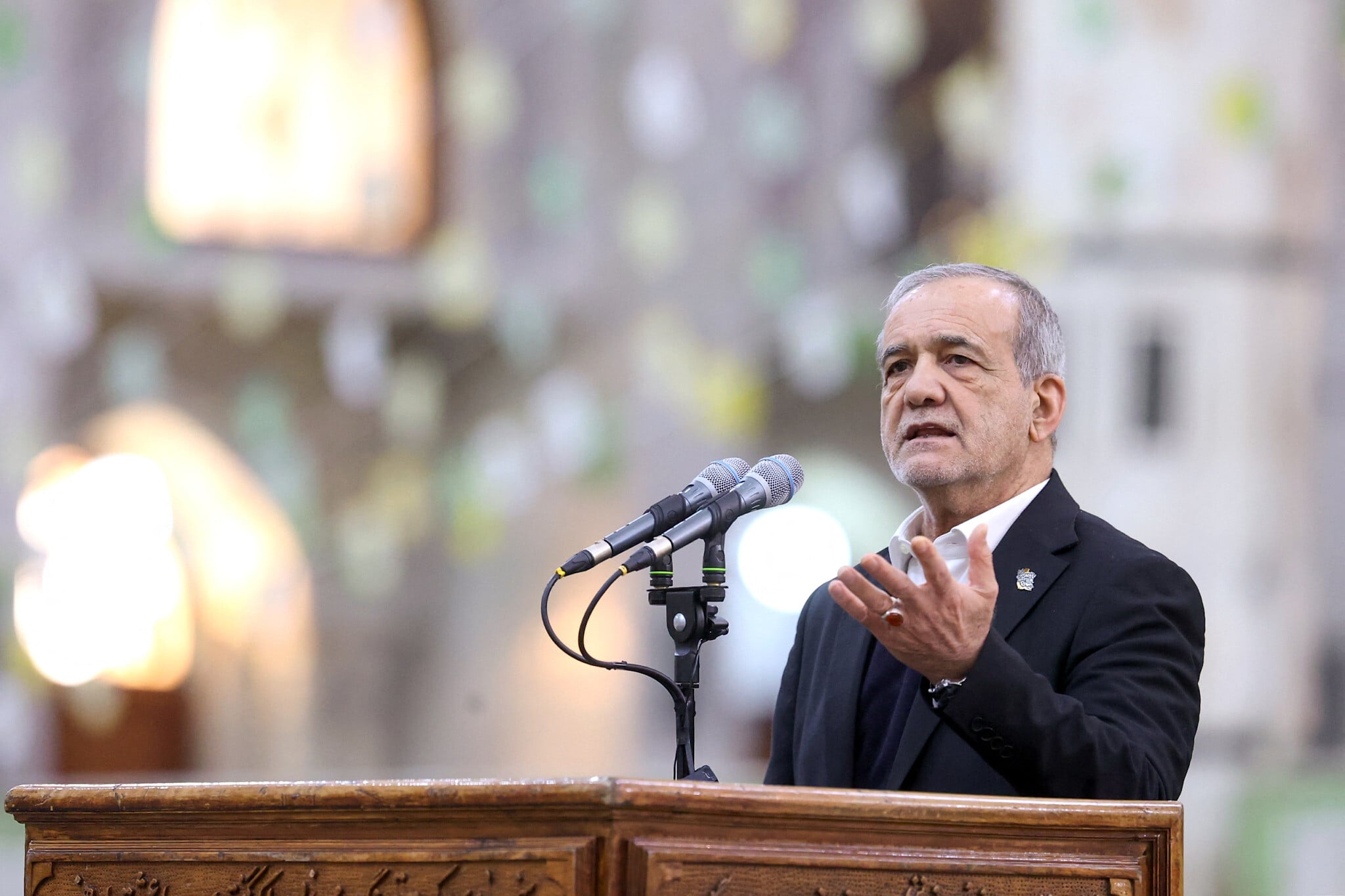
In this handout picture provided by Iranian presidency, Iran’s President Masoud Pezeshkian addresses cabinet members, as they visit of the tomb of the late Iranian revolutionary leader Ayatollah Ruhollah Khomeini, in Tehran on January 31, 2026 (Handout/Iranian Presidency/AFP)
“Iran and the United States will hold talks on the nuclear file,” Fars said, without specifying a date.
The report was also carried by the government newspaper Iran and the reformist daily Shargh.
The talks would likely be led by Trump’s senior envoy Witkoff and Iranian Foreign Minister Abbas Araghchi.
According to Axios, Turkey, Egypt and Qatar are working to organize a meeting this week between Witkoff and Iranian officials in Ankara, Turkey’s capital.
Without giving details on the content of any prospective negotiation, Iranian foreign ministry spokesman Esmaeil Baqaei said, “Countries of the region are acting as mediators in the exchange of messages.
“Several points have been addressed and we are examining and finalizing the details of each stage in the diplomatic process, which we hope to conclude in the coming days,” he added. “This concerns the method and framework.”
Speaking on CNN on Sunday, Araghchi said he believes his country can reach an agreement with the US.
Meanwhile, the Kremlin said that Russia is still trying to de-escalate tensions around Iran, noting that it had long ago offered its services to process or store Iran’s enriched uranium.
Asked if Russia was discussing with Iran and the US the possibility of taking Iranian enriched uranium, Kremlin spokesman Dmitry Peskov said: “This topic has been on the agenda for a long time.”
“Russia has been offering its services for quite a long time as a possible option that would lead to the removal of certain irritants for a number of countries,” Peskov said.
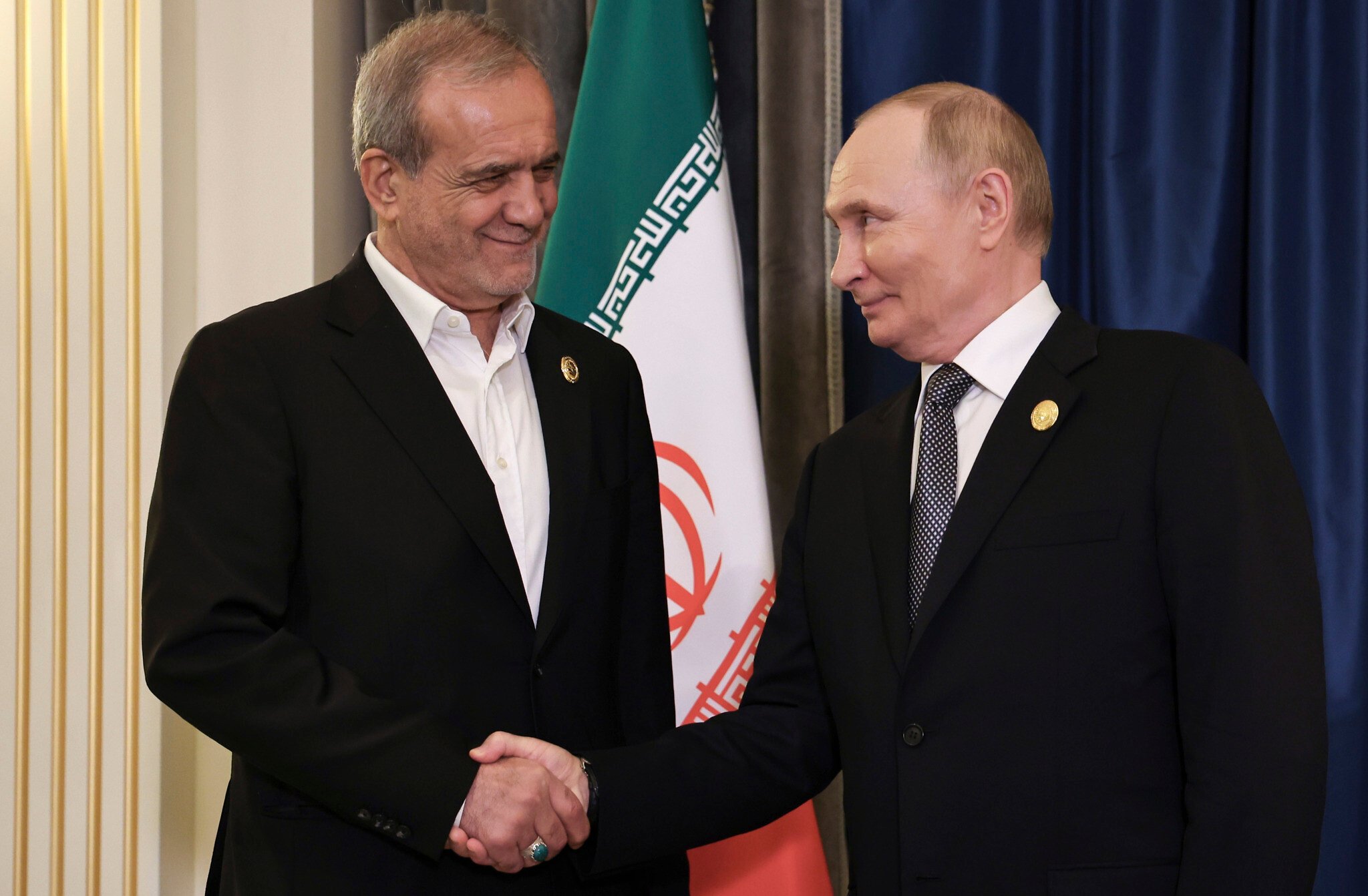
Iranian President Masoud Pezeshkian, left, and Russian President Vladimir Putin, right, shake hands during their meeting on the sidelines of the Shanghai Cooperation Organisation summit in Tianjin, China, September 1, 2025. (Alexander Kazakov, Sputnik, Kremlin Pool Photo via AP)
“Right now, Russia is continuing its efforts, continuing its contacts with all interested parties, and maintains its readiness to de-escalate tensions around Iran to the best of its ability,” he said.
Israel targeted Iran’s nuclear and ballistic missile programs during last year’s war, and has debilitated several of the terror groups funded by Tehran that seek Israel’s destruction. Trump has also warned Iran not to expand its ballistic missile stockpile.
Israel said its sweeping assault on Iran’s top military leaders, nuclear scientists, uranium enrichment sites, and ballistic missile program was necessary to prevent the Islamic Republic from realizing its avowed plan to destroy the Jewish state.
Iran has consistently denied seeking to acquire nuclear weapons. However, it enriched uranium to levels that have no peaceful application, obstructed international inspectors from checking its nuclear facilities, and expanded its ballistic missile capabilities. Israel said Iran had recently taken steps toward weaponization.
Iran retaliated to Israel’s strikes by launching over 500 ballistic missiles and around 1,100 drones at Israel. The attacks killed 32 people and wounded over 3,000 in Israel, according to health officials and hospitals.
Is accurate Israel coverage important to you?
If so, we have a request.
Every day during the past two years of war and rising global anti-Zionism and antisemitism, our journalists kept you abreast of the most important developments that merit your attention. Millions of people rely on ToI for fact-based coverage of Israel and the Jewish world.
We care about Israel – and we know you do too. So we have an ask for this new year of 2026: express your values by joining The Times of Israel Community, an exclusive group for readers like you who appreciate and financially support our work.
Already a member? Sign in to stop seeing this
You appreciate our journalism

You clearly find our careful reporting valuable, in a time when facts are often distorted and news coverage often lacks context.
Your support is essential to continue our work. We want to continue delivering the professional journalism you value, even as the demands on our newsroom have grown dramatically since October 7.
So today, please consider joining our reader support group, The Times of Israel Community. For as little as $6 a month you’ll become our partners while enjoying The Times of Israel AD-FREE, as well as accessing exclusive content available only to Times of Israel Community members.
Thank you,
David Horovitz, Founding Editor of The Times of Israel