
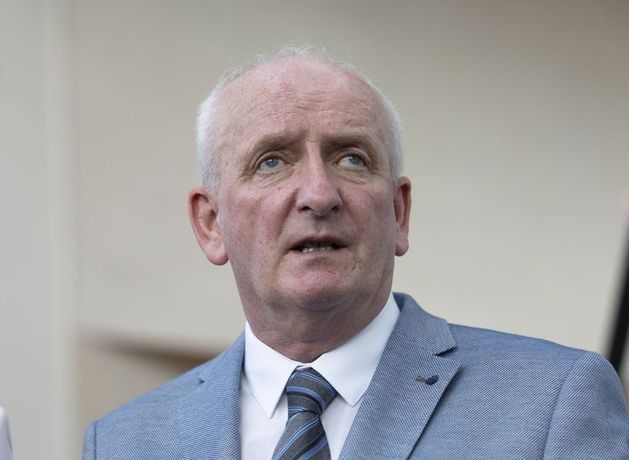
HSE chief Bernard Gloster said no exception will be made for obstetricians on public-only contracts and it’s time all obstetric care is delivered here through the public system.
He was responding to questions from Labour party spokeswoman Marie Sherlock, who highlighted concerns from senior obstetricians that because there are no private hospitals delivering maternity care in Ireland, doctors will be confined to public practice only, denying women a choice.
She asked: ”Will there be a pass for obstetricians?”
Mr Gloster said: “Definitely not.”
He pointed out consultants who are on older work contracts, allowing for private practice in maternity hospitals, can stay on them until they retire.
However he added: “Any new obstetrician hired in Ireland from now on will be on a public-only contract.”
Mr Gloster, who will retire from his post shortly, was before the committee to discuss the HSE’s service plan for 2026, setting out targets for how it will deliver health care this year.
Asked by Fine Gael TD Peter Roche about large waiting lists of children needing an assessment of needs for disability services, Mr Gloster said there will be changes in how the system operates this year.
He said the number of childrens’ disability teams now functioning well is “light years away from even three years ago”.
There has also been an increase in children being seen but there are “people waiting and that is a worry.”
He said, however, it is impossible for the HSE to comply with the law and complete assessments in six months.
“We are performing against an “outdated construct” in terms of assessment of need, he told the committee.
Around a third of children “come out of the process with no indication of disability.”
That is not good for children, their families or the use of resources, he said.
People also think they have to have an assessment of need to access services and that is not the case. An enormous amount of effort is being spent on assessment of need and if even a portion was applied to services, children would be better off, he added.
Late last year it was announced that changes would be implemented to make the system faster with more emphasis on establishing the needs of the child rather than lengthy and complex reports on a diagnosis of disability.
TDs also raised the ongoing low uptake of free GP cards, allowing eligible people to visit the family doctor at no cost.
Fianna Fáil TD Martin Daly asked what the HSE was doing about it while committee chairman, Padraig Rice he was recently told by a student who tried to apply that the process was too complex.
HSE official Pat Healy said the HSE had carried out research into why the uptake was not higher and was targeting information towards people who are eligible.
Earlier, Mr Gloster said the 2026 national service plan will see improvements in hospital waiting list times.
“Improvements will continue to be made in seeing patients waiting 48 months and 24 months, figures which have reduced 20pc and 30pc in recent times, and focus will be particular in taking the people waiting within Sláintecare time bands from a current 31pc to 50pc.”
As several hospitals struggle with serious levels of winter overcrowding again this week, he said that “in 2025 we saw 1.6m attendances at emergency departments.
“This was a national growth of 4.3pc, or 200 a day…and in that context we have reduced again the trolley wait for admitted patients by 10pc.
“Early 2026 saw an unprecedented growth in emergency attendances compared to the same period in 2025 – measurements of 13pc-18pc or 700 a day.
“This has resulted in a challenging month but again one in which there were some improvements achieved overall.”
He said that this year there will be a 5pc and 10pc growth on activity over 2025 with some specific areas having additional improvements.
This includes 223,000 women will have mammograms and 240,000 will have cervical screening.
All maternity units will implement IMEWS, a clinical tool used to identify signs of early deterioration in pregnant women and those who have given birth.
Some 74,376 more people will be covered by a GP visit card, up 9pc. There will be 26.7m home support hours for older people, a rise of 5pc.
Meanwhile, 2,205 additional children and 3,755 additional adults will be seen by community mental health services and adult mental health services.
The aim is for 95pc of patients referred to rapid breast clinics as urgent to be seen in 2 weeks.