
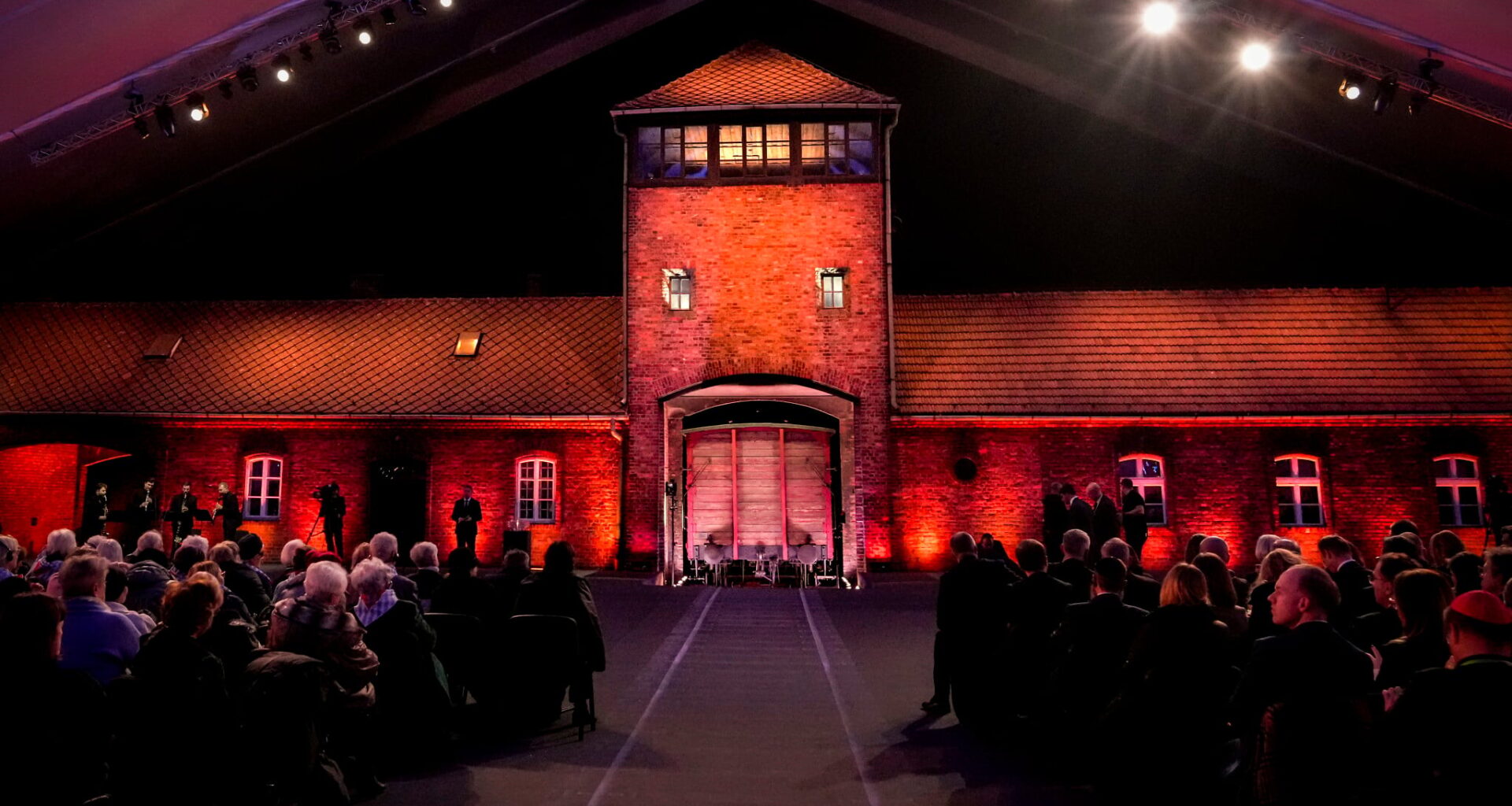
On Sunday, the Jewish columnist Bret Stephens stoked a small firestorm when he said, at a landmark event, that the Anti-Defamation League should be abolished and implied that its $275 million in assets should instead be allocated to building Jewish institutions like schools and cultural centers.
Days earlier, on International Holocaust Remembrance Day, a collection of major figures and groups drew attention for what they didn’t say: the word “Jews.” In their statements commemorating the Holocaust, US Vice President JD Vance, the BBC, and the British Green Party all failed to mention who the Holocaust’s main victims were.
This is far from the first time a leader, or leading institution, neglected to name Jews in a Holocaust statement. Nor is it the first time a Jewish commentator has called on the community to shift its mindset, and money, from fighting antisemitism to building Jewish life.
But the confluence of the two has cast a fraught reality into stark relief: Antisemitism is rising. The Holocaust’s cultural importance is fading. And no one really knows what to do about it.
The current rise in antisemitism, supercharged after October 7, 2023, has been happening for about a decade. In that time, millions of dollars, and untold manhours, have been devoted to fighting the scourge of Jew-hatred. One estimate said the Jewish community spends $600 million annually fighting antisemitism.
Get The Times of Israel’s Daily Edition
by email and never miss our top stories
By signing up, you agree to the terms
Between 2015 and 2025, the ADL’s operating budget more than doubled, from about $60 million to more than $130 million. A collection of other anti-antisemitism enterprises have been founded or risen in prominence. In 2023, before October 7, Israel’s Diaspora Ministry added “Combat Antisemitism” to its name and got a hugely expanded budget.
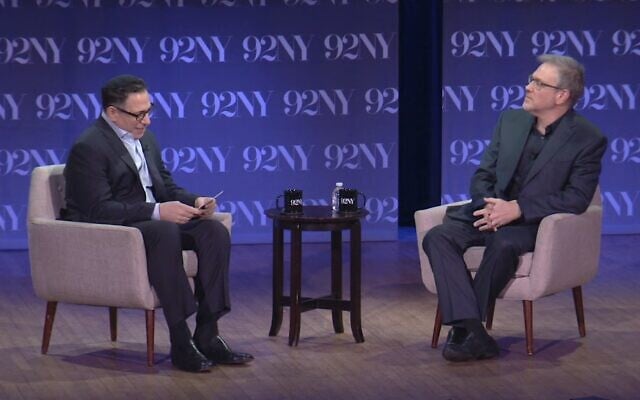
Rabbi David Ingber, left, interviews Bret Stephens after the New York Times columnist delivered remarks at the 92nd Street Y in Manhattan, February 1, 2026. (Peter Jamus/Michael Priest Photography via JTA)
In parallel, at least in the US, there’s been a doubling down on Holocaust education. The US Congress passed a bill strengthening Holocaust education in 2020, and put another one on the docket last year with bipartisan support. In New York, home to the most Jews in the country, programs have expanded to take kids to Holocaust museums to combat a rise in anti-Jewish attacks. Faced with the dwindling number of survivors 80 years after the genocide ended, museums are experimenting with holograms and VR.
Is any of it working? Antisemitism is at historic levels, as study after study shows, despite all the efforts to fight it. And many people don’t know basic facts about the Holocaust, as study after study shows, despite all of the efforts to teach about it.
Against that backdrop, on a day meant to memorialize the Holocaust, and amid mounting antisemitism in the present, the American vice president and the premier British media organization somehow managed to omit that the Holocaust killed Jews.
“There are certain trends now that are evident. One is to make Jewish life toxic,” said Deborah Lipstadt, the Holocaust scholar and former US antisemitism envoy, in an interview with The Times of Israel. “You begin to attack, you begin to erode.”
She went on, “The other trend I’m seeing quite strongly is the erasure of Jews: So, anything that might evoke sympathy, that might evoke identification, understanding, gets erased.”
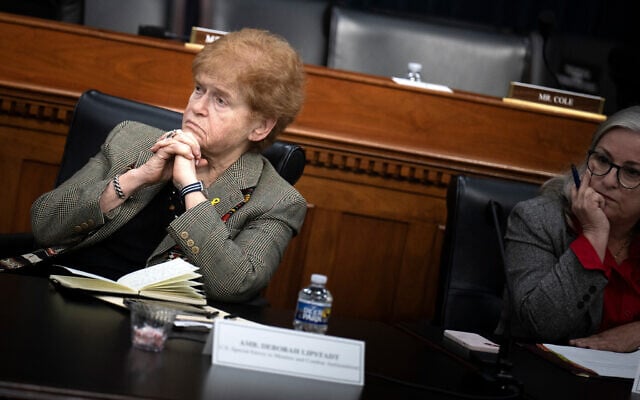
Former US special antisemitism envoy Deborah Lipstadt listens during a roundtable discussion about gender-based violence against Israeli women in the Israel-Hamas war, on Capitol Hill on February 14, 2024, in Washington, DC. (Brendan Smialowski / AFP)
The author Dara Horn, whom Stephens cited in his speech, and who has argued at length that Holocaust education isn’t winning the fight against antisemitism, and might actually be backfiring, used the same language, noting that the Soviet Union also made a point of removing mention of Jews from its marking of Nazi atrocities.
“This is a long tradition of erasing Jews from their own history, appropriating Jewish experience,” she told The Times of Israel. “There’s a long tradition of this in Christianity and Islam. This is taking something that happened to the Jews and then claiming it happened to everyone, and that Jews are evil chauvinists for claiming it happened to them.”
That dynamic was at play for Karen Pollock, the chief executive of the British Holocaust Educational Trust, who decried the “dangerous erasure of Jews from the Holocaust” in an op-ed and warned, “The painful reality is that the Holocaust is being distorted, rewritten and universalised before our eyes.”
When she posted the piece on social media, her replies became filled with people accusing her of racism, aligning with white supremacists or seeking to discount the Nazis’ other victims.
Both Horn and Lipstadt waved away perhaps more benign explanations for the omission of the word Jew. This was not, they estimated, a case where the BBC or Vance wanted to condemn all suffering — a message Jews have also trumpeted — and took it too far.
“Am I saying this is all deliberate? Not necessarily. But am I saying this is just a series of mistakes? No,” Lipstadt said. “Of course, fighting all forms of hatred and discrimination is significant, and is linked one to the other, but in order to combat a form of prejudice, you have to call it by its name.”
There are certain trends now that are evident. One is to make Jewish life toxic. You begin to attack, you begin to erode.
She noted that the BBC also recently omitted Jews from a report on the Battle of Cable Street, a 1936 street fight between British fascists and their Jewish and other opponents. Vance, for his part, has equivocated or pushed back when given opportunities to denounce antisemitism on the right.
Nor did either put much stock in the idea that Vance, as a millennial, is simply a member of an American generation that has broad gaps of knowledge when it comes to what the Nazis did to the Jews.
“Are you trying to tell me that JD Vance doesn’t know that 6 million Jews were murdered in the Holocaust?” Horn said. “Why are we making excuses for these people? I feel like this is a thing that Jews do where you try to find any possible explanation for why this is okay.”
Jewish thinkers have strategies — but likely no cure-all
So what should Jews do? The Holocaust is receding inexorably into the past, and the number of survivors will only get smaller. Meanwhile, the tally of antisemitic incidents has steadily risen.
One answer came from Stephens: a total reordering of American Jewish life that would see Jews turn inward, sending their children to top-notch Jewish schools and well-appointed Jewish cultural institutions paid for with the money that would have otherwise gone to directly fighting antisemitism.
It’s a radical prospect, and one unlikely to happen. Jonathan Greenblatt, who has helmed the ADL during the decade-old spike in antisemitism, and who was in the audience when Stephens called for the organization to be “dismantled,” told JTA, “You cannot have what Bret called a thriving Jewish people if they’re constantly under threat. So I just don’t agree that it’s a binary choice.”
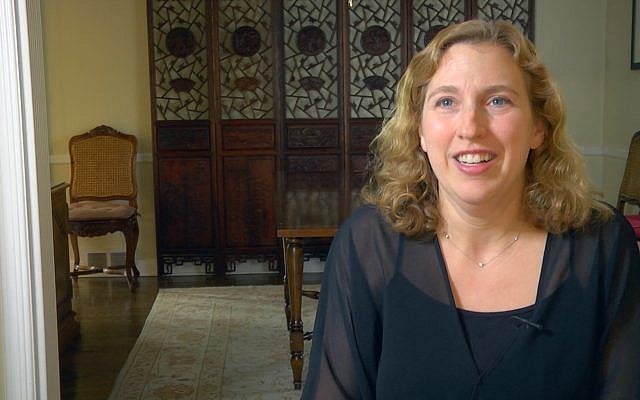
Author Dara Horn. (Michelle Paymar)
Horn has taken another approach, founding a new organization called The Tell Institute, which aims to teach students about what she calls the “groundbreaking” ideas of Jewish civilization — rather than just focusing on the Holocaust.
“I’m not making an argument against Holocaust education, but… the only thing that anyone learns at school about Jews, if they learn anything at all, is that Jews were people who were murdered in Europe between 1933 and 1945,” she said.
Instead, she advocates teaching concepts that are foundational to Judaism, such as not bowing down to other human beings, respecting the rule of law, and giving space to dissent. “These are basic foundational things from the Torah that have a huge impact on world history,” she said. “These are hugely important ideas.”
For Lipstadt, who first gained international renown for winning a libel suit in the UK against Holocaust denier David Irving, the answer is to keep speaking up.
“We call attention to it, we acknowledge how disturbing it is, and we keep pushing on it,” she said. “I think we don’t sit silently by.”
“Why are we making excuses for these people? I feel like this is a thing that Jews do where you try to find any possible explanation for why this is okay.
In all probability, a combination of all of these things will happen. Some Jewish activists and donors will pour energy and money into building Jewish schools and JCCs. Others will seed new efforts to fight antisemitism head-on. Others will found new educational initiatives. Others will leverage their public platform.
And in all probability, while many of these things may help, none of them will be a silver bullet that will fatally pierce the growing monster of antisemitism. In future years, many statements about the Holocaust will probably mention Jews, and some probably won’t. People will almost certainly keep arguing, for example, over whether it’s appropriate to compare ICE agents to Nazis.
In all probability, if there were a panacea, it would have been discovered already.
Near the end of a long interview, when she was asked if there was anything else she wanted to say, any points she hadn’t touched on, Horn paused for a moment.
Then she said, “I mean, I’m just so tired of this stuff.”