
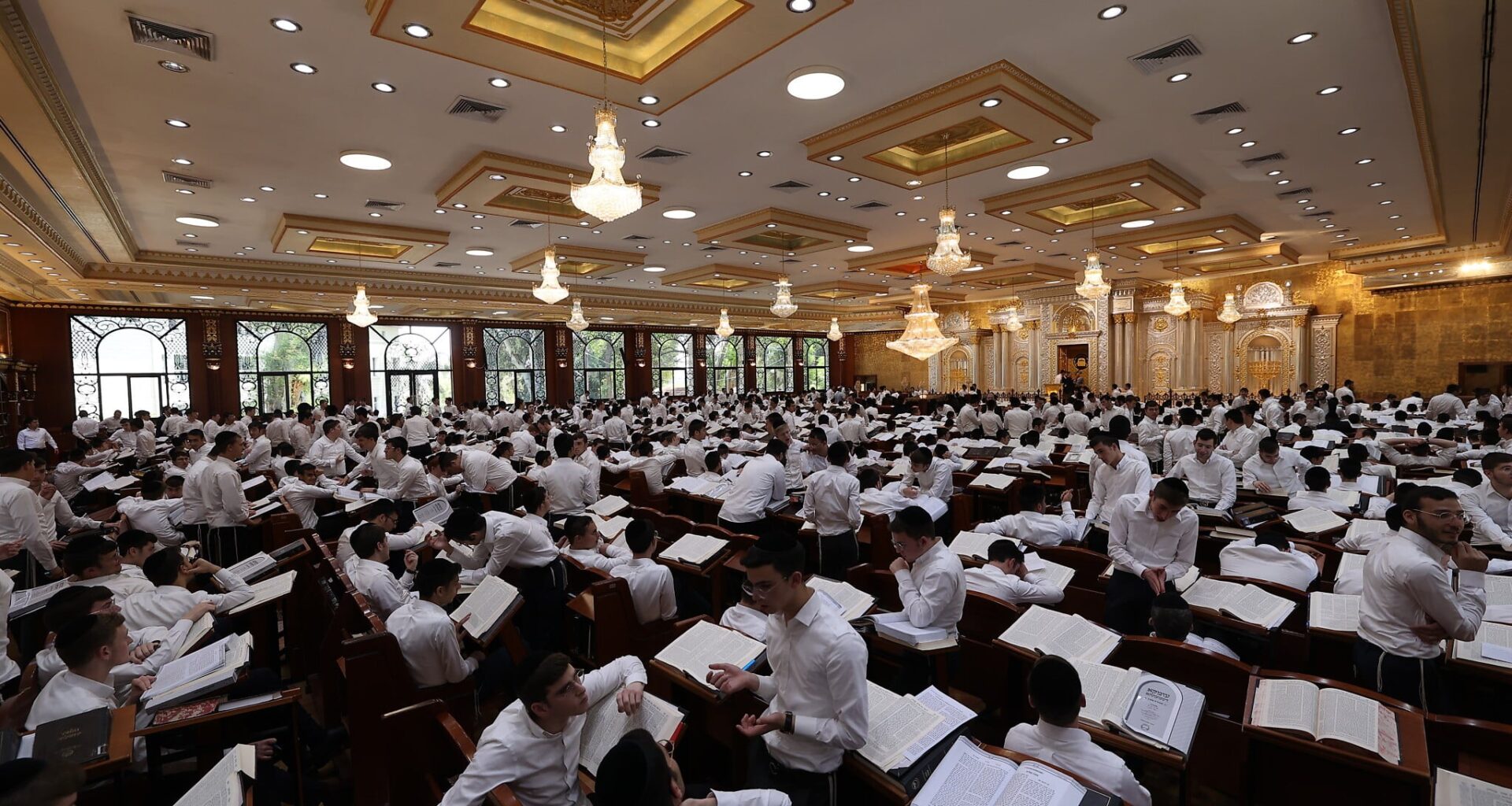
By 2050, almost one in four Israelis will be a member of the ultra-Orthodox community, a new report by the Israel Democracy Institute (IDI) released earlier this month has found.
The report examines the impact of a larger Haredi population on Israeli society as a whole. It considers both a scenario in which the community’s patterns in education and employment converge with those of the general Jewish population and a scenario in which they remain similar to current patterns, in which they are largely separate.
According to the report, the most recent projections from the Central Bureau of Statistics indicate that by 2050, 24.4 percent of Israelis will be Haredi, while IDI’s own projections put the figure at 22%. Currently, some 14% of Israelis, or 1.45 million people, belong to the community.
“The rapid growth of the ultra-Orthodox (Haredi) population is expected to have a dramatic impact on Israel’s economy and society, due to the group’s distinctive patterns of education and employment,” the authors of the report, Dr. Gilad Malach, Dr. Itamar Yakir, and Roe Kenneth Portal, wrote.
Currently, Haredi levels of participation in higher education and in the workforce, especially among ultra-Orthodox men, are significantly lower than those of the non-Haredi Jewish population.
Get The Times of Israel’s Daily Edition
by email and never miss our top stories
By signing up, you agree to the terms
Unless trends change, the growth of the Haredi population would mean the overall share of Israelis eligible for matriculation exams and those holding a university degree, as well as Israel’s employment rate, would decrease compared to today.
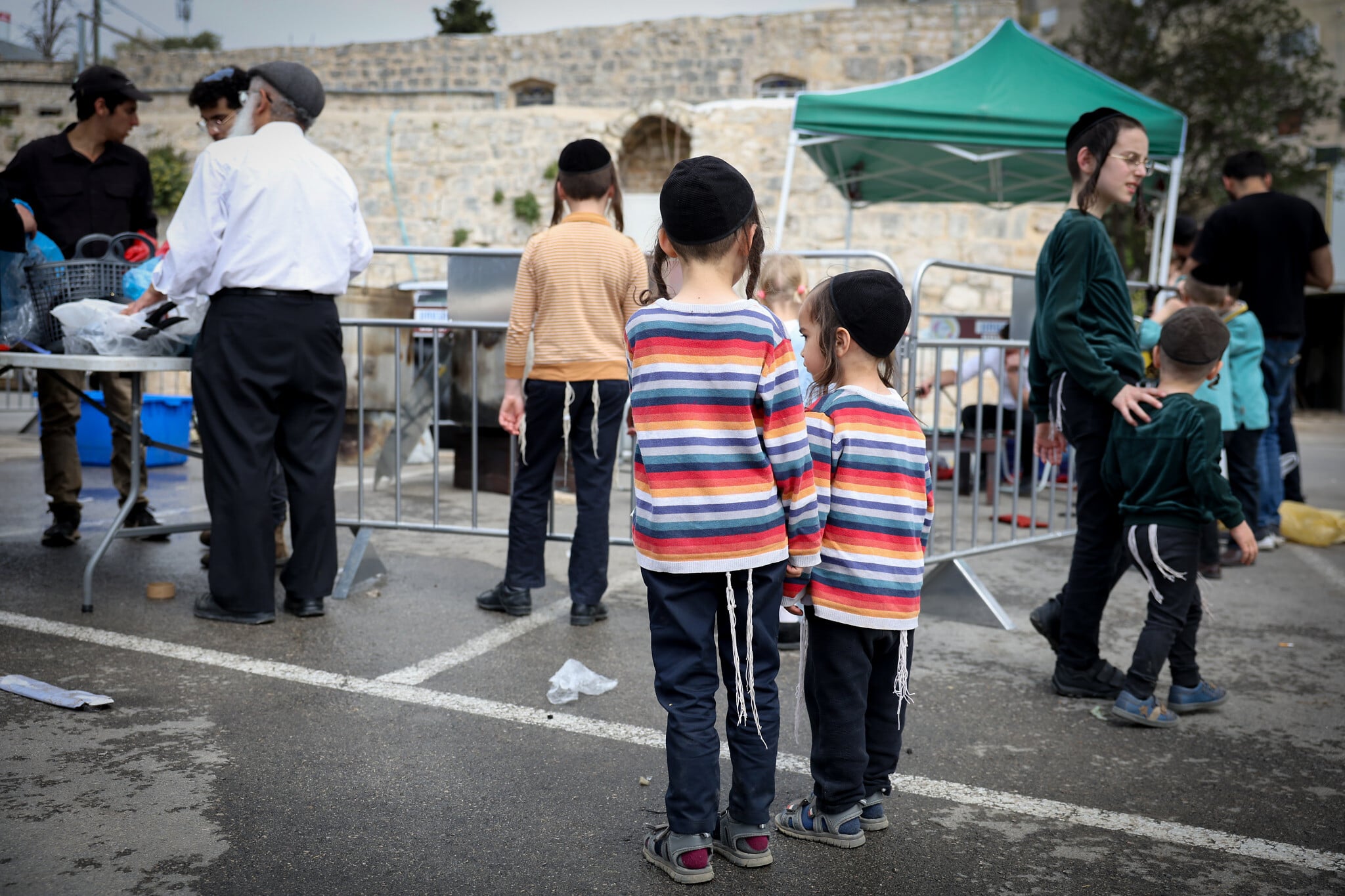
Haredi men prepare for the Jewish holiday of Passover in Safed on April 9, 2025. (David Cohen/Flash90)
Currently, the matriculation eligibility rate across the total population stands at 71%, compared to 16% in the Haredi community. If the latter percentage does not improve, by 2050, only 61.5% of Israeli high school-age students will be eligible for matriculation exams. If the Haredim were to close the gap in that field with the rest of the Jewish population, the rate would jump to 83.6%.
At the same time, today, 47.1% of Israelis ages 35-44 hold a bachelor’s degree, compared to 13% of Haredi men and 38% of Haredi women. According to the IDI report, if the rate of degree-holders in the ultra-Orthodox community remains stable, the percentage of Israelis aged 35-44 with a degree in 2050 will be 43.7%.
Finally, if Haredim maintain current trends, the employment rate in Israel will drop to 75.8% from the current 78.1%, while if they begin to join the workforce at rates similar to the rest of the population, it will increase to 79%.
“The loss of potential in terms of GDP per capita resulting from the non-integration of Haredim could reach more than 10%, equivalent to approximately 160 billion shekels ($52 billion) in 2023 GDP terms,” Malach, Yakir and Kenneth wrote.
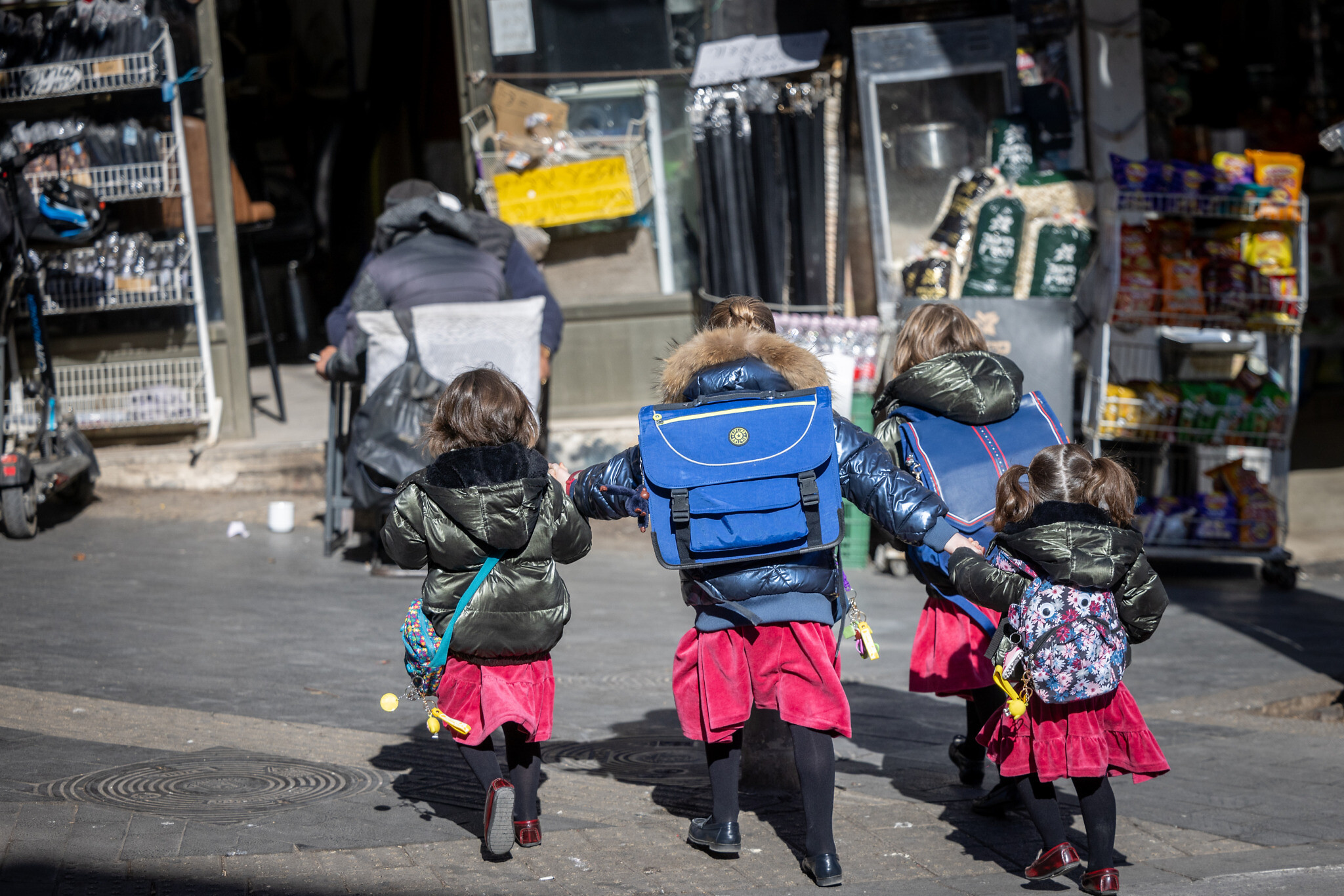
Illustrative: Ultra-Orthodox children in Mea Shearim, Jerusalem, on December 19, 2024. (Chaim Goldberg/Flash90)
For decades, experts have sounded the alarm about the lack of Haredi economic integration, given that it is Israel’s fastest-growing community, with an average of 6.5 children per Haredi woman.
Such fears have come to bear on the military draft following the Hamas-led October 7, 2023, attack, which sparked the longest war in Israel’s history. Ultra-Orthodox men have long been granted a blanket exemption from conscription.
In light of the current security situation, the IDF has said it urgently needs 12,000 recruits due to the strain on standing and reserve forces. Some 80,000 ultra-Orthodox men aged 18-24 are currently believed to be eligible for military service, but have not enlisted, even though the High Court of Justice declared the exemptions illegal in 2024.
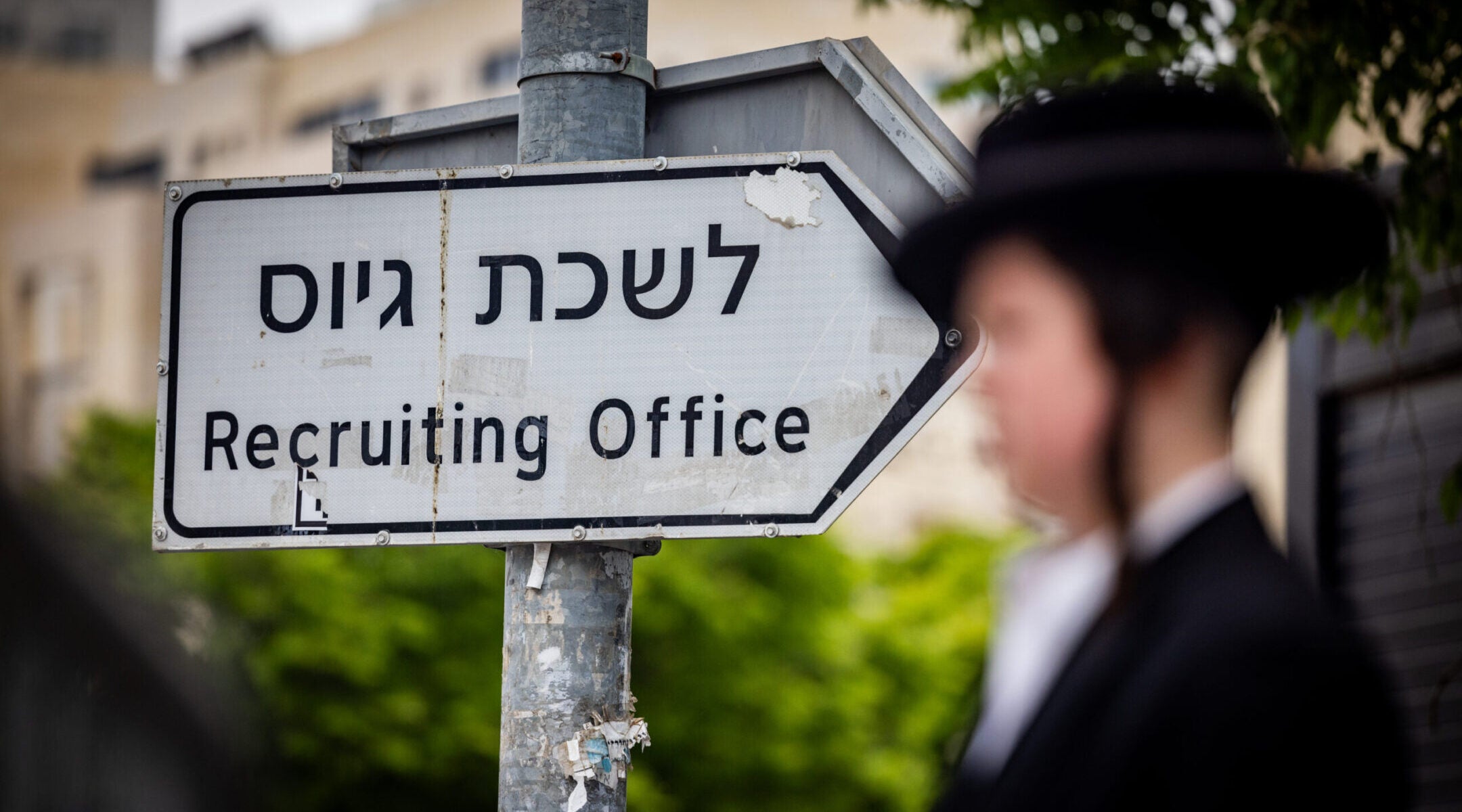
A Haredi Orthodox Jew stands near a sign for an army recruitment office during a protest against Haredi conscription in Jerusalem, May 1, 2024. (Yonatan Sindel/Flash90)
A bill currently moving through the Knesset would preserve most of the Haredi draft exemptions and has sparked a national debate.
According to the IDI report, Haredim currently constitute 23.5% of those designated for military service, and that share is expected to rise to 25% by 2030, 33% by 2040, and 40% by 2050.
“The findings point to an urgent need for a new, equitable ‘social contract’ between the state and ultra-Orthodox society, which would include far-reaching changes in the education system, military enlistment, and the subsidization of the Haredi population,” Malach, Yakir and Kenneth wrote.
“Decreasing the economic incentives for non-integration into Israeli society, as well as conditioning state support on the study of core curriculum subjects, military service, and the full realization of earning capacity, are necessary conditions for achieving the required changes,” they added.
Is accurate Israel coverage important to you?
If so, we have a request.
Every day during the past two years of war and rising global anti-Zionism and antisemitism, our journalists kept you abreast of the most important developments that merit your attention. Millions of people rely on ToI for fact-based coverage of Israel and the Jewish world.
We care about Israel – and we know you do too. So we have an ask for this new year of 2026: express your values by joining The Times of Israel Community, an exclusive group for readers like you who appreciate and financially support our work.
Already a member? Sign in to stop seeing this
You appreciate our journalism

You clearly find our careful reporting valuable, in a time when facts are often distorted and news coverage often lacks context.
Your support is essential to continue our work. We want to continue delivering the professional journalism you value, even as the demands on our newsroom have grown dramatically since October 7.
So today, please consider joining our reader support group, The Times of Israel Community. For as little as $6 a month you’ll become our partners while enjoying The Times of Israel AD-FREE, as well as accessing exclusive content available only to Times of Israel Community members.
Thank you,
David Horovitz, Founding Editor of The Times of Israel