
Anti-Zionists today have this delusion that the State of Israel is temporary. To them, it’s not just evil but the forever-target to be attacked, isolated, and delegitimized out of existence over time. From the uncompromising Khartoum Resolution in 1967 to activist slogans to Middle East studies syllabi, the logic is remarkably consistent: if they apply enough pressure, Israel will eventually vanish.
History has repeatedly proven that assumption wrong. If Israel’s decisive military victories in 1948, 1967, 1973, and over these past three years have taught us anything, it’s that the Jewish State is resilient and it is not going anywhere. But as a student at Columbia studying Israel and the Middle East, I am often struck by how detached the prevailing campus discourse is from reality. Israel is presented as a static object of critique, a moral problem to be remedied, and a society on the brink of decline.
What is striking today is that these criticisms seem to simply ignore a crucial aspect of Israeli society: the economy. If Israel were truly a country in social and political decline, wouldn’t its markets reflect that? One would expect its currency to be weakening, and its cross-border investment to be retreating, not accelerating. Yet the opposite has been true. The shekel is surging. Israeli markets reached historic highs, climbing over 50% by the end of 2025. M&A activity in the same period has increased fivefold from 2024, reaching over $71b.
Strength in the modern world is not measured only by a country’s military success or political calm. It is measured by whether a society embeds itself so deeply into global systems that it’s simply not removable.
Here is the puzzle critics ignore: even as political criticism of Israel has intensified, so has global investment in Israeli technology. Whatever the mob thinks of Israel’s policies, the world’s most sophisticated companies and firms treat Israel as indispensable.
Today, that’s why Israel’s rapidly blossoming AI economy deserves far more attention.
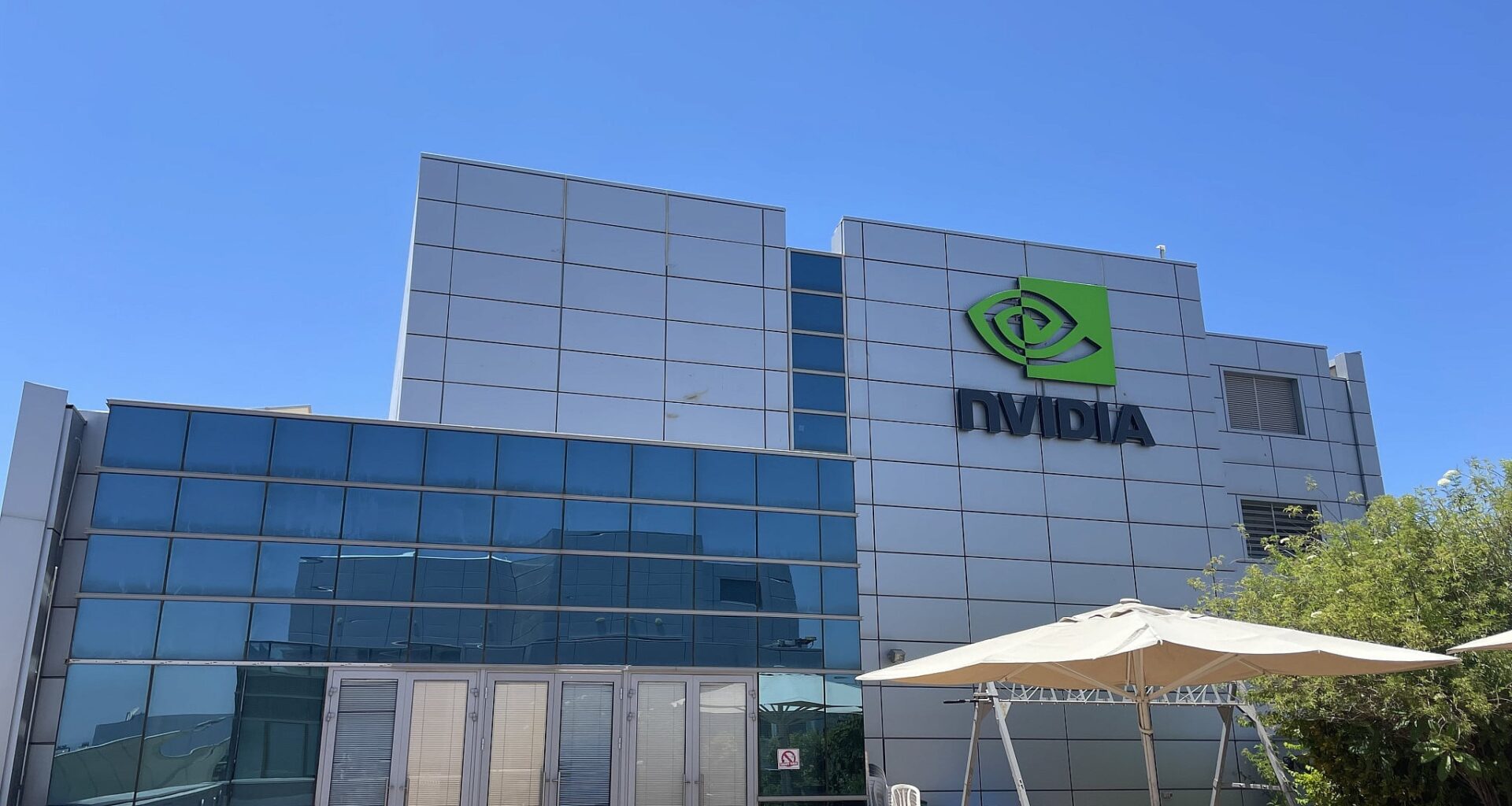
Consider two recent developments. In January 2026, Apple acquired Israeli AI startup Q.ai for nearly $2b – Apple’s second largest acquisition ever – and hired all of its roughly 100 employees, integrating the company directly into Apple’s ecosystem. At the same time, Nvidia, the firm sitting at the center of the global AI revolution, keeps expanding its footprint in Israel. CEO Jensen Huang calls the Jewish State Nvidia’s “second home”, while outlining plans that would boost its Israeli workforce.
These decisions are not political. They are not symbolic gestures countering out-of-touch anti-Zionists. They are strategic bets made by multinational corporations whose success depends on identifying where real capability lies.
That’s where Israel stands out. Israel has been repeatedly recognized for advancing the AI revolution. The Israeli economy keeps booming, thanks to Israelis whose entrepreneurial spirit and technological mastery generate innovative, world-changing inventions – from Waze to the PillCam to the Iron Dome.
Israelis know how to drive technology forward. Investing in Israel means investing in its people.
Apple did not simply buy Q.ai’s technology; it hired the startup’s entire team. Similarly, Nvidia did not pick Israel because of the real estate prices; Huang plans to double the company’s employees at its new Israeli campus.
For decades, leading multinationals have sought Israeli partnerships. Intel, Microsoft, Google, and Amazon all invested in R&D capacity there. Today, the object of the investment is pathbreaking: infrastructure-grade AI and systems that will become core parts of global platforms on the brink of reaching their full potential. Other countries attract AI investment too. But few offer Israel’s combination of talent density and entrepreneurial culture. These are non-fungible assets – you can’t just pick another country and expect the same results.
The implications are obvious. You can boycott a consumer brand. You cannot cancel a country whose people are building tomorrow’s systems that will run the global economy. When Israeli engineers design core AI tools and Israeli teams are embedded throughout global R&D pipelines, Israel is no longer just a go-to geopolitical punching bag. It’s become a most necessary part of running the future.
Israel’s indispensability also exposes a deeper flaw in today’s anti-Zionist movement. Many claim to oppose Israeli policies, not Israeli people. But the BDS boycott movement targets the human capital that makes Israel valuable to the world. Rejecting Israel means rejecting the people whose innovation drives the global economy. Such movements thus contradict the economic self-interest of the world’s largest corporations, the United States, and the Western world.
Anti-Zionist professors keep teaching students that the Middle East is a zero-sum moral battlefield, where legitimacy is granted by declaration. But the world students will inherit isn’t shaped by moralistic resolutions. In our real world, power flows through technology, capital, and integration. Understanding those forces is central to understanding the region.
Israel has not only proved its military dominance. It’s increasingly irreplaceable for the global AI economy. A politics premised on Israel’s eventual disappearance requires ignoring Israel’s economic reality, human capital, and billions of investment dollars pouring in. That’s not thoughtful critique. It is willful ignorance.
Students who want to understand the real Middle East – not something imagined in protest slogans – would do well to start there.
Elisha Baker is a student at Columbia University from Brookline, MA studying Middle East history, and an incoming law student at Columbia Law School. He spent two years as co-chair of Columbia Aryeh, a student-led Israel engagement group, and has been featured across the media as an author and commentator on Israel, antisemitism, and university governance.