
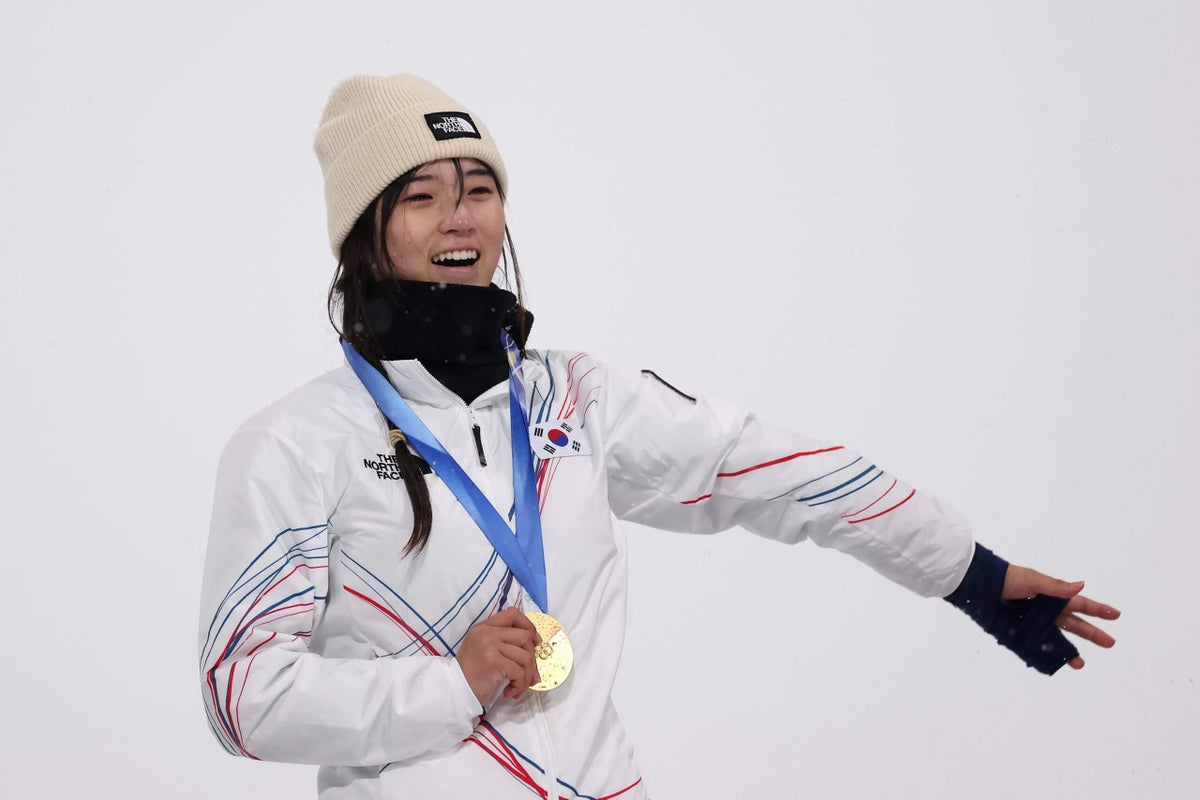
LIVIGNO, Italy — The crowd was silent and anxious. The competition paused. Medical officers skied down the frozen halfpipe to tend to the slender, immobile frame on the snow.
As Choi Gaon attempted to land a cab 1080 stalefish, the second jump in her first run during the women’s snowboard halfpipe final on Thursday, she caught the lip of the pipe, spinning her upside down, her body scraping along the icy floor.
The tearful 17-year-old questioned whether she should continue.
But the Olympic debutant gritted her teeth and tried to forget about her throbbing, bruised knee. As the South Korean started walking, she could feel energy seep back into her legs.
I’ll try again, she thought.
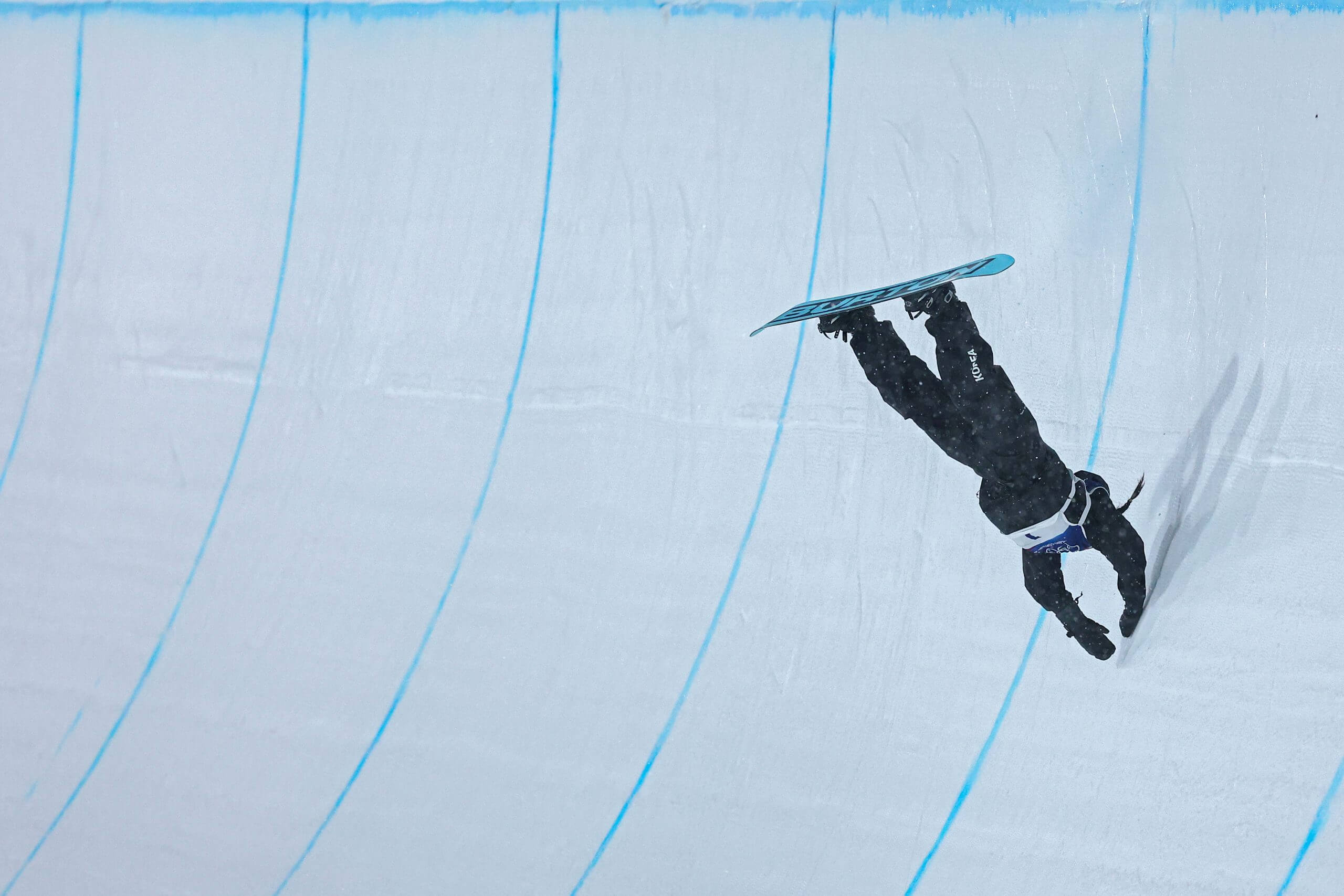
Choi Gaon suffered a heavy fall during the women’s snowboard halfpipe final. (Patrick Smith / Getty Images)
And then double gold medalist Chloe Kim, her idol, her mentor, stepped in. “You’re a really good snowboarder,” she told the teenager mid-competition. “You can do this, don’t worry about what just happened, you got this, shake it off.”
Emotions were running high, though. Choi was angry. She even refused to take a phone call from her father during the final.
Kim, last to go and bidding to become the first snowboarder to win three consecutive Olympic gold medals, had put herself in a commanding position after the first run, registering a score of 88.00. The rest of the field pushed for bigger and better tricks but failed to land their efforts as snow fell gently under the floodlights.
Those close to Choi did not doubt her capability. She came into the Olympic Games on good form, victorious in the three World Cups she had competed in. Kim’s preparation, meanwhile, had been hampered by a shoulder injury.
But during the final, Choi’s camp became concerned about the teenager’s injury. In the second run, she failed to land her signature move, a backside 9, involving a 900-degree rotation, which she almost always completes.
It was hard to imagine how Choi could recover.
With Kim still leading, it was all or nothing in the final run. Choi showed her mental resolve, focusing solely on her technique, and took a big, deep breath. She executed what was a normal routine for her and scored 90.25, putting all the pressure on the defending champion, who was last to go.
But Kim went big and fell, making, in her words, “her baby” the Olympic champion.
At 17 years and 101 days, Choi is the youngest snowboarding winner at a Winter Olympics, and the first South Korean woman to win an Olympic snowboarding medal.
Kim rushed over to her successor, congratulating her in a tight embrace. She felt overwhelming pride for her protégé and wanted to treat Choi — South Korea’s first Olympic champion of these Games — just as her mentors had treated her.
“I always wanted to be there for her and I still do,” said Kim. “When she showed up so clutch for her third run and won the damn thing, that is incredible.”
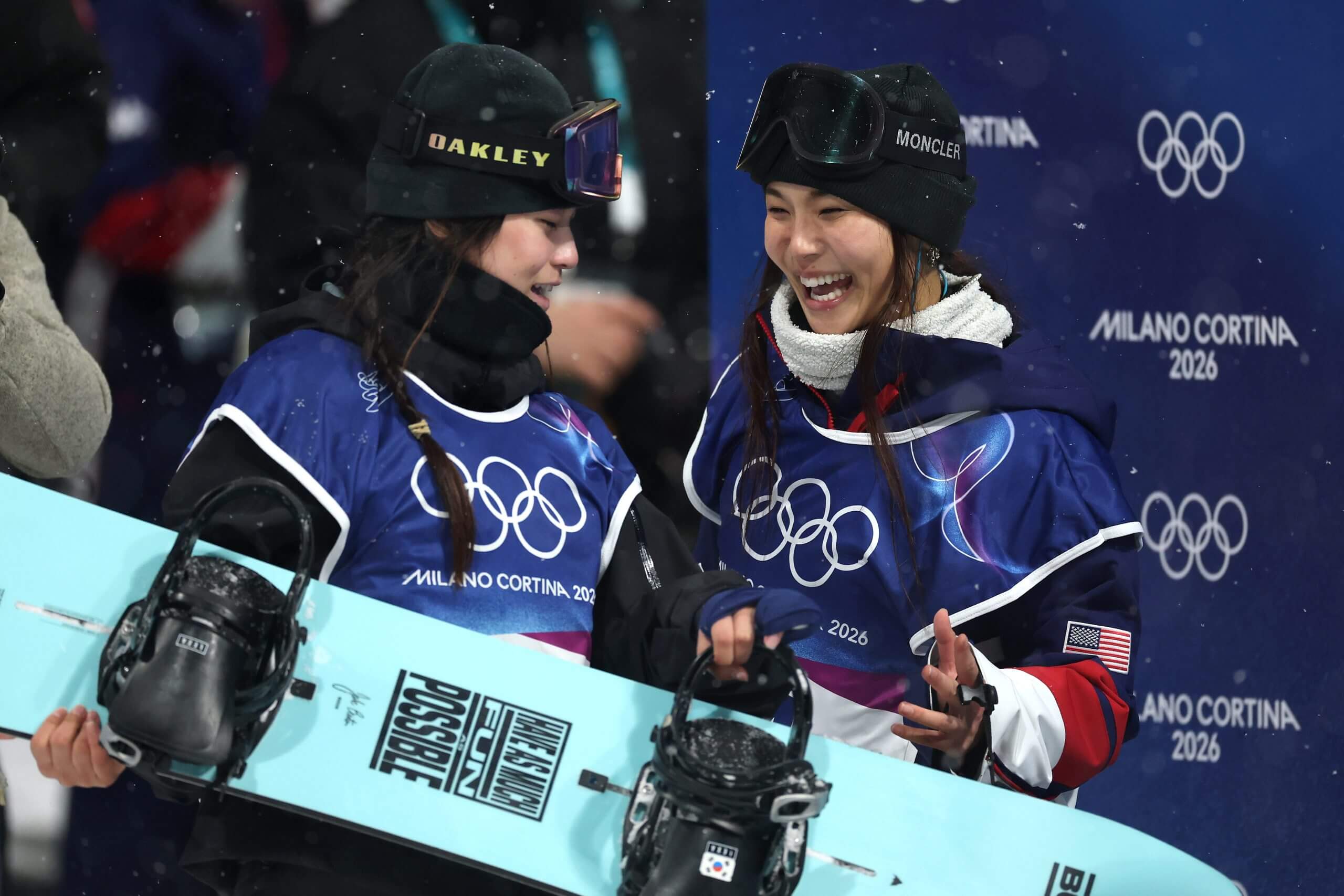
Choi Gaon laughs with Chloe Kim after the women’s snowboard halfpipe final. (Patrick Smith / Getty Images)
Kim was eloquent, poised and polished as she sat beside the timid Choi in the press conference. Such was the severity of the injury sustained after the first fall that the South Korean had been transported there via a ski mobile and limped into the room.
As Kim heaped praise onto the new Olympic champion, it marked a changing of the guard. The transition felt “weird” for the emerging talent Choi, who said Kim had told her “I’m just retiring,” but added she was unsure if the American was joking.
Kim has played a significant role in Choi’s rise. An encounter in 2017 at an Olympic test event in PyeongChang helped facilitate a move to the United States to train under Ben Wisner, coach to Team USA’s Bea Kim and Maddie Mastro. Kim’s first Olympic gold in 2018, which she also won at the age of 17, had inspired Choi.
Fast-forward five years, and by age 14, Choi had broken Kim’s record as the youngest X Games snowboard halfpipe champion.
“I feel like a proud mom,” Kim said after the Olympic final. “The future of snowboarding is in good hands.”
Kim highlighted Choi’s talent but also her work ethic, recalling how even at age 9, she would show up at the halfpipe before her.
“No one else deserves it more,” said the 25-year-old, describing the gold medalist as a “force.”
“She’s trying all these tricks that I’ve never tried before.”
Fluid in backwards, forwards, backside and switchside maneuvers, Choi is breaking boundaries, especially with her technical strength. “I don’t think a lot of women are able to land the switchback,” she said.
That, in part, is due to coach Wisner, whom she thanked for always trusting her. But it is her parents’ devotion that has also made Choi the champion she is today, travelling with her while her grandmother takes care of her siblings.
Any tension with her dad had long evaporated after the final. All she wanted to do was thank him as soon as possible.
“It feels surreal, like I’m in a dream,” said Choi. “I can’t believe my first Olympic medal is gold.”