
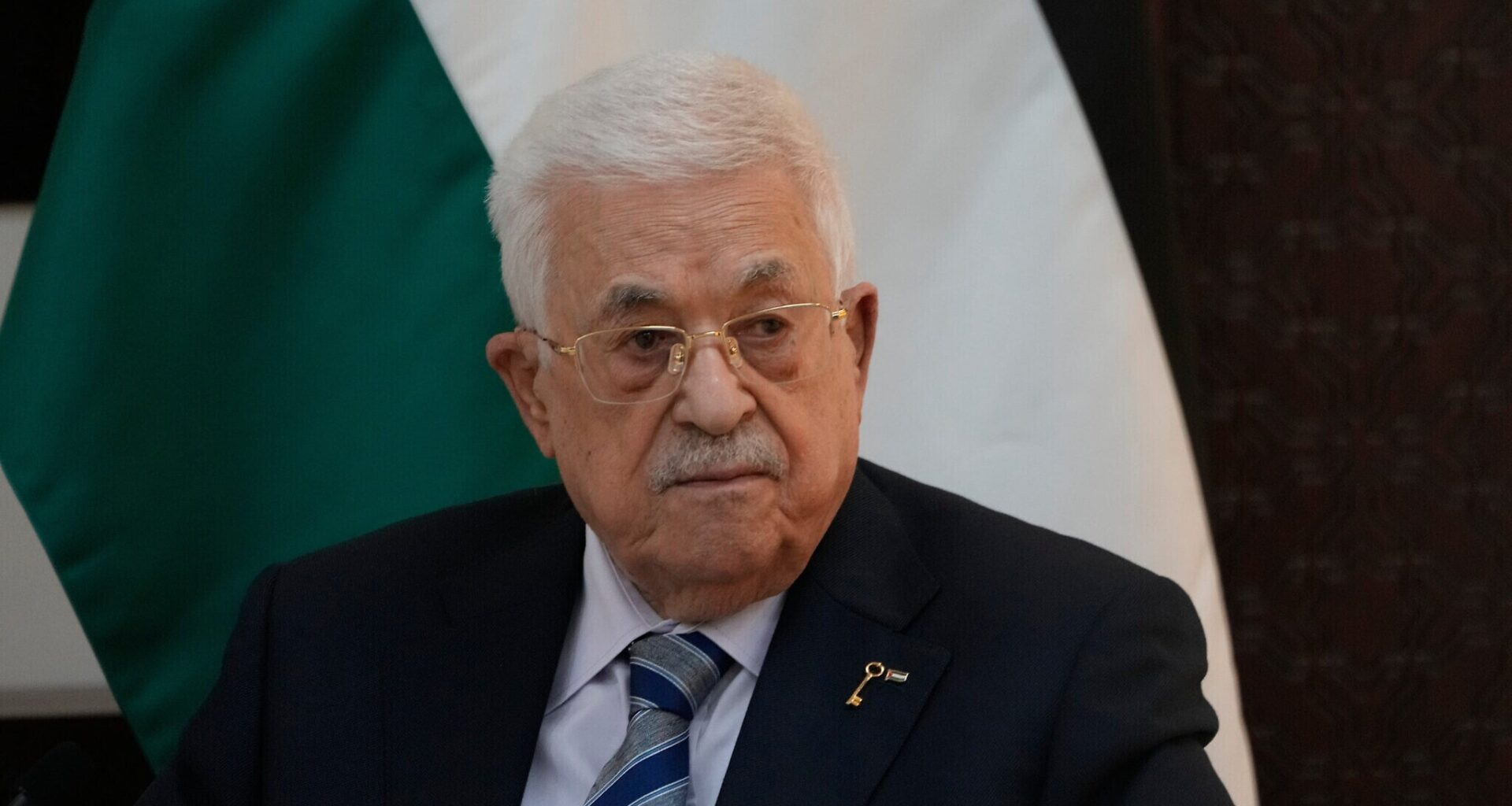
Palestinian Authority President Mahmud Abbas called on Saturday for the removal of “all obstacles” he said Israel has imposed on the implementation of phase two of the Gaza ceasefire.
“We emphasize the need to lift all obstacles imposed by the Israeli occupation on the implementation of the provisions related to the second phase of the agreement,” Abbas said, in a speech read by his Prime Minister Mohammed Mustafa, at an African Union summit in Ethiopia.
This included the work of a technocratic committee established to oversee the daily governance of Gaza, he added.
Removal of the obstacles was needed to “ensure continuity of services, coordinate humanitarian efforts and enable a swift recovery,” the PA president said.
Abbas accused Israel of “continuing to violate” the ceasefire agreement with Palestinian terrorist group Hamas that took effect in October and was backed by the United States.
Get The Times of Israel’s Daily Edition
by email and never miss our top stories
By signing up, you agree to the terms
“From the announcement of the ceasefire until today, more than 500 Palestinians have been killed [in Gaza], which threatens the durability of the truce and the full implementation of its second phase,” he added.
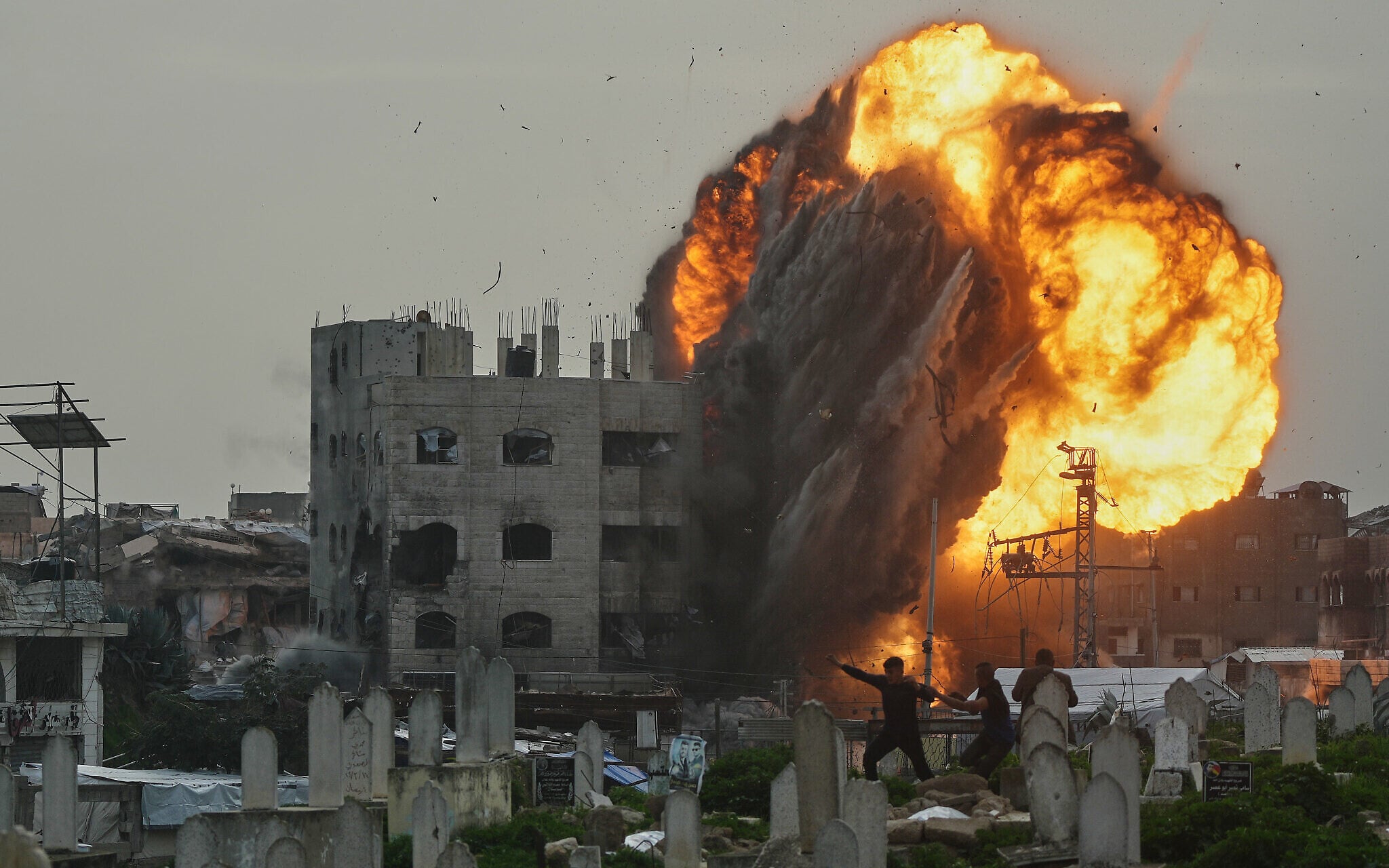
Smoke and flames rise from an Israeli military strike on a building in the Zeitoun neighborhood of Gaza City, February 6, 2026. (AP Photo/Jehad Alshrafi)
Even though the US-brokered truce entered its second phase last month, violence has continued in the coastal territory, with Israel and Hamas trading blame.
The deal is aimed at permanently ending the Gaza war, which was sparked by the Hamas-led October 2023 invasion of southern Israel, and was endorsed in November by the United Nations.
The second phase stipulates that Israeli forces gradually withdraw from Gaza and Hamas should disarm, with an international stabilization force deployed to ensure security.
Hamas has repeatedly said, however, that disarmament is a red line, although it has indicated it could consider handing over its weapons to a future Palestinian governing authority.
‘A number of conditions’
The Israel Defense Forces still controls more than half of the Gaza Strip, while Hamas and Israel accuse each other daily of ceasefire violations.
Fifteen Palestinian experts on the technocratic committee, which is being overseen by a “Board of Peace” set up by US President Donald Trump, are currently based in Egypt, despite a partial reopening on February 2 of the Rafah Border Crossing, Gaza’s only gateway to the outside world that does not lead to Israel.
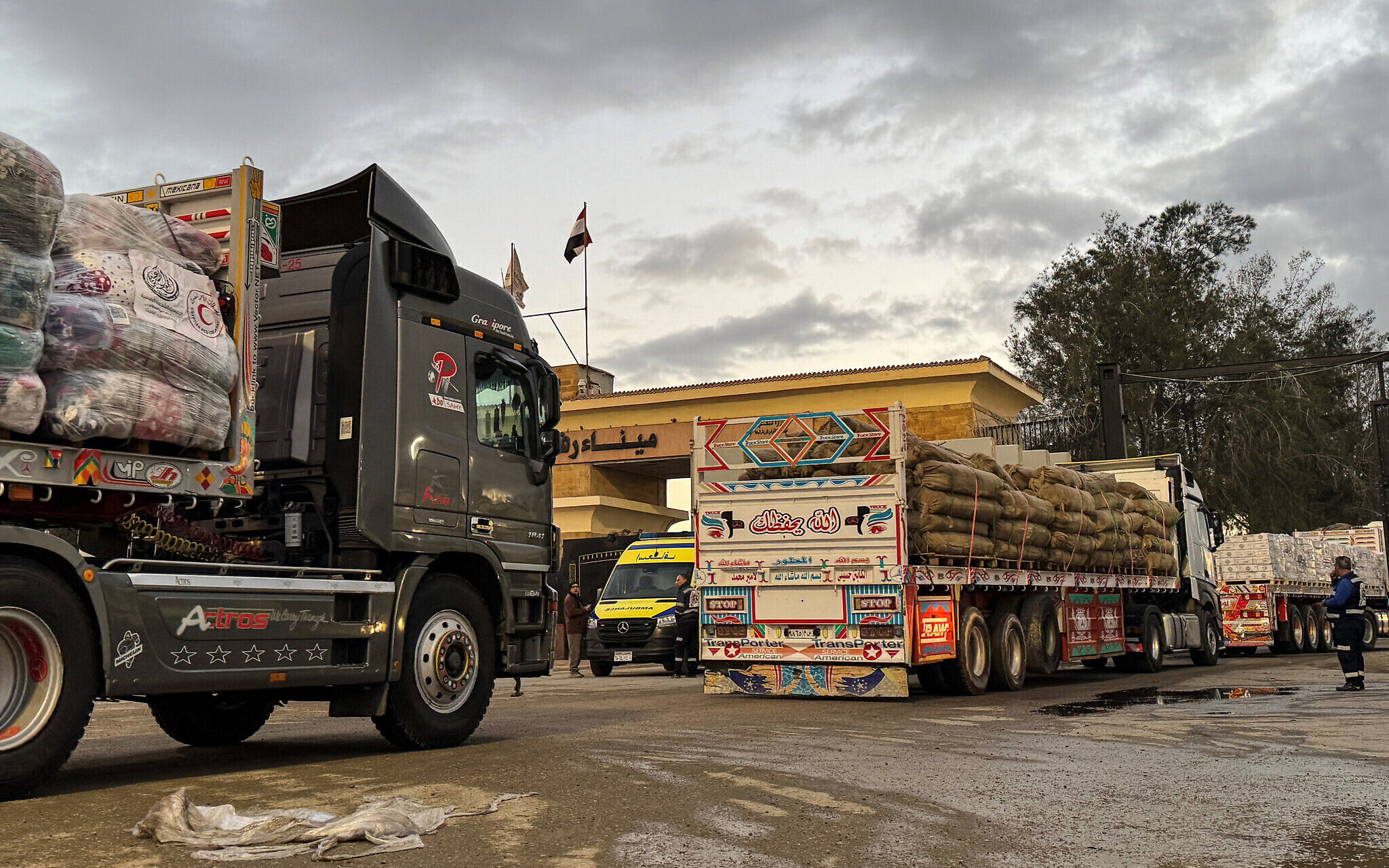
Humanitarian aid trucks enter through the Egyptian side of the Rafah border crossing with the Gaza Strip on February 4, 2026, days after Israel permitted a limited reopening of the border post. (AFP)
Nickolay Mladenov, a Bulgarian diplomat whom Trump named high representative for Gaza, said on Friday that “a number of conditions need to be met” before technocratic committee members can enter the Palestinian territory.
“One, Hamas needs to transfer the civilian control of the institutions in Gaza,” he told a discussion on the sidelines of the Munich Security Conference.
“This is not a government coming in after an election. This is far much more complicated,” he said.
“Because Hamas has been governing Gaza for 20 years and… implementing policies that are not in line with Palestinian legislation,” he added.
Other conditions he mentioned included ending Gaza ceasefire violations and “a radical increase in the assistance to people, aid going into Gaza.”
“And finally, we need to make sure that we have the framework agreed in place on the decommissioning of weapons in Gaza,” Mladenov said, emphasizing the importance of the future role of a Palestinian security force.
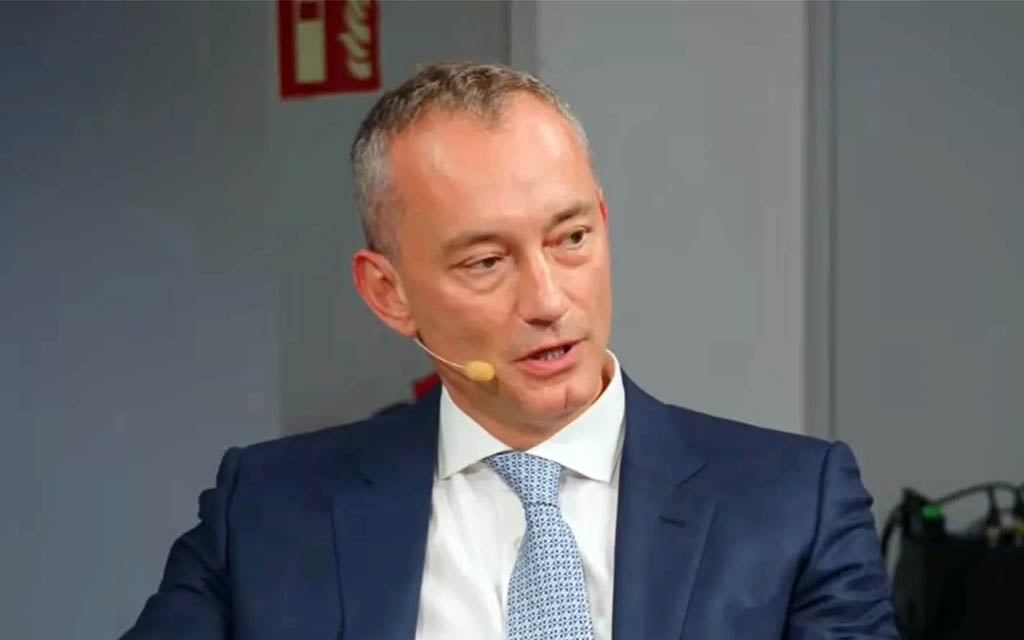
Board of Peace High Representative for Gaza Nickolay Mladenov speaks at the Munich Security Forum on February 13, 2026. (Screen capture/YouTube)
He said the International Stabilization Force (ISF) for the territory — set out under the Trump plan to end the war — “is extremely important.”
“But far more important than the ISF is the new Palestinian security force that should be deployed in Gaza, that should be able to secure the ground with the assistance of the ISF,” he added.
Is accurate Israel coverage important to you?
If so, we have a request.
Every day during the past two years of war and rising global anti-Zionism and antisemitism, our journalists kept you abreast of the most important developments that merit your attention. Millions of people rely on ToI for fact-based coverage of Israel and the Jewish world.
We care about Israel – and we know you do too. So we have an ask for this new year of 2026: express your values by joining The Times of Israel Community, an exclusive group for readers like you who appreciate and financially support our work.
Already a member? Sign in to stop seeing this
You appreciate our journalism

You clearly find our careful reporting valuable, in a time when facts are often distorted and news coverage often lacks context.
Your support is essential to continue our work. We want to continue delivering the professional journalism you value, even as the demands on our newsroom have grown dramatically since October 7.
So today, please consider joining our reader support group, The Times of Israel Community. For as little as $6 a month you’ll become our partners while enjoying The Times of Israel AD-FREE, as well as accessing exclusive content available only to Times of Israel Community members.
Thank you,
David Horovitz, Founding Editor of The Times of Israel