
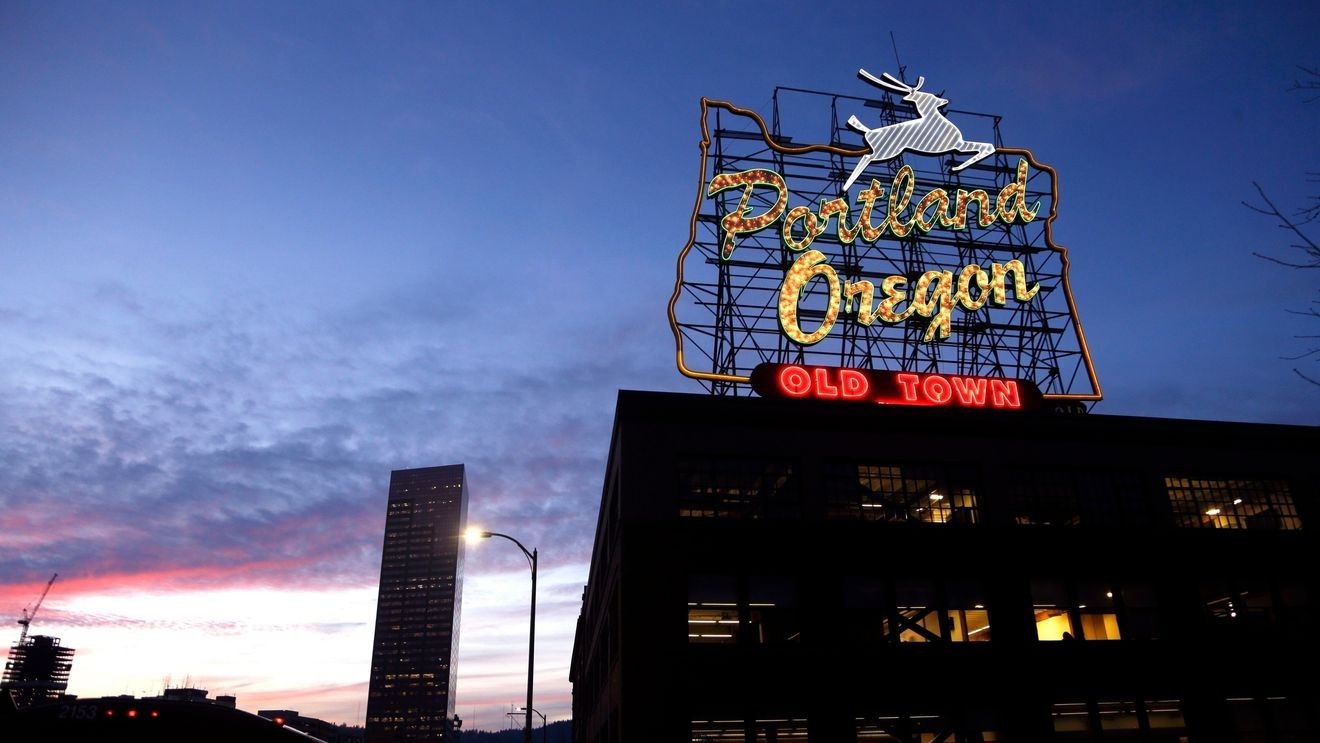
PORTLAND, Ore. (KATU) — A new EcoNorthwest report paints a grim picture of the Portland metro area’s economy.
Starting with the central city’s foot traffic, the study shows daily trips remain down by 32,000 as job growth stalls and affordability challenges persist across the region.
According to researchers, Portland’s central city may need another decade to return to pre-pandemic foot-traffic levels — a key driver of economic vitality for downtown retailers and small businesses.
“If we look at where we are today in our central city, we’re still down about 32,000 trips a day,” said Dr. Michael Wilkerson, partner and director of economic research at EcoNorthwest. “Think about how many retailers those 32,000 trips could support.”
READ ALSO | Portland’s 20 largest office buildings have lost $2 Billion in market value since 2019
While Portland has made strides in some areas, the report points to troubling trends.
“We are last in multifamily permitting in America. Our office vacancies are the highest in modern history in our community,” Wilkerson said.
Portland is not alone in facing post-pandemic headwinds. The broader metro area is also struggling.
“Our region, dependent on trade, saw the largest drop in export value in the country. We are 80 out of 81 on real estate investability. And we are at the bottom of 50 American cities in terms of employment,” Wilkerson said.
Despite ongoing initiatives to address housing affordability across the metro area, the report finds that affordable housing has declined.
“Affordable housing has gone down. And I have to venture a guess that’s not because people love the state of homelessness and the affordability of our housing,” Wilkerson said. “If we look at the share of renters who are cost-burdened — those who spend more than 30% of their gross income on rent — we have the exact same percentage today that we did a decade ago.”
The report also highlights stark differences among the four counties in the Portland metropolitan area.
Clark County leads the region in post-pandemic job growth, while Multnomah County trails behind.
Job recovery by county:Multnomah County: 93.5% of pre-pandemic jobs recoveredWashington County: Nearly 100% recoveredClackamas County: 4% more jobs than pre-pandemic levelsClark County: 14% more jobs than pre-pandemic levels
Clark County’s growth stands in sharp contrast to the rest of the metro area.
County leaders credit strategic development and land-use planning for their success.
Glen Young, a Clark County councilor, pointed to major infrastructure and development projects.
“We’ve had some great projects — the creation of the downtown waterfront, the Discovery Corridor, as well as the Vancouver Innovation Center. It’s really been about smart and thoughtful land use,” Young said.
Business leaders echo that sentiment.
Ron Arp, president of Identity Clark County, a nonprofit business leadership group, said available land has created opportunity.
“We are less developed than other parts of the metropolitan area, so we have more available land, more opportunity for development,” Arp said. “You would expect to see a higher growth rate in Clark County compared to the rest of the metropolitan area as a result.”
That’s not the only factor Arp attributes to the county’s growth.
“The second reason is it’s less taxing here. We generally have a lower overall tax profile. It’s a little lower cost of living,” Arp said.
Overall, the EcoNorthwest report paints a sobering picture.
Every major sector in the Portland metro region experienced job losses last year. The region lost 8,800 jobs, placing it among the four metro areas nationwide with the highest job losses.
As the largest city in the metro area, Portland plays a central role in the region’s economic outlook. We asked the mayor how he plans to address the report’s findings.
His office sent a statement on his behalf:
This report makes one thing clear: Every Portlander deserves a clean, green, safe, affordable and economically vibrant city that reflects their values. The statistics are sobering, and they underscore the seriousness of the work ahead. It is time to begin a new era of growth that brings new workers, new jobs and new opportunities for everyone. I am committed to that future. Portland’s renaissance depends on our ability to face the headwinds while recognizing the green shoots of progress already emerging.