
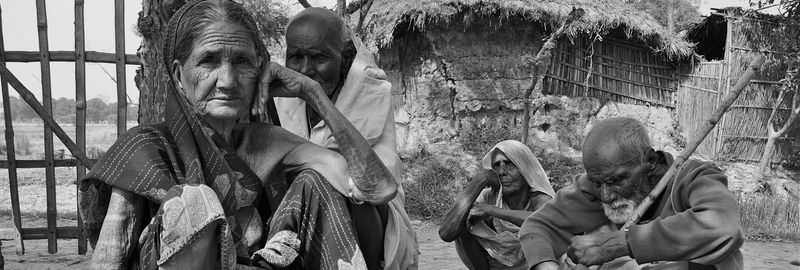
The NSAP provides assistance to senior citizens, widows and people with disabilities under three sub-schemes.
New Delhi: The Union government has placed the responsibility of increasing pensions and revising beneficiary lists under the National Social Assistance Programme (NSAP) on state governments. The NSAP provides assistance to senior citizens, widows and people with disabilities under three sub-schemes.
In a written reply in the Rajya Sabha, junior rural development minister Kamlesh Paswan said that states were free to update beneficiary lists and provide additional financial support from their own funds. The response came after Rajya Sabha MP Raghav Chadha sought information on rural households left out of welfare schemes due to outdated or incomplete data.
The pensions and beneficiary records under the NSAP were last revised between 2007 and 2012, according to official documents. Paswan also stated in a written reply dated February 11, that the scheme guidelines do not prescribe a fixed timeline for revision of benefits under the programme, adding that “the pension amount under the Old Age Scheme was revised from Rs 75 to Rs 200 in 2007.”
The NSAP comprises three sub-schemes named after Indira Gandhi. Under these, individuals aged 60-79 receive Rs 200 per month, while widows above 40 and disabled adults receive Rs 300 per month. Beneficiaries aged 80 and above receive Rs 500 per month. All beneficiaries must be below the poverty-line.
Currently, 3.09 crore people are covered under the programme. The Union government has imposed a state-wise ceiling on the number of beneficiaries. “Under NSAP, If there are more eligible beneficiaries, states have the option to provide financial assistance from their own sources,” Paswan said.
As per information from states and Union Territories, about 5.86 crore additional beneficiaries are supported under state pension schemes.
Also read: Modi Govt Cannot Afford to Ignore Its Broken Retirement and Entitlement Planning For Seniors
Development economist Dipa Sinha, told the Telegraph that the government “has persistently resisted the revision of beneficiaries under welfare schemes like the NSAP”.
“These (the eligible beneficiaries) are the most vulnerable people with very little say in the political and social structure. The central government is conveniently passing the onus on to the states,” Sinha said.
She pointed out that states like Uttar Pradesh, Madhya Pradesh, Bihar and Jharkhand, which already face a fund crunch, would not add more beneficiaries or revise the pension amount under the scheme, “denying lakhs of eligible and helpless people.”
The Union government also recently replaced the Mahatma Gandhi National Rural Employment Guarantee Act (MGNREGA), 2005 with Viksit Bharat—Guarantee for Rozgar and Ajeevika Mission (Gramin) (VB—G RAM G), changing the ratio of Union government spending to that of the states from 90:10 to 60:40.
The additional fiscal burden on the states has been criticised by activists, policy experts and academics.
This article went live on February sixteenth, two thousand twenty six, at two minutes past one in the afternoon.
The Wire is now on WhatsApp. Follow our channel for sharp analysis and opinions on the latest developments.