
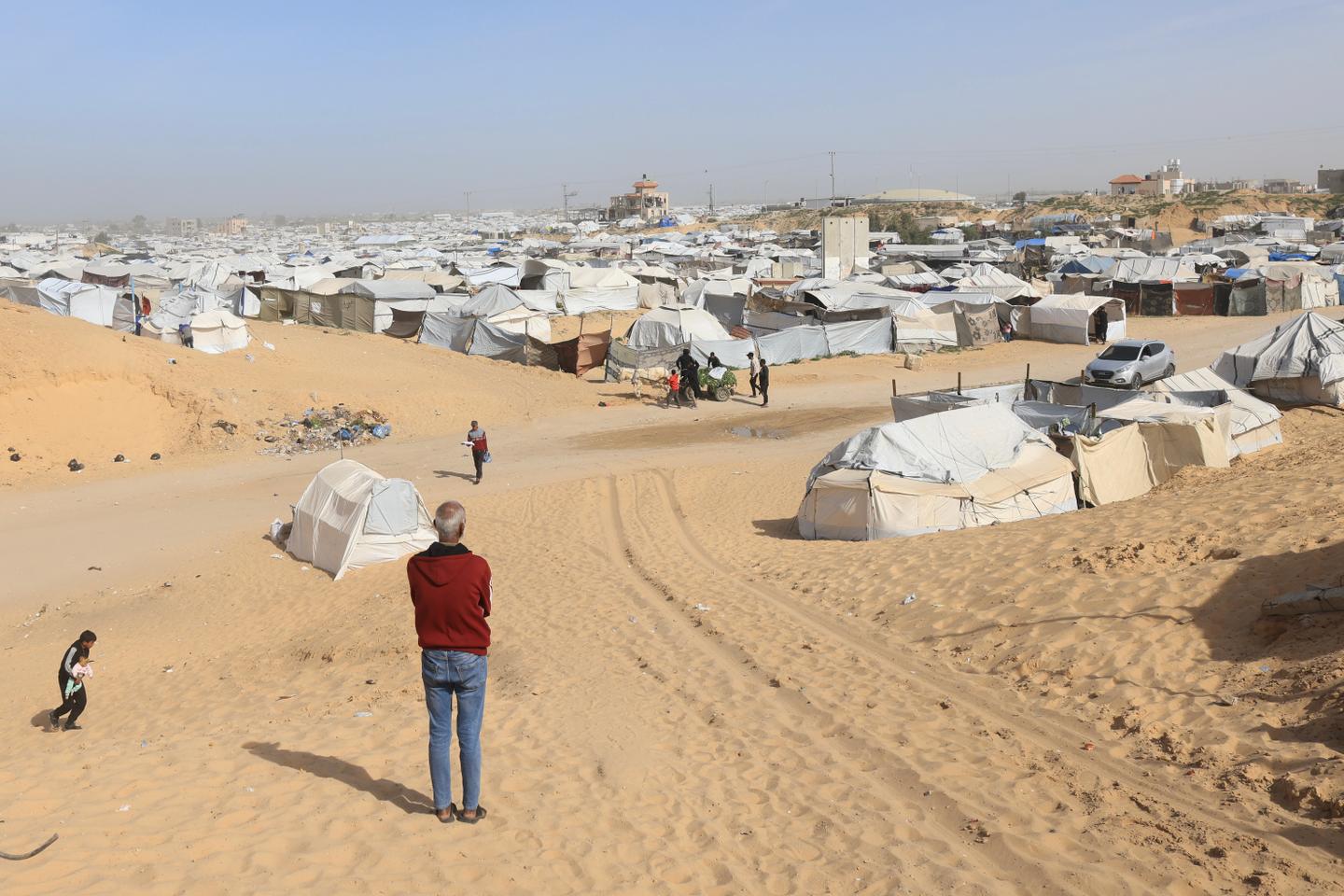
The Board of Peace that was initiated by Donald Trump is meeting on Thursday, February 19, in Washington. Perhaps we will finally learn what its purpose might be, beyond collecting exorbitant membership fees, the use of which will ultimately be decided by a single person – the president of the United States. Initially intended for Gaza, the council’s charter now boasts ambitions as global as they are uncertain. Yet, there is an urgent need to return to its original mission.
When Israeli Prime Minister Benjamin Netanyahu made the first of his five visits to the White House since Trump’s return to power a year ago – in addition to two meetings in Florida – he expressed his ambition to “change the face of the Middle East.” “Our decisions and the courage of our soldiers have redrawn the map. But I believe that working closely with President Trump, we can redraw it even further, and for the better,” he stated.
One year later, this new map has not only been marked by the near-disappearance, under US-supplied bombs, of the pro-Iranian “axis of resistance.” It now differs from the past through the emergence – upon Israel’s initiative – of zones with an indeterminate status along the country’s periphery, particularly in Gaza.
Read more Subscribers only At Sharm el-Sheikh, nations back Trump’s plan for Gaza’s future
On the eve of the massacres of October 7, 2023, that were perpetrated by Hamas, along with the bloody destruction of the narrow strip of land that followed, Israel was still considered by most law experts to be an occupying power, in spite of its “Gaza Disengagement” of 2005. Since then, the country has added direct military occupation – which covers more than half of this overcrowded and now devastated territory – to its remote control. Predicting when this might end would be risky.
Although a ceasefire – which officially remains in effect – was celebrated with great fanfare by Trump at the Sharm El-Sheikh summit on October 13, 2025, it has been contradicted by the ongoing Israeli strikes that have killed hundreds of Palestinians ever since. Despite the official end of fighting, the Israeli army has continued to ban international media from entering the enclave. This unprecedented blackout from a US and European ally has been exacerbated by the exclusion – contrary to humanitarian law – of non-governmental organizations such as Doctors Without Borders, which have refused to submit to Israeli authority.
You have 55.81% of this article left to read. The rest is for subscribers only.