
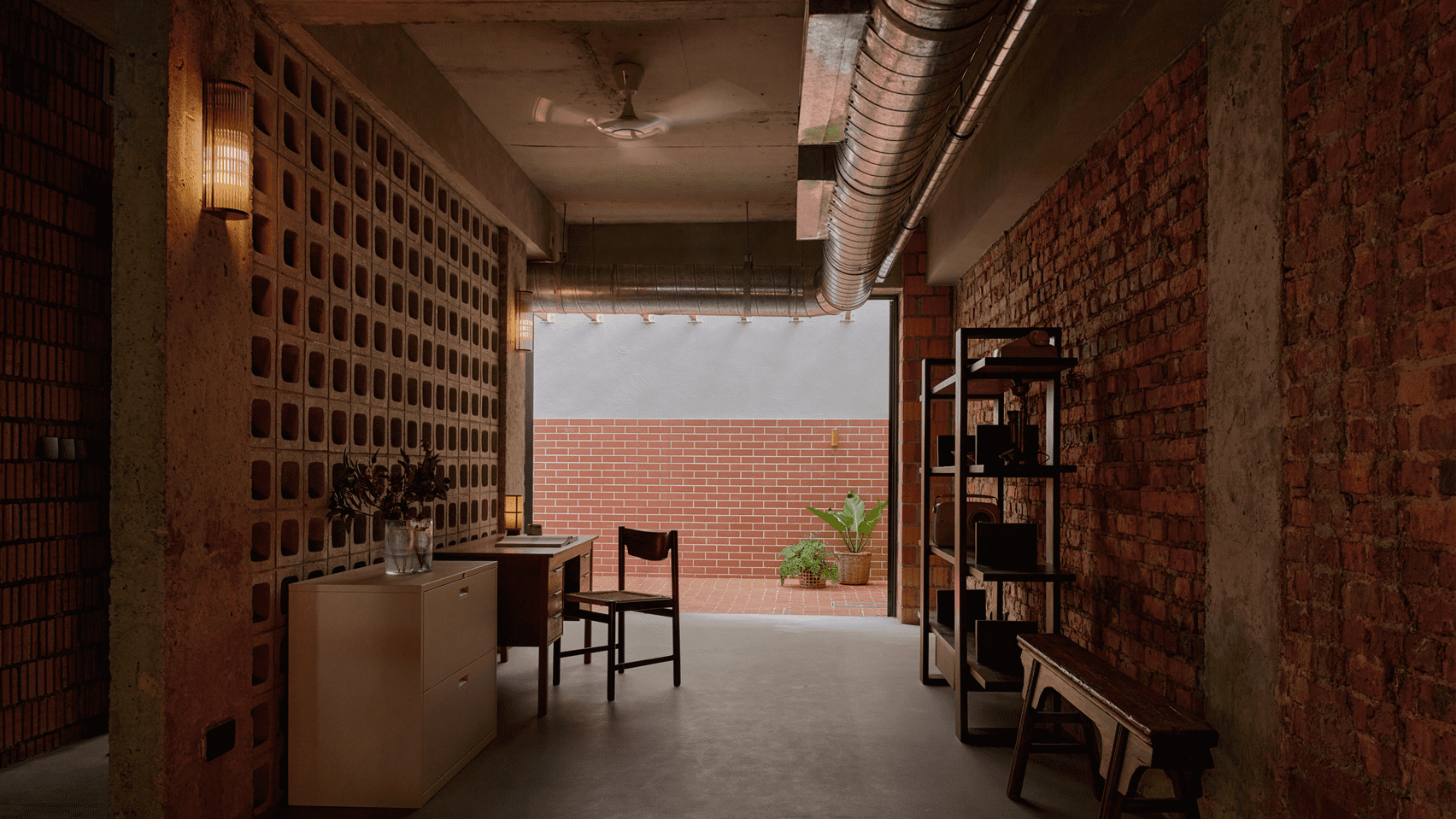
Ceiling board and layers of plaster were stripped down to reveal the original brickwork of this two-storeyed terraced house in Singapore, overhauled by L Architects.
Located on Barker Road, the 252-square-metre house was originally built 30 years ago for a now-retired professor.
Named My Last Home, the client tasked the L Architects team with executing what he envisioned to be the “final renovation” of his residence.
 L Architects has overhauled a terraced house in Singapore
“This house is for a professor who was returning to Singapore for his retirement and told the team that this will likely be the final renovation for this home,” L Architects founder Lim Shing Hui told Dezeen.
“I left the [first] meeting feeling a certain weight on my shoulders, and wondering if we could truly give him what he was looking for – to design someone’s last home,” she added.
L Architects aimed to reveal the original features of the house by stripping back the layers of wall plaster and false ceiling that had been added over time.
 The house is located on Barker Road in Singapore
“When we first visited the house, we sensed that it was patiently waiting to reclaim its more authentic self,” Lim said.
“We wanted to rediscover the original spirit of the house, which we believed had an interesting story to tell,” she continued.
The residence is organised across two storeys, with an open-plan living area, library, kitchen and study overlooking the backyard on the ground floor.
This is connected by a teakwood staircase to a primary bedroom, guest room and storage room on the first floor.
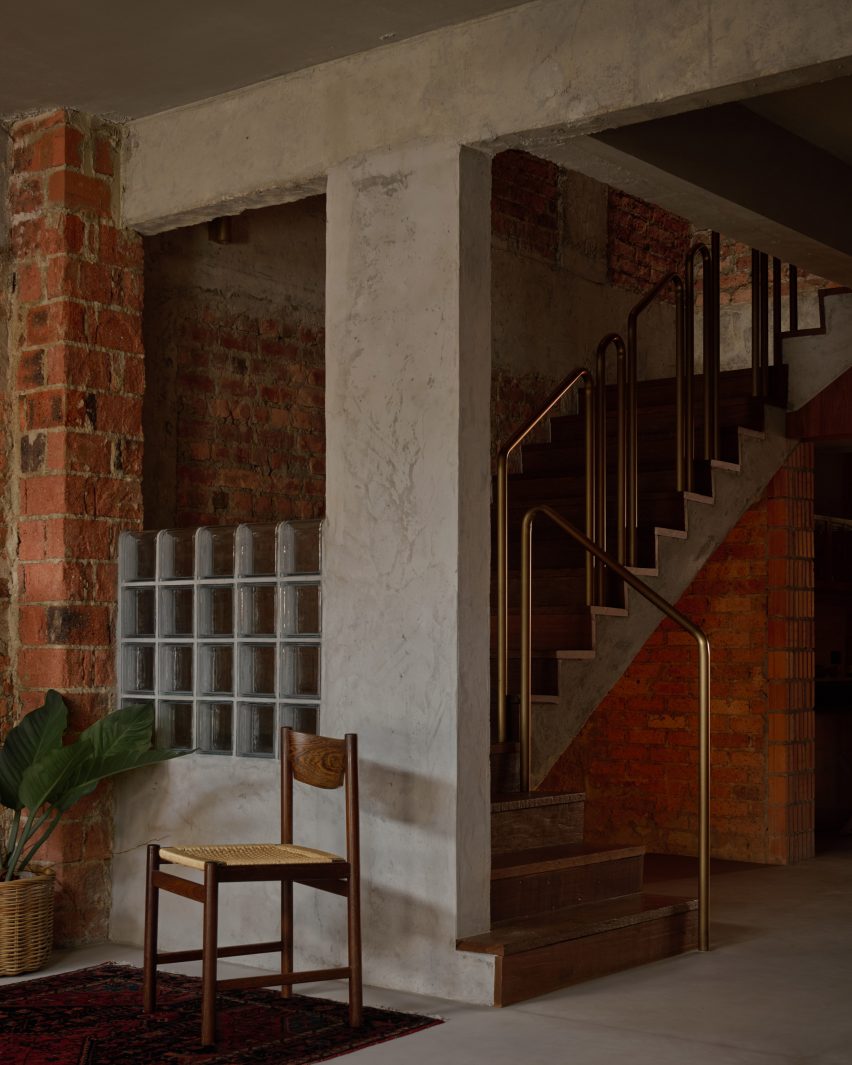 L Architects unmasked the original features of the house
Across the house, the L Architects team – comprising Lim, Tse Lee Shing and Loo Quan Le – removed and reorganised some of the non-load-bearing walls to improve cross-ventilation.
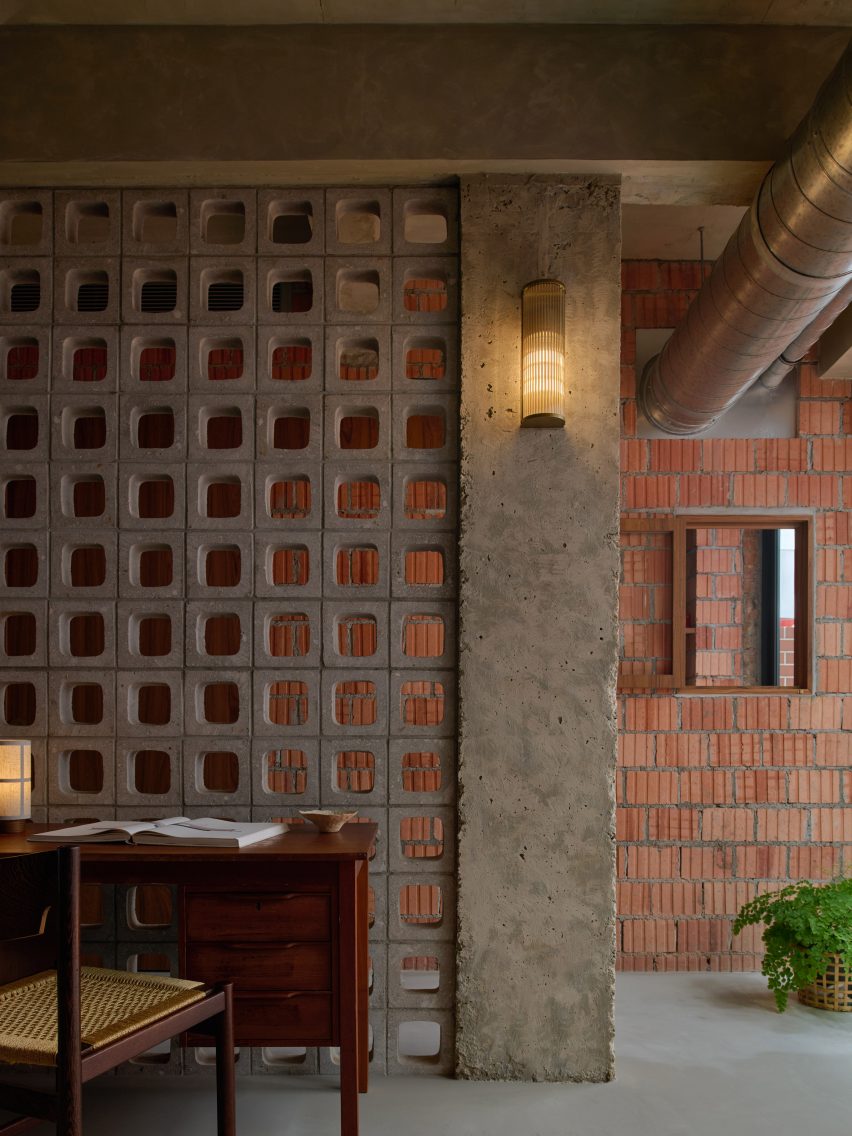
Newly-built walls made of modern three-hole bricks were erected. On the ground floor, these were teamed with sliding doors and perforated screens to divide the common areas.
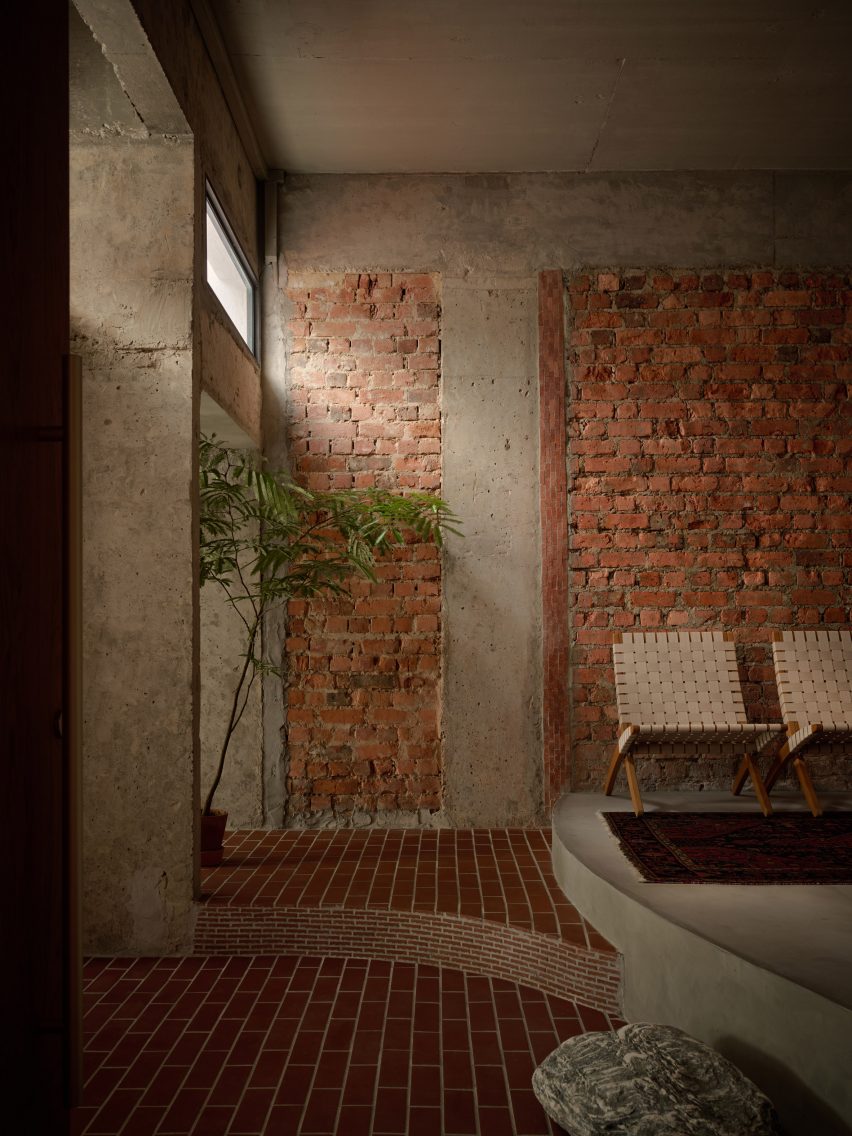
While carrying out a test removal of the wall plaster, the team discovered English bond brickwork underneath, which they decided to unmask, complemented by concrete pillars and beams.
Suzuko Yamada Architects casts furniture within walls of concrete Japanese house
“As we removed the plaster, a lot of the mechanical and electrical items, like the old wiring and its conduits, were also removed,” explained Lim.
“Upon removing these items, we start to see the grazed tracks on the walls like battle ‘scars’. We convinced our client to retain it as part of the historical story of what this house has gone through,” she added.
On the first floor, false ceiling boards were peeled away to uncover the original pitched ceiling with exposed timber rafters.
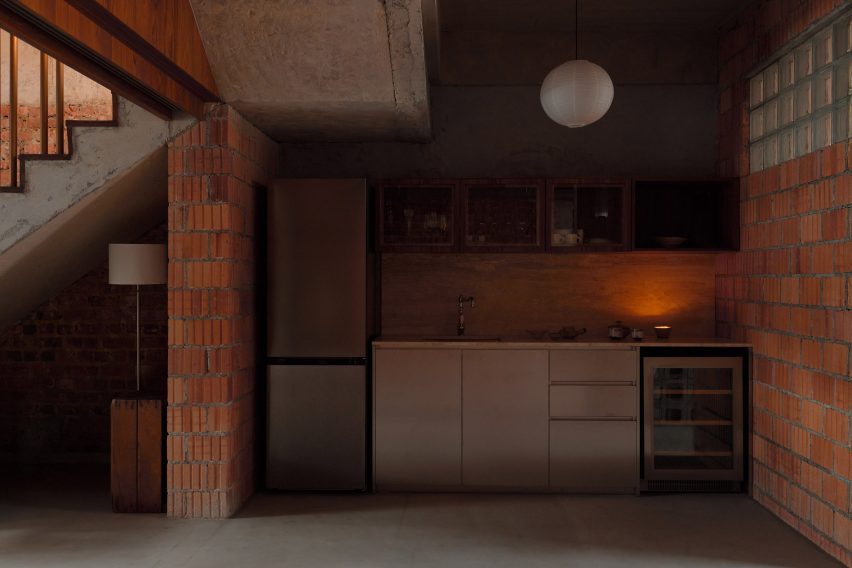 Stainless steel surfaces cover the kitchen
Solid timber furniture was sourced for the residence, including a vintage bed and study table that had been sitting in the client’s storage for several years.
Bespoke reclaimed timber benches were created for the foyer and bedroom and complemented by teak-covered built-in carpentry that is dotted across the space.
Cement screed flooring features on the ground floor, complemented with chestnut-hued timber flooring on the first floor.
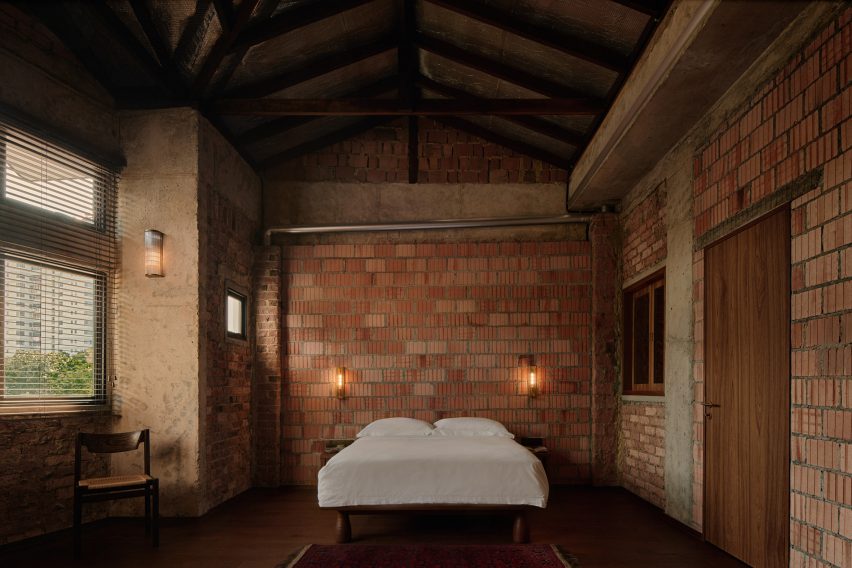 A pitched ceiling was uncovered in the primary bedroom
The tactile material palette of the residence is contrasted by stainless steel surfaces in the kitchen and exposed mechanical services, including ducts and rainwater harvesting pipes.
In the bathrooms, L Architects installed glazed subway tiles mimicking the proportions of the bricks forming the original walls.
“The house must represent the current moment of when the renovation took place, resulting in a harmonious mix of both the past and present,” Lim commented.
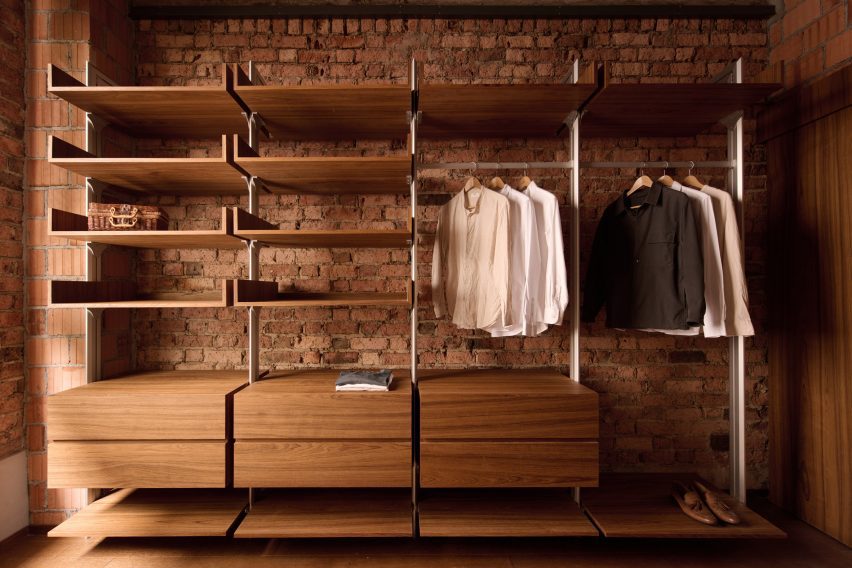 English bond brickwork features throughout
L Architects is a Singapore-based architecture office founded by Lim in 2016. Previously, the studio used double-bullnose bricks to overhaul a flat in Singapore, for which it was named the winner of the residential interior (small) category of the Dezeen Awards 2025.
Elsewhere in the country, Open Studio turned a 1960s school hall into a pickleball court and Park + Associates completed Singapore’s “first multi-storey 3D-printed house”.
The photography is by Jovian Lim.