
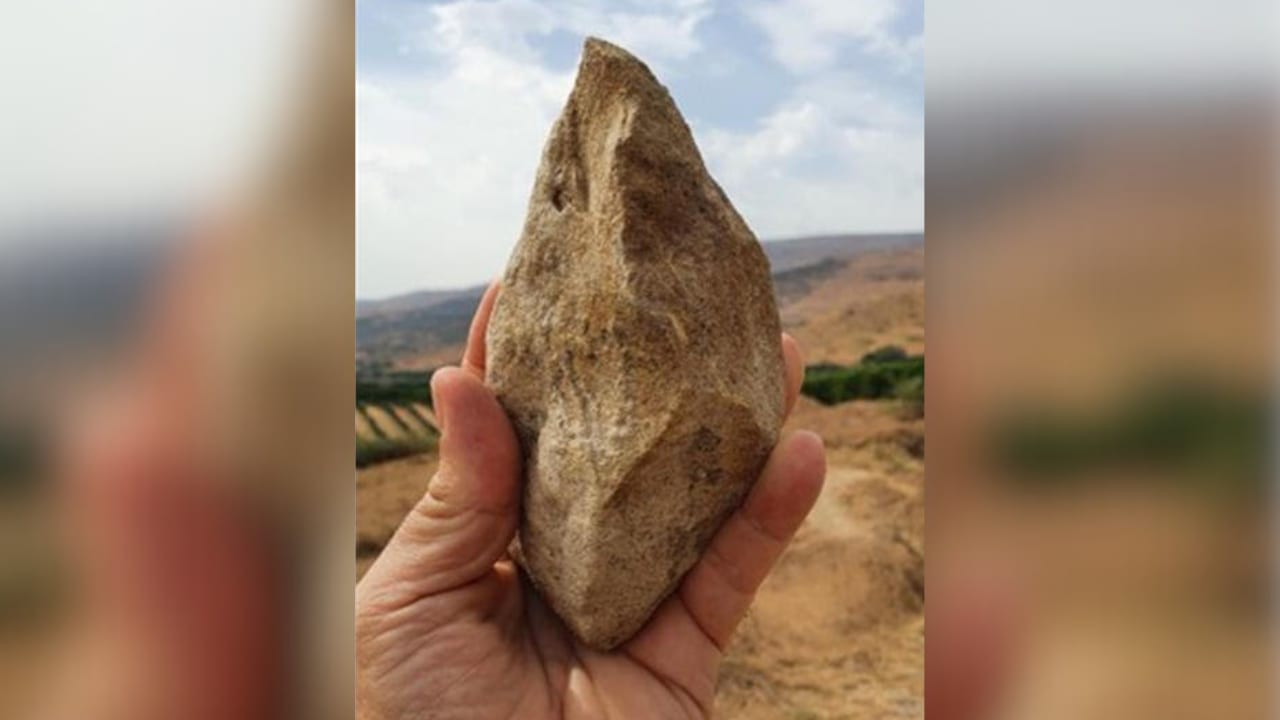
Ubeidiya, a prehistoric site in the Jordan Valley, has been dated by researchers to be at least 1.9 million years old, according to a new study from the Hebrew University of Jerusalem, the University of Haifa, and the University of Tulsa.
According to a Thursday statement released by Hebrew University, researchers used three different methods to date the site, challenging the preexisting notion of the site being between 1.2 and 1.6 million years old.
The first method, known as cosmogenic isotope burial dating, measures rare isotopes created when cosmic rays strike rocks of the surface. Once the rocks are buried, the isotopes begin to decay “at a predictable rate,” allowing researchers to learn how long they have been underground.
The second method was done by examnining traces of the Earth’s ancient magnetic field preserved in the site’s lake sediments, which “lock in the direction of the planet’s magnetic field at that moment,” the statement explained. Researchers then compared them against known magnetic rotations in Earth’s history in order to create a timeline.
However, some of the initial readings suggested that the sediment was around three million years old, which didn’t match with any other findings, leading researchers to believe that the sediments had been moved around and redeposited over thousands of years by natural geological processes.

The third method used by researchers was the uranium-lead dating of fossilized freshwater snail shells in order “to establish a minimum age for the layers in which the stone tools were discovered.”
All three methods presented the same answer.
How did early humans migrate?
The new dating also sheds light on how early humans made and carried their tools.
At Ubeidiya, archaeologists also discovered found two different types of stone tools: the simpler Oldowan tradition, and the more advanced, carefully crafted Acheulean style involving hand axes.
“The ‘Ubeidiya Formation has long interested researchers because it preserves early evidence of the Acheulean culture, characterized by large bifacial stone tools found in association with rich faunal assemblages, including species of African and Asian origin, some of which are now extinct,” the statement said.
Based on the findings, researchers approximate that both tool-making traditions had been used by different groups of early humans migrating from Africa at roughly the same time, rather than one tradition gradually replacing the other.
The research paper titled “Complex exposure-burial history and Pleistocene sediment recycling in the Dead Sea Rift with implications for the age of the Acheulean site of Ubeidiya” is now available in Quaternary Science Reviews