

This is the 83rd instalment in a series on dementia, including the research into its causes and treatment, advice for carers, and stories of hope.
Doing “brain training” tests can make me a bit nervous. The anxiety triggers silly mistakes, and then “poor” results make me more anxious – especially when they are dementia tests. What if I fail, or my score points to a suboptimal brain response?
I am also suspicious of them: how could an online test measure brain response accurately, and – even more importantly – how does that test relate to supporting brain health?
It seems that the right tests can help. The results of a study published this month confirm that one specific type of cognitive training – speed training – can significantly reduce the risk of Alzheimer’s disease and related dementia even years after that training took place.
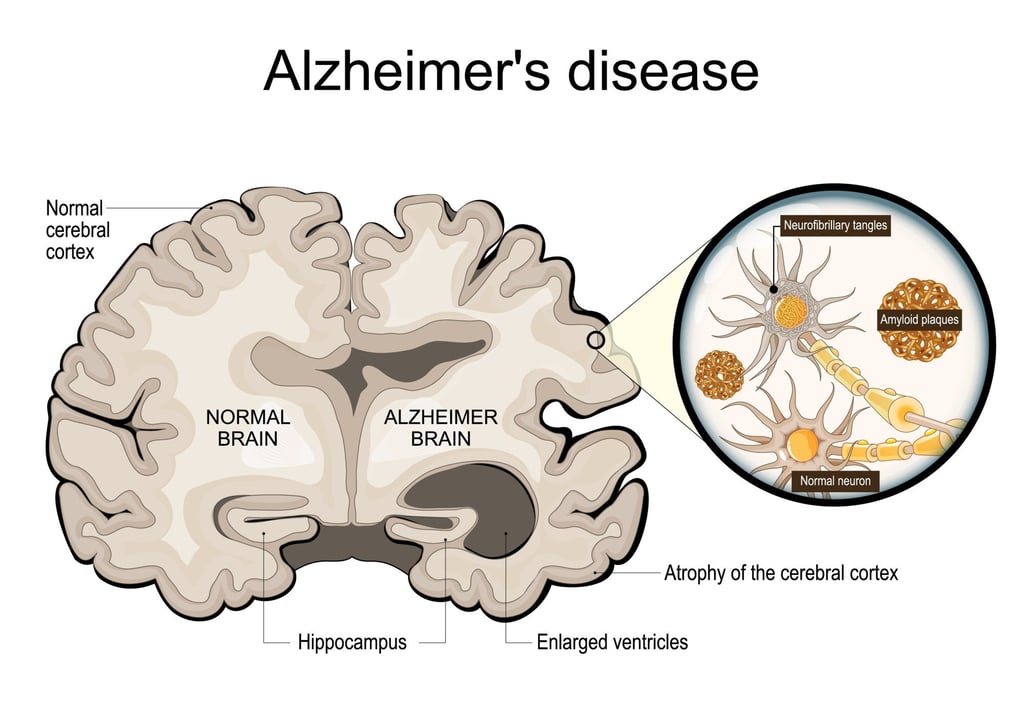 An illustration of a cross-section of a normal brain (left) and one of a brain damaged by Alzheimer’s disease. Photo: Shutterstock
The original study upon which these results are based – the Active study, for Advanced Cognitive Training for Independent and Vital Elderly, funded by the US National Institute on Aging and the National Institute for Nursing Research – involved 2,800 people over the age of 65.