
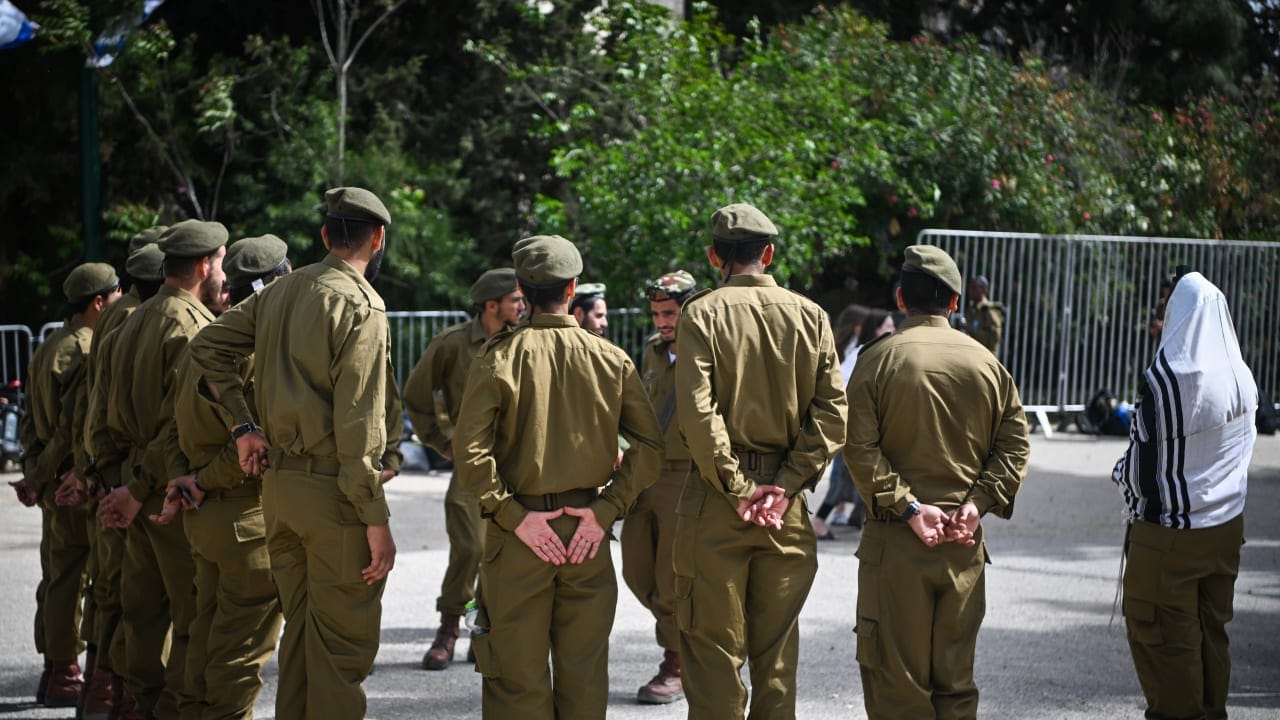
6,621 complaints were filed in 2025 by IDF soldiers against the military for various kinds of mistreatment, the Defense Ministry Complaints Ombudswoman announced on Monday in its annual report on the subject.
Complaints in 2025 range from deficient vehicle defenses to racism to blocking medical attention for certain soldiers to invasion of privacy to abusing military drivers for personal trips to unreasonable delays in granting security clearances, wrote Brig. Gen. (res.) Racheli Tevet Wiesel.
6,615 complaints were dealt with in 2025, keeping pace essentially with the number of complaints filed.
Of the new complaints filed, 3,134 were filed by rank and file mandatory service soldiers, 1269 by reservists, 965 by career officers, 847 by personnel in non-IDF sections of the defense establishment, and another 406 other assorted complaints.
The volume of complaints was comparable to 6,777 filed in 2024, with the most noteworthy trend being a 40% spike in complaints by career officers compared to two years ago.

While mandatory service complaints remain the largest issue, the relative reduction in reservist complaints and the relative spike in career officer complaints make this issue more noteworthy for this year’s report.
Typically, career officers file fewer complaints either because they have better conditions to start with, find it easier to address their complaints with superiors with whom they have a closer-to-equal relationship, or have greater personal resilience to handle adversity in the military than younger, less experienced soldiers.
In contrast, during the two years of war, when interest groups sprang up to defend the huge mass of mandatory service soldiers or the still large mass of reservists, career officers felt the least supported.
They have felt, in many instances, that the military has dumped additional duties on them to avoid fighting battles with reservists or mandatory soldiers, let alone the haredi (ultra-Orthodox) sector, which the government has made no real attempt to draft in larger numbers.
58% of the complaints filed by career officers were found to be justified, versus the broader average of 52% being found justified out of all of the complaints.
This higher percentage is consistent with career officers only complaining when there is a clearly problematic situation and having an unambiguous sense of how the army generally operates and should operate.
31% of career officers complained specifically about low pay.
Of the 52% found justified, 18% have already been corrected or are in the process of being corrected.
Even in cases where the Defense Ministry did not find a complaint justified, some lack a way to establish what is true between two contradictory narratives of the complaining victim against the alleged offender – sometimes the ombudswoman gets involved.
For example, she said that if a large volume of unprovable individual complaints is filed against the same commander, she may intervene with that commander’s commander.
In one such case, the commander was later fired from their position after additional scrutiny by the Defense Ministry revealed other problematic behaviors.
Complaints specific to reservists have included releases from duty with improper documentation, incorrect documentation of the number of days served, and underpayment of salary or other rights and perks due to errors in the documentation system.
New recruits to the IDF, as usual, complained about overly long entry processes, including burdensome evaluations of their psychological fitness to serve as soldiers.
IDF commanders accused of racist comments
Regarding racism, most of the complaints are not of open or official racism per se, such as being excluded from a job in the army due to issues of race.
Rather, they are cases of humiliation where a commander might call a dark-skinned soldier various politically incorrect or disparaging racial slurs, or make some other provocative comment to a soldier with some other ethnic background, such as that they “look like a terrorist.”
According to the Defense Ministry, there were cases in which certain commanders repeated such behavior, and complaints were made to them, but they ignored them until more official complaints were filed with the Defense Ministry.
In yet another case, a soldier filed a complaint that a reprimand from a mid-level commander left him depressed and considering hurting himself.
In response, the commander said, “So commit suicide. Take your weapon and commit suicide.” At the time, the senior brigade commander verbally reprimanded the mid-level commander. However, the ministry said that an additional, more official reprimand was added to the mid-level commander’s permanent file to impact that commander’s future career path and perception of the severity of what she had done.
Another commander assaulted a soldier while they were deployed in Lebanon.
The soldier’s footwear was not all lined up properly, leading the angry commander to cut off part of the sticking-out portion of the soldier’s pants. During the cutting motion, the commander also partially cut the soldier.
This was done in front of the entire unit and led to the commander being court-martialed.
Many soldiers of all backgrounds complained that the IDF has been inconsistent or oppressive in allowing them to take vacations during the wars.
This was highly problematic because the soldiers actually needed vacations more than during the pre-war era, given the length, intensity, and trauma of their rounds of lethal operational fighting.