
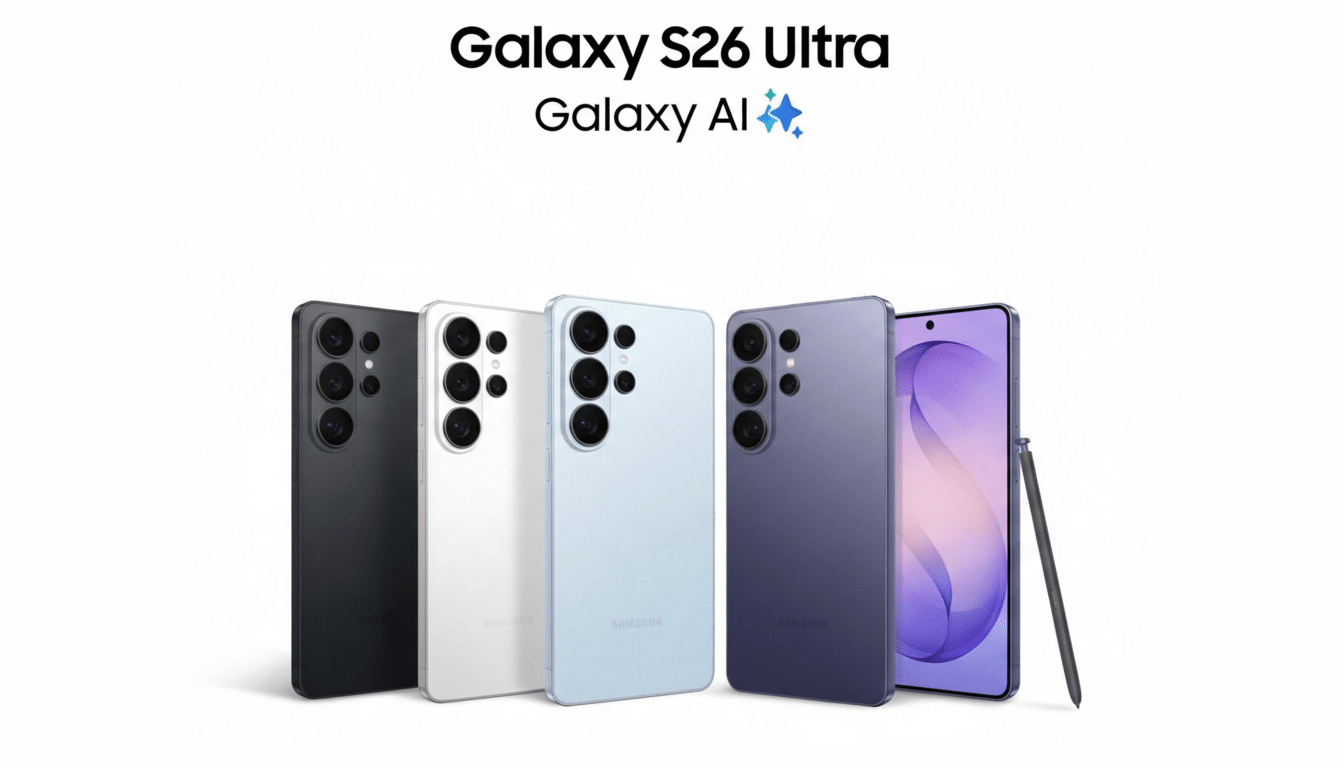
A credible leaker claims Samsung’s next Ultra phone will debut a switchable Privacy Display that narrows viewing angles to combat shoulder surfing. The reported design relies on microscopic gratings and prism-like optics embedded in the screen stack to deflect off-axis light away from bystanders while preserving a clear, straight-on view for the user. The schematic shared on social media is unverified, but the physics behind it tracks with known optical engineering.
How the Switchable Privacy Display System Could Work
According to the leak, the display behaves normally until the user toggles privacy mode. At that point, voltage is applied to targeted layers in the panel, revealing a diffraction grating—think of it as a nanoscopic picket fence etched into a transparent film. Light traveling at steep angles encounters the grating first, which alters its path via diffraction and redirects it upward at angles that are unfavorable for viewing.
Those redirected rays then meet a prism-inspired layer near the top of the stack. Because of refractive index contrasts and the severe incidence angles, much of this off-axis light undergoes total internal reflection, pushing it back into the panel instead of toward prying eyes. Light that comes straight from the pixel to the viewer’s eyes continues largely undisturbed, which preserves the on-axis image while shrinking the readable cone.
In everyday terms: straight-ahead looks normal, while side glances see washed-out content or a dark blank plane. The concept echoes diffractive optical elements used in AR waveguides and anti-glare films, adapted here to actively manage viewing angles on demand.
How It Differs From Micro‑Louver Filters
Traditional privacy accessories use a passive “micro‑louver” film—tiny vertical blinds that physically block oblique light. Leaders like 3M have documented visibility windows around ±30° from center on many filters, a workable but blunt solution that costs brightness and can add sparkle or moiré. Laptop integrations such as HP’s Sure View implement similar concepts within the LCD stack to narrow the field on command.
The approach described in this leak is more nuanced: instead of merely blocking light, it steers and traps it using diffraction and internal reflection. That opens the door to finer control of the privacy cone and potentially better retention of central brightness and color accuracy. An electronically controlled layer also means the effect can be tuned by software profiles—strong privacy in transit, a wider cone at a desk, or off entirely.
Potential Trade-offs and Expected Display Performance
No optical trick is free. Diffractive structures can introduce rainbowing or tint shifts at certain angles if the grating period closely matches visible wavelengths (roughly 400–700 nm). Engineers typically mitigate this with multi-order suppression, aperiodic patterns, or pairing with prism films to smooth color artifacts. Expect Samsung to balance privacy strength with minimal chromatic side effects.
There is also the energy and brightness math. Redirecting or reflecting light generally reduces net luminance; passive privacy films on monitors often shave double-digit brightness. An integrated OLED solution might aim to keep on-axis brightness loss under 10% in privacy mode, but it could still require a small power bump to compensate. Heat management and uniformity across millions of subpixels are nontrivial manufacturing challenges, especially when layering over thin-film encapsulation and polarizers.
Key metrics to watch in real testing include:
The half-gain angle (the point where brightness halves off-axis)
Contrast at ±30° and ±45°
Center luminance retention
Color accuracy (Delta E)
Independent evaluations from groups like DisplayMate or lab demonstrations at events hosted by the Society for Information Display would help validate the claims.
Why This Matters for Mobile Security and Privacy
Visual eavesdropping is not hypothetical. In the Visual Hacking Experiment conducted by the Ponemon Institute with 3M, “attacks” on office environments succeeded in 91% of attempts, often within minutes. Smartphones compound the risk because they are used everywhere—airports, trains, cafes—where sensitive email, healthcare portals, and financial apps are only a glance away. A built-in, one-tap privacy mode would remove the friction of carrying an external filter while letting users recover full viewing angles when collaboration matters.
Enterprises with strict compliance regimes—healthcare (HIPAA), finance (PCI DSS), and legal—have pushed for visual privacy controls on laptops. Bringing a credible, low‑penalty version to phones could accelerate corporate adoption and influence how rivals approach display stacks on next‑gen flagships.
What to Watch Next as Samsung Refines the Technology
The source of the shared schematic, posted by Ice Universe on X, has not been corroborated, and the images themselves appear rendered. Until official documentation arrives, treat the mechanism as an informed possibility rather than a guarantee. If confirmed, look for details on privacy cone width, brightness impact, color stability, and any battery implications. Also watch whether the feature is systemwide, app‑controllable, and compatible with always‑on display and high‑refresh modes.
If executed well, a diffractive‑prism privacy layer could be one of the most practical display innovations in years—less about pixel density bragging rights and more about everyday trust. The science is sound; now it’s a question of engineering tradeoffs and how well the final product balances clarity, efficiency, and discretion.