
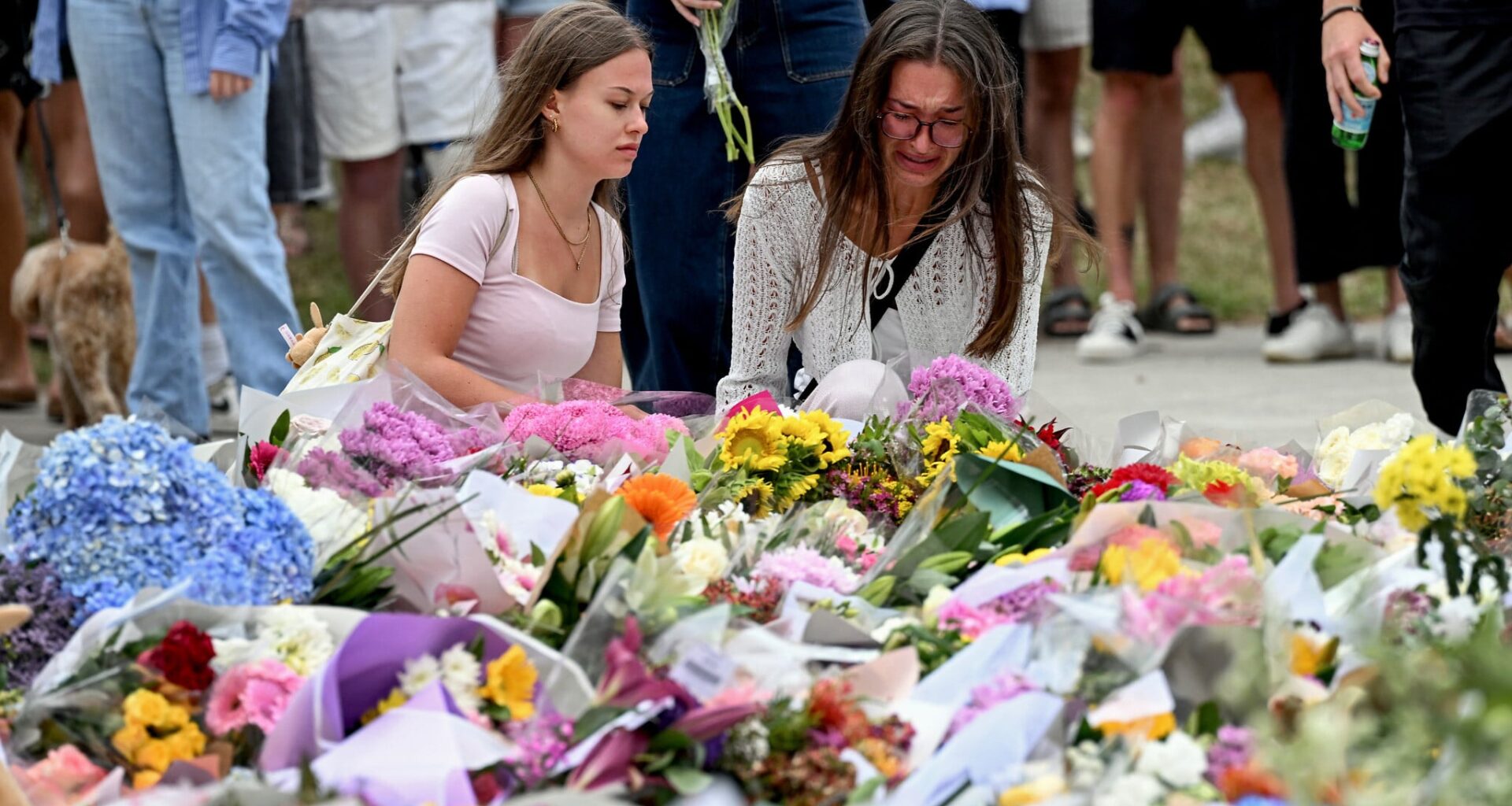
Australia on Tuesday opened a government-backed inquiry into antisemitism, after 15 people were killed in a terror attack targeting a Jewish event at Bondi Beach in December 2025.
The attack at the Hanukkah celebration shocked a country with strict gun laws and fueled calls for tougher controls and stronger action against antisemitism.
The Royal Commission, the most powerful type of government inquiry in Australia, which can compel people to give evidence, will be led by retired judge Virginia Bell.
It will consider the events of the terror attack as well as antisemitism and social cohesion in Australia, and is expected to report its findings by December this year.
In her opening statement at a court in Sydney on Tuesday, Bell said security arrangements at the Hanukkah event and intelligence ahead of it would form a major part of the commission.
Get The Times of Israel’s Daily Edition
by email and never miss our top stories
By signing up, you agree to the terms
“The commission needs to investigate the security arrangements for that event, and to report on whether our intelligence and law enforcement agencies performed to maximum effectiveness,” Bell said.
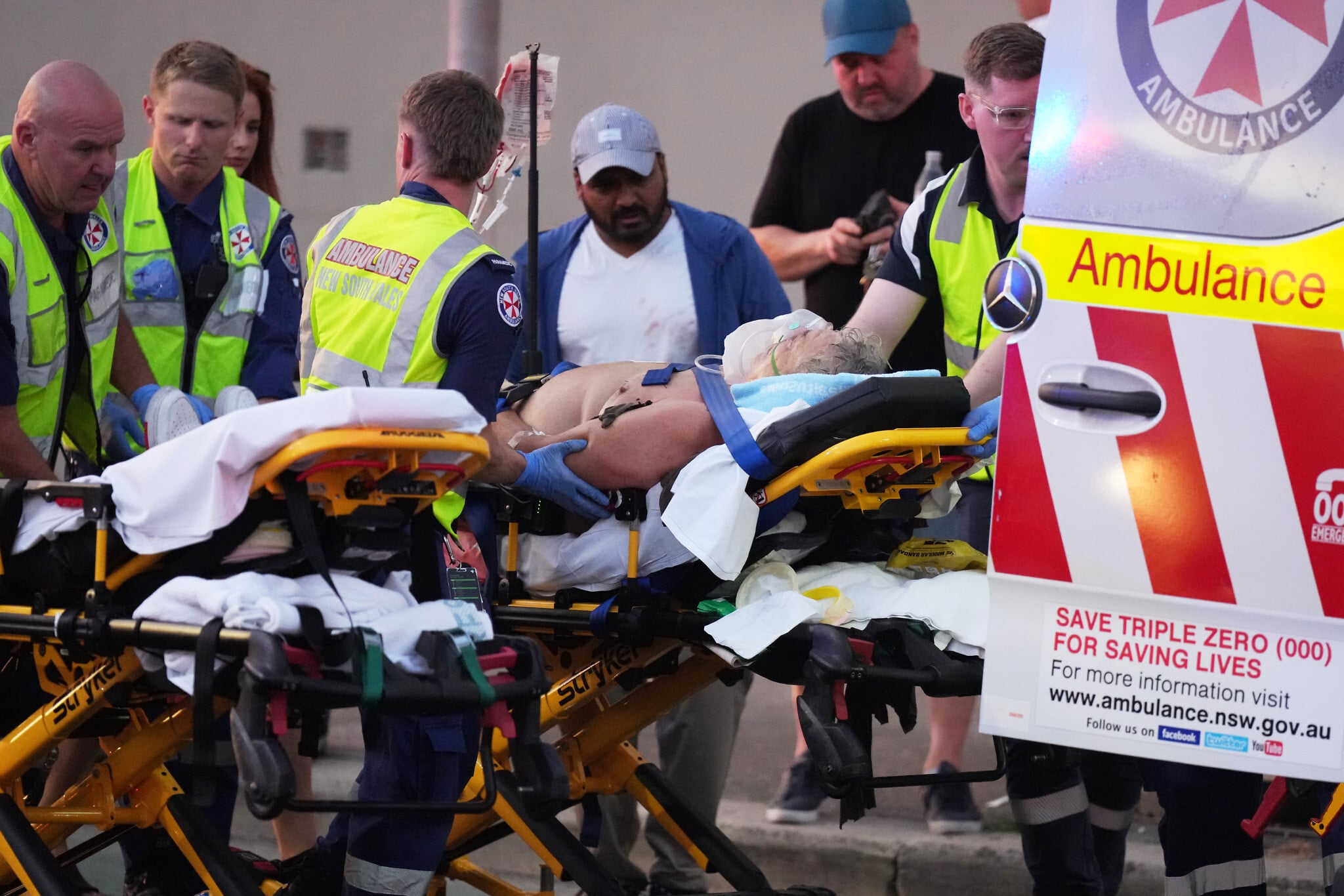
Emergency workers transport a person on a stretcher after a deadly terror shooting at Bondi Beach in Sydney, December 14, 2025. (AP/Mark Baker)
Police say the gunmen, Sajid Akram and his son Naveed Akram, were inspired by the Islamic State group.
Sajid Akram was shot dead by police at the scene, while Naveed Akram, who was also shot but survived, is currently facing charges including 15 counts of murder and a terror offense.
Limited scope of inquiry
Due to the ongoing legal proceedings, no potential witnesses in Akram’s trial will be called to give evidence to the commission, Bell said.
Bell said she plans to meet with victims’ families in private to explain some of the limitations of her inquiry.
Richard Lancaster, the top lawyer assisting Bell with the inquiry, said his team had sent dozens of requests to government and other agencies to produce documentary evidence, but the level of responses are “not presently where we would like it to be.”
There was no testimony heard or evidence given on Tuesday, and the commission is yet to determine when it will next sit.
Michele Goldman, CEO of the New South Wales Jewish Board of Deputies, said after the hearing that the inquiry would be an opportunity to showcase the community’s “horrific” experiences of antisemitism.
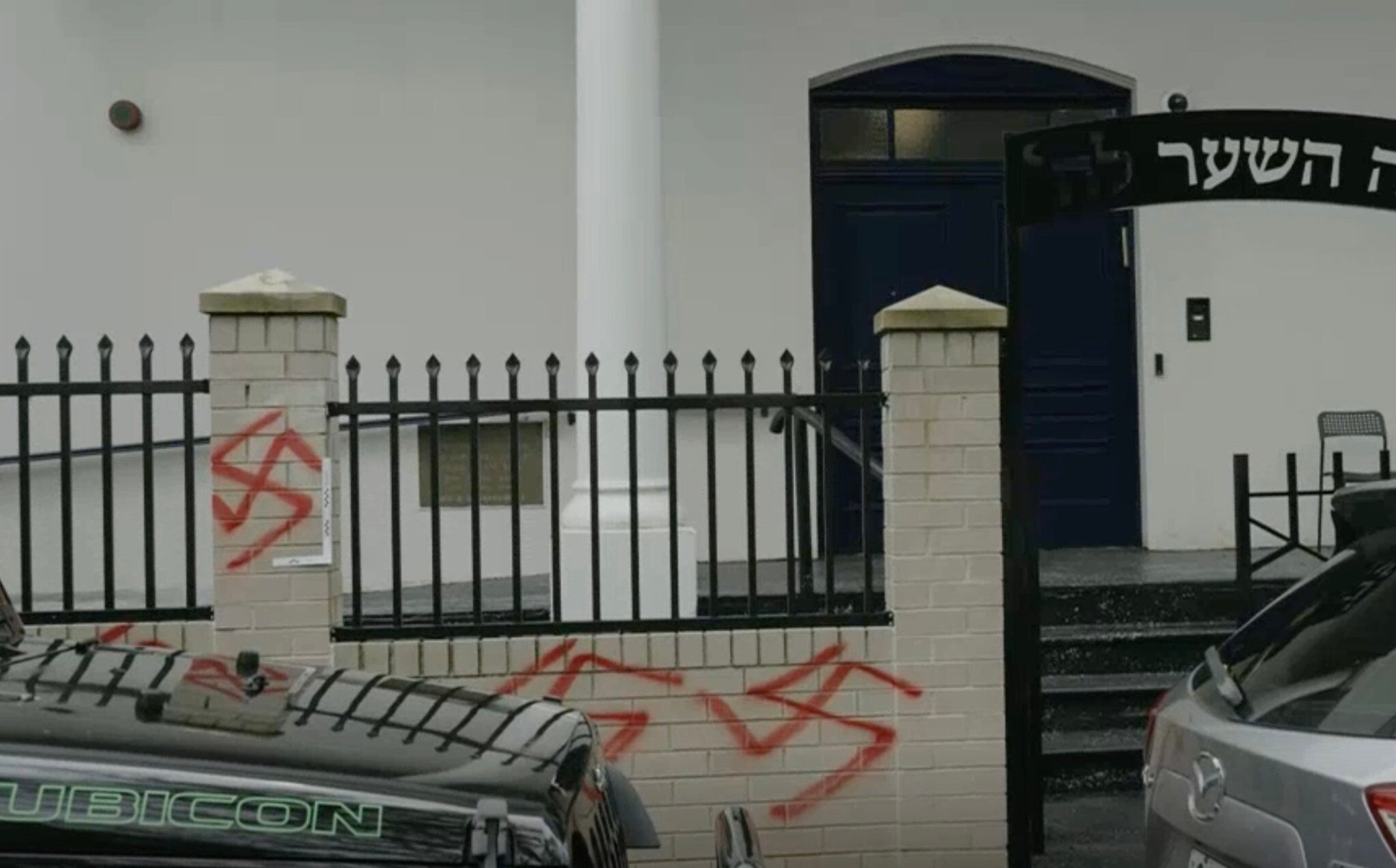
Swastikas daubed on a synagogue in Newtown on January 11, 2025, in Sydney, Australia. (Screen grab via ABC News)
But some people directly impacted by the attack would find it “very hard” to be barred from sharing their accounts with the inquiry, she said.
Australian Prime Minister Anthony Albanese had initially resisted calls to set up a Royal Commission, saying the process would take years, which attracted criticism from Jewish groups and victims’ families.
Australia’s 120,000-strong Jewish community has long complained that Albanese hasn’t done enough to protect them from rising antisemitism following the October 7, 2023, Hamas attack on Israel and the subsequent war in Gaza, and that his critical position on Israel has emboldened pro-Palestinian and anti-Israel activists to target Jewish institutions.

A handout photo taken and released by the Australian Prime Minister’s Office on December 15, 2025, shows Australian Prime Minister Anthony Albanese laying flowers at the Bondi Pavilion at Bondi Beach, the scene of a deadly terror shooting targeting a Hanukkah event, 15 people were killed. (AFP / AUSTRALIAN PRIME MINISTER’S OFFICE)
Albanese’s occasional statements of support for the community after the many attacks on Jews in the past two years have frequently been met with cynicism.
Many in Australia’s Jewish community say the government, and Albanese in particular, “abandoned” them, arguing that clear warning signs and a spate of antisemitic attacks were ignored in the lead-up to the Bondi massacre.
Since Hamas attacked Israel on October 7, 2023, sparking the Gaza war and setting off a tidal wave of antisemitism across the globe, Australia’s Jewish community has been among the hardest hit.
Australia has seen successive marches and protests that have included antisemitic rhetoric, as well as attacks on synagogues, schools and homes. Instances included a firebomb attack on a synagogue, two nurses who threatened to kill Jewish patients at their hospital, and the law enforcement discovery of a trailer filled with explosives, said to have been intended to cause a mass-casualty event at a Sydney synagogue.
Is accurate Israel coverage important to you?
If so, we have a request.
Every day during the past two years of war and rising global anti-Zionism and antisemitism, our journalists kept you abreast of the most important developments that merit your attention. Millions of people rely on ToI for fact-based coverage of Israel and the Jewish world.
We care about Israel – and we know you do too. So we have an ask for this new year of 2026: express your values by joining The Times of Israel Community, an exclusive group for readers like you who appreciate and financially support our work.
Already a member? Sign in to stop seeing this
You appreciate our journalism

You clearly find our careful reporting valuable, in a time when facts are often distorted and news coverage often lacks context.
Your support is essential to continue our work. We want to continue delivering the professional journalism you value, even as the demands on our newsroom have grown dramatically since October 7.
So today, please consider joining our reader support group, The Times of Israel Community. For as little as $6 a month you’ll become our partners while enjoying The Times of Israel AD-FREE, as well as accessing exclusive content available only to Times of Israel Community members.
Thank you,
David Horovitz, Founding Editor of The Times of Israel