
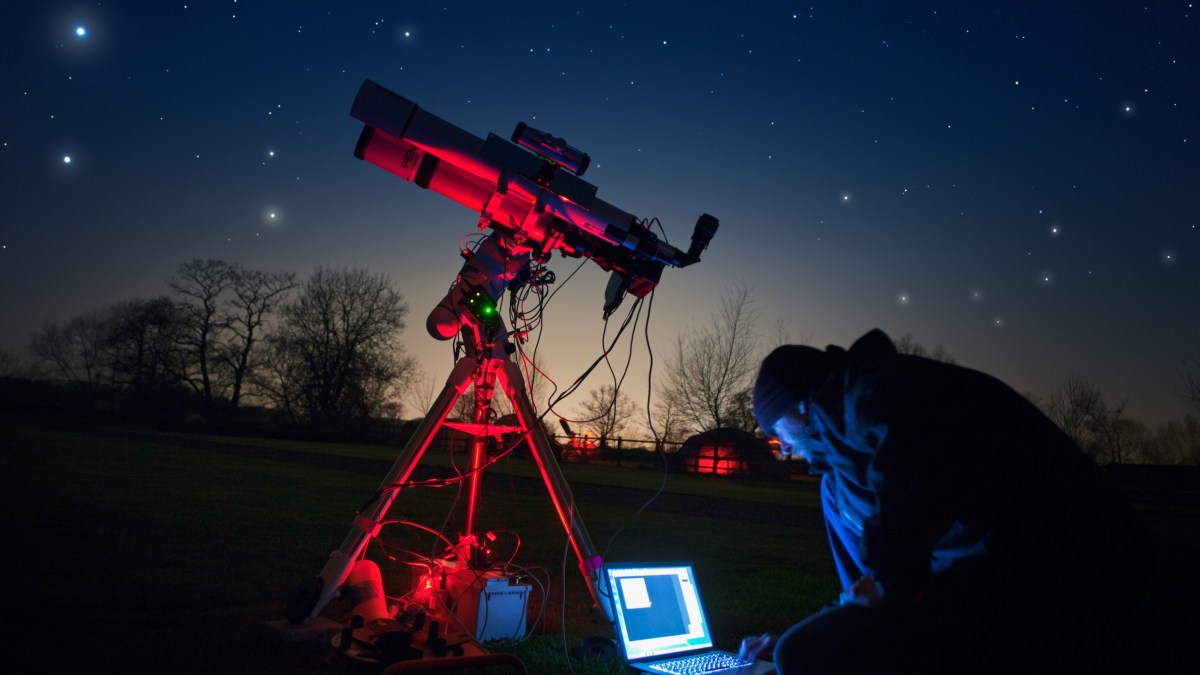
Look west shortly after sunset this week and, if the sky is clear, you may glimpse a rare treat: several of the solar system’s planets strung out across the twilight.
Astronomers call it a “planetary parade” — a moment when several worlds are visible in the sky at the same time. Over the next few days, Mercury, Venus, Jupiter, Saturn, Uranus and Neptune will all be above the horizon together. Four of them may be bright enough to be seen with the naked eye.
What is a planetary parade?
The planets always trace a broad band across the sky, along what is known as the ecliptic, because they orbit the Sun in roughly the same plane. From time to time, their differing speeds around the Sun place several of them on the same side of it, so they appear grouped together from our viewpoint on Earth: a parade.
As Shyam Balaji, a cosmologist at King’s College London, puts it, these alignments are “predictable geometrical coincidences”.
How rare are they?
That depends on how many planets you want in your parade. Seeing three at once is not uncommon. According to David Armstrong of the University of Warwick, the seeing four bright planets is “relatively rare”, occurring every few years. This time “the planets are best observable just after sunset, so this is one of the most convenient opportunities for several years,” he added.
When to look
In the UK, weather permitting, the view will be best on March 1, says Armstrong, though any clear evening in late February or early March will do. The best window is about 30 minutes after sunset. Too early and the sky is too bright; too late and the lowest planets will have slipped below the horizon.
• Supermassive new theory on what lies at the heart of our galaxy
You will need a clear western horizon (ideally over the sea or flat countryside), a cloudless sky and a little patience. The planets will only be well placed for about an hour after sunset. Let your eyes adjust and stay clear of bright lights (and the glare of your phone). For a moment, watch the machinery of the heavens turn.
What you’ll see
Be realistic. This is not a dramatic stack of worlds piled on top of one another. They are spread across a wide arc of sky.
Venus will be the showstopper: very bright, low in the western twilight. Jupiter will be higher in the sky — a steady, brilliant point further round towards the southeast as darkness falls.
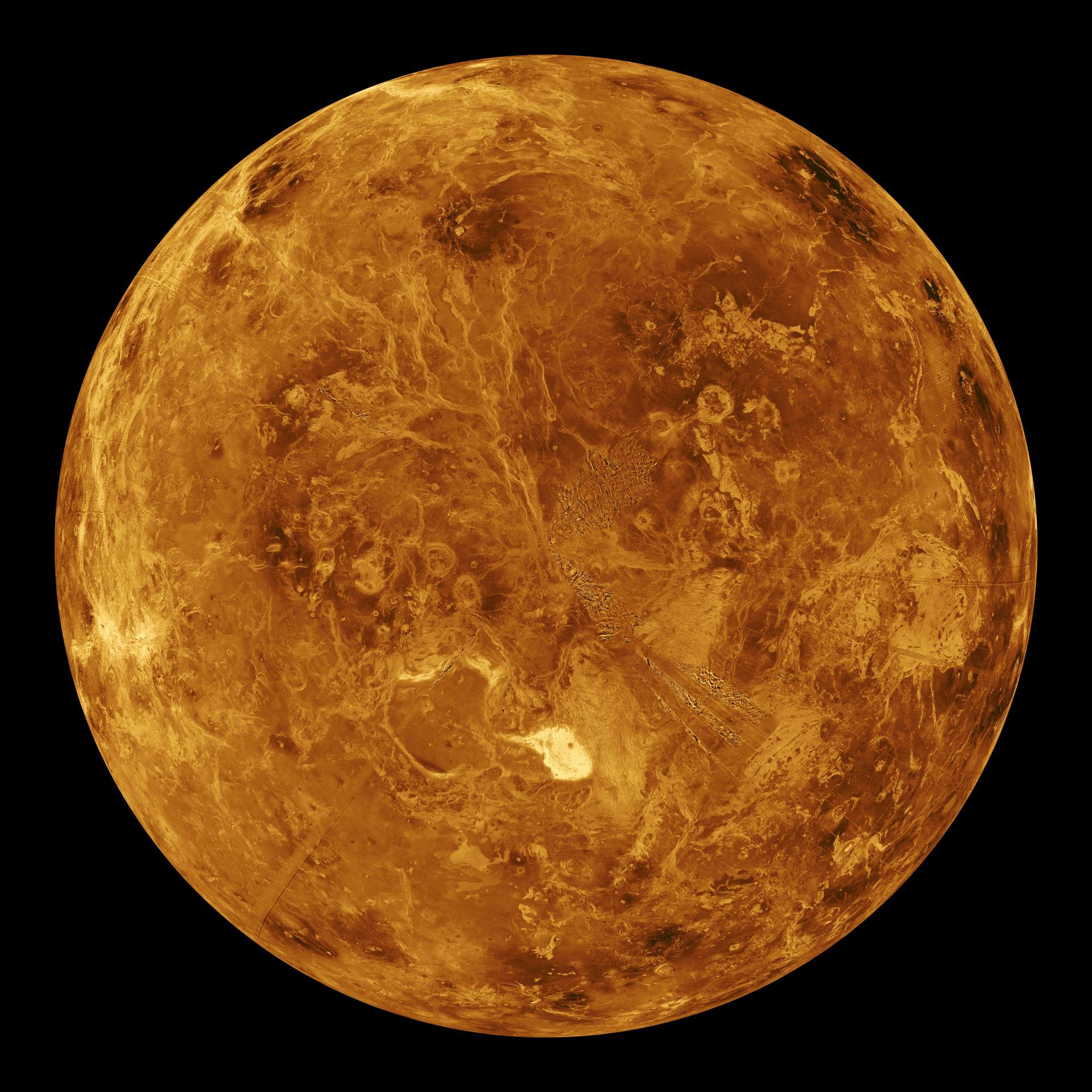
The northern hemisphere of Venus, as seen by Nasa’s Magellan spacecraft
NASA
Saturn will sit in the west with a distinctive yellowish hue, but will be sinking as the month goes on.
Mercury will be the most challenging: it will be faint, low in the sky, and easily lost in the glow of sunset. Robert Massey of the Royal Astronomical Society said: “When a planet is only a couple of degrees above the horizon, it is not easy to spot.” A flat, unobstructed view is crucial.
• February night sky: all eyes on the moon
Uranus and Neptune are there, too. But you will need a small telescope or binoculars to find them. Neptune in particular is too faint for the naked eye. Uranus is just about visible in theory, but extremely difficult in practice.
A bonus for binoculars
If you have binoculars or a small telescope, turn them towards Jupiter, says Armstrong. Even modest magnification can reveal up to four of its largest moons (Io, Europa, Ganymede, and Callisto) as pinpricks of light beside the planet. Saturn’s rings, too, can be visible — a sight that never quite loses its power to astonish.