
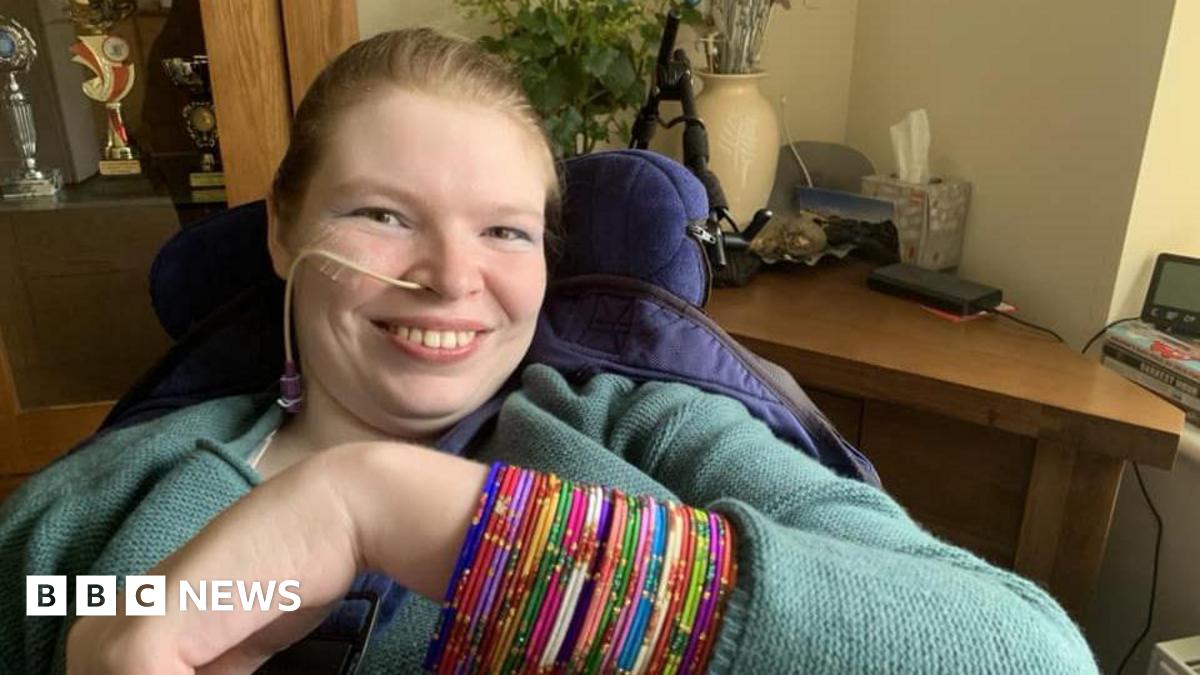
Ritchie has Ehlers-Danlos syndrome, a condition that affects the joints; functional neurological disorder, which impacts her mobility; Addison’s disease, a hormonal disorder, and epilepsy.
She has a tracheostomy and sometimes uses a ventilator. Able to speak when she was younger, she has primarily used eye-gaze technology to communicate since 2017.
Before her hospital admission, Ritchie had 24‑hour one‑to‑one nursing funded in her own home by NHS Continuing Healthcare (CHC).
She was studying for a master’s in sustainability at Southampton University, as well as acting as a charity ambassador and keynote speaker.
In 2023 and 2024 Ritchie was recognised as one of the most influential disabled people in the UK for her pioneering work supporting communication using eye movement.
She was admitted to East Surrey hospital last April with pneumonia and suffered further complications which prolonged her stay.
She wanted to be discharged back to her own home, but this did not happen.
Instead, her mother Christine Ritchie says care commissioners at NHS Sussex All Age Continuing Care (AACC) told them Ritchie would be going to a nursing home.
Ritchie refused.
On the day she was transferred, Ritchie told the BBC she was “devastated” and wanted to get back to her own home.
More recently, she explained: “In my own home, with my nurses, I feel safe and can see my friends and family easily.
“My dad visits me almost daily. I can have meetings easily and I am not dictated to by the home rules or policies.”
She said living at home gave her agency and control of her own surroundings – and the ability to use a wheelchair-adapted van to go out to events, shopping and university.
“Life will not be worth living if I cannot go home,” she said.
When she was taken from East Surrey Hospital to Temple Grove Nursing Home, Ritchie’s mother said her powered wheelchair was “switched off and pushed”.
“She didn’t consent to go,” she told the BBC. “It’s absolutely horrific.”