
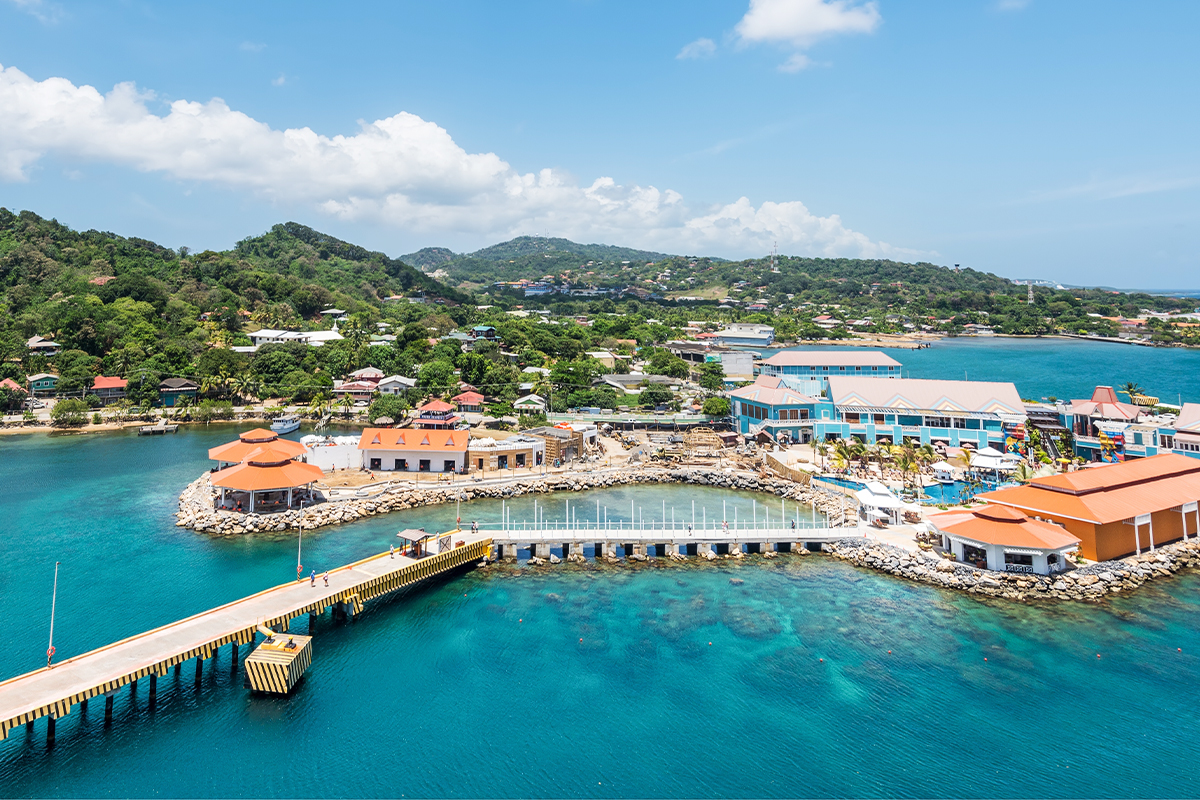
Recruitment for Phase 1 trial of mRNA therapy begins in ‘special economic zone’ on the Caribbean island of Roatán.
Longevity biotech Klothea Bio says it has begun enrolling participants into a Phase 1b clinical trial designed to explore whether boosting levels of a longevity-associated protein can influence biomarkers linked to human lifespan. The study of an experimental alpha klotho mRNA therapy is being conducted at the GARM Clinic in Próspera, a special economic zone on the Honduran island of Roatán, and home to several companies pursuing unconventional clinical development strategies.
Human trials of longevity interventions are challenging for several reasons – not least because aging unfolds over decades and there are still no universally accepted surrogate biomarkers, all of which complicates trial design, powering, and approval pathways. As a result, most longevity biotech companies typically evaluate their drugs around specific diseases rather than aging as an indication. With this trial, it appears Klothea is attempting to break the mold.
The company was launched by Advantage Therapeutics in 2024 to concentrate specifically on interventions targeting the klotho protein, first identified in 1997 and widely studied for its association with healthier aging. Higher circulating levels of alpha klotho have been linked to organ protection and repair across multiple systems, including the cardiovascular, renal, neurological and skeletal systems, although translating these findings into human therapeutics has proven technically challenging.
Boosting klotho levels in the body
Klothea’s experimental therapy, AKL003, uses a lipid nanoparticle formulation to deliver a proprietary mRNA sequence intended to prompt the body’s own cells to produce the protein. Describing its strategy as “klotho hormone supplementation,” the company believes the approach could allow repeat dosing and more consistent expression than earlier attempts to increase klotho levels. The randomized, double-blind, placebo-controlled study aims to evaluate safety, tolerability and biological activity in a small cohort of 21 healthy adult volunteers aged 25 to 75.
“This Phase 1 study is an important step to evaluate the safety and tolerability of repeat dosing and to better understand how AKL003 influences circulating alpha Klotho protein levels in humans,” said Klothea’s Chief Science Officer Carmela Abraham. “We are excited to begin enrollment and to advance our program with scientific rigor and a strong focus on participant safety.”
While mortality outcomes would be impractical to measure in a study of this nature, researchers will also look at a broad set of exploratory measures associated with aging and healthspan, including inflammatory and metabolic markers, cardiovascular assessments, sleep and recovery data collected through wearable devices, mitochondrial function and patient-reported quality-of-life outcomes. Investigators will examine epigenetic aging clocks and composite functional scores in an effort to capture potential shifts in biological age.
“This trial will monitor for signals of extended human lifespan,” said Klothea CEO Dr Agustin Fernandez. “Since direct observation of mortality is infeasible in this setting, we are using surrogate biomarkers correlated with longevity and all-cause mortality. These biomarkers are selected based on geroscience evidence, such as geroprotectors and predictive of reduced biological age, lower disease risk, and improved health span; these include, of course, Klotho.”
An alternative regulatory model
Recruitment in the trial requires participants to travel to Roatán. Próspera, where the trial is being conducted, operates as an autonomous special economic zone with its own legal and regulatory framework. Designed to attract international investment, the jurisdiction promotes lower taxation, streamlined governance and policies framed around medical freedom and entrepreneurial experimentation.
Niklas Anzinger is an entrepreneur in Próspera, where he is focused on building out its biotech ecosystem with “network city” project Infinita.
“Klothea’s trial is a great validation for Prospera’s regulatory model,” he told us. “Companies are required to carry liability insurance, effectively making the insurer a regulator – with more flexibility but the same or even stricter safety standards. This model is gaining credibility: US states like Montana and New Hampshire are now adopting elements of the same approach.”
The island has become an emerging hub for experimental biotech initiatives. Gene therapy company Minicircle has conducted studies at the same GARM Clinic site, and celebrity biohacker Bryan Johnson received its follistatin gene therapy there. Last year, we reported on Unlimited Bio, also based in Próspera, and its ambitions to run “dozens” of preventive genetic therapy trials over the next decade.
Whether the data generated in Klothea’s trial will help advance the case for alternative regulatory approaches or not remains to be seen, but many in longevity will be keenly interested in the safety outcomes and biomarker trends emerging from this small cohort.
Photograph of Roatán: byvalet/Shutterstock