
Some Israeli officials are considering paying compensation in a small number of high-profile cases in which Palestinians were killed during the war, The Jerusalem Post has learned.
The idea has many similarities to Israel’s compensation deal with Turkey after the 2010 Mavi Marmara flotilla incident.
One of the goals would be to free Israel from the trap it has been in with its critics in the form of a black-and-white war crimes debate which posed a false choice: Is Israel all evil or all good? Another goal would be to boost Israeli legitimacy globally, which has taken a massive hit.
A controversial way out of the black-and-white debate, which the Post understands is supported by a variety of former and current top Israeli legal officials, with lots of legal precedent, and which Prime Minister Benjamin Netanyahu has used before with Turkey, is called “ex gratia.”
Before discussing “ex gratia” in detail, the Netanyahu-Turkey narrative in some ways tells the story best.

In May 2010, a flotilla of small naval ships, including the Mavi Marmara crewed by a number of Turkish citizens, made its way into the Israeli-Gazan maritime zone where the IDF was enforcing (and still enforces) a blockade of Hamas.
The goal of the flotilla was to break Israel’s naval blockade.
Flotilla ships ignored Israel Navy warnings to turn back, and eventually naval forces started to board the ships with the intention of taking control in a nonviolent fashion so as to be able to bring them to shore at Israeli ports.
However, the operation to take control of the Mavi Marmara was clumsily planned, including poor intelligence collection about some of the activists onboard who, intelligence failed to note, were prepared to resist IDF troops violently.
Some of the Turkish activists onboard used crowbars to attack and beat Israeli soldiers as they sought to board, seriously wounding some.
Acting in self-defense, but without having been carefully coached about the possibility of hand-to-hand combat with activists who had crow bars but not guns, the soldiers opened fire, killing nine Turkish citizens.
Israel contended that the soldiers were within their self-defense rights, but still regretted the result. It had never wanted to kill Turkish citizens on the boat, and one way Israel eventually patched up its relations with Turkey afterward (at least for a few years) was by making an ex gratia payment of $20 million as a show of goodwill and of regretting the loss of life.
“Ex gratia” means “by favor” or “out of grace.” The closest translation in Hebrew is “lifnim mishurat hadin.”
When an action or payment is done or made ex gratia, it is carried out voluntarily, out of kindness or grace, and any payment given is made without the giver acknowledging any liability.
Crucially, “ex gratia” has nothing to say about moral equivalence. It is irrelevant that Hamas will not make reparations for the 1,200 people it massacred on October 7. The only question is whether it can be said to be a right thing to do and whether it is in Israel’s interests.

Former and current top legal officials have said that sometimes acknowledging that Israel is not perfect and admitting specific flaws can help the Jewish state’s image.
The world has been inundated with the suffering of Gazans, and frequently it seems that the world thinks that Israel doesn’t care or is at most ambivalent, even if it facilitates third parties providing humanitarian aid. There are probably even a certain number of Israelis who believe the Gazans “deserved it,” whether officially Hamas or not. But not caring about the suffering of innocent Palestinians, aside from the moral quandary, can make Israel appear less sympathetic even in the eyes of those in the West who generally support the Jewish state.
Israel’s legitimacy strategy
The concept and broader strategy here, in terms of Israel’s interests, is focusing in on fair-minded persons instead of hardline Israeli critics to try to repair the country’s global legitimacy.
Hardline Israeli critics probably will not stop going after Israelis, and in many cases non-Israeli Jews, no matter what Israel does. But there are fair-minded Americans, Europeans, Canadians, Japanese, and others who want to be on the Jewish state’s side if it finally gives them an honest reason and accounting, including some kind of a reckoning.
Convincing fair-minded persons to remain on Israel’s side is not just an exercise in truth and in public relations, but is likely to have very large practical implications.
For example, the Democratic Party will likely win back one or both houses of the US Congress in the November 2026 midterm elections, and there is a strong chance also for Democrats in the 2028 elections based on past history of the constant cyclical vacillation of American political power between the two main parties.
Israel has lost support among both Democrats and Republicans during the war, but with Democrats it might already be at or near a critical tipping point where it could turn party leaders against Jerusalem in larger ways, something which, until the war, was limited to a small group of radicals.
There are nine months until the midterms and less than three years until the next presidential election for the Jewish state to start trying to win back Israel as a bipartisan cause.
How will that work given that nearly all Israelis, from Right to Center to most of the Left, do not believe Israel as a whole committed war crimes (even if some rank-and-file individuals might have, at least one of whom has already been convicted of beating a detainee), whereas even many fair-minded Americans have doubts?
According to many former and current Israeli legal officials, “ex gratia” may be the answer.
To be sure, winning back legitimacy with portions of the US, Europe, and elsewhere is far from the only threat Israel faces.
At this moment, the Iranian ballistic missile threat is by far the most dangerous.
But after that threat, the possibility of losing US, European, and other support on a long-term basis is likely a larger threat than even the threats that Hezbollah and Hamas currently pose to Israel, even as those groups still do pose threats.
Legitimacy is also crucial for Israel’s economy. America may or may not be able to thrive in a world of greater protectionism and tariffs, but Israel will unquestionably take a massive economic hit if it does not repair its brand.
Israel’s decision to delay disclosing its narrative makes this move even more pressing
There could be other ways for Israel to take some hits to win back some of its legitimacy. Part of that would involve rushing out its long overdue counternarrative on the many war crimes allegations it faces and which have been reported ad nauseam across the globe.
However, The Jerusalem Post recently revealed that this is not in the cards, as the Israeli political and legal establishments are, for now, holding back much of their information about these high-profile incidents out of fear that the International Court of Justice (ICJ) and International Criminal Court will abuse the information against Israel for biased anti-Israel political purposes.
In fact, the Post disclosed that the IDF has closed dozens of alleged war crimes cases arising from the 2023-2024 period of the war, while choosing to keep the details under wraps for an indefinite period.
These cases are part of the around 100 criminal probes which the IDF legal division has opened into its own soldiers’ conduct.
That 100 number is only a drop in the pond of the up to 3,000 total preliminary reviews of alleged war crimes.
Unfortunately, since August 2024, the IDF has not provided an updated breakdown between which preliminary review cases have been referred for potential criminal consideration by the IDF legal division versus which became full criminal cases versus which cases leapfrogged past the operational review stage directly into being criminal probes.
Regarding the ICJ, the Post has learned that Israel’s response, due March 12, to South Africa’s genocide claims against it are in the process of being detailed by an approximately 1,000-page legal brief, with another 4,000 plus pages of exhibits.
This is one of the largest, if not the largest international law and war legal defense document Israel has ever produced, though the charges being confronted relate only to 2023-2024.
South Africa has not yet given a detailed attack on the IDF’s conduct in 2025. It is expected that South Africa will file an update in spring-summer 2026, to which Israel will likely need to respond by spring 2027.
Sources have indicated to the Post that this means Israel may decide to hold back much of this information until at least mid-2026, if not mid-2027.
That is just too slow to salvage Israel’s legitimacy, according to some former and current Israeli legal officials.
In the absence of Israel making its case properly to the world, the least it can do, if not from an ethical perspective then at least from a strategic perspective, is to show compassion and recognition of Palestinian suffering in a concrete way.
Once again, such recognition in no way makes a comparison or any moral equivalence between Hamas’s purposeful mass massacre and Israel’s attempt to topple Hamas while trying to limit civilian harm in an impossible battle zone of Hamas human shields.

Now is the time to make this ex gratia move, according to many officials, because the war ended around four months ago; because Phase II of the Trump administration ceasefire and Gaza’s future has started; and because all of the hostages are finally back, as of January 26.
Also, as mentioned above, the clock is ticking for Israel to make progress on rehabilitating its reputation; and at some point, long before Israel will share its full narrative, the story of Israel’s role in this war will already be set.
An interesting question is whether the ex gratia move could have been made earlier.
While maybe it could have, tracing how far Israel has come since October 7 also explains more about why now is the right time.
Immediately after October 7, Israelis needed to think about physical military safety first, and almost nothing else would have registered.
More than two years later, Israeli military security is still the first priority, and the IDF’s military doctrine has evolved to be far more aggressive in meeting enemies in their territory as opposed to letting them get anywhere near Israeli territory.
But more than two years later, Israel needs and wants to rejoin the broader world with all of its imperfections.
There is no contradiction between Israelis’ inner sense of catastrophic loss from October 7, 2023, and being strategic about the Jewish state’s place in the world in 2026.
If, in 2023, such a gesture might have been a reward to Yahya Sinwar, Mohammed Deif, Ismail Haniyeh, and other members of Hamas and company, it certainly is not a reward to them today.
For one thing, Sinwar, Deif, Haniyeh, virtually all of Hamas’s other first- and second-string leaders, and a grand total of close to 25,000 of its fighters are all dead.
In addition, nearly all of Hamas’s heavy weaponry has been destroyed, and it will take years to rebuild Gaza – Hamas and Gazans know they lost!
True, Hamas is not disarmed and probably won’t disarm. But Israeli legitimacy cannot wait for the coming of the Messiah either.
So if at earlier stages of this war, it might have been too soon to make ex gratia payments, now Israel is at a point where it has achieved many of its goals and bludgeoned Hamas so substantially that no one will mistake it for a Gazan victory.
The ethical case of Israel’s payments to Palestinian victims
The ethical case for the ex gratia payments is fairly simple.
While the “70,000 Gazans killed” number may be exaggerated, the Post and other Hebrew media reported in late January that members of the IDF high command do not think the number is far off.
Israel argues that around 25,000-30,000 of those killed were Hamas or Palestinians killed by Palestinians, such as by rocket misfires or summary executions of opposition figures.
That still leaves somewhere between 40,000 and 45,000 innocent civilians killed accidentally by Israel’s counterinvasion and two-year slog with Hamas.
Between 70% and 80% of Gaza’s structures were destroyed, sometimes to target Hamas terrorists, but sometimes just to reduce the probability of a Hamas ambush on IDF soldiers.
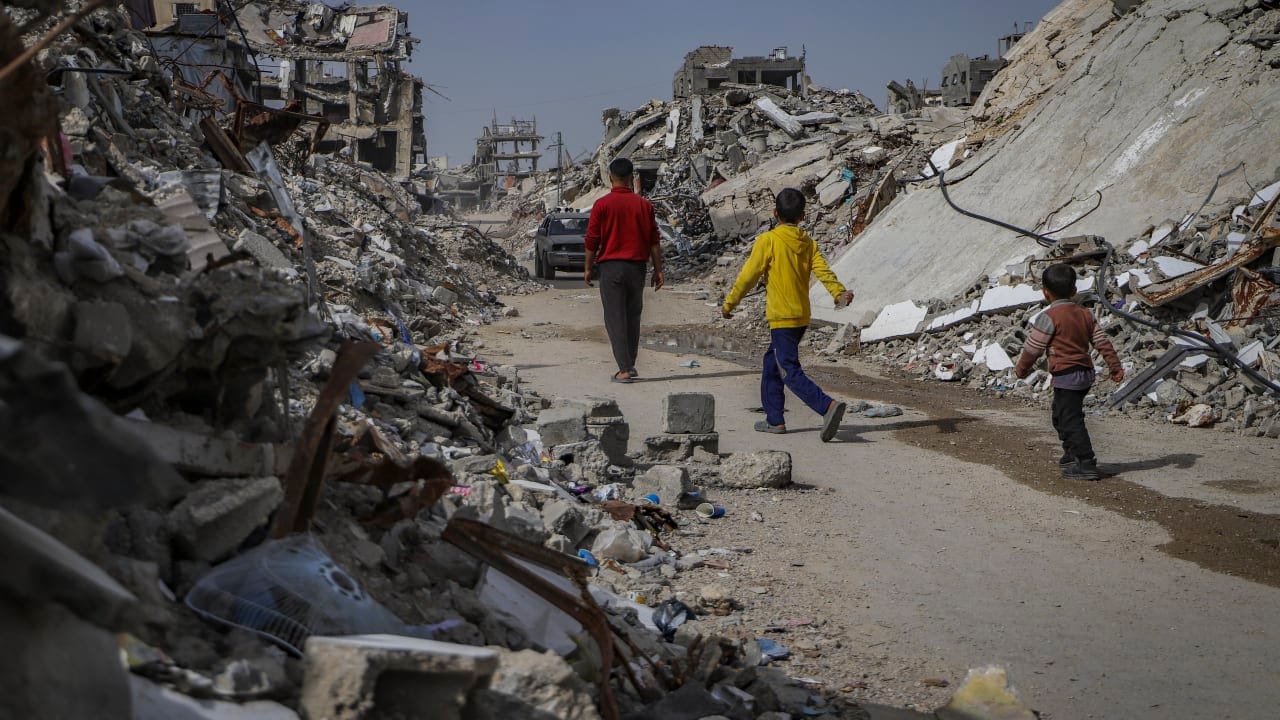
Israel can accuse Hamas of atrocities, of using the Gaza Strip as one big human shield; it can justify destroying buildings for force protection, and can view all or most of its major actions as necessary, while still recognizing that the IDF’s killing massive numbers of Gazans and destroying much of the Strip caused enormous suffering to innocent Gazans.
Recognizing this suffering, while rejecting the war crimes label, is the essence of ex gratia, current and former officials say.
The precedent of Netanyahu paying ex gratia to Turkey for the 2010 ‘Mavi Marmara’ casualties and other precedents
In 2016, Netanyahu authorized a payment of $20m. to Turkey relating to nine Turkish citizens being killed by the IDF during the Mavi Marmara incident.
This was despite Israel’s position that it had acted legally, including with support from the UN Palmer Report for many of its legal arguments.
The payment reflected that Israel had come a long way toward Turkey from its original position of $0 to $100,000 per person to millions per person for the nine Turkish persons killed in the incident.
To say that Israel bowed to Turkish claims of precedent would be to ignore the wild and virtually unbounded world of ex gratia payments.
Many times, ex gratia payments are paid to promote national interests, like preserving international travelers’ safety or maintaining relations – or mitigating the damage to relations – with an important foreign nation.
In other cases, nations made ex gratia payments to retrieve hostages or end diplomatic isolation and rejoin the international community.
In 1968, Israel paid $3,323,500 to the families of the 34 dead crewmen of the USS Liberty, following a 1967 incident in which Israeli aircraft and motor torpedo boats attacked the US Navy ship in error.
Then, in 1988, the US paid Iran $61.8m. for the families of 290 dead passengers on Iran Air Flight 655, a civilian airliner, after the USS Vincennes that same year shot down the airliner in error under suspicion that it was a military aircraft.
The breakdown this time comes to around $213,000 per person, though likely much larger with inflation.
Starting in 2002, Libya paid at least $2.16 billion to the families of 270 dead passengers on Pan Am Flight 103, known as the Lockerbie bombing, after the airplane was blown up in midair, allegedly by Libyan agents in 1988.
In both the Lockerbie case and in a separate case in which Iraq was supposed to pay $27m. to the US over a 1987 incident, intervening new incidents in the middle ended up causing a halt to the payments, which had no legal enforceability.
There are countless other examples of the US compensating families in Iraq, Afghanistan, and other places, while Israel has compensated the Palestinians, the UN, and nondemocratic countries like China have compensated rivals like England.
Rather, the jump in payments to Turkey by Netanyahu and Israel came because Jerusalem wanted a deal more. This was possibly to regain Turkish cooperation on a number of fronts and to get the Turkish case against its top military commanders during the Marmara incident to disappear.
Legitimacy with the US, Europe, and others is far more important.

If Israel paid ex gratia payments, it would not be for every incident during the war, say current and former officials.
Rather, Israel would likely select a series of high-profile incidents for which it would make payments.
These incidents might include the World Central Kitchen (April 2024, when seven aid workers were mistakenly killed); the Islamic Red Crescent (March 2025, when up to 15 aid workers were mistakenly killed); one or more incidents of mass (as many as 69 and as many as 125, in two different incidents) mistaken Palestinian deaths in Jabalya from 2023; an incident in which multiple Reuters reporters were killed in Lebanon in 2023; some of the Gaza Humanitarian Foundation (GHF)-related incidents in 2025 (when some dozens of Palestinians were mistakenly killed going to receive, or after receiving, food aid); and some incidents in which children died due to generally poor war conditions.
Compensation would be given only in cases where Israeli indictments are not filed against Israeli soldiers; as in cases where soldiers are indicted, the criminal enforcement would serve as the sign of Israel’s recognition of Palestinian suffering.
This will not be a silver bullet. What Israel has done in Gaza, however defensible it might be, will have long-lasting consequences for the country’s reputation. Antisemites will hate Israel and Jews no matter what. Some fair-minded people will not be able to get past the last two years of images and the 70,000 number of Gazans killed, and will not be ready to analyze the breakdown of combatants to innocents or other complex issues.
But some will start to be more open to Israel’s story and to hearing the context. Some may start to “forgive” Israel simply because of the humanizing gesture, without even getting into the details.
Some top Israeli legal officials have suggested going even further and making some kind of substantial, if still relatively modest in absolute terms, contribution to Gaza’s rehabilitation. A flood of reports, which the IDF and the government notably repeatedly did not deny, has suggested that Israel, directly or indirectly, paid for aspects of setting up the GHF to provide food aid to the Palestinians in 2025. Still, it is unlikely that such an idea will be acceptable politically within Israel in the immediate coming years (Netanyahu rejected paying into the Board of Peace pool of funds for Gaza reconstruction). Also, Israel’s government will likely need to strategically decide that it wants to be perceived in a positive light by more of the world, ensuring that its actions and the actions of its ministers are part of such a coherent strategy.
So ex gratia payments will not solve Israel’s legitimacy problems. But many smart Israeli legal minds think it could be a start.