

Never miss an important update on your stock portfolio and cut through the noise. Over 7 million investors trust Simply Wall St to stay informed where it matters for FREE.
Apple (NasdaqGS:AAPL) is reportedly accelerating work on AI-integrated wearables, including smart glasses, camera equipped AirPods, and an AI pendant, targeting potential launches in 2026.
CEO Tim Cook has flagged an upcoming week featuring multiple product launches, such as a low cost MacBook, new iPads, a possible foldable iPhone, and an entry level iPhone 17E.
The push into AI devices and a broader hardware refresh could affect Apple’s position in wearables and expand its reach across new customer segments.
For you as an investor, the key point is that Apple is leaning harder into AI hardware and wearables, areas that currently make up a relatively small portion of its revenue mix. The focus on products like smart glasses and AI enabled accessories sits alongside core lines such as iPhone, Mac, and iPad, and reflects how the company is responding to broader trends around on device AI and personal computing.
The planned product week, which includes a lower priced MacBook and entry level iPhone 17E, also suggests Apple is looking to address more price sensitive segments while exploring new form factors such as a foldable iPhone. How these launches are received, and how quickly any new AI wearables gain traction, could influence how investors think about Apple’s long term growth drivers and competitive positioning in consumer electronics.
Stay updated on the most important news stories for Apple by adding it to your watchlist or portfolio. Alternatively, explore our Community to discover new perspectives on Apple.
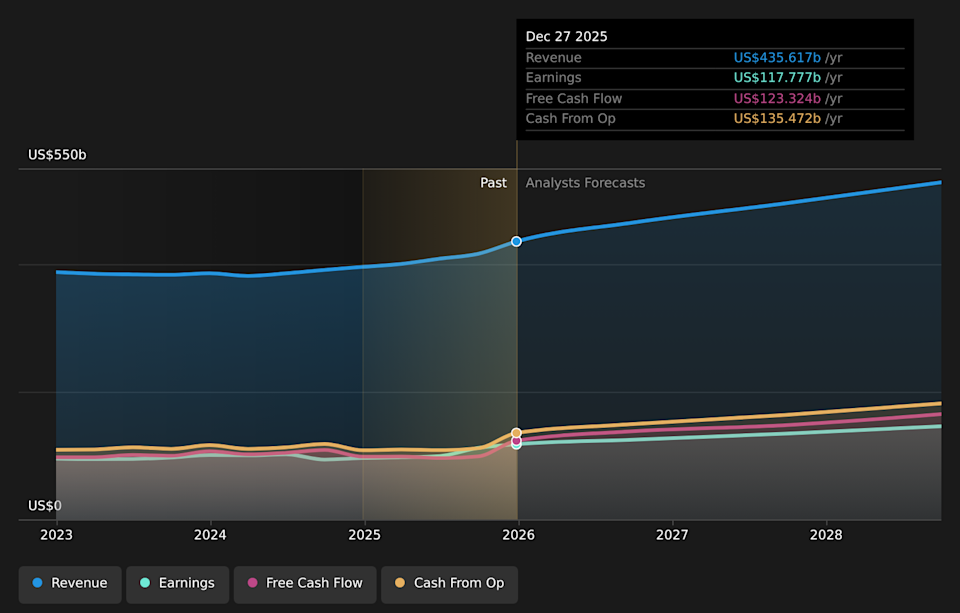 NasdaqGS:AAPL Earnings & Revenue Growth as at Feb 2026
2 things going right for Apple that this headline doesn’t cover.
For Apple, the push into AI-powered glasses, camera AirPods and an AI pendant sits at the intersection of two trends you care about as an investor: higher-value hardware and deeper ecosystem lock in. Wearables and accessories currently make up a small slice of total sales, so any traction here would be on top of a base that is still led by iPhone and, increasingly, Services. The timing around a packed product week, including a lower priced MacBook and iPhone 17E, also points to Apple using AI features to reach both premium and budget-conscious users rather than focusing only on the high end.
The AI-focused wearables concept directly supports the narrative that Apple is using AI-powered features and enhanced wearables to create new revenue streams and deepen engagement across its hardware and services.
At the same time, the need to get on-device AI and Siri upgrades right could challenge the narrative if software experiences on these new devices fall short while rivals like Alphabet and Samsung push their own AI hardware.
The idea of AI glasses and pendants tied into Visual Intelligence is not explicitly reflected in the existing narrative, which focuses more on phones, services and traditional wearables, so the scale of that opportunity may not be fully captured.
Knowing what a company is worth starts with understanding its story. Check out one of the top narratives in the Simply Wall St Community for Apple to help decide what it is worth to you.
⚠️ Execution risk if AI wearables fail to resonate with users or if privacy and data usage concerns limit adoption compared with rivals like Alphabet, Samsung or Meta.
⚠️ Hardware and component cost pressures, including rising memory and sensor costs, could squeeze margins if Apple cannot pass pricing through on new AI-heavy devices.
🎁 A successful AI wearables line could grow an area that currently contributes only a modest share of revenue, adding another leg alongside iPhone, Mac and Services.
🎁 Tighter integration between AI devices, Apple Pay, Apple TV sports rights and services could support higher spending per user and a more resilient ecosystem versus other consumer electronics brands.
From here, keep an eye on three things: the actual feature set Apple reveals on AI wearables, how they are priced versus premium rivals and whether reviews see them as meaningfully better than existing Watch and AirPods use cases. On the broader product week, watch any commentary on demand for lower-priced MacBooks and iPhone 17E, since that will say a lot about how Apple can address a smartphone and PC market that research firms expect to be under pressure. Early signs of developer support for AI-first experiences across these devices will also matter, because third party apps often decide whether a new Apple category has staying power.
To ensure you’re always in the loop on how the latest news impacts the investment narrative for Apple, head to the community page for Apple to never miss an update on the top community narratives.
This article by Simply Wall St is general in nature. We provide commentary based on historical data and analyst forecasts only using an unbiased methodology and our articles are not intended to be financial advice. It does not constitute a recommendation to buy or sell any stock, and does not take account of your objectives, or your financial situation. We aim to bring you long-term focused analysis driven by fundamental data. Note that our analysis may not factor in the latest price-sensitive company announcements or qualitative material. Simply Wall St has no position in any stocks mentioned.
Companies discussed in this article include AAPL.
Have feedback on this article? Concerned about the content? Get in touch with us directly. Alternatively, email editorial-team@simplywallst.com