
FEBRUARY 28 — The decision by the State of Israel to launch what it described as a pre-emptive strike against the Islamic Republic of Iran marks a grave escalation in Middle Eastern geopolitics.
It is not merely another episode in a long rivalry. It is a rupture with far-reaching global consequences.
Israel has justified the operation as necessary to neutralise what it considers an imminent nuclear and missile threat. Pre-emption, in Israeli strategic doctrine, is rooted in survival.
Yet the invocation of pre-emptive force always raises a fundamental question: who determines imminence?
If that threshold becomes subjective, the international system grows unstable.
The prohibition on the unilateral use of force — anchored in the post-1945 order — risks erosion.
The involvement of the United States under President Donald Trump further intensifies the stakes. What may have begun as a bilateral strike now carries the spectre of a broader regional war.
Tehran has vowed retaliation. That promise cannot be dismissed as rhetoric.
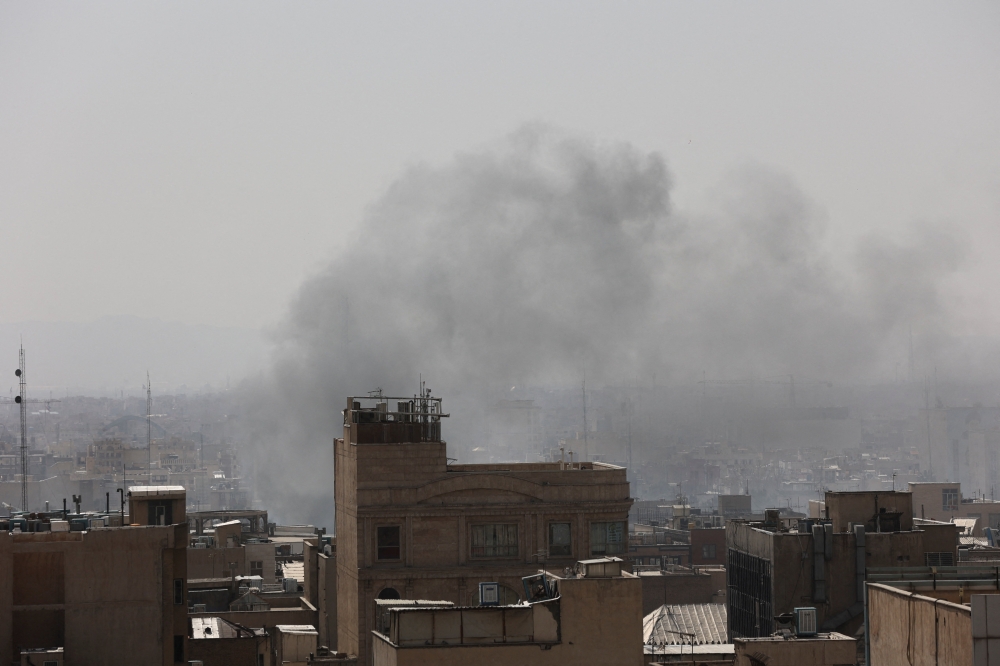
Smoke rises following an explosion, after Israel and the US launched strikes on Iran, in Tehran, Iran, February 28, 2026. — WANA (West Asia News Agency) handout via Reuters
Iran’s strategic culture is built upon deterrence through asymmetric means — including regional networks and missile capabilities.
An Israeli-Iranian confrontation rarely remains confined. The Gulf, Lebanon, Syria, Iraq — all could become secondary theatres. Energy markets will react nervously.
Shipping lanes may face disruption. Inflationary pressures will ripple globally.
Beyond economics lies a deeper concern: the weakening of multilateral diplomacy.
The United Nations system was designed precisely to prevent unilateral escalations of this magnitude.
When major powers bypass collective adjudication, smaller states feel the tremors most acutely.
For Asean, the lesson is clear. Regional stability anywhere affects prosperity everywhere.
Malaysia and Southeast Asia cannot afford prolonged instability in the Middle East.
Energy security, trade routes, and labour markets are intertwined.
The current crisis also underscores the fragility of nuclear diplomacy. Talks with Iran have ebbed and flowed over the years.
Sanctions, enrichment thresholds, missile programmes — all remain contentious. But diplomacy, however imperfect, is always preferable to war.
A sustained conflict would radicalise positions on all sides. It would empower hardliners. It would shrink the space for compromise.
Pre-emption may yield tactical gains. Yet strategically, it risks normalising a doctrine that others may one day emulate.
If every state reserves to itself the right to strike first based on perceived threats, the global order becomes perilously elastic.
The Middle East does not need another cycle of devastation.
Nor does the world. This moment demands restraint, renewed dialogue, and serious back-channel diplomacy.
History will judge not merely who struck first — but who worked hardest to prevent the next strike.
* Phar Kim Beng is a professor of Asean Studies and director of the Institute of International and Asean Studies, International Islamic University of Malaysia.
** This is the personal opinion of the writer or publication and does not necessarily represent the views of Malay Mail.