
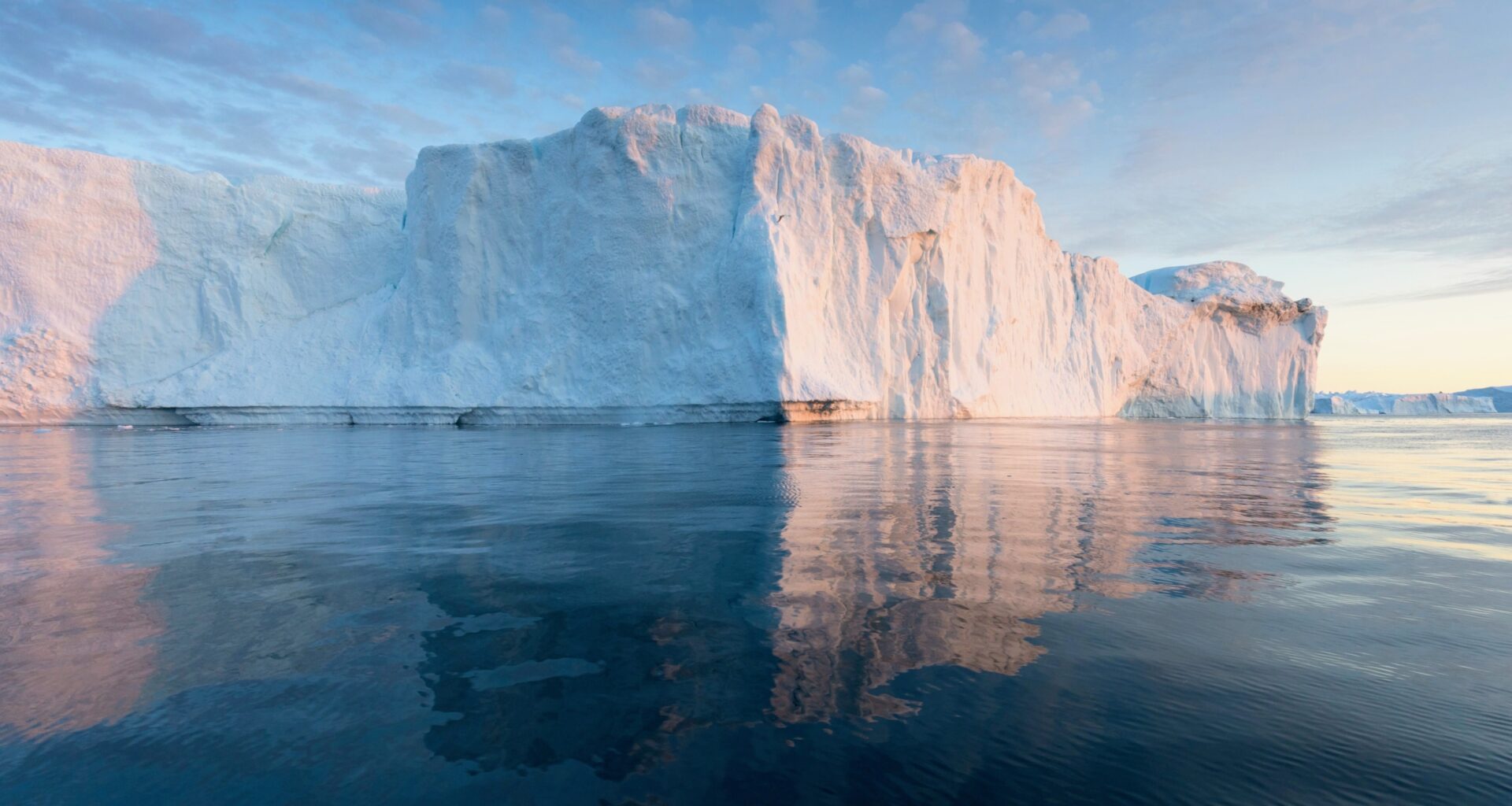
For a long time, many scientists hoped that melting ice in Antarctica might actually help fight climate change. The idea seemed simple. As glaciers melt, they could release iron into the ocean.
Iron helps tiny ocean plants grow. These plants absorb carbon dioxide, a gas that warms the planet. More iron could mean more plants and less carbon dioxide in the air.

However, new research shows that this hopeful idea is not completely true.
Why iron is so important
The Southern Ocean near Antarctica is extremely important for our planet. It may look cold and empty, but it is full of life. Microscopic plants called phytoplankton float in these waters.
Even though they are tiny, they support the entire food chain. Krill feed on them first. Then penguins, seals, and even giant whales feed on the krill.
These tiny plants do something else that really matters. They pull carbon dioxide out of the air while making their own food. Because of this, the Southern Ocean removes more carbon dioxide than any other ocean on Earth.
However, phytoplankton cannot grow on their own. They need iron, just like humans need vitamins. If there is not enough iron in the water, their growth slows down.
When that happens, less carbon dioxide gets removed from the air. That is why scientists pay close attention to where the iron in this ocean comes from.
Melting ice and iron fertilization
Many scientists believed that melting ice shelves release large amounts of iron into the ocean, a process known as iron fertilization.
The reasoning was straightforward. Ice traps iron. when the ice melts, iron enters the water. The extra iron helps phytoplankton grow faster. Faster plant growth removes more carbon dioxide from the atmosphere.
Some climate models even included this idea when predicting future climate change.
To test this idea, scientists from Rutgers University New Brunswick and other institutions traveled to the Dotson Ice Shelf in West Antarctica in 2022. They used a research ship called the Nathaniel B. Palmer.
Warm deep ocean water flows under the floating ice shelf and melts it from below. This process creates a circulation system known as the meltwater pump. The system mixes meltwater with deep ocean water and pushes it upward toward the surface.
The researchers wanted to measure exactly how much iron entered and left this system.
What the scientists measured
The team collected water samples where deep ocean water flows into the ice shelf area and where mixed water flows out.
The researchers found that the deep ocean water already contained iron. The water leaving the ice shelf area contained only slightly more iron than the water entering it.
The increase was very small. Meltwater added only about 10 percent of the dissolved iron in the outgoing water. This result showed that melting ice was not the main source of iron after all.
Where most of the iron comes from
The findings surprised many researchers. About 62 percent of the dissolved iron came from deep ocean water. Around 28 percent came from sediments on the ocean floor. Only about 10 percent came from meltwater.
“Roughly 90% of the dissolved iron coming out of the ice shelf cavity comes from deep waters and sediments outside the cavity, not from meltwater,” said Venkatesh Chinni, a postdoctoral scholar and lead author of the study.
This discovery challenges earlier beliefs about how iron enters the Southern Ocean.
A hidden source under the ice
The researchers also studied iron isotopes, which act like chemical fingerprints. These fingerprints help scientists identify where the iron originally formed.
The results suggested that some iron comes from beneath the glacier itself. Under the ice, water can remain in dark areas with very little oxygen. In these conditions, tiny microbes can help release iron from rocks. That iron then flows toward the ocean.
“Our claim in this paper is that the meltwater itself carries very little iron, and that most of the iron that it does carry comes from the grinding up and dissolving of bedrock into the liquid layer between the bedrock and the ice sheet, not from the ice that is driving sea level rise,” said Rob Sherrell, the study’s principal investigator
Tiny particles matter too
The scientists also found large amounts of iron attached to tiny particles in the water. This particulate iron was much more common than dissolved iron.
Some of these particles may slowly release iron that phytoplankton can use. The meltwater pump helps lift both deep water and iron-rich particles toward the surface, where sunlight allows plants to grow.
So melting ice still plays a role. However, its main role is to move iron upward from deep waters rather than to add large new amounts of dissolved iron.
What this means for climate predictions
Some climate models assumed that melting ice released large amounts of iron into the ocean, but this new study shows the contribution is far smaller than expected.
Deep ocean water and ocean-floor sediments supply most of the iron. Melting ice mainly helps move iron-rich water upward.
As Antarctica continues to warm, melting may increase. This could push more deep water toward the surface. However, the main iron source will likely remain deep ocean water and materials from beneath the ice, not the melting ice itself.
This research sharpens our understanding of how Antarctica shapes the chemistry of the Southern Ocean and, in turn, influences marine ecosystems and the global climate.
The study is published in the journal Communications Earth.
—–
Like what you read? Subscribe to our newsletter for engaging articles, exclusive content, and the latest updates.
Check us out on EarthSnap, a free app brought to you by Eric Ralls and Earth.com.
—–