

Listen to this article
Estimated 3 minutes
The audio version of this article is generated by AI-based technology. Mispronunciations can occur. We are working with our partners to continually review and improve the results.
Conservationists are reporting that more alewife and blueback herring are returning to the St. Croix River after the removal of a hydroelectric dam two years ago.
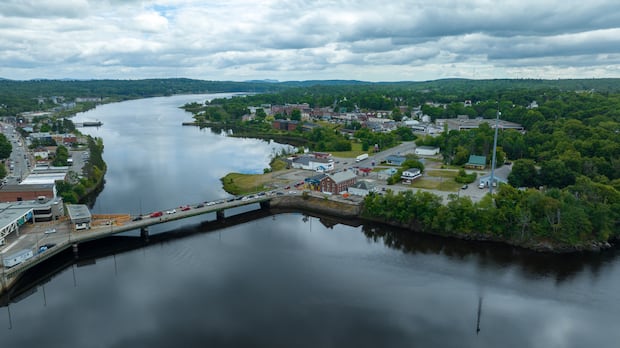
The St. Croix River, also known as the Skutik, flows along the southwest New Brunswick town of St. Stephen, and was once home to the Milltown Dam.
The dam was removed with the help of efforts led by conservationists.
“It feels alive again. It feels like its own entity again and it’s really beautiful,” said Alexa Meyer of the Passamaquoddy Recognition Group, an Indigenous-led group representing the interests of the Peskotomuhkati Nation.
Meyer said she believes there are more than one million fish in the river, up from about 800,000 since the last time the population was recorded.
“But really the amount of fish that should be in the river are estimated between 50 to 100 million,” she said.
 Alexa Meyer says the number of alewife fish in the river has increased since the removal of the dam. (Submitted by Sean Landsman)
“Milltown Dam stood for 140-ish years but before that [the river] was really the heart of the Peskotomuhkati Nation.”
She said this is where families would come together to fish.
“For the nation, it is so special to see that dam reopened.”
Start of cultural restoration
Matt Abbott of the Conservation Council of New Brunswick has been holding discussions at the river, where people can share its history and talk about their personal connection to it.
“We realized that the damage to the fish and damage to the river also caused cultural and social damage,” Abbott said of the dam’s impact.
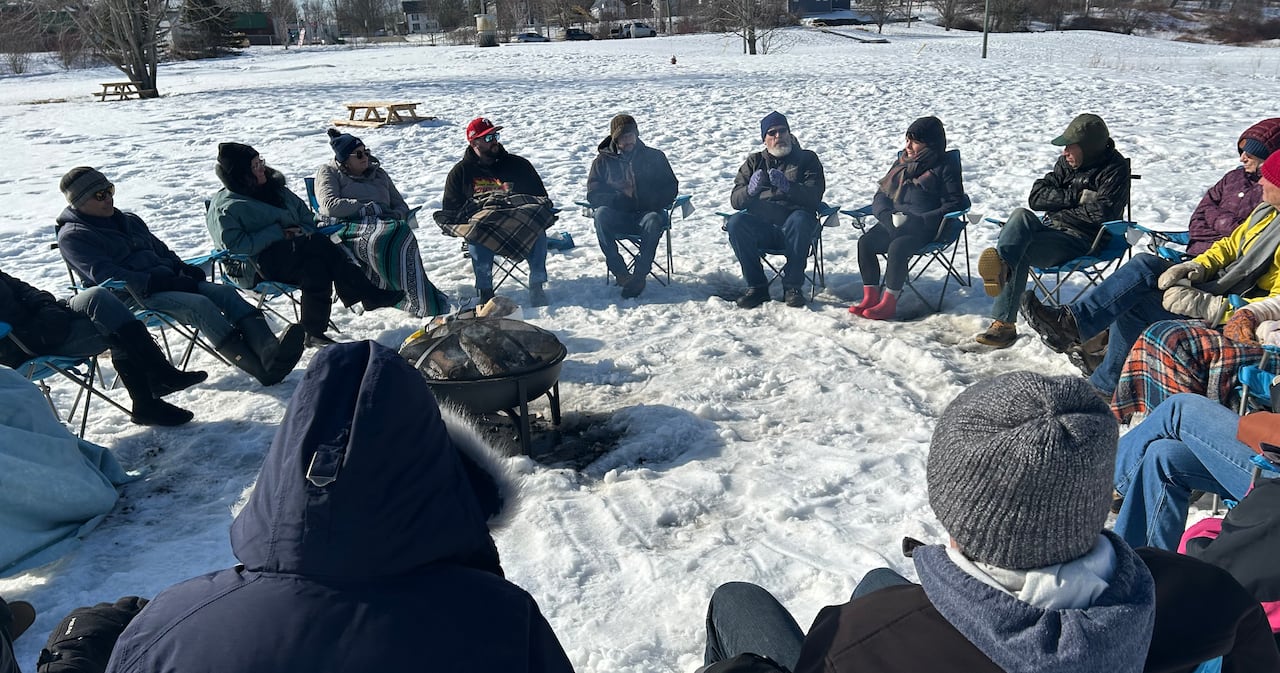 Matt Abbott of the Conservation Council of New Brunswick has been hosting storytelling sessions at the river also known as the Skutik to advance cultural restoration. (Ian Curran/CBC)
“As the fish were kept out of the river, as the river’s quality declined, people’s sense of connection to the river also declined,” he said.
Peter Brown, a St. Stephen resident who attended a storytelling session on Saturday, shared his memories of paddling on the river in the summer.
 Peter Brown of St. Stephen shared stories Saturday about his time on the river. (Ian Curran/CBC)
Brown said he was always keen to know what the river would look like without the dam.
But Abbott said some people were also concerned about the dam’s because it was one of the first power-generating dams in Canada.
“We heard from people there was a concern that there was a loss of heritage,” Abbott said.
He said the storytelling sessions can help show people that they still belong, and there is still a sense of connection without the dam.
“My hope is that people continue to love this river and continue to fight for it.”