
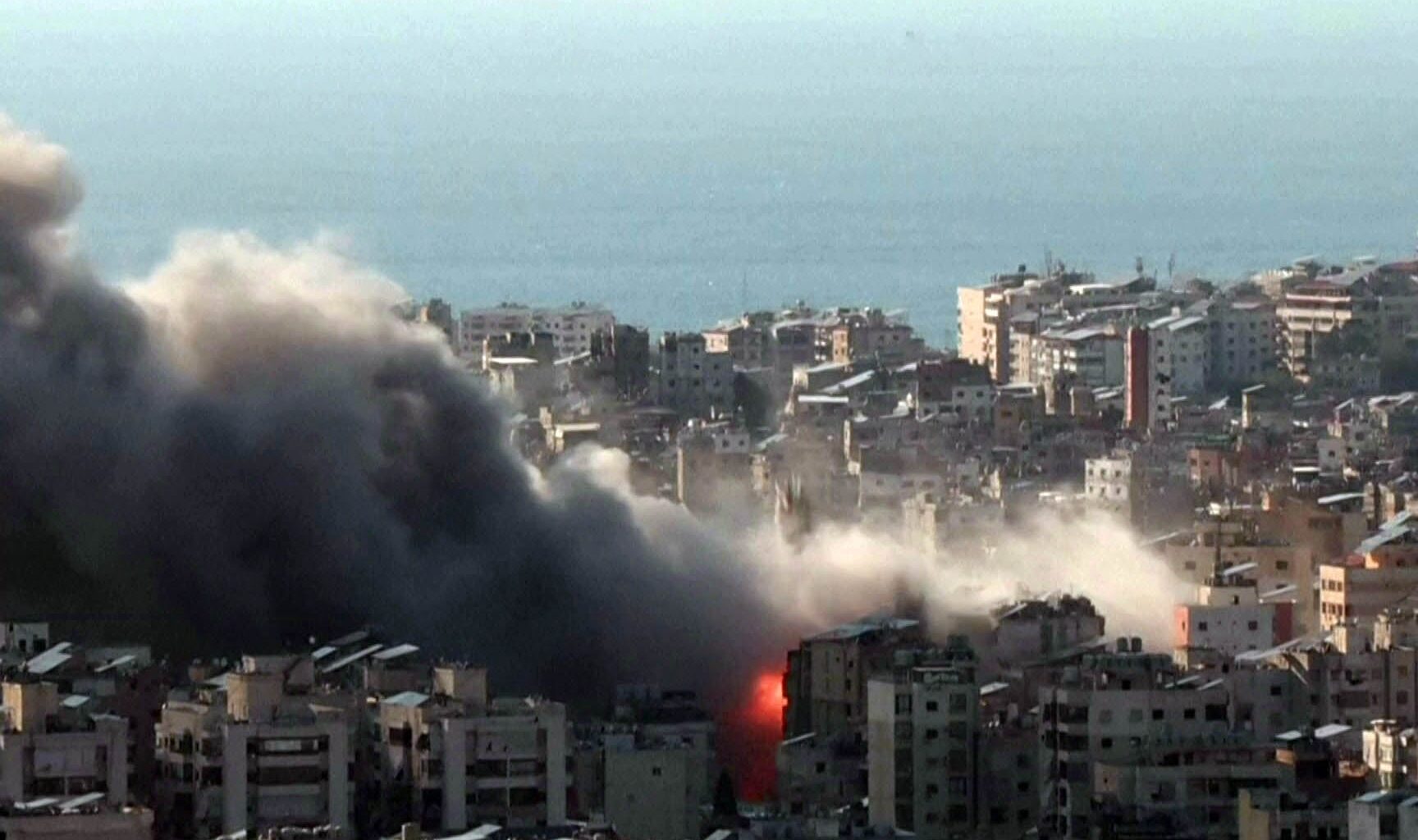
Israel said Monday that the head of Hezbollah’s intelligence arm was killed in an overnight strike and Beirut said it would ban the terror group’s military activities, hours after the Iran-backed organization fired rockets and drones at Israel, leading to major retaliatory strikes.
The IDF confirmed that the overnight strike in the Lebanese capital killed Hussein Makled, whom it called “the head of Hezbollah’s intelligence headquarters.”
The military said Makled was responsible for “forming the intelligence picture using various intelligence collection tools to provide the Hezbollah terror organization with intelligence assessments regarding IDF troops and the State of Israel.”
“He also closely cooperated with senior commanders in Hezbollah who planned and advanced terror attacks against Israel and its citizens,” the military added.
The terror group’s overnight attacks — which it said were in retaliation for the killing of Iranian supreme leader Ali Khamenei in the opening minutes of the joint Israeli-US assault on Iran on Saturday — led to waves of Israeli airstrikes across Lebanon, including in the capital.
Get The Times of Israel’s Daily Edition
by email and never miss our top stories
By signing up, you agree to the terms
In a statement after a cabinet meeting, Prime Minister Nawaf Salam said Lebanon rejected any military actions launched from its territory “outside the framework of its legitimate institutions and affirmed that the decision of war and peace is exclusively in its hands.”
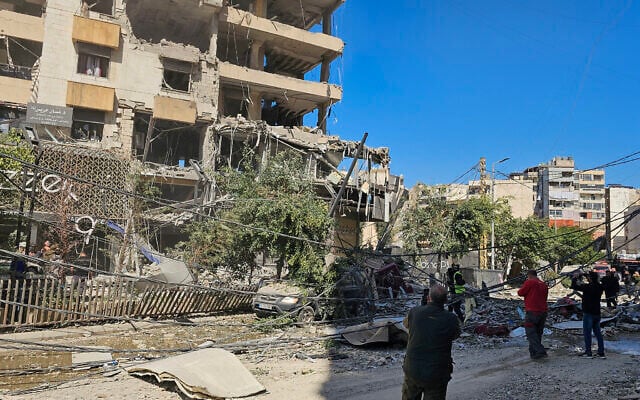
People look at a building damaged in an Israeli airstrike in response to a Hezbollah attack on Israel, in the southern suburb of Haret Hreik of Beirut on March 2, 2026 (AFP)
This “necessitates the immediate prohibition of all Hezbollah’s security and military activities as being outside the law, and obliging it to hand over its weapons to the Lebanese state,” he said.
Salam ordered the military and security agencies to take “immediate measures” to implement the cabinet decision and prevent “any military operation or the launching of missiles or drones from Lebanese territory.”
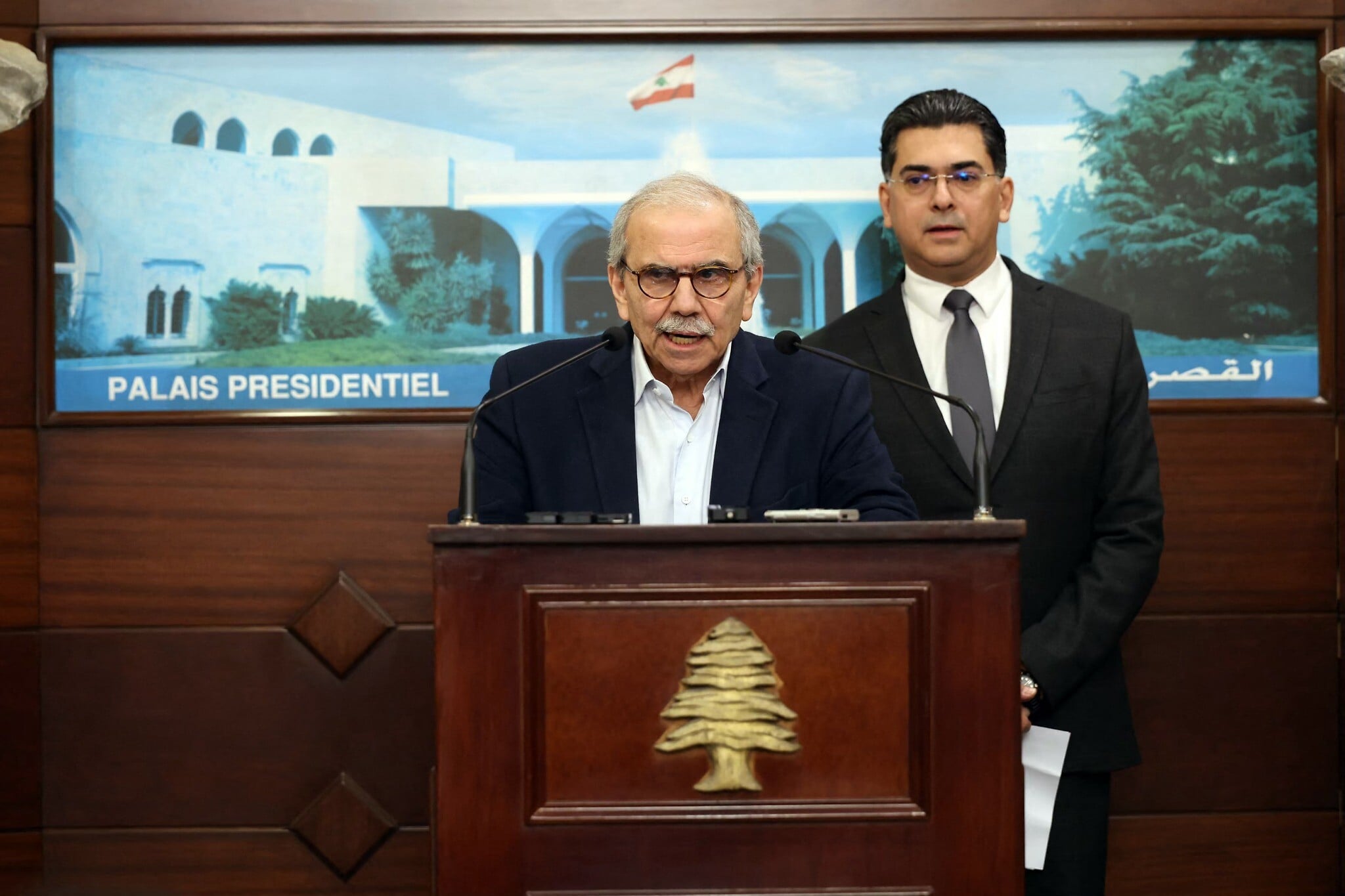
Lebanese Prime Minister Nawaf Salam speaking at the end of the ministerial council at the Presidential Palace of Baabda, east of Beirutת March 2, 2026 (Handout / Lebanese Government Press Office / AFP)
It was the latest effort by Lebanon’s leadership to assert its authority over Hezbollah, which it has been seeking to disarm ever since the start of its ceasefire with Israel in November 2024.
On Saturday, upon the beginning of Israeli and American operations in Iran and the subsequent retaliatory fire from Tehran, Salam had warned that Lebanon refused to be dragged into war.
And after Hezbollah on Sunday promised to take action against Israel and the US, President Joseph Aoun reiterated that “the decision of war and peace rests solely with the Lebanese state,” in a plea for the terror group to remain on the sidelines, as it had done during the previous 12-day war between Israel and Iran in June 2025.
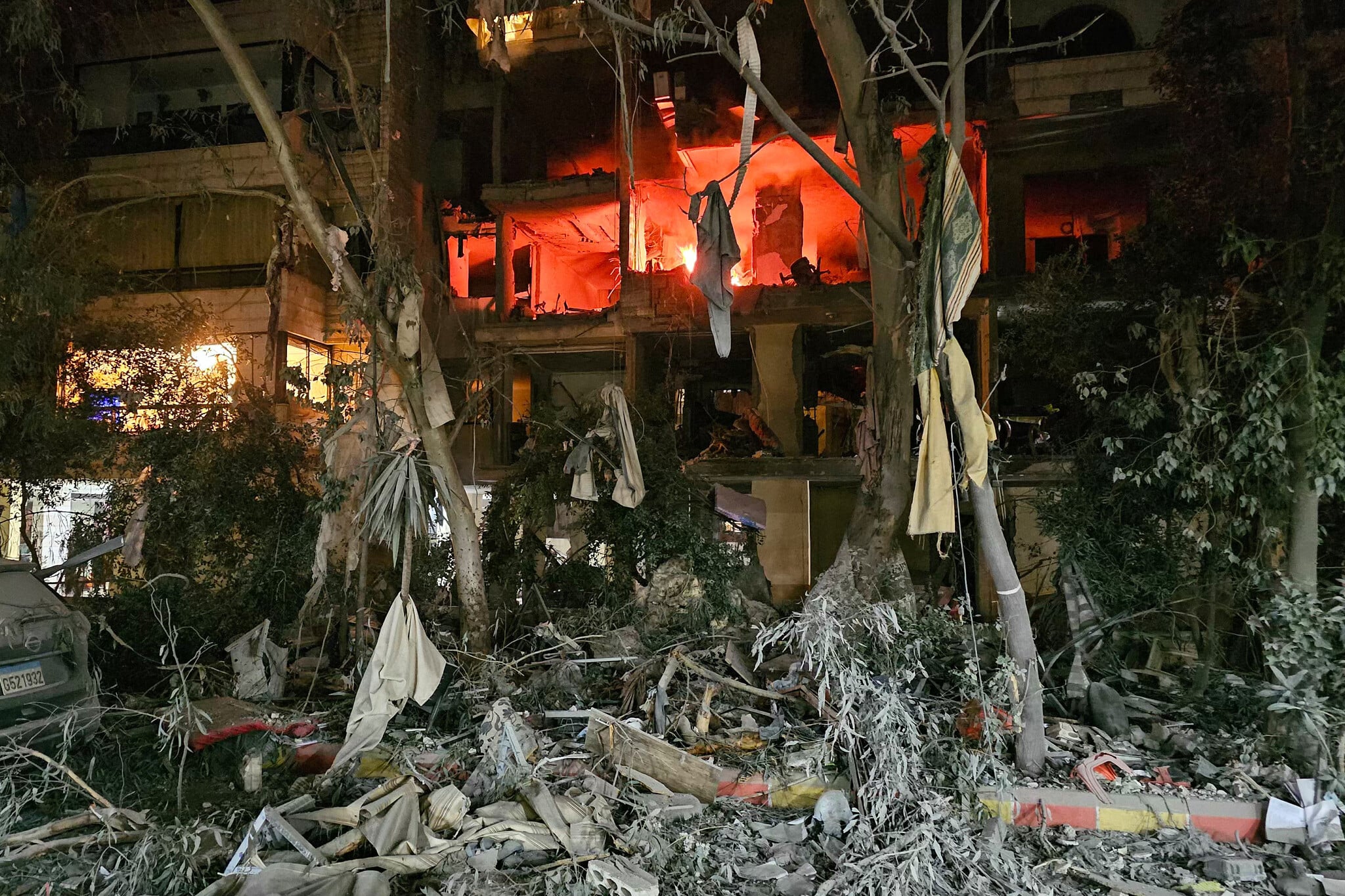
A fire is seen in a damaged building after an Israeli airstrike in response to Hezbollah rocket and drone fire in Beirut’s southern suburb neighborhood of Haret Hreik on March 2, 2026 (AFP)
But the request fell on deaf ears as Hezbollah moved ahead with its attack, the first time that the Iranian proxy had fired at Israel since the US-brokered ceasefire between Israel and Lebanon came into effect.
In the wake of the attack, Defense Minister Israel Katz said on X that Hezbollah’s chief Naim Qassem was now “a marked target for elimination.”
Katz warned that Israel would send Qassem to “the depths of hell” like Iran’s Khamenei.
“We will strike Hezbollah hard, and Naim Qassem, chairman of the Hezbollah terrorist organization, will discover that whoever follows Khamenei’s path ends up like Khamenei — in the depths of hell,” Katz said during a visit to the Israeli Air Force operations center.
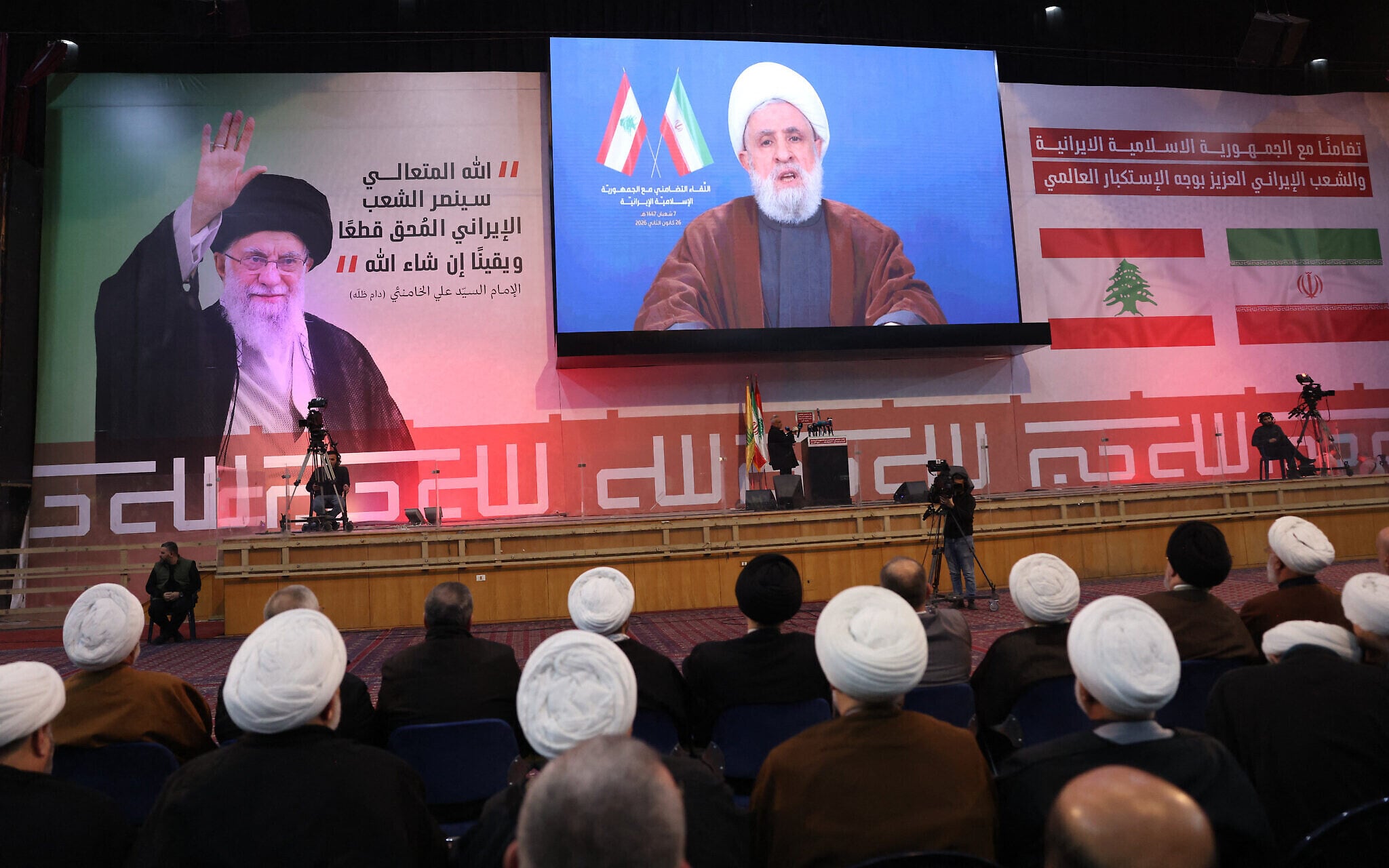
Supporters watch a televised speech by Hezbollah chief Naim Qassem during a rally to show their solidarity with Iran, in the southern suburb of Beirut on January 26, 2026. (Anwar AMRO / AFP)
IDF Spokesman Brig. Gen. Effie Defrin also threatened Hezbolllah.
“Hezbollah opened fire. It chose to start a campaign. It will pay a heavy price,” Defrin said in a press conference.
“We struck dozens of command centers and rocket launch sites belonging to the organization. We struck senior commanders, among the last remaining top officials still alive in that organization,” he said, adding that the results of the strikes were under review.
Defrin said that additional strikes will be conducted in south Lebanon, where the IDF issued evacuation warnings to dozens of villages.
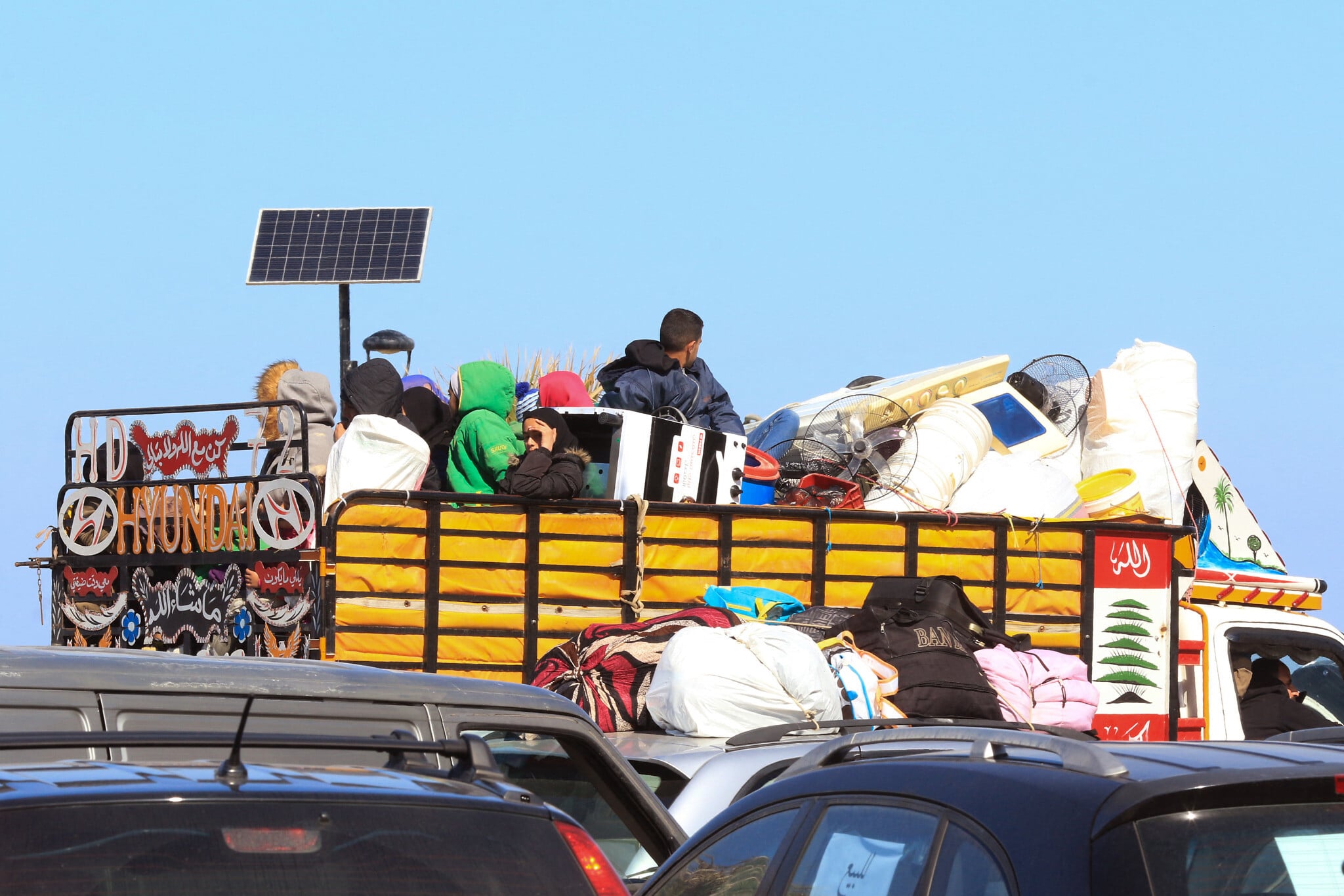
A family rides in the back of a lorry as motorists flee villages in southern Lebanon along the coastal road through the city of Sidon on March 2, 2026. (Mahmoud ZAYYAT / AFP)
Lebanese authorities announced the opening of displacement shelters in dozens of schools in Beirut, the south, and Mount Lebanon.
During the last war, the government’s shelter network was wildly inadequate for the scale of the displacement.
In the coastal city of Sidon, the gateway to south Lebanon, hundreds of northbound cars piled with mattresses, blankets, and children’s schoolbags crammed both sides of the two-way highway.
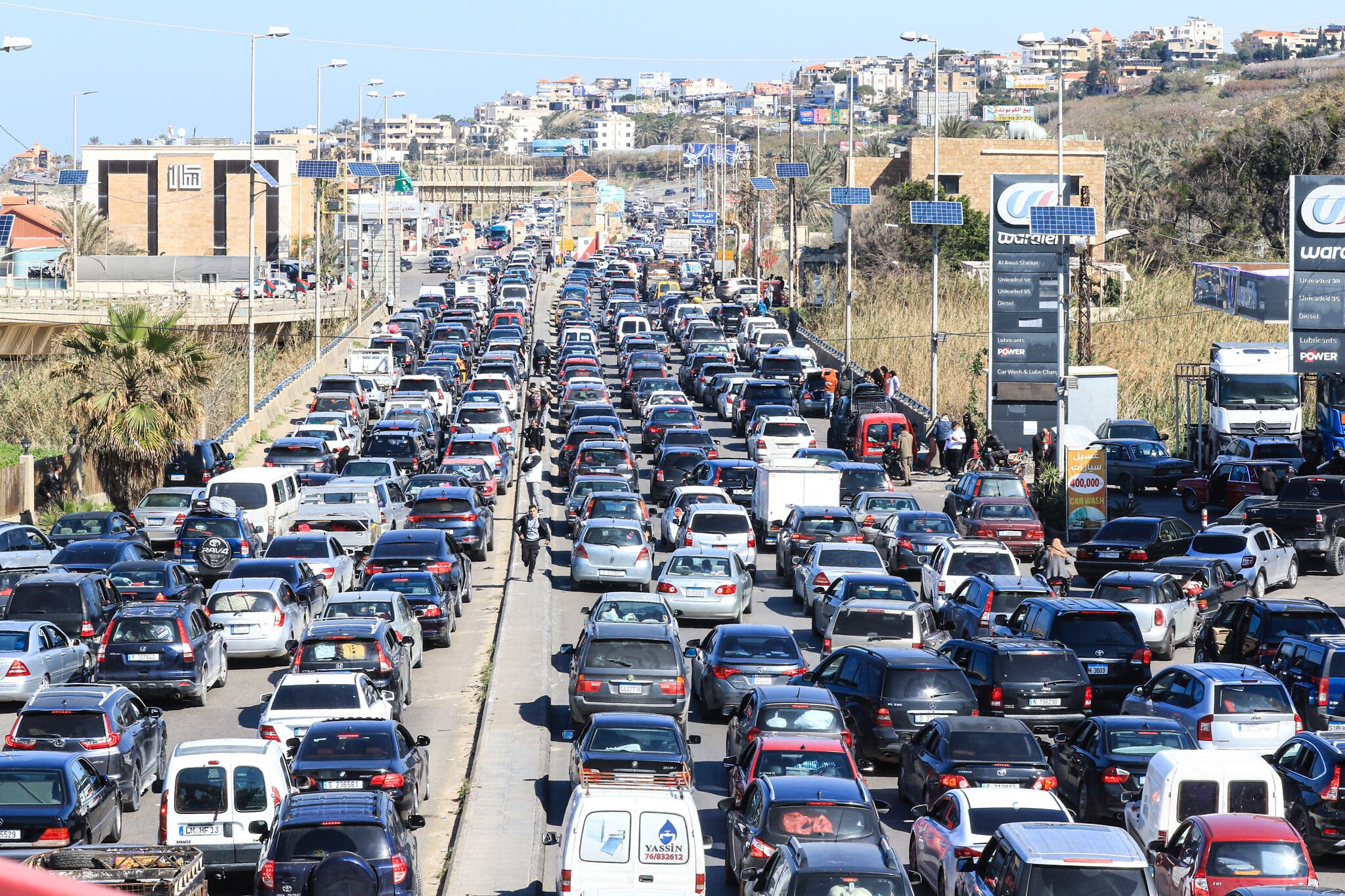
Motorists block the highway as they flee their villages in southern Lebanon along the coastal road through the city of Sidon on March 2, 2026 (Mahmoud ZAYYAT / AFP)
Lebanon’s health ministry said at least 31 people were killed in the Israeli strikes since the early hours of Monday, without differentiating between civilians and members of Hezbollah.
You appreciate our wartime journalism

You clearly find our careful reporting of the Iran war valuable, at a time when facts are often distorted and news coverage often lacks context.
Your support is essential to continue our work. We want to continue delivering the professional journalism you value, even as the demands on our newsroom have grown dramatically during this ongoing conflict.
So today, please consider joining our reader support group, The Times of Israel Community. For as little as $6 a month you’ll become our partners while enjoying The Times of Israel AD-FREE, as well as accessing exclusive content available only to Times of Israel Community members.
Thank you,
David Horovitz, Founding Editor of The Times of Israel