
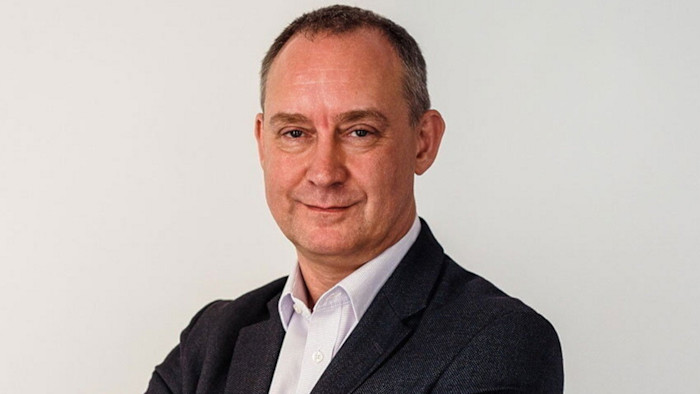
A senior NHS official privately urged colleagues to add more patient data into a Palantir-built platform at the same time as he was being paid to advise the US technology company.
Matthew Swindells has been joint chair of four major hospital trusts in north-west London since April 2022 and has also since then acted as an adviser to Palantir through the now-defunct lobbying firm Global Counsel, which was co-founded by Lord Peter Mandelson.
Board papers for one of the trusts, Chelsea and Westminster, from the year when Swindells was appointed joint chair stated that he was “to be excluded from any decision-making in relation to Palantir”.
But in May 2024 Swindells told other senior NHS executives in an email that patient data from GPs in north-west London should be added to a platform Palantir has developed for the NHS.
“We should plan to flow patient level data in order to be able to drive automated workflows through the FDP,” he said. FDP is a reference to the Federated Data Platform, which has been developed by Palantir.
The company was awarded a £330mn contract in 2023 to create the FDP, which collates NHS operational data such as waiting lists, staffing, patient health, care and treatment information, and operating theatre schedules.
NHS England has said the FDP will not combine GP records from across the country. Such records, which contain the most complete picture of a patient’s long-term health, would turn the FDP from a hospital logistics tool into a more all-encompassing population health database.
NHS staff and medical trade unions have voiced concerns in recent years about Palantir’s suitability for providing data tools in national health systems, given it is best known for its ties to the security, defence and intelligence sectors.
Swindells’ email to senior NHS leaders in north west London suggested that the trusts “start by flowing aggregate metrics” from GP patient databases into the FDP before moving on to individual patient data.
He said officials had previously made other changes to a data platform used in north-west London, known as Whole Systems Integrated Care (WSIC), “without having to renegotiate all the data sharing agreements”.
Swindells said the GP patient data would allow “population health and quality research within WSIC and when we wanted to deploy it into a live operational environment, we would be able to drop it into the FDP”.
The recipients of the email included Penny Dash, now chair of NHS England, the body with overall responsibility for the health service in England.
 Penny Dash was appointed chair of NHS England in March 2025
NHS and GP patient information is stored across many different databases, with access to the data both locally within a certain region or on a national level strictly controlled by formal contracts.
The data agreements limit which medical records can be shared and for what purposes, as well as who they can be shared with. The contracts are intended to protect patient privacy.
Swindells told the FT: “The point I was making was about GP data being used in our local federated data platform which is under local data controllership, not about the national federated data platform.”
“The consideration was whether we could include GP data already in our local secure data environment for use only by local clinicians and managers for agreed operational purposes,” he said.
He added that “none of this has been actioned”.
NHS England said: “NHS organisations cannot upload confidential GP patient information to the [FDP] without first securing appropriate data sharing agreements from GP practices, NHS trusts and integrated care boards — and all data always remains under NHS control.”
Swindells was deputy chief executive and chief operating officer for NHS England until July 2019. He joined Global Counsel as a senior adviser in September of that year to “support its clients in health, health tech, life sciences and pharmaceuticals and advise clients in adjacent sectors”.
The 51-year-old was also a member of Palantir’s health advisory board from September 2019 until April 2022, when Swindells was appointed to the part-time role of joint chair for four north-west London hospital trusts.
He remained a senior adviser at Global Counsel until last month, according to his register of interests, when the company collapsed into administration in the wake of fresh revelations about Mandelson’s relationship with the sex offender Jeffrey Epstein.
Swindells said that in 2022 he had “also stopped supporting the GC [Global Counsel] contract with Palantir when I took on this role for the duration of the FDP procurement”.
He added that he returned to advising Palantir through Global Counsel after the NHS contract was awarded “and there was no risk of a commercial conflict, my declaration of interests reflects this, until I reduced my work with GC in August 2025”.
Swindells’ email was followed up the same day by Dash, who before her promotion to NHS England chair was serving as chair of the NHS North West London Integrated Care Board.
Dash said that she “had a chat with Matthew about this yesterday”, adding that then NHS England’s chief digital officer Ming Tang was “offering money” for Palantir and healthcare consultancy Carnall Farrar to “develop a popn [population] health tool within FDP”.
In his register of interests, Swindells declared that from February 2022 he was also an “internal adviser to Carnall-Farrar Healthcare strategy consultancy”, and in his latest register he states he is chair of the firm, a role he took on in April 2025.
Some of the recipients of the emails pushed back against Swindells’ suggestions, saying they did not have the bandwidth and that information governance issues would need to be resolved if GP data were to flow into FDP, and that this would take a substantial amount of time to deliver.
One wrote: “We are currently committed — as are the rest of London — to WSIC. To change that, we’d need substantial assurance that the FDP route will get there faster . . . at present, we don’t believe that is true.”
David Rowland, director of the Centre for Health and Public Interest think-tank, said: “The idea that the public interest can be protected simply by officials declaring and managing these conflicts behind closed doors is a nonsense.”
“The rules in this area need to be massively strengthened,” he added. “In the light of the Mandelson scandal, parliament needs to get a grip on the relationship between senior officials, lobbyists and private companies.”
 NHS staff and medical trade unions have voiced concerns about Palantir’s suitability for providing data tools in national health systems © Sopa/Alamy
Helen Morgan, the Liberal Democrats’ health spokesperson, said the revelations “will do little to build trust in a platform which has raised real concern in the health service about patient trust, data security, and NHS independence.”
Swindells told the FT: “I have been very open about my business interests outside of the NHS, and followed the NHS’s robust governance requirements carefully.
“I have also been very clear about my commitment to making sure our local communities, patients and staff get the maximum benefit from digital technology and data. That necessarily includes getting the most from the federated data platform which was procured nationally by NHS England.”
Palantir said: “Matthew Swindells has rightly made a clear public commitment to recuse himself from any commercial decision making in relation to the FDP, on account of other roles. The comments recorded in these exchanges are perfectly consistent with that commitment.”
Carnall-Farrar Healthcare did not immediately respond to a request for comment.