
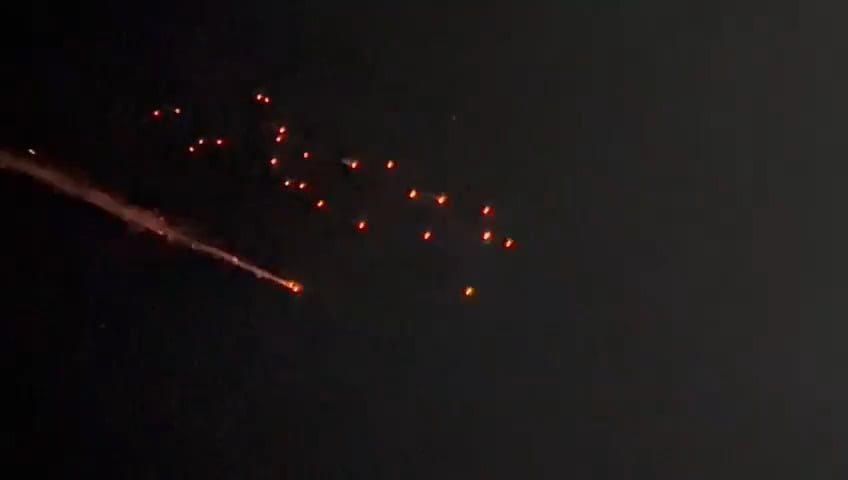
Iran has launched multiple ballistic missiles at Israel carrying cluster bomb warheads during the ongoing conflict, indiscriminately spreading small bombs in wide areas of the country.
The warhead of such missiles opens up while descending and scatters around 20 smaller munitions with around 2.5 kilograms (5.5 pounds) of explosives, in a radius of around 8 kilometers (5 miles), according to the Israel Defense Forces.
The munitions do not have their own propulsion or guidance and simply fall to the ground, where they are designed to explode on impact.
Israeli military officials said such a missile poses a threat to a much wider area than Iran’s other ballistic missile warheads, but the explosion from each of the cluster bombs is far smaller.
In contrast, Iran’s traditional ballistic missile warheads are packed with an estimated 500 kilograms of explosives, which can cause massive damage.
Get The Times of Israel’s Daily Edition
by email and never miss our top stories
By signing up, you agree to the terms
The IDF has confirmed that Iran launched ballistic missiles carrying cluster bomb warheads at Israel several times in the current conflict, as well as in June 2025’s war. The Iran-backed Houthis in Yemen also launched several missiles with cluster bomb warheads at Israel last year.
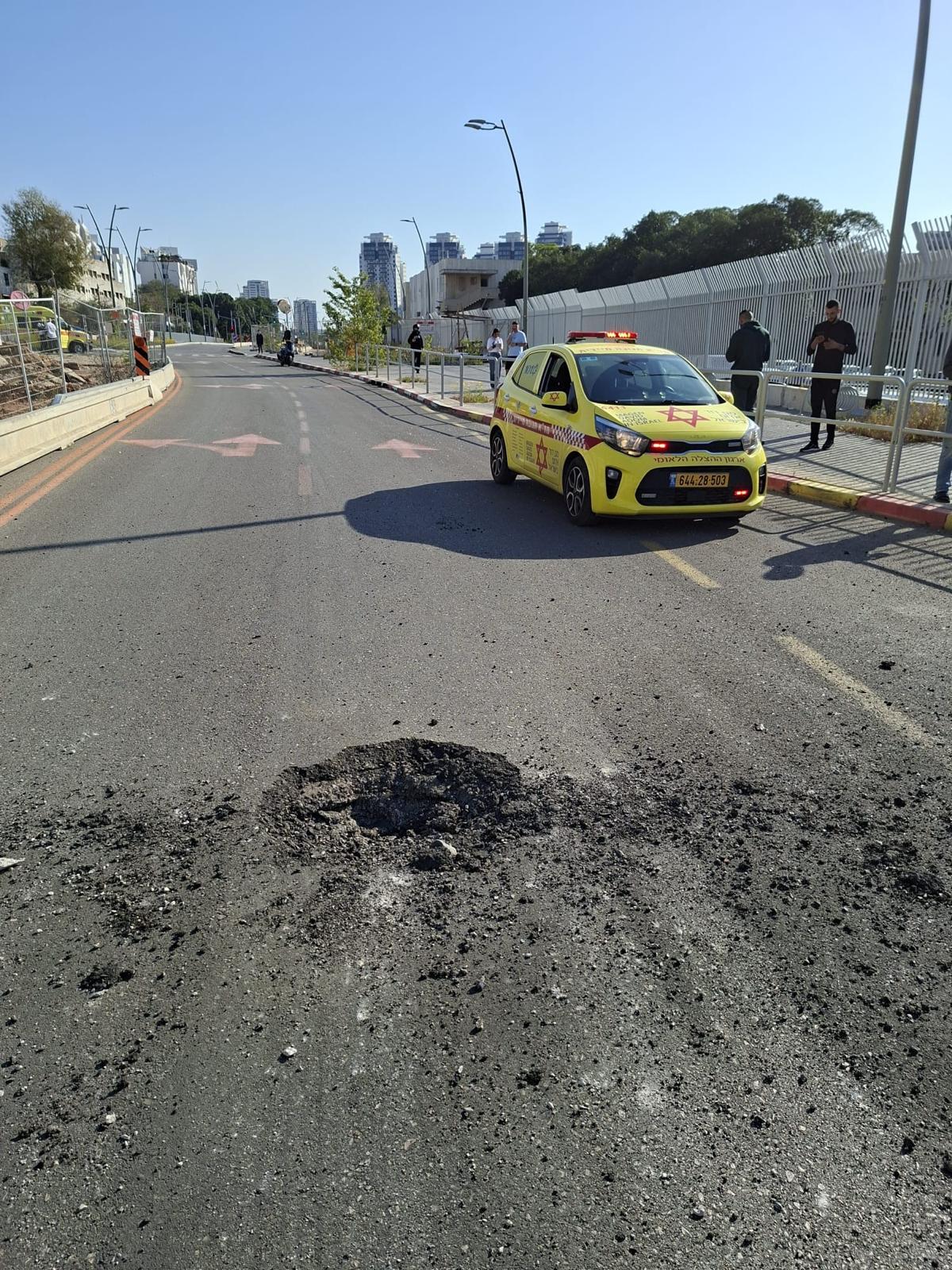
A Magen David Adom vehicle is seen next to damage caused by an Iranian missile strike in central Israel, on March 3, 2026. (Magen David Adom)
It remains unclear how many such missiles Iran has fired at Israel, as many of them have been intercepted by air defenses.
On Tuesday, submunitions from a cluster bomb warhead hit several locations in central Israel, wounding 12 people, medics said. The damage caused by the submunitions was equivalent to that of a small rocket.
Footage on Sunday also showed two dozen fragments streaking through the sky after a cluster bomb warhead opened and scattered bombs across central Israel.
مشهد جديد يوثق الضربات الصاروخية الإيرانية على مواقع الاحتلال في فلسطين. pic.twitter.com/Dw5m9PiSj3
— شبكة قدس الإخبارية (@qudsn) March 1, 2026
Some of the submunitions do not explode upon hitting the ground, and they can still pose a danger to anyone who happens upon them.
The IDF Home Front Command has warned the public not to approach any missile remains they may find on the ground, which effectively act as landmines, and to alert authorities immediately if they spot one.
There have been no changes to the Home Front Command’s guidelines for civilians when it comes to cluster bomb attacks.
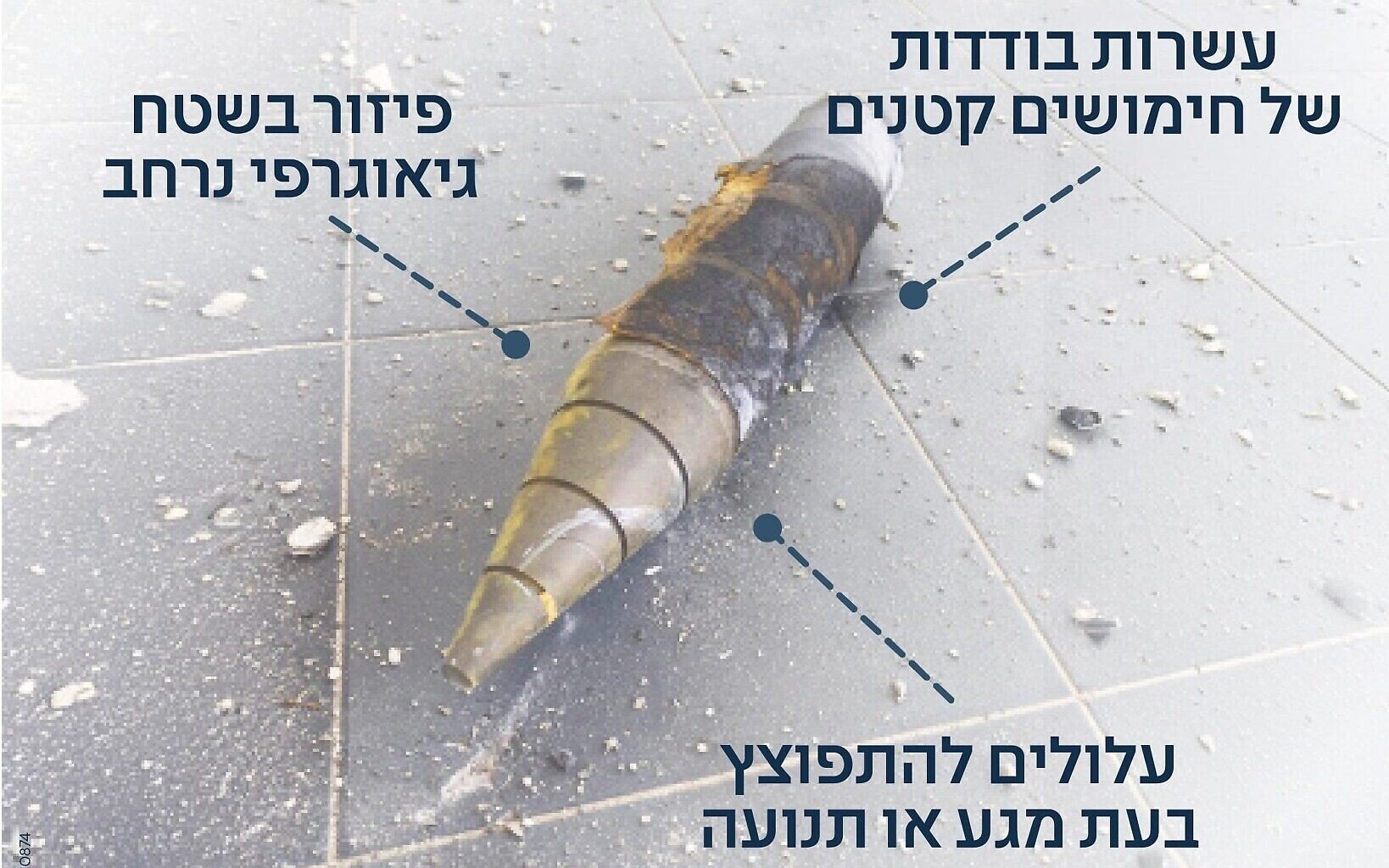
A Home Front Command image shows a munition from an Iranian cluster bomb missile, warning the public to stay away, June 19, 2025 (IDF)
Human rights groups have long campaigned for cluster bombs to be banned due to the random, indiscriminate nature of the threat they pose, unlike other types of munitions that can be used to precisely target combatants or military assets while minimizing harm to civilians.
In total, 112 countries have signed a 2008 convention banning the production, storage, sale, and use of cluster munitions. Iran and Israel are not among them.
The text of the 2008 Convention on Cluster Munitions says cluster bombs “kill or maim civilians, including women and children, obstruct economic and social development… impede post-conflict rehabilitation and reconstruction (and) delay or prevent the return of refugees and internally displaced persons… for many years after use.”
You appreciate our wartime journalism

You clearly find our careful reporting of the Iran war valuable, at a time when facts are often distorted and news coverage often lacks context.
Your support is essential to continue our work. We want to continue delivering the professional journalism you value, even as the demands on our newsroom have grown dramatically during this ongoing conflict.
So today, please consider joining our reader support group, The Times of Israel Community. For as little as $6 a month you’ll become our partners while enjoying The Times of Israel AD-FREE, as well as accessing exclusive content available only to Times of Israel Community members.
Thank you,
David Horovitz, Founding Editor of The Times of Israel