
This article is an on-site version of our Energy Source newsletter. Premium subscribers can sign up here to get the newsletter delivered every Tuesday and Thursday. Standard subscribers can upgrade to Premium here, or explore all FT newsletters
Hello and welcome to Energy Source, coming to you from New York.
The world is bracing for what’s next in the widening conflict in the Middle East after Israel said it is preparing for a multi-week military onslaught alongside the US to fully “dismantle” the Iranian regime. US defence secretary Pete Hegseth said “larger waves” of attacks on Iran were coming.
In the meantime, Gulf states have been hit by missiles from Iran and are anxiously waiting for the US military to deliver interceptors for air defence systems. Some of the Islamic regime’s missiles have hit energy facilities and the conflict has disrupted the flow of oil through the Strait of Hormuz.
The disruption of oil supplies caused prices to hit an 18-month high this week, with the international benchmark Brent crude settling at $81.40 a barrel on Wednesday.
My colleague Jamie Smyth reported that US shale drillers will not be able to increase production fast enough to combat an oil supply crisis. Producers had been hit by a period of lower oil prices that led many to cut spending, idle rigs and lay off workers. Many drillers are cautious and reluctant to invest in new drilling programmes until they are certain that higher crude prices will last.
As the conflict in the Middle East threatens the security of energy supplies in the region, the search for new reserves may become urgent. Today’s newsletter looks at a fresh report that argues new oil and gasfields have become more challenging to develop in recent years. Thanks for reading, Alexandra.
New oil and gas projects face longer development timelines
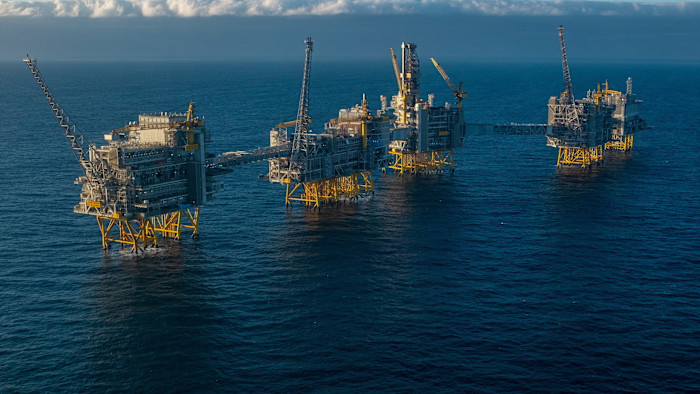
As the conflict in the Middle East drives up oil prices, the search for alternative sources in untapped regions may become a higher priority. But new oil and gasfields take about three times as long to come online as they did historically, according to a fresh report.
Global Energy Monitor said new projects in 2025 took an average of 15 years to come online, as new oil and gasfields are increasingly found in hard-to-reach areas that can make them challenging and expensive to develop. That is far slower than the average of 4.9 years in the period of 1960 to 1980.
“The complexity of conventional oil and gasfields is increasing, mostly due to the easiest projects already being developed,” said Scott Zimmerman, project manager at Global Energy Monitor and author of the report. “These longer lead times mean there is greater uncertainty.”
The organisation’s research follows the International Energy Agency’s findings that output from oil and gasfields has rapidly declined in recent years because of a greater reliance on shale and deep offshore resources. The IEA warned that in order to keep global oil and gas production consistent, new resources must be developed.
But modern oil and gasfields are technologically complex, largely because they are found in areas that are much more challenging to develop such as deepwater reserves. These areas can be vulnerable to extreme pressure and temperatures that are also at risk of blowouts that could lead to spills.
Because of technological innovations, companies are now more comfortable drilling in ultra-deep, high-pressure reserves but they require expensive technology. Zimmerman said these projects are subject to longer lead times because they must build the specific infrastructure these projects require. Extended timelines can also drive up project costs.
Companies have also resorted to developing reservoirs of sour gas, which has a higher concentration of hydrogen sulphide than sweet gas and has risks associated with human health and equipment challenges.
New projects are also subject to permitting delays from environmental impact assessments and safety regulations.
The Rosebank oilfield was discovered in 2004 but did not take final investment decision until 2023. The North Sea project faced an additional delay last year after the UK government required it to undergo a more detailed environmental impact assessment before production starts.
Many projects in Russia have suffered from lengthy lead times, including the Chayandinskoye oil and gasfield, which took 36 years to come online after discovery. Moscow has said 80 per cent of the country’s production would come from hard-to-recover reserves by 2030. This will increase the amount of capital needed for Russia to develop new fields, while sanctions that have cut the country off from western technology have also driven up lead times. (Alexandra White)
Job moves
ACWA Power has appointed Samir Serhan as chief executive.
TAE Technologies has named Cedric Burgher as chief financial officer.
Empyrean Energy has appointed Gajendra Bisht as chief executive.
Power Points
The UK government is poorly positioned to help households navigate surging energy prices because of the large amount of public debt it is struggling to manage, a top economist has warned.
Why has crude not hit $100 a barrel? The oil industry’s expert handling of previous crises such as the Covid-19 pandemic and Russia’s invasion of Ukraine has made the market more relaxed about short-term supply shocks.
Donald Trump’s war in Iran has sent US petrol prices sharply higher, undermining his claims to be tackling an affordability crisis that has sapped his popularity.
Energy Source is written and edited by Jamie Smyth, Martha Muir, Alexandra White, Rachel Millard, Malcolm Moore and Ryohtaroh Satoh, with support from the FT’s global team of reporters. Reach us at [email protected] and follow us on X at @FTEnergy. Catch up on past editions of the newsletter here.
Recommended newsletters for you
Moral Money — Our unmissable newsletter on socially responsible business, sustainable finance and more. Sign up here
The Climate Graphic: Explained — Understanding the most important climate data of the week. Sign up here