
Liz Gálvez
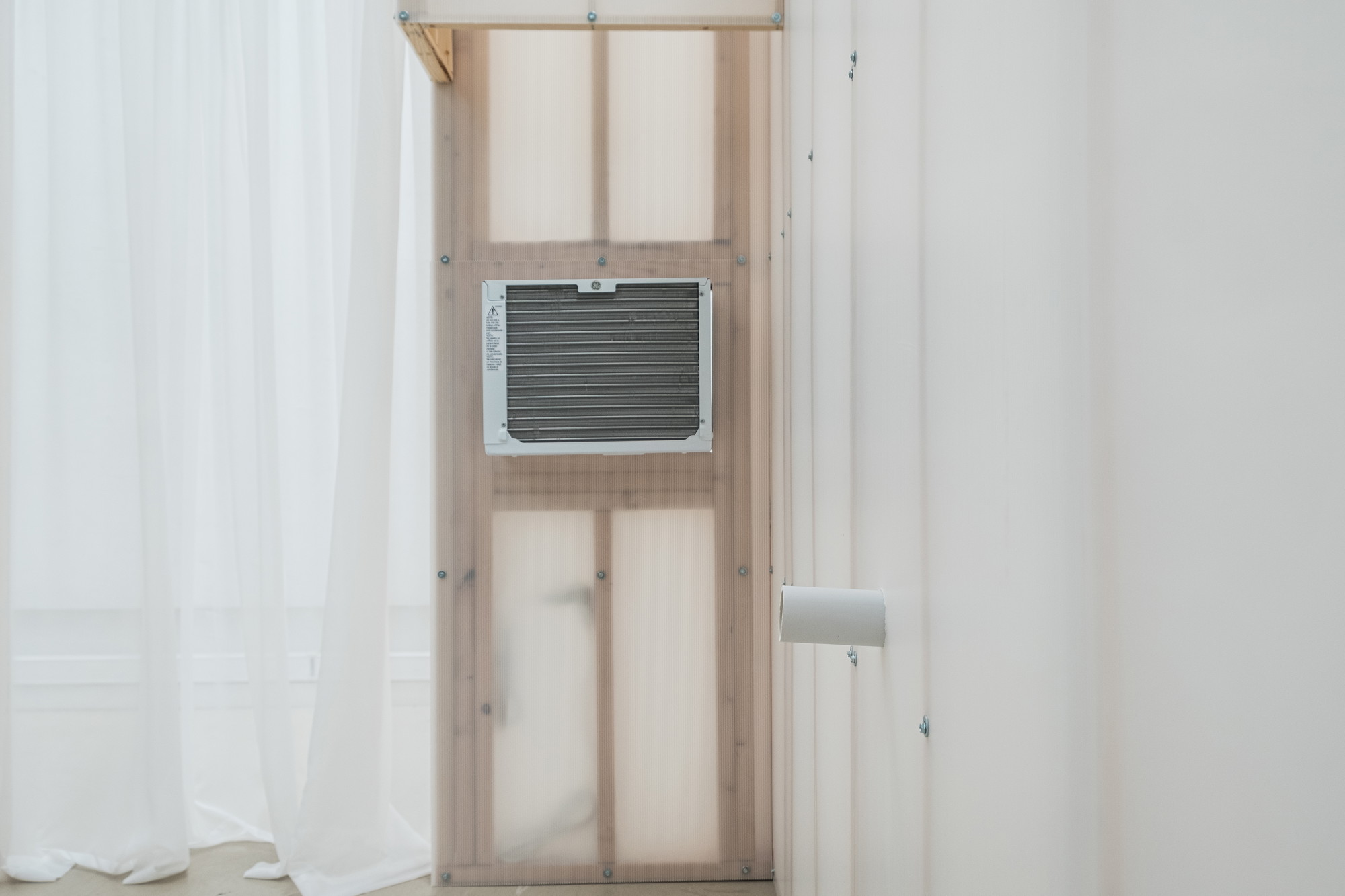
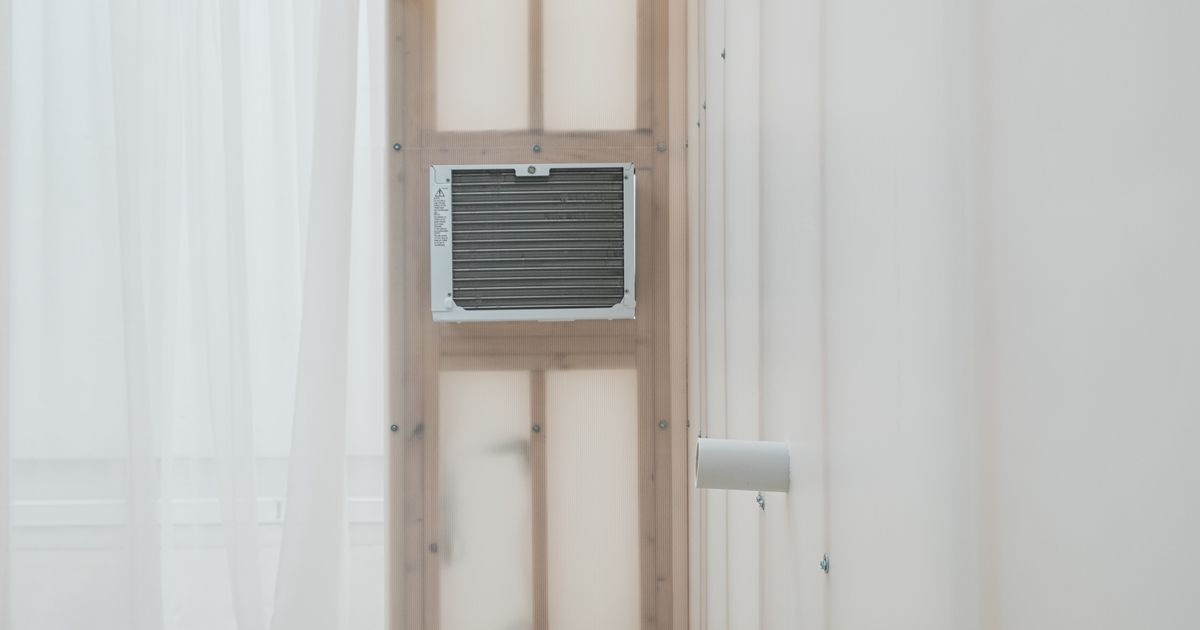
Liz Gálvez, Of Envelopes and Air, 2021. Installation view of Transgression no. 4 (thru-wall air conditioning unit and exhaust heat chimney), with no. 6 (plumbing vent) in the foreground. Photo: Jeff Fitlow.
After Comfort: A User’s Guide
March 2026
Notes
1
Banham Reyner, The Architecture of the Well-Tempered Environment (University of Chicago Press, 1969), 19.
2
For most of human history, cooking was done outdoors over open fires or indoors in semi-open hearths. Around the twelfth century, the introduction of the chimney in Northern Europe was transformative, allowing fires to be located indoors and their residual smoke directed outwards. See: Putnam, J. Pickering, The Open Fireplace in All Ages (Boston: J. R. Osgood and company,1882).
3
Catharine E. Beecher, A Treatise on Domestic Economy, For the Use of Young Ladies at Home, and at School (Boston: Thomas H. Webb, & Co., 1842).
4
Beecher, A Treatise on Domestic Economy, 419–32.
5
Catharine E. Beecher, A Treatise on Domestic Economy: for the Use of Young Ladies at Home, and at School, Rev. ed., with numerous additions and illustrative engravings. (Boston: T.H. Webb & Co.), 1843.
6
“Cilento and Vallo di Diano National Park with the Archaeological Sites of Paestum and Velia, and the Certosa di Padula,” UNESCO World Heritage Centre, accessed November 21, 2025, ➝.
7
Medieval Italian recipes even included architecturally-scaled climatic and ventilation strategies, such as references to the chef’s management of fireplace trammels, hooks, strings, and a variety of legged containers. Odile Redon et al., The Medieval Kitchen: Recipes from France and Italy, trans. Edward Schneider (The University of Chicago Press, 2000), 16–17.
8
For the scientization of air management see, Liz Gálvez, “Cooked Air: The Kitchen and its Exhalate,” Footprint 15, no. 1, issue 28 (Spring/ Summer 2021): 127–39, ➝.
9
Victor and Aladar Olgyay, Design with Climate: A Bioclimatic Approach to Architectural Regionalism (Princeton University Press, 1963), vxi. Note that the gendered terminology comes directly from the citation.
10
Kiel Moe, Insulating Modernism: Isolated and Non-Isolated Thermodynamics in Architecture (Basel: Birkhäuser Verlag GmbH, 2014).
11
Walter Grondzik and Alison Kwok, Mechanical and Electrical Equipment for Buildings (Hoboken: Wiley, 2014), 175–80.
12
Sheila Kennedy, “Material Presence,” in Material Misuse (AA Publications: London, 2001), 6–8. See also my description of the cavity wall as a space of common detritus in Liz Gálvez, “If Walls Could Smell,” Disc 2.0: Intimacy, ed. Ian Erickson (2023).
13
Grondzik and Kwok, Mechanical and Electrical Equipment for Buildings, 175–80.
14
Ulrich Beck, Risk Society: Towards a New Modernity (London: Sage Publications, 1992).
15
See for example, Slavoj Žižek’s lectures on “The Hermeneutics of Toilets” where he uses the example to show how a seemingly mundane object can reveal deep-seated cultural attitudes and ideologies.
16
See the discussion on media, in Daniel A. Barber, “Architecture, Media, and Climate,” Modern Architecture and Climate: Design before Air Conditioning (Princeton University Press, 2020), 2–21.
17
On view from June 9 through July 1, 2021 at the Farish Gallery, Rice School of Architecture, Houston, TX.
© 2026 e-flux and the author