
By Hollie Younger / Staff writer
A bill aimed at enhancing space cooperation between Taiwan and the US cleared the committee stage in the US Senate on Wednesday, with senators saying it would help counter threats from Beijing.
The Taiwan and American Space Assistance (TASA) Act is to go to the Senate floor after being passed by the Committee on Commerce, Science and Transportation.
The act would allow for extended cooperation between the Taiwan Space Agency, NASA and the US National Oceanic and Atmospheric Administration (NOAA).
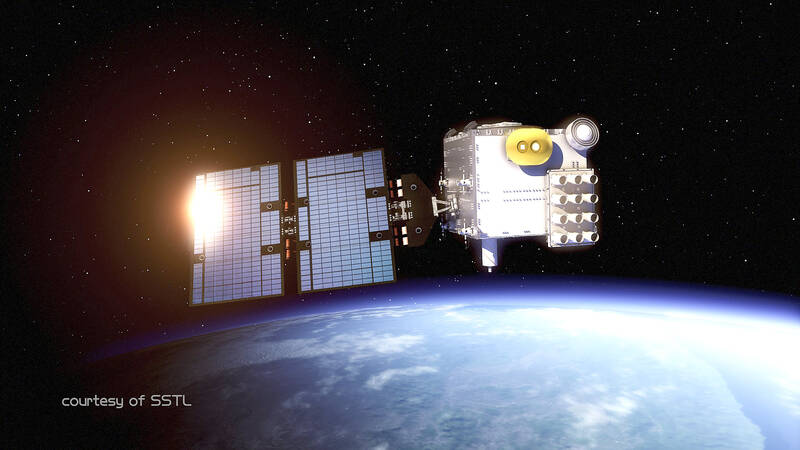
Photo courtesy of the Taiwan Space Agency
Areas of cooperation would include satellite program development and space exploration, as well as atmospheric and weather programs.
The act would also allow NASA and NOAA to exchange personnel with the Taiwan Space Agency to bolster Taiwan’s space capabilities.
The bipartisan bill was introduced in September last year by US representatives French Hill and Gabe Amo.
NASA and NOAA have limited authority to work with the Taiwan Space Agency, which was launched in 2022, due to the US government’s “one China” policy, Hill and Amo said in a statement last year.
The act helps the US counter threats from China and addresses gaps in NASA’s ability to cooperate with Taiwan’s space efforts, US senators Eric Schmitt, Tammy Duckworth and Michael Bennet said in a joint statement on Wednesday.
Space exploration and satellite operations are becoming central to US national security and would help to counter “malign influences such as China,” Schmitt said.
“As the United States continues to be the global leader in space exploration and in expanding new, innovative technology for space and satellite operations, it’s crucial that we work with our partners in the Indo-Pacific to advance and prosper,” Duckworth said.
“Taiwan is a vibrant democracy, a key economic partner and an increasingly capable space player. This legislation will enable NASA and NOAA cooperation with Taiwan’s Space Agency, strengthening our joint ability to tackle shared challenges in space,” Bennet said.