
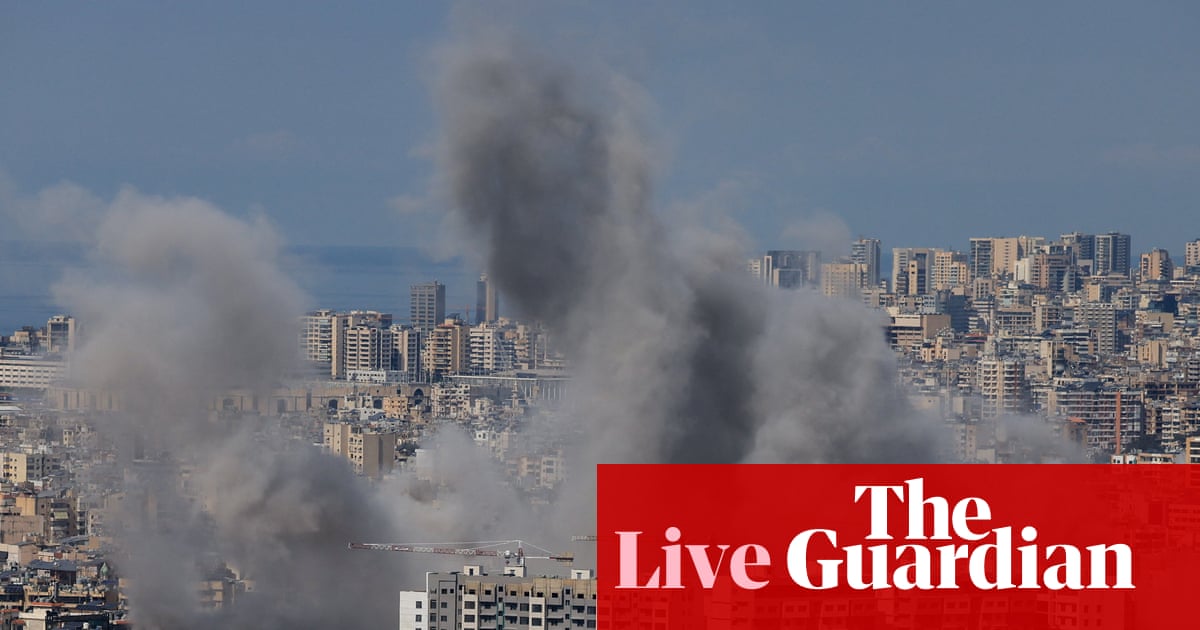
Israel announces new phase in Iran conflict as US warns strikes will ‘surge dramatically’
Israeli attacks hit the Iranian capital Tehran overnight as the IDF announced a “new stage” in its campaign against Iran, with US and Israeli officials hinting at escalating strikes.
The Israel Defense Forces (IDF) chief of staff Lt Gen Eyal Zamir said his military has completed the initial stage of “surprise opening blow” and that it was “now moving to the next phase of the campaign” with surprises ahead.
“We will intensify the strike on the foundations of the regime and its military capabilities,” he said in a statement carried by the Times of Israel.
“We have additional surprising moves in our hands, which I do not intend to reveal.”
His remarks followed an announcement by US defence secretary Pete Hegseth that “firepower over Iran and over Tehran is about to surge dramatically”.
US president Donald Trump has ruled out sending troops to Iran, saying it would be a “waste of time”, but indicated he would like to see Iran’s leadership structure removed. “We want to go in and clean out everything,” he said.
The IDF also conducted renewed strikes against what it described as Hezbollah strongholds in Beirut, the Lebanese capital. Hundreds of thousands of people in the southern suburbs of the city were ordered to leave their homes by the IDF yesterday, causing scenes of panic.
Iran’s Islamic Revolutionary Guard Corps (IRGC) said they had fired missiles towards Tel Aviv after an earlier wave of explosions caused a blaze at a residential building in the city.
Updated at 02.52 EST
Key events
Show key events only
Please turn on JavaScript to use this feature
IDF claims 50 jets bombed Khamenei’s underground bunker ‘still being used by Iranian officials’
The Israel Defense Forces (IDF) said it has destroyed the underground bunker of the slain Iranian supreme leader, Ayatollah Ali Khamenei, in Tehran, which it claims is still used by senior Iranian officials.
The IDF said approximately 50 Israeli air force fighter jets dropped about 100 bombs on the site, which it claimed was located under Iran’s “leadership complex” in Tehran, spreading across multiple streets and including “many entry points and rooms for gatherings of senior members of the Iranian terror regime”.
In a statement, the IDF said:
double quotation markThe underground bunker was built beneath the compound and was a secure emergency asset for managing the war by the leader, who was eliminated before he managed to use it.
After Khamenei’s assassination, the compound continued to be used by senior Iranian regime officials.
There was no immediate comment from Iran.
Updated at 06.37 EST
‘Plenty of oil’ in markets despite Middle East turmoil, says IEA chief
The head of the world’s energy watchdog has sought to allay fears over a global oil crisis as the conflict in the Middle East escalates, saying there is “plenty of oil” in the markets due to a “huge surplus”.
This is despite reports that fuel oil traders in Asia are struggling to secure alternative supply as US-Israel war on Iran and Tehran’s retaliatory strikes curtail shipments from key Middle Eastern suppliers through the Strait of Hormuz, where about a fifth of the world’s oil is shipped through.
“There is plenty of oil, we have no oil shortage,” Fatih Boril, the executive director of the International Energy Agency (IEA), told reporters in Brussels. “There is a huge surplus in the market.”
“We are facing a temporary disruption, a logistical disruption.”
The oil price is on track for its biggest weekly gain in four years, fuelling fears of an inflation spike that will reignite the cost of living crisis and hurt growth around the globe.
For more updates on the economic impact of the Middle East conflict, follow our business liveblog here:
Updated at 06.17 EST
UK home secretary Shabana Mahmood said police and security services “won’t hesitate to take action” after four men were arrested in the UK on suspicion of spying on Jewish communities for Iran.
Posting on X, she said:
double quotation markThe Jewish community and the wider public will understandably be concerned by today’s arrests. We continue to monitor the situation closely and engage with those affected.
I can reassure you that our police and security services are world leading and won’t hesitate to take action to counter any threat to the UK.
They will continue to use the full range of tools and powers available to them to keep this country safe. They have the government’s full support as they carry out their vital work.
Updated at 06.16 EST
Israel official says bombing campaign in Iran going ‘much better than expected’ – report
A senior Israeli official said the US-Israeli military campaign in Iran was going “much better than expected”.
“Nobody could have expected such smooth execution,” the unnamed official told the Times of Israel. “With such payloads being dropped, and such a complex level of coordination required – no one could have anticipated such success so soon.”
The official went on to describe Israel’s achievements as “epic”.
US and Israeli officials said their militaries have all but seized the skies over Tehran, having reportedly destroyed most of Iran’s air defences and missile launchers. US defence secretary Pete Hegseth said the strikes were “about to surge dramatically”, while the Israeli military indicated that it has begun a new phase in its bombing campaign, with “additional surprising moves in our hands”.
The Iranian army, meanwhile, vowed to continue targeting Gulf countries in retaliatory strikes, including US military bases located across the region.
“Over the past few hours, various types of destructive drones of the army’s ground forces have targeted American military bases in Kuwait in large numbers,” the Iranian army said today in a statement carried by Iran’s semi-official Mehr news agency.
“These attacks will continue in the coming hours.”
Share‘We were humiliated’: Israel’s attacks on Beirut cause mass displacement crisis
Taz Ali
Displaced families in Lebanon’s capital Beirut huddle on the streets to break their Ramadan fast, forced out of their homes in the southern suburbs by the Israeli military following a large-scale evacuation order.
The UN refugee agency (UNHCR) said nearly 100,000 people have been displaced within Lebanon and tens of thousands of Syrian refugees in the country have fled back over the border. It described the situation in the region as a “major humanitarian emergency”.
News agencies on the ground have spoken to some of the displaced people, many of whom have been forced to flee their homes once again as Israel renewed its strikes against Iran-backed Hezbollah militants in the beleaguered country.
Displaced people fleeing Israeli airstrikes in Beirut’s southern suburb of Dahiyeh sleep near the city coast. Photograph: Hussein Malla/AP
“We’re sleeping here in the streets – some in cars, some on the street, some on the beach,” Jamal Seifeddin, 43, told Reuters. “I’ve never slept on the ground like this. I’ve been forced to. No one even brought a blanket.”
One man, who declined to give his name, told AFP: “We fled from the suburbs, we were humiliated. We’ll sleep on the road tonight and God alone knows what will happen to us.”
The UN human rights chief, Volker Türk, said the evacuation order issued by the Israeli military for southern Beirut raises serious concerns under international law, “in particular when it comes to issues around forced transfer”.
Children displaced by Israeli airstrikes in Beirut’s southern suburbs. Photograph: Joseph Eid/AFP/Getty ImagesShare
Updated at 05.56 EST
Azerbaijan withdraws diplomats from Iran
Azerbaijan is withdrawing diplomatic staff from Iran for their own safety, foreign minister Jeyhun Bayramov said.
His comments come a day after Azerbaijan said four Iranian drones had crossed its border and injured four people in the Nakhchivan exclave.
Speaking at a press conference today, Bayramov said Azerbaijan was evacuating employees from its embassy in Tehran and its consulate general in Tabriz north-west of Iran.
“We cannot put the lives of our people at risk,” he said.
Updated at 05.08 EST
US probe of Iran school strike must ‘happen very quickly’, says UN rights chief
Volker Türk, the UN high commissioner for human rights, has urged the US to move “very quickly” with its investigation into a deadly strike on a school in Iran, which Tehran has blamed on the US and Israel.
Iranian officials said the attack on Shajareh Tayyebeh girls’ school in Minab, which happened on Saturday at the start of the US-Israeli combing campaign on Iran, killed at least 165 students.
Pete Hegseth, the US defence secretary, continued to deny responsibility for the strike, saying it was being investigated and that Americans “never target civilian targets”.
Speaking to reporters in Geneva today, Türk said:
double quotation mark“What we have asked for is obviously prompt, transparent and impartial investigations, which we understand has been announced by the United States of America.
“We need this to happen very quickly and we need to also make sure that there is accountability as well as redress for the victims.”
Iranians attend the funeral ceremony of the victims of an airstrike on a girls school in the city of Minab, southern Iran. Photograph: EPAShare
Qatar’s energy minister Saad al-Kaabi said it could take “weeks to months” for energy exports to return to normal levels even if the war ended immediately, following an Iranian drone strike at the country’s largest liquefied natural gas (LNG) plant.
He warned the conflict in the Middle East could “bring down the economies of the world”, as the world’s second-largest producer of LNG was forced to declare what is known as force majeure, when a company is freed from contractual obligations in the event of extraordinary circumstances beyond its control.
While a small proportion of Qatar’s gas is exported to Europe, he said the continent would be affected as Asian buyers outbid Europeans for whatever gas is available on the market.
“If this war continues for a few weeks, GDP growth around the world will be impacted,” Al-Kaabi told the Financial Times.
“Everybody’s energy price is going to go higher. There will be shortages of some products and there will be a chain reaction of factories that cannot supply.”
Updated at 04.41 EST
Sri Lankan president calls for peace as Iranian sailors seek refuge on island
The president of Sri Lanka, Anura Kumara Dissanayake, has urged for peace, after his country allowed an Iranian ship to dock in one of its port and allowed 200 crew members to enter the island.
Sri Lankan officials brought 208 people on the vessel to the capital Colombo while their ship, the Irins Bushehr, was into custody in Trincomalee on the east coast.
Authorities are still searching for people who are believed missing after a US submarine torpedoed the Iranian warship Iris Dena off the Sri Lankan coast on Wednesday. Rescuers found the bodies of 84 people in oil-slicked water while 32 lives were saved. The 180-crew Iris Dena was on its way home after taking part in naval exercises hosted by India in late February, officials said.
Sri Lanka navy personnel assist Iranian sailors during a rescue operation after responding to a distress call from their vessel, the Iris Dena, on Wednesday. Photograph: Sri Lankan Navy/Reuters
In a statement posted on X, Dissanayakes said:
double quotation markNo civilian should die in wars. Our approach is that every life is as precious as our own. We jealously guard our non-aligned policy while ensuring that humanitarian values and the saving of lives remain our top priority.
What the world urgently needs today is peace. There is a real risk of a severe global economic crisis, and entire societies are facing serious and complex challenges.
We call upon all parties to demonstrate a firm commitment to peace. As a state, Sri Lanka stands ready to support every step toward ending hostilities. All our actions are aimed at saving lives and ensuring that humanity prevails.
Updated at 04.41 EST
 Gaby Hinsliff
Gaby Hinsliff is a Guardian columnist. She has written this opinion piece about the disappearing fantasy of Dubai portrayed by influencers:
To be fooled by a mirage, you needn’t be lost in the desert. Sometimes, the illusion is strongest just when you thought you were safely home, posting from the pool about your teenage daughter’s spa party and your own glittering life in a city where “the possibilities are endless”, as they tend to be for billionaires’ daughters living in tax havens. Only then does the fantasy explode in a puff of intercepted missile smoke, leaving just another woman in her pyjamas telling Instagram (as Petra Ecclestone did at the weekend) that she moved to Dubai “to feel safe” and war was never mentioned in the small print.
Who could have guessed that living a few hundred miles as the drone flies from Tehran might have risks? Certainly not the anonymous hedge funder who fumed to the Financial Times that “the trade was not that you were getting exposed to geopolitics”.
But if it’s hard to sympathise with the super-rich, as they discover that there are some things money can’t buy, then they are not the only Britons trapped in the Gulf. The deal Dubai offered economic migrants – which is what Britons seeking a better life in the Gulf are, much as some will hate the label – was a kind of real-life Truman Show: a sunny, shiny, sterilised low-crime haven for anyone itching to get rich or stay that way, sustained by stiff penalties for anyone publicly shattering its illusions.
Alongside the wealth managers, property agents and taut-skinned trophy wives who always accompany the mega-rich are an army of younger temporary workers to clean their pools and nanny for their kids and teach them pilates, many of whom have families back home now worried sick. Gloat if you must that they are now finding out why other people stay home in the rain, but schadenfreude is a grim look when fellow human beings are sleeping in their basements as the tyrannical Iranian regime tries to kill them.
You can read the rest of her opinion piece here:
Updated at 04.43 EST
Pictures: People forced to flee from southern suburbs of Beirut as Israel strikes Lebanese capital
Displaced people at Martyrs’ Square in Beirut. Photograph: Khalil Ashawi/ReutersA man with his family fleeing Israeli airstrikesbuilds a fire to keep warm along the Beirut coast. Photograph: Hussein Malla/APChildren displaced from the southern suburbs of Beirut rest at Martyrs’ Square. Photograph: Khalil Ashawi/ReutersDisplaced families seeking safety set up tents in the central square of Beirut. Photograph: Khalil Ashawi/ReutersA view of a damaged building after an Israeli strike in Beirut. Photograph: ReutersSmoke rises from an Israeli airstrike in Dahiyeh, Beirut’s southern suburbs in Lebanon. Photograph: Hussein Malla/APShare