
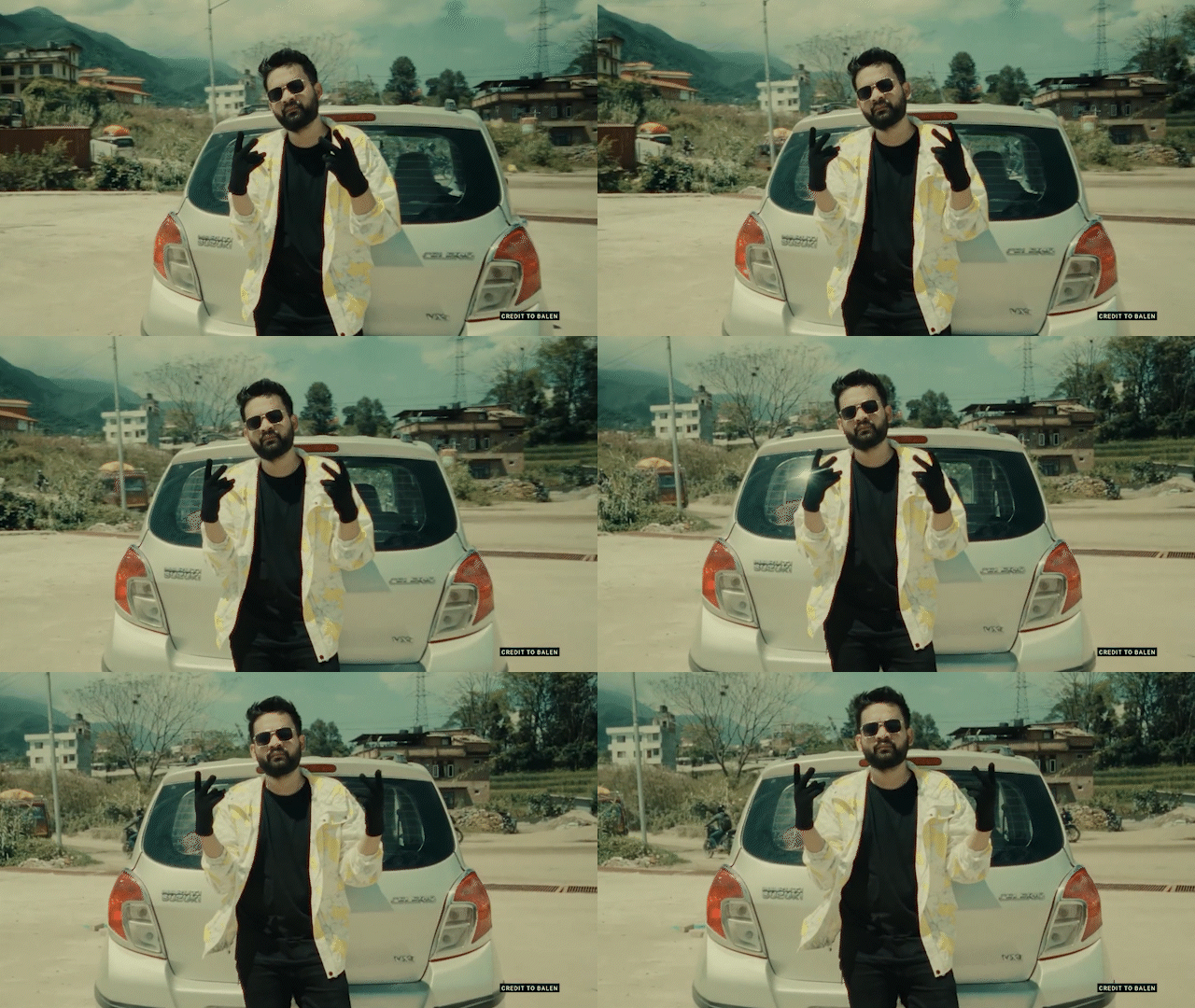
A millennial rapper is set to beat a Marxist former prime minister in an election that has pitted Nepal’s younger generations against an entrenched communist old guard.
Balendra Shah, 35, writes hip-hop songs about his country’s rotten political culture, posts on Instagram instead of giving interviews and wears sunglasses to every rally.
Vote counting is yet to conclude but on Friday Shah’s Rastriya Swatantra Party (RSP) was leading in 107 seats out of the 165 that are directly elected, suggesting he will win a landslide and become prime minister.
“Shah carries the hopes of my generation,” Shishir Rijal, an 18-year-old first-time voter and student in Lalitpur, Kathmandu, told The Times. “He represents both the hope and the change Nepal has long been missing.”
In Thursday’s election in the landlocked Himalayan nation, Shah — known to his fans simply as Balen — represents the hope of the youth who led the student revolution that ousted KP Sharma Oli’s corrupt government in September.
The uprising, which began as a peaceful protest against a social media ban, spiralled out of control after police open fired on student protesters, killing 19. Oli, the prime minister at the time, resigned in disgrace and vanished for weeks, but the subsequent unrest — Nepal’s most violent in decades — left dozens of others dead and the capital in ruins.
Underpinning the protests was a resentment, widespread among Gen Z, against Nepal’s “nepo babies”, the children of politicians who flaunted their lavish lifestyles on social media. Nepal is one of Asia’s poorest countries in the world, with a median age of 25.
Nepal has nearly 19 million people who are registered to vote
On Thursday, voters thronged the streets of Kathmandu, hopeful for change. “It’s the first time I’ve seen more women than men coming out to vote,” said Aayush Basyal, a Gen Z student activist who was volunteering at a polling booth in Jorpati, Kathmandu. “It’s a really unusual thing to witness.”
Many of Nepal’s nearly 19 million registered voters place their hopes in Shah, whose RSP party came fourth in 2022’s election and was formed on an anti-corruption platform.
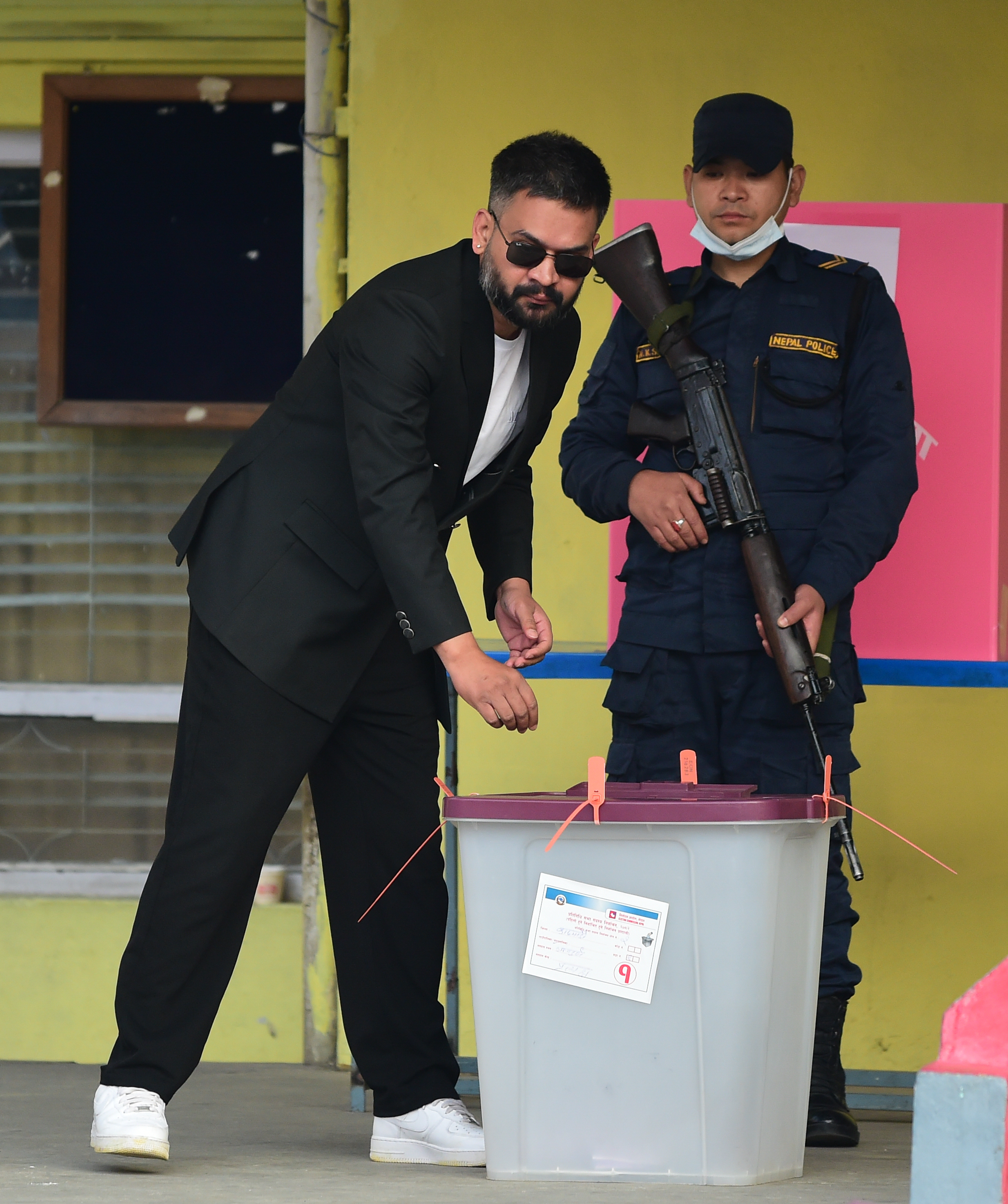
Shah casts his vote
RITESH SHUKLA/GETTY IMAGES
Shah’s rap songs mock other political parties, criticise Nepal’s entrenched corruption and speak to the sacrifices of ordinary Nepalis and the struggles of the country’s minorities.
His song Nepal Haseko, which translates as Nepal Smiling, became a Gen Z anthem during last year’s protests and has 11 million YouTube views.
Please enable cookies and other technologies to view this content. You can update your cookies preferences any time using privacy manager.
Enable cookiesAllow cookies once
In one music video he can be seen dancing on the steps of an ancient stone temple — a Unesco world heritage site — in Kathmandu’s Durbar Square.
At a rally for Shah on Monday in Nepal’s Chitwan district, crazed supporters screamed out the lyrics to an AI-generated campaign song, which translates to: “Time’s up, fake leaders, game over. On March 5 we’ll ring the bell.”
Shah resigned as Kathmandu mayor, a position he held since 2022, in January and announced he would run for the country’s top post as leader of the RSP.
Critics, however, are concerned that Shah’s campaign won’t be followed by substantive changes and policies. “He was never the ideal candidate”, says Basyal. “He’s very charismatic, but the whole protest was about accountability and transparency and he hasn’t held a single press conference. The big concern is that it’s a performative campaign, about making an image for himself.”
• Nepali protesters use ChatGPT to pick their new leader
Shah has largely shunned interviews in favour of social media posts, many of which come across as impulsive and erratic. The rapper is also known to be a fan of luxury cars: in January a photo of Shah driving a black Land Rover Defender, worth more than 40 million Nepalese rupees (£203,000), was criticised online.
He has also faced criticism from Human Rights Watch for using the police to “mistreat the urban poor”, including cracking down on street vendors and slum dwellers.
Others are worried about his foreign policy approach. A post by Shah on Facebook a few months ago, which has since been deleted, read: “F*** America, F*** India, F*** China.”
In 2023 he banned the screening of Indian films in Kathmandu and hung a map of “Greater Nepal” in his office, which included territories that lie within India’s borders. It was a response to India’s installation of a mural depicting “Greater India”. India is Nepal’s largest trade and investment partner: bilateral trade makes up 15 per cent of the nation’s GDP.
Shah will also have to contend with the old guard. For more than three decades, Nepal was governed by a revolving series of fragile coalitions led by the same septuagenarian leaders from three main political parties. The system has long enabled a corrupt political elite to entrench itself at the expense of the public.
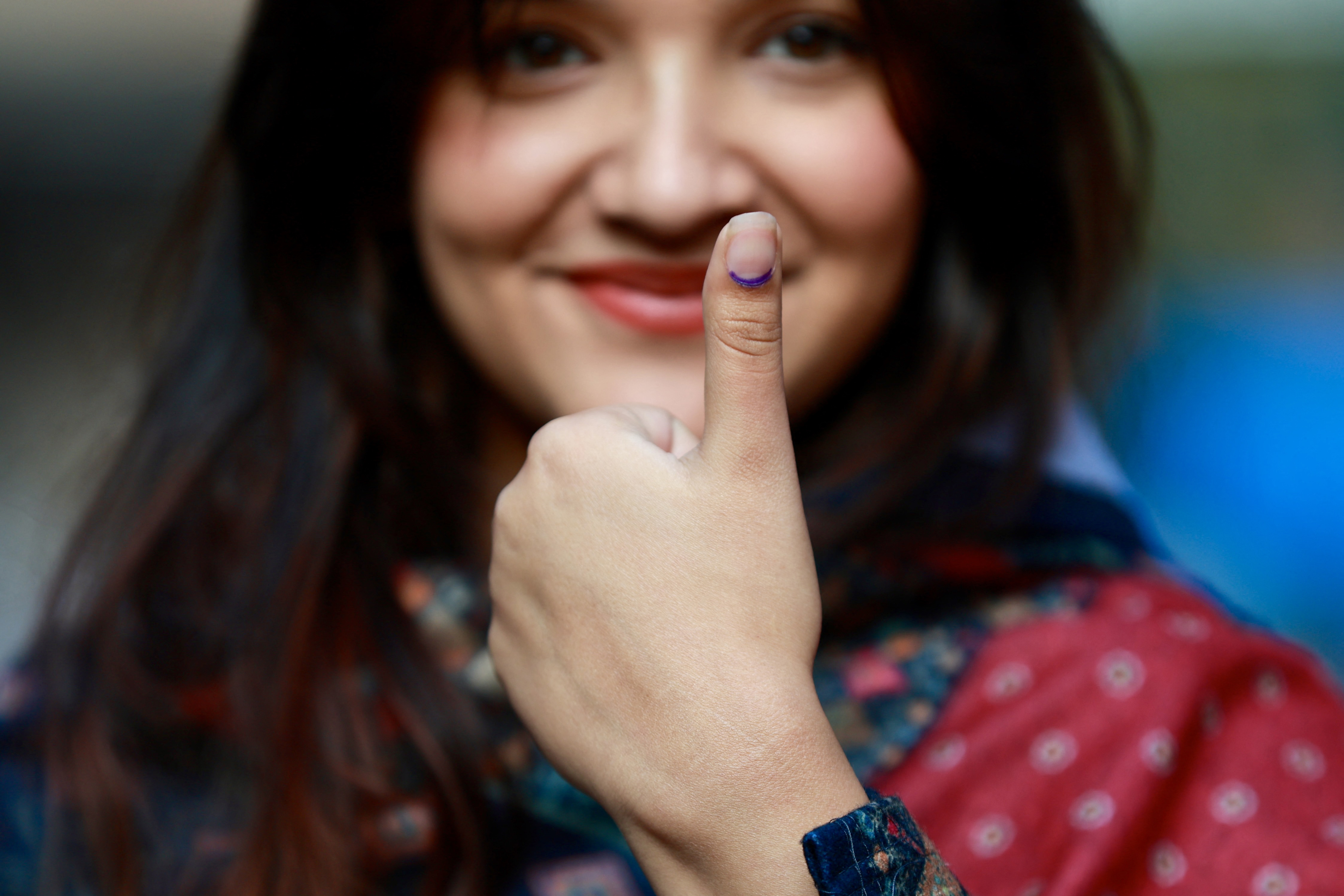
A voter after casting her ballot on Thursday
PRABIN RANABHAT/AFP
Oli of the communist CPN-UML, who has been prime minister four times and was ousted in September, is competing against Shah in the constituency Jhapa-5. The region has for years been a stronghold for Oli’s party. Also running again is Pushpa Kamal Dahal, also known as Prachanda, three-time prime minister, an ex-guerrilla fighter and leader of the CPN (Maoist Centre), another communist party.
For Oli’s close circle, victory for Shah is far from a foregone conclusion. Bhola Nath Pokhrel, a central committee member of UML, Oli’s party, said: “The hatred against KP Oli is largely social media propaganda created by certain agents misusing social media.”
Inside Jhapa-5, voters were less sure. “I believe that [Oli] should have stepped down from his position and apologised for the mistakes made during the protests,” Dinesh Ojha, 58, said. “The people voting in Jhapa-5 are eager to support a new candidate and want to see the change that this new leadership could bring to the country.”