
In the sleek, detached comfort of a Brooklyn loft or a London flat, the idea of a “bomb-shelter rave” sounds like grotesque performance art — a desperate, neon-soaked cliché. In Tel Aviv, it is something else entirely.
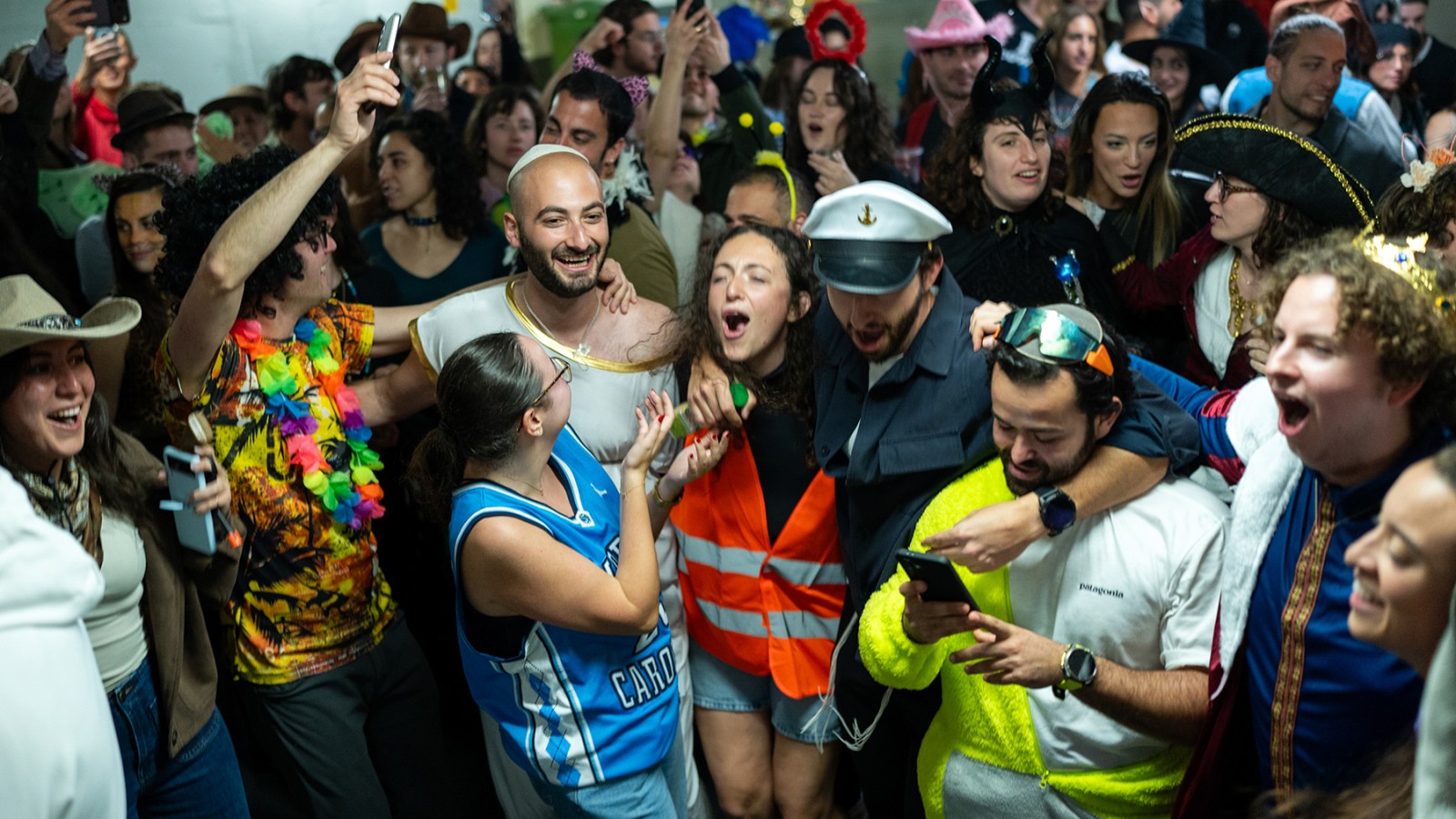
This week, as I was visiting Israel for a conference and to meet my family and friends in Tel Aviv, I experienced it first-hand. In Israel, every building is required to have a reinforced bomb-shelter. Ours is a bare concrete bunker underground. That night, someone dragged in a speaker. Someone else switched on a small strobe light. Within minutes, what had been a tense room of strangers waiting for the authorities to tell us we are safe to go back home, turned into something else entirely. As Iranian ballistic missiles were intercepted in the sky above us, our shelter became something resembling a nightclub.
Similar gatherings happened throughout the city — some in below-ground parking lots, others in train stations. There was even a wedding. All had one thing in common: the instinctive, almost stubborn insistence on living.
You might be wondering: How can anyone dance while war— and the loss of so many lives— hangs overhead? But this isn’t bravado, and it isn’t a celebration. No one here calls it ‘partying.’ It’s something closer to release. A way through the fear rather than around it. We aren’t dancing because we’ve forgotten the conflict, we are dancing because it has stripped us of every other form of agency. When cornered, the human body refuses to stay passive. It moves. It resists. It asserts life in the face of a sky that tells you to cower.
In the mamad, the fortified safe room, which I’ve visited more than 40 times this week, the air is thick with recycled oxygen, and heavy with metallic adrenaline as 20 bodies are squeezed into a space meant for four. Normally, this is a sensory warning: “Prepare to die.” Then someone, a stranger in a dusty hoodie and worn sneakers, hits play on a JBL boom box.
Editor’s picks
The track is relentless, 128 beats per minute, a heartbeat that overrides the erratic thrum of our own pulses. In that moment, Purim — the Jewish holiday that commemorates an ancient attempt by a Persian madman to annihilate the Jewish people — isn’t a holiday, it’s a call to action. When sirens scream “hide,” we rise. When the world demands smallness, we take up space. The bassline repairs the city’s psychic infrastructure, one four-on-the-floor bar at a time.
Israelis have always had a special relationship with dance music. Decades before this war, electronic beats were part of the country’s rhythm, from late night in Tel Aviv’s clubs to massive festivals that draw thousands of young people looking for a few hours of freedom under the open sky. I remember dancing in the desert when I was younger, arriving with my friends after midnight and leaving only once the sun came up over the Mediterranean — soaked and exhilarated — the city slowly waking around us.
On Oct. 7, 2023, that culture of joy was shattered when Hamas militants stormed the Nova music festival in the south of Israel, murdering hundreds who had gathered simply to dance. Since then the act of dancing has taken on a deeper meaning for Israelis. Nova survivors used the slogan “we will dance again” as a promise, to never give in to hate and darkness.
When I was dancing in that mamad, the fear which usually paralyzed me — the way my chest would tighten, teeth rattle, prayers repeat — evaporated. Inside the concrete cocoon, explosions become percussion, the track becomes therapy. Violence and music collide, destructive energy reframed into something creative, collective, and alive.
I found myself dancing to trance music I grew up with. Beside me was a young woman with dark, curly hair. Her family is from Iran, she can only speak to them over the phone once in a while, since the internet is often blacked out. They are safe but she worries for them. She spoke with terrifying, beautiful clarity about watching the regime’s power flicker, about relatives she hasn’t seen in years, and about her dream of dancing in Isfahan one day. She laughed softly at the irony: Here, in a Tel Aviv shelter, she was reclaiming the very freedom that had been denied her, and that upsets the Iranian regime to no end.
Related Content
“They will dance again,” she said, voice cutting through the bass. The sentiment wasn’t one of surrender, but rather pure, unbridled hope. Her words hung in the recycled air, defying gravity and expectation alike. Around us, strangers joined hands, jumped, spun — tiny acts of courage multiplying, forming a tribe in concrete.
This is context at its most extreme. How can you explain a group of strangers spontaneously dancing in a bomb shelter? In terror, we can become victims. In a room where bass drowns blast, we are a tribe. We are not ignoring the missiles — we are refusing to let them set the tempo of our lives. Every movement is a claim: Life, freedom, joy, and defiance are not negotiable.
Trending Stories
The track faded long after the all-clear. We emerged into the tense, quiet night of Tel Aviv. Smoke trails from the air defense lingered like ghostly brushstrokes, fading into clouds. Rhythm still pulsed in our bones. In a city under siege, the dance floor isn’t escape — it is survival. Every beat, every jump, every flash of light is a reminder that even under fire, we remain unbroken, moving, alive.
Hen Mazzig is an Israeli author and educator based in London, the son of North African and Iraqi Jewish refugees. He is a Senior Fellow at The Tel Aviv Institute, a non-profit focusing on uplifting marginalized Jewish voices online and fighting antisemitism. Find him on Instagram at @HenMazzig.