
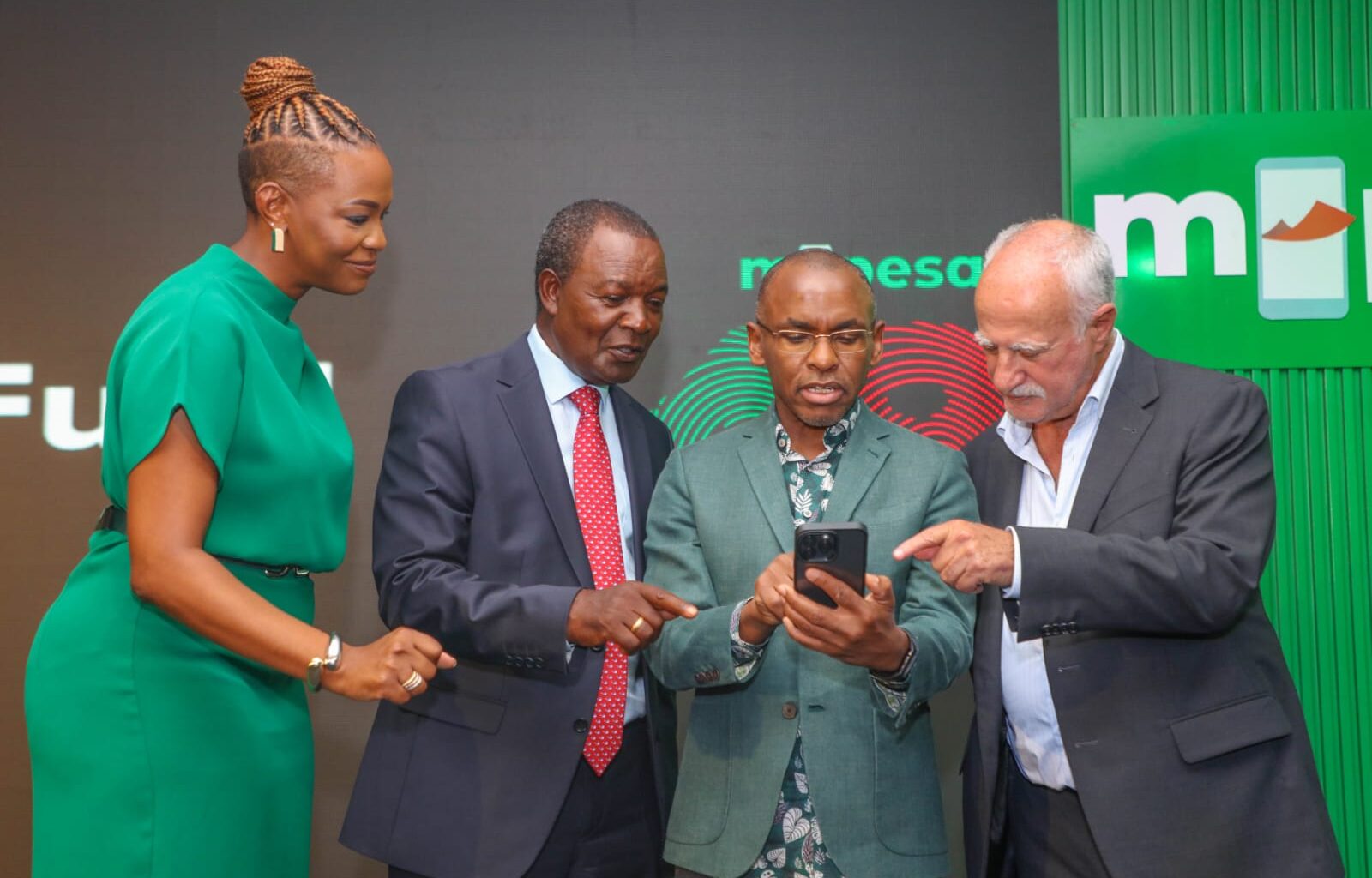
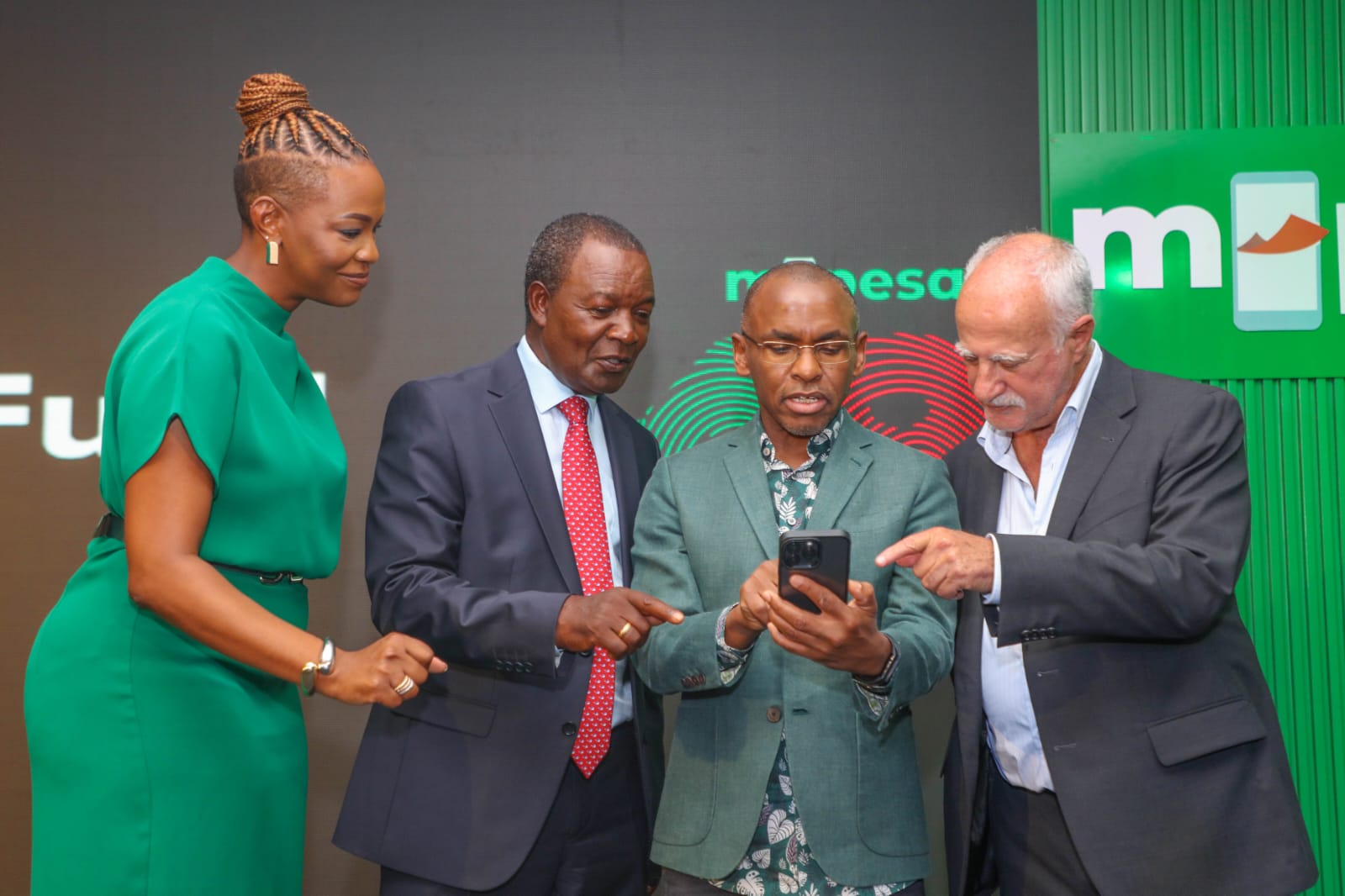
 Safaricom CEO Peter Ndegwa [holding a phone]
Safaricom’s mobile money platform M-Pesa has reached 40 million monthly active users in Kenya, marking a major milestone as the service celebrates 19 years since its launch on March 6, 2007.
What began as a simple person-to-person money transfer service has evolved into a comprehensive digital financial ecosystem embedded in the daily lives of millions of Kenyans.
In a statement marking the anniversary, Safaricom CEO Peter Ndegwa said the platform’s evolution reflects the company’s broader mission to empower individuals and businesses through accessible digital financial tools.
“Our goal is to give Kenyans and Africa at large digital financial tools to empower them to be more prosperous. Reaching 40 million monthly active customers in Kenya is a milestone we celebrate as we recommit to enable every Kenyan to transact safely, grow their savings, and build their wealth,” Ndegwa said.
“To us, every M-Pesa transaction tells a story of someone building their future.”
From money transfers to a full financial ecosystem, over nearly two decades, M-Pesa has transformed from a payments platform into a diversified financial services hub offering credit, savings, investment, and merchant payment solutions.
These include investment and wealth-building products such as Ziidi Money Market Fund (MMF) and Ziidi Trader, credit facilities like Fuliza and KCB M-Pesa, and business payment solutions including Lipa na M-Pesa, Pochi la Biashara, and Global Pay.
Safaricom says these services are designed to help individuals and small businesses access financial services that were historically limited to the formal banking sector.
Over the past year, the company has also continued to invest heavily in technology upgrades, enhanced fraud prevention systems, and customer education aimed at improving the platform’s security, usability, and reliability.
M-Pesa is widely credited with transforming financial access in Kenya.
According to the government data, the country’s financial inclusion rate has risen to 84.8 per cent of the adult population in 2024, up from 26.7 per cent in 2006, the year before the service launched.
Millions of Kenyans now use their phones not only to send money but also to save, borrow, pay bills, receive salaries, and conduct business transactions, effectively turning mobile phones into personal banking.
Beyond financial inclusion, M-Pesa has become a critical pillar of Kenya’s digital economy.
The platform processes about 2,600 transactions per second, reflecting its role as the country’s dominant payment infrastructure.
Annual transaction volumes continue to surge.
In the financial year ending March 2025, M-Pesa handled transactions worth approximately Sh38.3 trillion, a value that significantly exceeds Kenya’s annual GDP.
The ecosystem supporting the platform has also expanded dramatically. Safaricom reported 298,900 M-Pesa agents across Kenya in 2025, forming one of the largest financial distribution networks in Africa and providing millions of jobs directly and indirectly.
The wider Safaricom ecosystem contributes over Sh1.21 trillion annually to Kenya’s economy — more than eight per cent of the country’s GDP — through employment, taxes, supplier spending, and digital financial services.
M-Pesa has also become Safaricom’s biggest revenue engine.
In the financial year ending March 2025, the mobile money platform generated Sh161.1 billion in revenue, representing 41.5 per cent of Safaricom’s total revenue and reinforcing its role as the company’s primary growth driver.
The strong performance helped Safaricom post total revenues of Sh388.7 billion and net income of Sh69.8 billion for the year, highlighting the central role M-Pesa plays in the firm’s profitability.
Industry analysts say the platform’s continued expansion into investments, international remittances, and merchant payments is likely to further strengthen its contribution to Safaricom’s earnings.