

 For those who find themselves thrashing about, kicking, or throwing punches in their sleep, it might be a sign of REM Sleep Behavior Disorder. This intriguing yet potentially troubling condition arises when the brain’s protective paralysis during deep dreaming phases doesn’t function as it is intended to, leading to dramatic dream reenactments. Sleep is supposed to be a time when the body rests and the mind processes the day. Dreams come and go, often vivid, sometimes strange, but they usually stay inside the mind. Yet for some people, the body begins to move along with the dream.A person may shout, kick, punch, or even leap out of bed while still asleep. Partners may notice sudden movements in the middle of the night or hear conversations that make no sense. The sleeper often remembers a vivid dream the next morning.Doctors call this condition REM Sleep Behaviour Disorder (RBD). It is uncommon, but it matters because it can affect safety during sleep and, in some cases, signal deeper neurological issues.“REM Sleep Behaviour Disorder is a sleep disorder in which a person acts out their dreams while they are sleeping. Normally, during the REM sleep period, which is when most dreams occur, the brain temporarily paralyses the body’s muscles to prevent movements. In RBD, this mechanism fails, and the person may talk, shout, punch, kick, or even jump out of bed while sleeping,” explains Dr Keni Ravish Rajiv, Senior Consultant – Neurology and Head of Epilepsy Service, Aster Whitefield Hospital.Understanding this disorder early can prevent injuries and help doctors monitor long-term brain health.
What exactly happens during REM sleep?
Sleep occurs in several stages. One of the most important stages is REM sleep, short for Rapid Eye Movement. This is when the brain is highly active and most dreaming occurs.During normal REM sleep, the brain sends signals that temporarily switch off the muscles. This natural paralysis prevents the body from physically acting out dream scenes.But in REM Sleep Behaviour Disorder, this protective system does not work properly. The brain continues dreaming, yet the muscles remain active.The result is simple but alarming: the dream escapes into real movement.People may:Talk or shout loudlyMove their arms or legsPunch or kick during sleepSit up suddenly or jump from bedA long-running study published in the Frontiers in Neurology explains this process in detail and notes that RBD occurs when the brain circuits responsible for REM muscle paralysis malfunction. 
The disorder is most common in men over 50 but can occur at any age and may sometimes be linked to neurological conditions such as Parkinson’s disease. Diagnosis usually involves a sleep study called polysomnography.
When dreams become physical actions
Most people with RBD describe vivid and intense dreams. These dreams often involve action, being chased, defending themselves, or escaping danger.Dr Rajiv notes that the movements are closely linked to dream content.“The movements that occur in RBD are often related to vivid and action-packed dreams, such as being chased. This is why individuals may end up harming themselves or their bed partner during sleep,” he explains.Unlike sleepwalking, which occurs in deeper non-REM sleep, RBD usually appears in the second half of the night, when REM sleep becomes longer and more frequent.The sleeper may wake up quickly afterward and remember the dream clearly. This detail helps doctors differentiate RBD from other sleep disorders.
Warning signs that should not be ignored
Many people first learn about RBD through their partner or family member. The signs often appear gradually.Common warning signals include:Sudden physical movements during sleepPunching, kicking, flailing arms, or falling out of bed.Loud talking or shouting during dreamsSome people speak clearly while asleep or yell in response to dream events.
Dreams involving action or conflict
Dreams often feel intense, dramatic, or threatening.Unexplained injuries at nightBruises, scratches, or knocked-over objects in the bedroom.Bed partner disturbancesPartners may wake frequently because of sudden movements.Recognising these patterns early can help doctors intervene before injuries occur.
Who needs to be extra careful?
REM Sleep Behaviour Disorder can appear at any age, but certain groups are more likely to develop it.Research suggests it is most common in men over 50. However, younger adults may also experience the disorder, particularly when certain triggers are present.Dr Rajiv points out that several factors may increase the risk.“RBD is most commonly seen in men over the age of 50, although younger individuals may also develop it. It may be linked to neurological disorders such as Parkinson’s disease or other conditions affecting the brain’s motor control centres. It can also appear on its own or be triggered by medications, sleep deprivation, or excessive alcohol use,” he says.The study also shows that some individuals with RBD later develop neurological conditions affecting movement and brain function.This connection does not mean every patient will develop such diseases. But it explains why neurologists recommend careful monitoring. 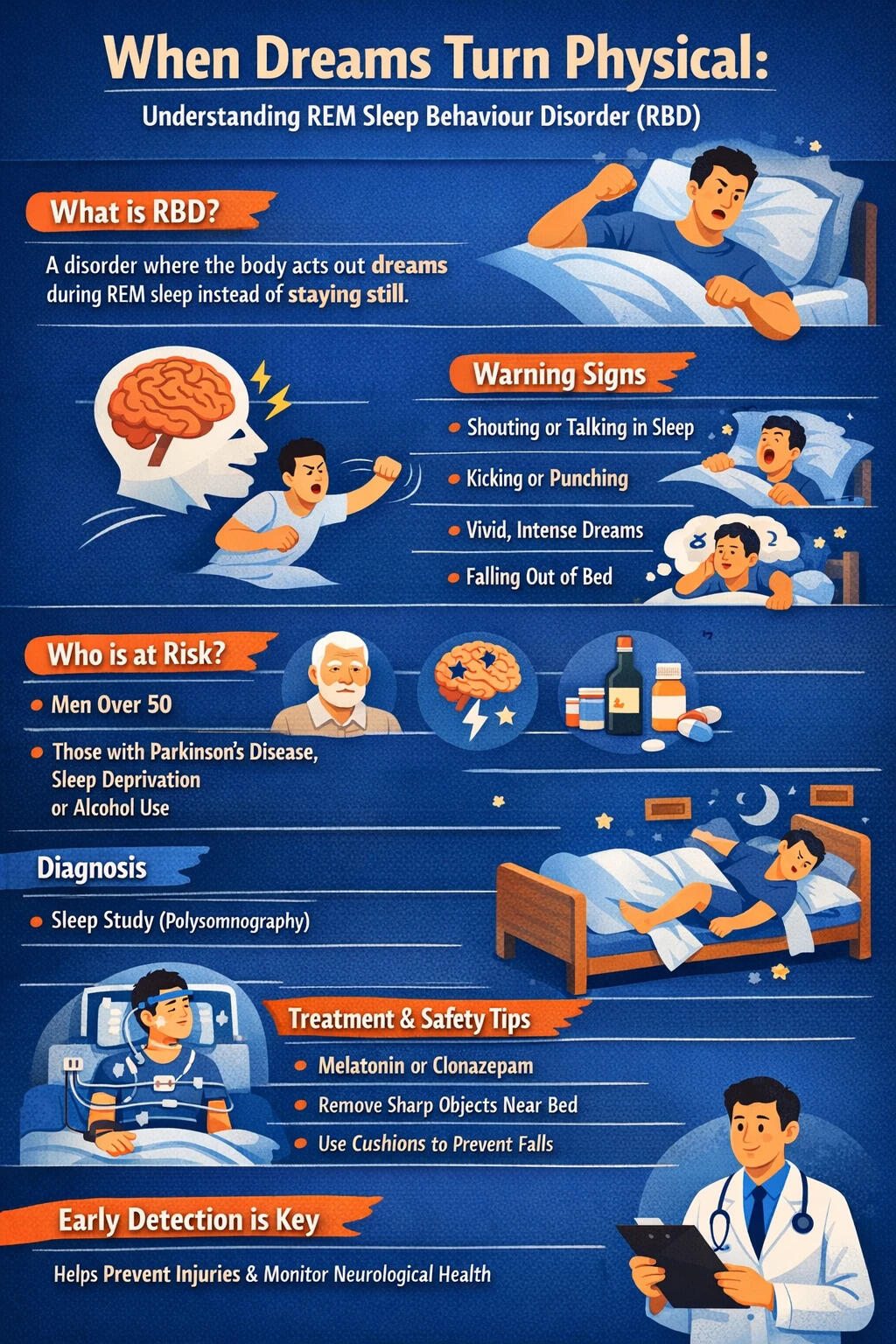
Treatment includes medications like melatonin or clonazepam along with safety measures in the bedroom to prevent injury.
How doctors diagnose the condition
Diagnosis usually begins with a detailed discussion about sleep behaviour. Doctors often ask the patient and their partner about nightly patterns.A key test used to confirm the disorder is polysomnography, an overnight sleep study.During this test, specialists record:Brain activityEye movementsMuscle activityBreathing patternsHeart rateThe test helps doctors confirm whether the normal muscle paralysis during REM sleep is missing.“Diagnosis is usually based on the patient’s sleep history and confirmed through an overnight polysomnogram that records brain activity, muscle movements, and breathing patterns,” explains Dr Rajiv.This test helps rule out other sleep conditions such as sleep apnea or night terrors.
Treatment and making sleep safer
The goal of treatment is not only to control movements but also to reduce the risk of injury during sleep. Doctors usually recommend a combination of medication and safety measures.Medications may include:Melatonin, which helps regulate sleep and reduce movementsClonazepam, commonly used to suppress abnormal muscle activity during REM sleepDr Rajiv says these treatments often work well when started early.“Treatment focuses on improving safety during sleep and reducing abnormal movements. Medicines such as melatonin and clonazepam are commonly used, and patients are advised to make their sleeping environment safer,” he explains.Doctors also suggest simple changes at home:Remove sharp objects near the bedPlace cushions beside the bedLower bed height if falls occurAvoid alcohol before sleepMaintain regular sleep timingThese adjustments reduce injury risk while treatment begins to work.
Why early attention matters
Sleep disorders are often ignored because they happen quietly at night. Yet RBD can offer an early clue about the brain’s health. Detecting the condition early helps doctors track neurological changes and manage symptoms effectively. When sleep begins to behave differently, it may be the body’s way of asking for attention. Recognising these signals early can protect both sleep and long-term health.Medical experts consulted This article includes expert inputs shared with TOI Health by: Dr Keni Ravish Rajiv, Senior Consultant – Neurology and Head of Epilepsy Service, Aster Whitefield Hospital.Inputs were used to explain REM Sleep Behaviour Disorder highlighting its warning signs, possible causes, and why early medical consultation is important for proper diagnosis and treatment.