
Stephen Jeans is a lecturer in earth and space science at Mount Royal University and Ambrose University. He holds a PhD in Earth and Space Science Education.
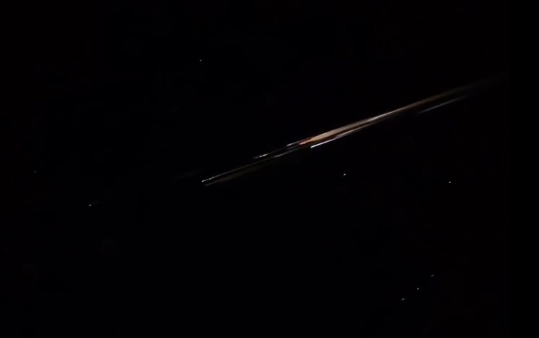
After reviewing footage of the fireball that streaked across the sky last night, he believes folks saw a satellite reentering earth’s atmosphere.
“It’s very impressive that so many people got a good look,” said Jeans.
At first, he thought it could have been part of a meteor pattern seen across Alberta and British Columbia. Meteors were spotted in Alberta a few weeks ago and on March 2, a bright bolide (bright meteor) streaked across the sky in British Columbia.
“This is probably not a meteor that we’re looking at,” he said. “A meteor comes streaking through the sky fairly swiftly. A meteor will usually be fairly bright and a consistent bright.”
Related Stories:
Satellites or space debris move a little slower, taking a few minutes to move across the sky, and are less bright.
“It’s still traveling at a pretty good speed, but when it starts to re-enter the atmosphere, or if it’s deorbited because they’re finished with it, it will start to break up high up in the atmosphere, about 100 kilometers up, and it leaves a whole bunch of debris, streaks, and colours.”
In the past, it was rarer to see satellites reentering the atmosphere. When they did, it was usually announced ahead of time.
However, with more satellites sent into orbit and more nets of satellites, like Starlink, placed in low orbit, sightings like the one on Thursday night are becoming more common.
“The idea is they’re not going to be up there for long. The reason why they do that is because they can refurbish and replenish them, and they can be close to the Earth for quick communications,” said Jean.
Starlink satellites are designed to have a life span of about five years. It is reported that about one to two Starlink satellites are deorbited every day.
“Occasionally, they rub up against the atmosphere and will start to tumble out. Or they fail, their devices stop working, and so they’re intentionally crashed into the planet or deorbited.”
Jean said to keep an eye on the sky for similar events in the future. He said satellite debris can be very pretty as a variety of colours streak the sky due to the different materials.
Should I be worried about debris?
Jean said the likelihood of being hit by satellite debris is very rare.
“It’s no different than anything else catching fire,” he said. “By the time they reach the surface of the Earth, they’re going to be pretty small.”
Air resistance also slows down the debris, so it does not come in too swiftly.
Additionally, when satellites are intentionally deorbited, companies are sensible about the location. Typically, they plan for big debris to land in the middle of ocean.
Report celestial events
When you are lucky enough to see a celestial event, Jean said to report it online.
Information gathered is then collected in one place, making it easier for people to track and determine the cause for events like this.
Events can be reported at the American Meteor Society