
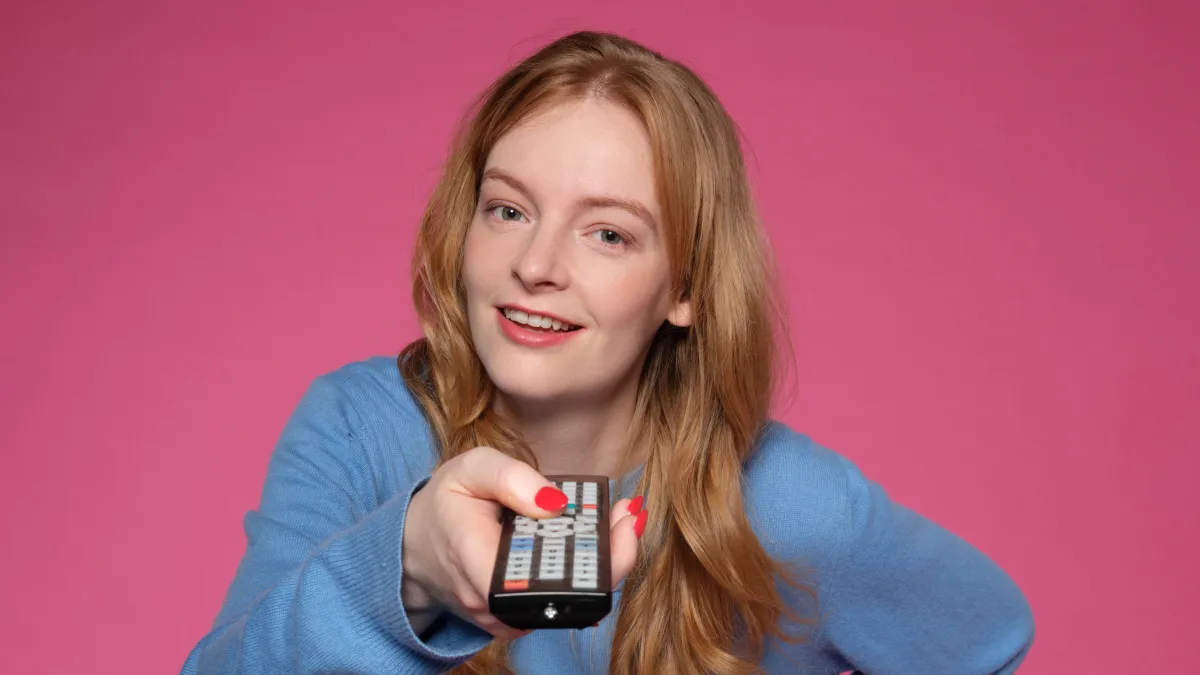
One day in the not too distant future, when Britain is nothing but a bleak, postindustrial wasteland, only two industries will remain: Harry Potter and Sherlock Holmes. All manufacturing having packed up, our economy will rely entirely on the export of these two intellectual property juggernauts to Japanese teenagers and Minnesotan housewives. The Holmes phenomenon is a particular economic opportunity in that it lends itself to Britain’s natural area of comparative advantage: period dramas marked by good posture, homoerotic tension and the frequent removal and redonning of hats.
In Young Sherlock (Prime Video), the latest contribution to the Holmes industrial complex, courtesy of Guy Ritchie, our hero arrives in 1870s Oxford as a college servant, only to discover that — by happy coincidence — somebody is bumping off the dons. You can tell, by the way, that this show is made to appeal to an international audience because early on in episode one Holmes’s brother Mycroft helpfully explains that Oxford is “arguably the greatest university in the world”. You don’t need to tell Brits this because they have spent their lives hearing it from people who studied there.
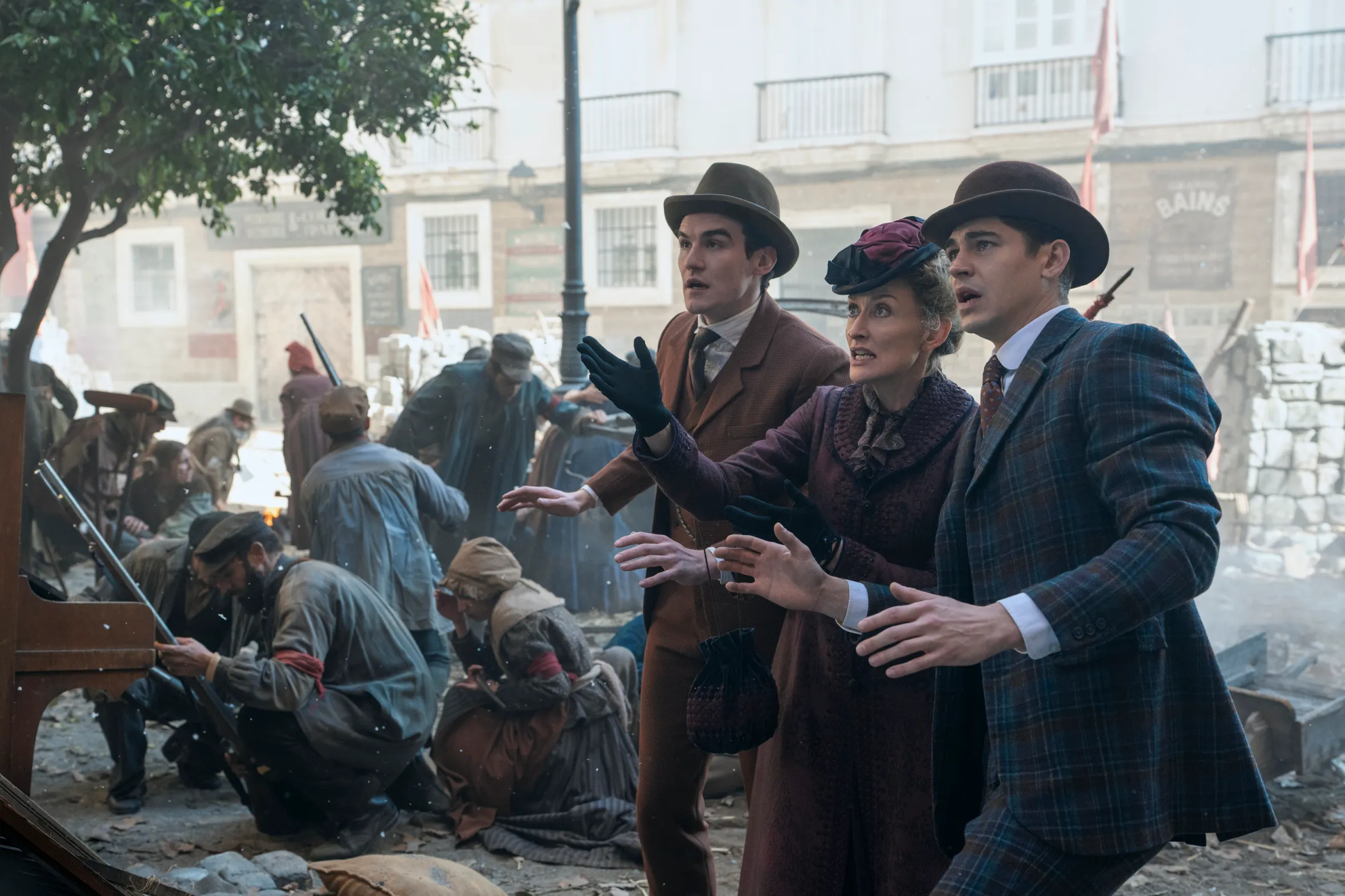 Dónal Finn, Natascha McElhone and Hero Fiennes Tiffin in Young SherlockDaniel Smith/Prime/PA
TV newsletter
What to watch or stream, plus news and reviews from our small-screen experts.
Sign up with one click
There are brief moments of Ritchie wit in this show, most of which come from Dónal Finn, who — as James Moriarty, at this stage in life Sherlock’s best friend — is the best thing about it. But overall, it is neither particularly funny nor particularly suspenseful. Nor does it feel new. The lead villain, whose identity I won’t spoil, is just a 19th-century copy of Hugh Laurie in The Night Manager. Come to think of it, the plot — which develops into an international arms deal caper — is not far off that of The Night Manager either. It’s a perfectly enjoyable watch: a warm, Richard-Osman-cosy-crime bubble bath of a show. But when you think of all the other shows that didn’t get made? You start to wonder, what’s the point?
Did we really need another foray into the Holmes canon? We’ve already had Jeremy Brett in the 1980s, and Benedict Cumberbatch in the 2010s in a show that, like a genius with a spiralling cocaine addiction, was utterly brilliant until it was not. Then Enola Holmes, Mademoiselle Holmes, Miss Sherlock, each uniquely daring to ask the question nobody else was asking: what if a woman could solve crimes? And there was Jonny Lee Miller in Elementary, which posed an even more subversive question: what if Sherlock Holmes were forced to engage with Americans? Young Sherlock is not even Guy Ritchie’s first crack at Holmes: he’s already made two films starring Robert Downey Jr.
That’s a lot of shows given that even Holmes’s original creator, Arthur Conan Doyle, became so bored by his creation after just a few years that he chucked him off the Reichenbach Falls. Of course, he ended up crawling back later, shamefaced, because his most famous creation was such a cash cow. There’s a metaphor in there somewhere. Television today is an anxious industry. The money isn’t what it used to be. Everyone is cagey, risk-averse, looking for guaranteed wins. Why bet the house on a new writer with an innovative idea when you can funnel more cash into a big-name property that guarantees eyeballs?
This is also how we find ourselves with Marshals (Paramount+), yet another spin-off from Yellowstone. The jobbing actor turned juggernaut showrunner Taylor Sheridan’s modern American epic, telling the story of the fictional Dutton family, owners of the Yellowstone ranch in Montana, was one of the most popular shows in the US before it ended in 2024. Since then a whole universe of prequels, sequels and tributes has followed. By my count, Marshals is the third spin-off, with two more imminent. Who needs new ideas? Instead, we have the adventures of the newly recruited US Marshal Kayce Dutton (Luke Grimes), the troubled youngest son of the formidable ranch owner John Dutton, played with such fire and pathos in Yellowstone by Kevin Costner until (spoiler) he copped it in season five and Kayce sold the ranch back to the local Native American tribe.
It’s always a curse to have a talented older sibling, but Marshals just does not compare to Yellowstone. It is more police procedural than Great American Novel, with too much time taken up by bloody but emotionally bloodless shoot-out scenes. “That’s going to be a lot of paperwork in the morning,” I found myself thinking midway through one police raid, which is never a good sign.
Instead of Yellowstone’s thrilling cowboy psychopaths, philosopher ranchers and evil venture capitalists, we have a slightly wooden Kayce and a cookie cutter cast of clichés to make up his colleagues in the marshals: the mum who feels conflicted juggling dangerous work and caring for her child; the outsider from the big city adapting to small-town life. The great, sweeping vista shots of Montana that were so critical to Yellowstone’s beauty are still there. But while in that show these landscapes seemed to parallel the grandeur of the narrative, here they seem little more than Windows screensavers.
Watching comes with a great sense of déjà vu. Much of the plot revolves around a dispute between the tribe and the local blue-collar workers. We’ve heard this song before. Dutton comes across a man who has been excruciatingly and critically injured in an explosion, and shoots him to put him out of his misery. It is a direct replica of a scene from Yellowstone. Are the writers trying to tell us something about the mundanity, the circularity of violence in this world? Maybe. But it doesn’t work. You’re left wondering instead whether they have run out of ideas.
I found myself thinking the same thing while watching Love Story: John F Kennedy Jr & Carolyn Bessette (Disney+), the plot of which is exactly what you would expect from the title. Have we as a culture so run out of ideas that Ryan Murphy (the creator of Glee and Nip/Tuck, and “the most powerful man in TV” as he always used to be termed) has no choice but to create this syrupy romance where the only dramatic conflict comes from the fact that at least one — maybe two — of the pair is a spoilt brat? You would have thought everything that can be said about this family has already been said, and yet here we are. Such is the deep-seated American yearning for a return to monarchy that TV execs know you can slap the word Kennedy on anything and guarantee a profit.
Despite all this, there is something rather magnetic about this show. Naomi Watts is fantastic as Jackie Kennedy (although she does not survive past the first few episodes). The whole thing is visually beautiful and the soapy plot rattles along with sufficient strategically placed emotional crunch points that you somehow end up investing in this rather rum pairing.
The overwhelming big brand caution of American TV execs is spawning some pretty forgettable content, but there’s something about this story of doomed love and haunted glamour that is rather irresistible. I find myself compulsively clicking “play next episode”. I don’t feel good about it. But I still keep watching. Perhaps we get the TV we deserve.
Charlotte Ivers’s television firsts
First show I watched with my parents
When I was a child I was enamoured with the gardening show Ground Force, perhaps because Charlie Dimmock had the same colour hair as me. I tend to find celebrities exciting only if I remember them from childhood (to my shame, the only politician I’ve ever been starstruck by is John Prescott). Thrillingly, the other day I interviewed Alan Titchmarsh on the phone. He told me he reads The Sunday Times and I nearly squealed with excitement. I texted my whole family but nobody else seemed to quite grasp the magnitude of the situation. Ridiculous people.
First show that left me speechless
It was Mad Men. Matthew Weiner’s visually beautiful and morally bleak tales of hard-drinking, hard-shagging 1960s ad men hit me at exactly the right time in my life: just on the brink of adulthood. It’s easy to accidentally sell an 18-year-old on the glamour of it all. Big hair! Gorgeous clothes! Whiskey for breakfast! But that just means the eventual realisation of the hollowness of the whole thing hits harder. Oh, I remember thinking, skulking hungover in front of the TV with the curtains drawn in my first horrible house share… so this is adult life, then. Luckily it turned out not to be so. I’m careful not to open the whiskey before 2pm.
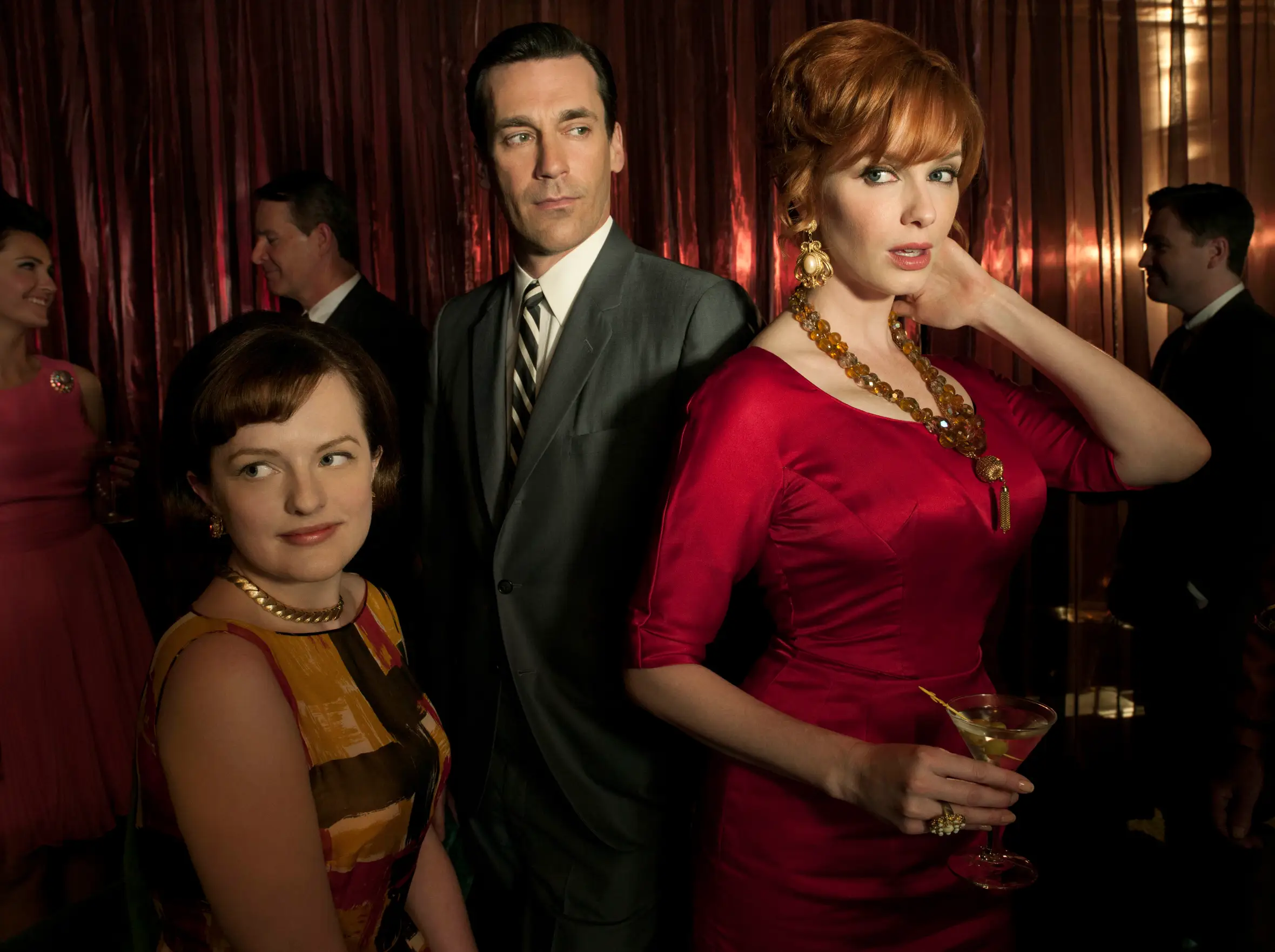 Elisabeth Moss, Jon Hamm and Christina Hendricks in Mad Men Frank Ockenfels/AMC
First theme song I loved
It was, is and for ever shall be Only Fools and Horses.
First show that taught me the power of TV
It’s got to be The National Anthem, the first episode of Black Mirror. I was 16 when Charlie Brooker’s prime ministerial pig fellatio hit our screens. That’s perhaps rather late in the day for such a first but I don’t remember anything quite like this before then. We were talking about this show for weeks before it came out, then for weeks after. People can be a bit smirky about Black Mirror these days — “Oh, what if your phone was out to kill you? What if your toaster stole your wife?” — but we forget how much the early series of this show in particular moved the dial on what television can be and can do.
First box set I owned
The Simpsons, specifically series six. It was a Christmas present, if I remember correctly. I felt no need to beg my parents for any further DVDs. Watching this one set of 25, 22-minute shows covered me for entertainment for a good two years… or a bad two years, perhaps. Horrifyingly, I have just googled the episode list and I barely recognise any of them. It feels like catching sight of someone across the supermarket who you once loved desperately and feeling nothing. The only episode that vaguely rings a bell is Homer Badman in which Homer is accused of sexual harassment after peeling a gummy sweet Venus de Milo off a woman’s bum. Sex sells, it seems, even when you’re nine. Particularly when you’re nine, maybe.
First show that made me love food
This is mortifying… I’ve never told him this but it was Giles Coren and Sue Perkins’s The Supersizers Eat…, a show in which the presenters ate and lived like people from different historical eras. Great show. I’ve seen every episode twice. I’m being serious here: don’t tell Giles about this.
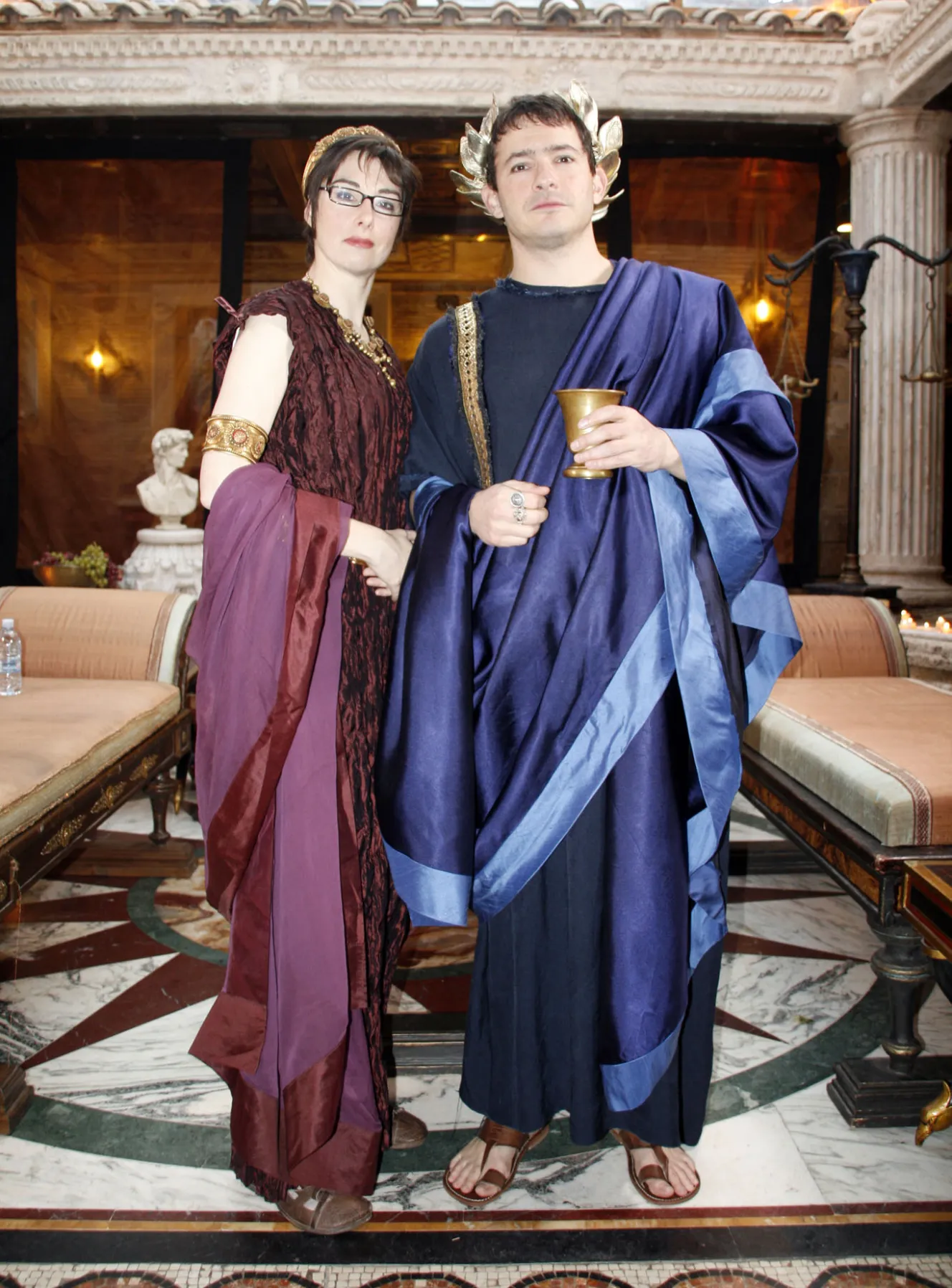 Sue Perkins and Giles Coren in The Supersizers Eat…Silver River/BBC
First show I was definitely too young to be watching
I’m tempted to say it was Skins — with its promise of teenage drink, drugs and romance — the first series of which came out when I was 12, on E4.
E4… there’s still a tingle of excitement to it, even now. The very existence of E4 seemed to speak to a glamorous, grown-up world, a secret garden to which I was denied entry. At the time Skins seemed impossibly illicit and adult. Looking back, however, I presume I was bang on their target viewer demographic. Skins did a bit of a number on me, I reckon. It set me up for a lot of disappointment. Watching when I was 12 I assumed my late teenage years would involve rather more dramatic fights for my honour and sexy Bristolian rendezvous, and rather less watching Giles dress up as a Georgian.
First show I binged start to finish
Ryan Murphy’s Glee, a show about a choir at a fictional Ohio high school, filled with covers of classic pop songs. I have been accounting for my love of this show in the court of social opprobrium for more than a decade but I will not budge. Glee was great.
What are you watching on TV right now? Let us know in the comments below
Love TV? Discover the best shows on Netflix, the best Prime Video TV shows, the best Disney+ shows , the best Apple TV+ shows, the best shows on BBC iPlayer , the best shows on Sky and Now, the best shows on ITVX, the best shows on Channel 4 streaming, the best shows on Paramount+ and our favourite hidden gem TV shows. Don’t forget to check our critics’ choices to what to watch this week and browse our comprehensive TV guide