
Two Israel Defense Forces soldiers were killed in a Hezbollah attack in southern Lebanon early Sunday morning, as missiles and drones rained down across much of northern Israel throughout the day.
Meanwhile, Israel carried on with heavy strikes in Lebanon, with the IDF saying that some 200 members of Hezbollah and other terror groups have been killed since hostilities intensified last week.
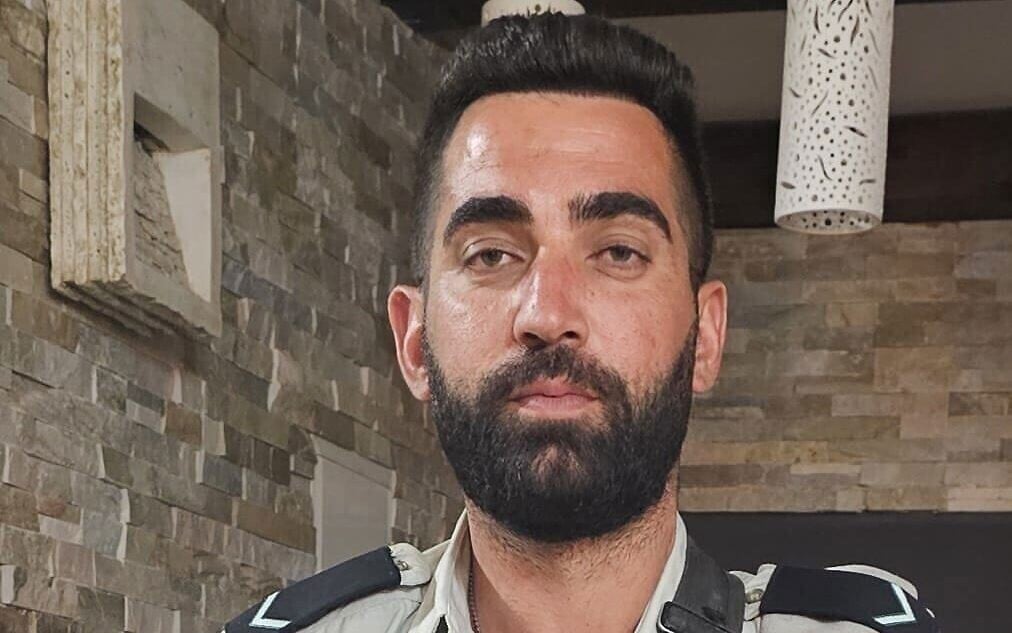
One of the slain Israeli troops was named Sunday afternoon as Sgt. First Class Maher Khatar, 38, a heavy machinery operator in the 91st “Galilee” Regional Division’s combat engineering unit, from Majdal Shams.
The name of the second soldier is to be released later, the army said.
The incident took place near an army post in southern Lebanon, just across from the Israeli border community of Manara.
Get The Times of Israel’s Daily Edition
by email and never miss our top stories
By signing up, you agree to the terms
According to a preliminary IDF probe, the incident began when a tank got stuck amid operations in the area. The IDF sent a Puma armored personnel carrier and two D9 armored bulldozers in an attempt to extract it.
One of the D9 bulldozers was struck by a projectile, possibly an anti-tank missile or a mortar, causing a blaze that killed the two troops, according to the IDF’s probe. One officer was also lightly injured in the incident.
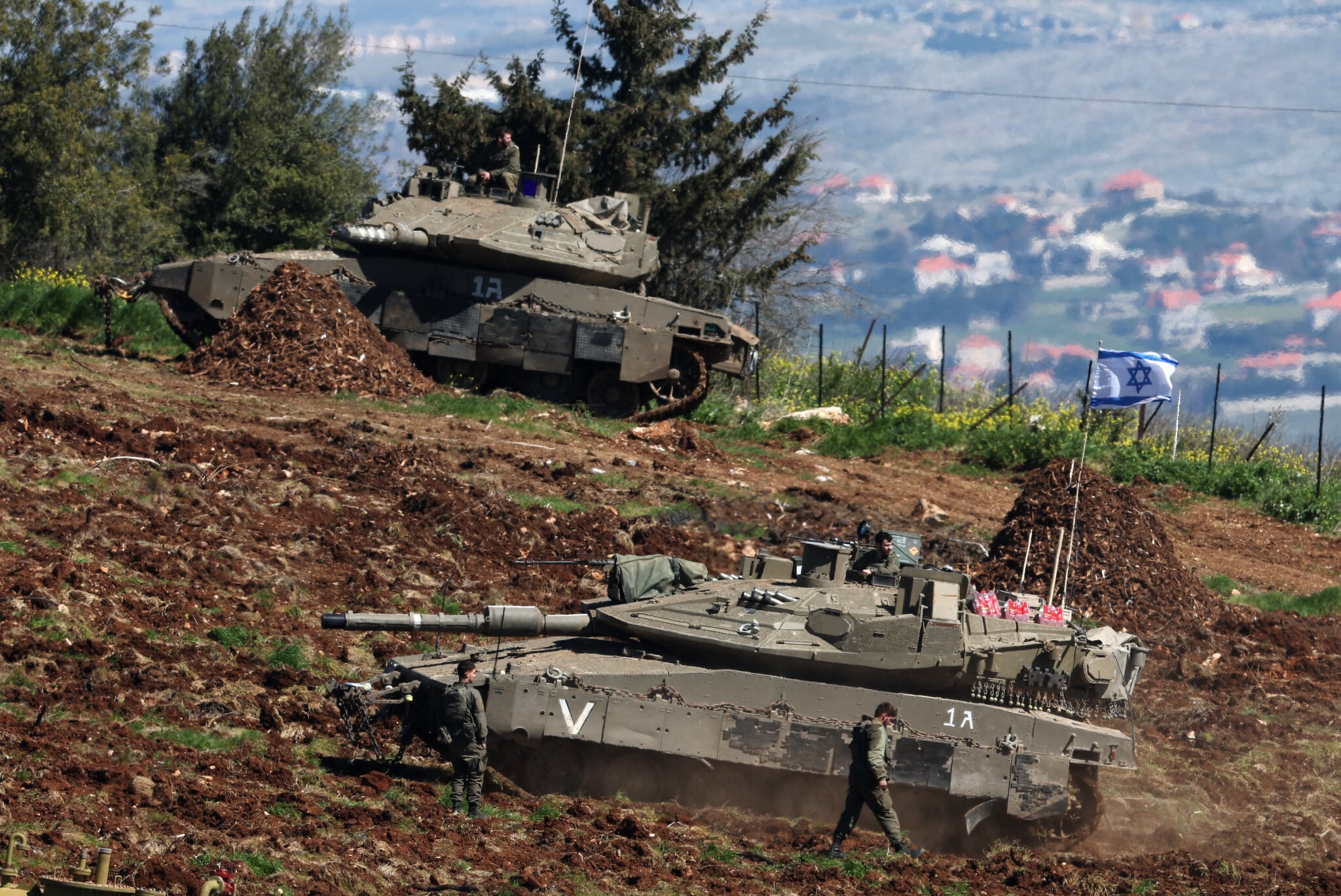
Israeli tanks gather at a position along the Lebanon border on March 8, 2026. (Jack Guez/AFP)
Rocket and drone sirens sounded repeatedly overnight and throughout Sunday morning and afternoon, sending residents of Haifa, Karmiel, Safed, Rosh Hanikra and many other areas in northern Israel scrambling for shelter.
The IDF said that Hezbollah has been launching most of its attacks from deeper within southern Lebanon, and not from close to the border.
At least three drones launched from Lebanon were downed by Israel in the north mid-morning, the IDF said. A prolonged chase after one of them set off sirens in a wide swath of territory.
The IDF said that several homes in northern Israel were damaged by helicopter fire during attempts to shoot down the drone. The helicopter had used its 30mm cannons to shoot down the drone over the Lebanon border, according to the IDF.
“As part of the interception attempts, a small number of homes in Israeli territory were hit by artillery shells that were fired,” the military said, adding that no injuries were caused and the incident is under further investigation.
The IDF said Sunday that it had conducted over 600 strikes in Lebanon, using over 820 bombs, after Hezbollah began attacking Israel on Monday in response to the killing of Iran’s supreme leader.
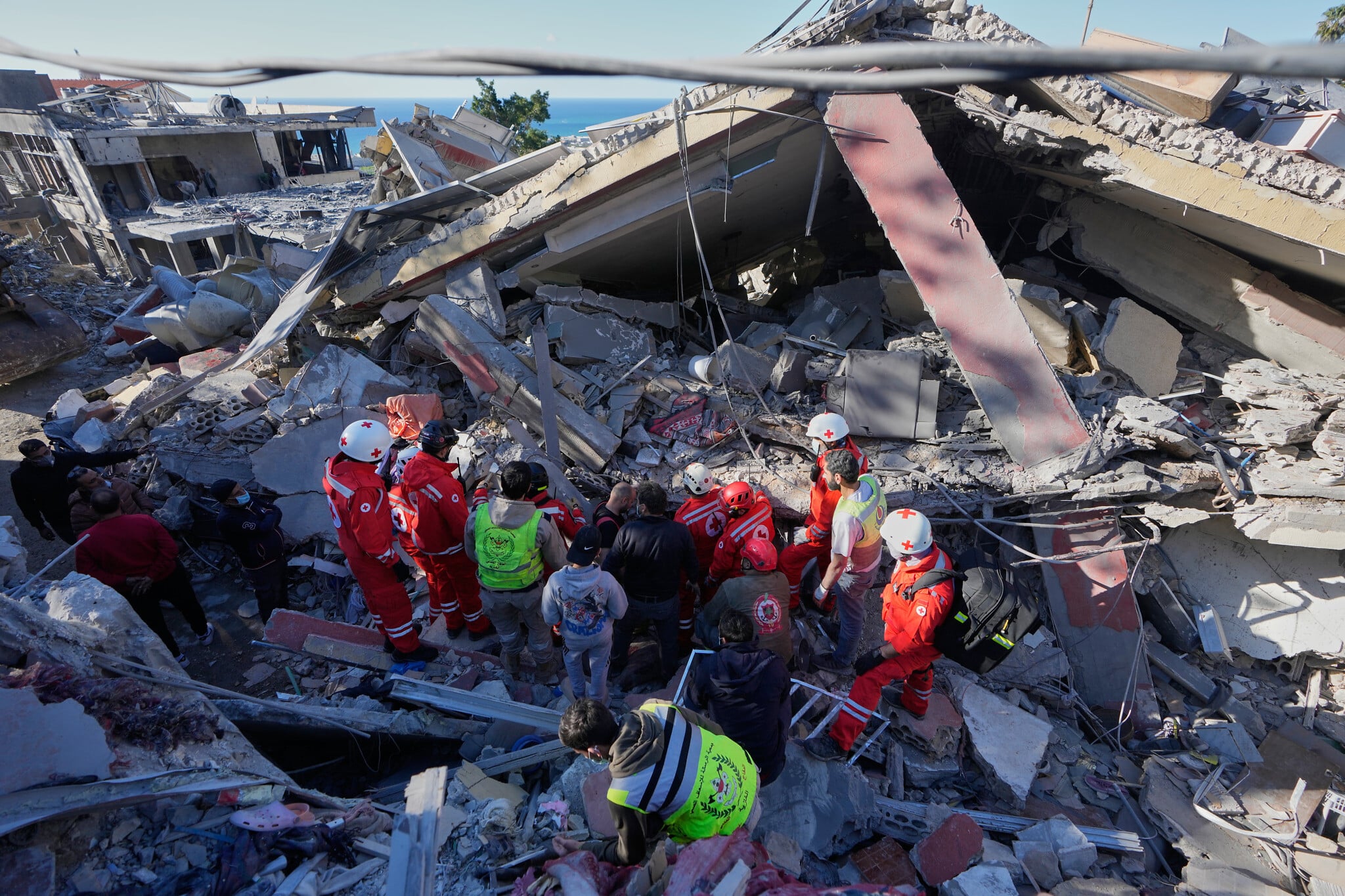
Rescue workers search for victims at a destroyed building that was hit by an Israeli airstrike in Ghaziyeh, southern Lebanon, March, 8, 2026. (AP Photo/Mohammed Zaatari)
Among the 200 operatives killed by Israel in Lebanon in the past week, the IDF said, were 80 members of Hezbollah’s elite Radwan Force, 70 Hezbollah artillery operatives, and a number of top commanders, including the chief of the Palestinian Islamic Jihad in Lebanon. According to Lebanon’s health ministry, Israeli strikes in the past week killed 394 people, including 83 children.
The Lebanese government, which has claimed it is working to disarm Hezbollah, has slammed the terror group’s renewed attacks on Israel, accusing it of dragging Lebanon into a regional war on behalf of Iran.
Iranians depart Beirut
Overnight between Saturday and Sunday, Israel struck a swanky Beirut hotel, killing at least four people. The IDF said it carried out a targeted attack on key commanders of Iran’s Islamic Revolutionary Guard Corps.
Amid the heavy cross-border fire, more than 100 Iranians, including some diplomats, were evacuated from Beirut overnight, a Lebanese official told AFP on Sunday.
“A total of 117 Iranians, including diplomats and embassy staff, were evacuated on a Russian plane that left Beirut overnight from Saturday to Sunday,” the official said on condition of anonymity.
The evacuation came after Lebanon’s government on Thursday banned any activity by Iran’s Islamic Revolutionary Guard Corps — a main backer of Hezbollah. The government also imposed a visa requirement on Iranians entering the country as part of measures to pressure Hezbollah.
The official said the Iranian embassy had informed Lebanese authorities beforehand of the evacuation operation, which was carried out via Beirut’s international airport. The official added that the plane was heading to Turkey, without specifying the final destination of the Iranians.
The body of an Iranian diplomat killed during the war, along with those of his wife and three children, were also on board the plane, the official added.
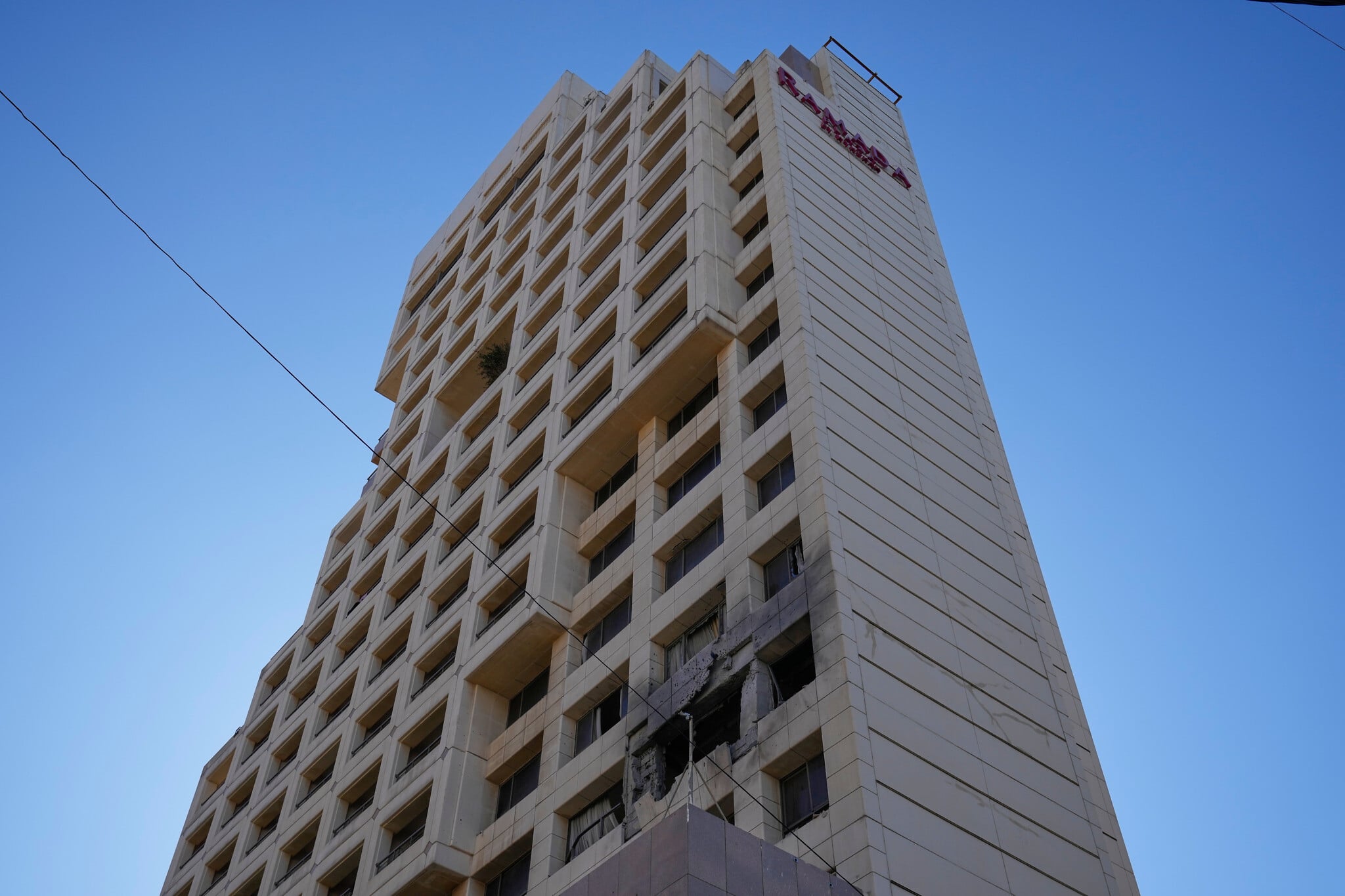
Damaged hotel rooms which were hit by Israeli strike are seen in Beirut, Lebanon, March 8, 2026. (AP Photo/Hussein Malla)
The IDF on Sunday reiterated its warning to Lebanese civilians in all of southern Lebanon to evacuate amid the fighting against Hezbollah.
“Hezbollah’s terror activities are forcing the IDF to act against it with force in the area,” said army spokesman Col. Avichay Adraee.
“Airstrikes are ongoing as the IDF operates with great force in the area. Therefore, for your safety, we once again urge you to evacuate your homes immediately and head north of the Litani River,” he said.
The warning was first issued by the IDF on Wednesday. The military estimates that over 420,000 Lebanese civilians have so far evacuated their homes since Hezbollah renewed its rocket attacks on Israel last week, prompting fresh IDF activity against the terror group.
Israel regularly struck Hezbollah targets in Lebanon following a 2024 agreement, accusing the terror group of ceasefire violations, and continued to hold on to five border posts inside Lebanon, citing security needs. It has now expanded beyond those points, citing defensive needs.
The November 2024 ceasefire ended a year of hostilities between Hezbollah and Israel, which started when the terror group began firing missiles and drones into northern Israel one day after its ally Hamas launched a devastating attack on southern Israel that set off the war in Gaza.
You appreciate our wartime journalism

You clearly find our careful reporting of the Iran war valuable, at a time when facts are often distorted and news coverage often lacks context.
Your support is essential to continue our work. We want to continue delivering the professional journalism you value, even as the demands on our newsroom have grown dramatically during this ongoing conflict.
So today, please consider joining our reader support group, The Times of Israel Community. For as little as $6 a month you’ll become our partners while enjoying The Times of Israel AD-FREE, as well as accessing exclusive content available only to Times of Israel Community members.
Thank you,
David Horovitz, Founding Editor of The Times of Israel