
Prime Minister Benjamin Netanyahu on Saturday said the US-Israeli bombing campaign in Iran would continue unabated and that the “moment of truth” was nearing for Iranians to overthrow their government.
His comments came as the IDF said it struck Iran’s two “most central” ballistic missile sites, and, in an apparent first, oil infrastructure in Tehran.
Later on Saturday night, US President Donald Trump told reporters that the war “will continue for a while longer” without providing a timeline, and pointed to the October 7, 2023, onslaught led by Iran’s terrorist ally Hamas, as evidence of the regime’s “evil.”
Tehran fired a dozen volleys of missiles at Israel on Saturday, causing no injuries. A missile fired on Saturday night damaged a home in the central city of Lod. Iran also kept targeting the Gulf, with one person killed in a missile strike on Dubai.
The salvos on Israel came alongside missile fire from the Iran-backed Hezbollah terror group in Lebanon, which has been attacking across the border in support of Tehran.
Get The Times of Israel’s Daily Edition
by email and never miss our top stories
By signing up, you agree to the terms
Though the stated goal of the campaign is to destroy the regime’s ability to threaten Israel the region and beyond, including by targeting key regime leaders, its command and control centers, and its nuclear and ballistic missiles programs, Netanyahu and Trump have both highlighted that they also seek to create the conditions for regime change, and Trump has demanded a role in choosing Iran’s next leader.
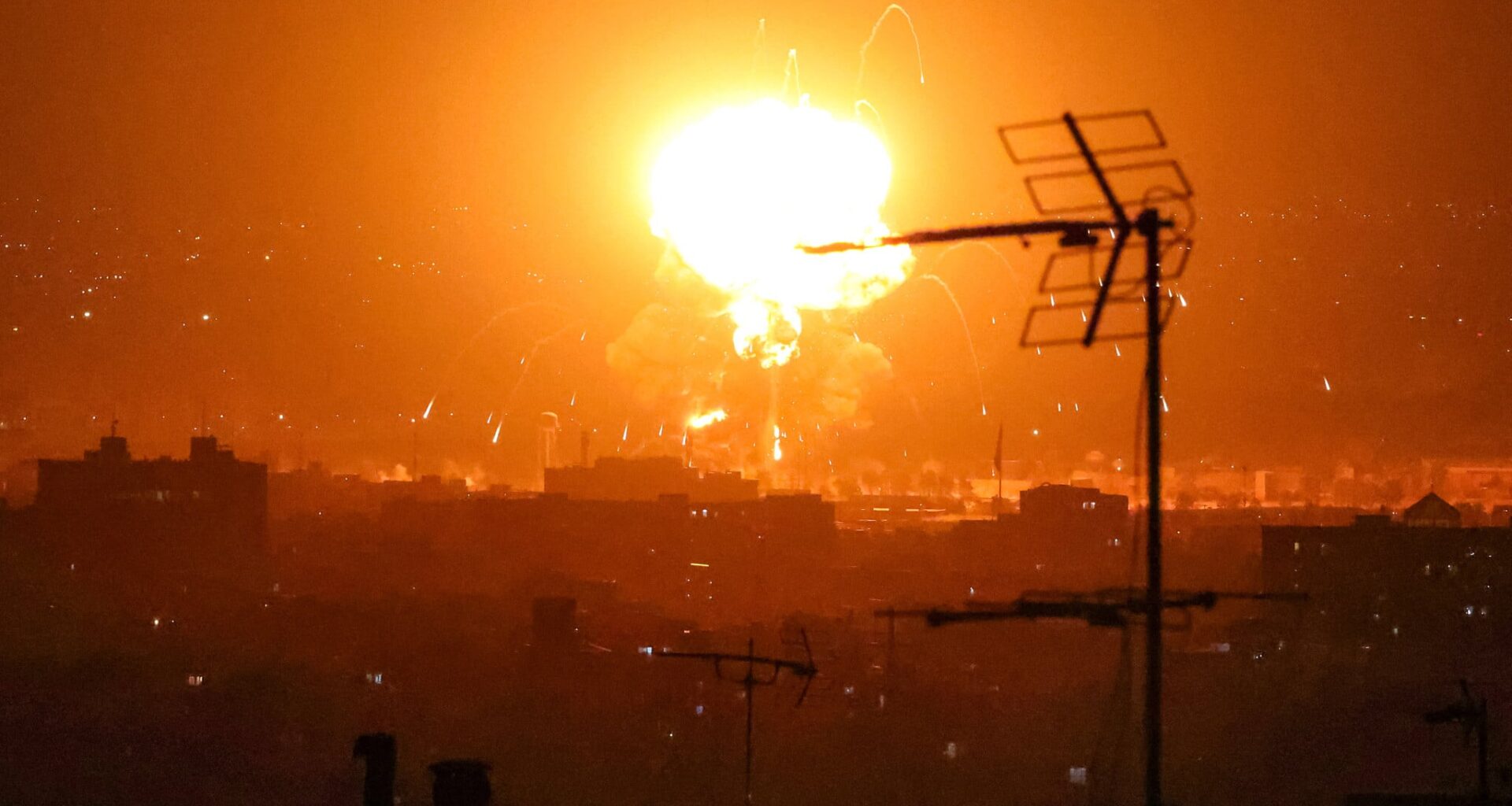
JUST IN: Scenes in Tehran after the US bombed an Iranian oil depot.
Oil price is about to go further up ⬆️ pic.twitter.com/zMeRt5ICyA
— Ainà Dipo ???????? (@dipoaina1) March 7, 2026
Iranian officials appear to be pressing ahead in naming a successor to Ayatollah Ali Khamenei, the supreme leader who was killed in an Israeli strike on the first day of the war. Hossein Mozafari of Iran’s Assembly of Experts was quoted by official news outlet Fars as saying that the top clerical body would select a replacement for Khamenei within a day. Israeli security officials believe the front-runner, Khamenei’s son Mojtaba, was wounded after being targeted in an airstrike this week, but is still alive.
In his Saturday video statement, Netanyahu advocated the overthrow of the regime, as Israeli TV reported that Israel was “optimistic” about such an outcome.
Netanyahu said Israel has “an organized plan with many surprises” for the next phase of the war with Iran, “to destabilize the regime, to enable change.”
“The moment of truth is drawing near” for Iranians to topple the Islamic Republic, Netanyahu said, adding that Israel is “not trying to divide Iran” but is rather “trying to free Iran.”
Ultimately, Netanyahu said to Iranians, “It depends on you” to oust the regime. He predicted that the overthrow of the regime would bring about peace between Israel and Iran.
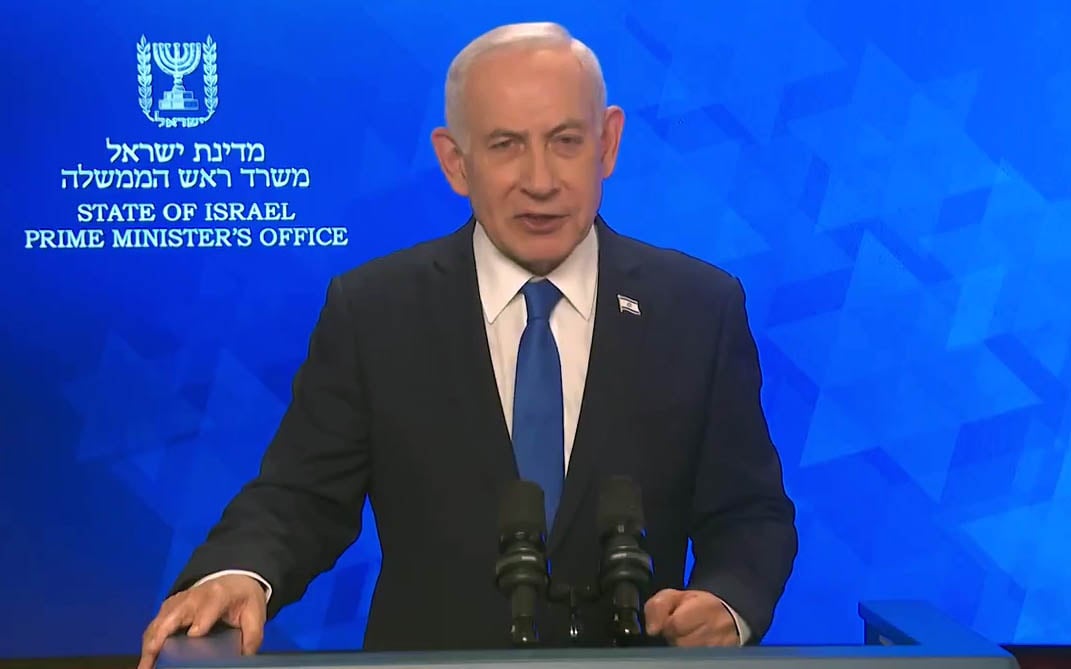
Prime Minister Benjamin Netanyahu delivers a televised statement, March 7, 2026. (GPO Screenshot)
‘Optimism’ on regime’s fall
On Saturday evening, Channel 12 reported that Netanyahu was meeting with top security officials, including Defense Minister Israel Katz, and that Israel was “optimistic” that the Iranian regime would collapse.
According to the network, Israeli officials have identified sharp disagreements among top Iranian officials, especially between President Masoud Pezeshkian and Iran’s Islamic Revolutionary Guard Corps, a US-designated terrorist organization which was central to quashing opposition protests in Iran in which the regime killed tens of thousands. There is also reportedly a disconnect between the military leadership and forces in the field, and a lack of coordination in decision-making among senior leaders.
A senior Israeli official quoted by Channel 12 said that “there is no deadline for the campaign” being waged against the Islamic Republic.
“As long as the price paid by the [Israeli] home front keeps going down, and there aren’t US losses, Israel and the US are continuing with full force,” the official said.
A security official was also quoted by the network as saying that “we’re optimistic about the ability to cause the regime to collapse.”
The regime’s fall “seems far off, but could come in an instant,” said the security official, adding that “it’s being hunted every day. It’s being slowly eaten from within.
“Inside the regime, there is confusion, and power struggles that haven’t been there in decades,” the official said.
The official also said Iran’s allies Russia and China were “running away” from the Islamic Republic rather than rallying to its side.
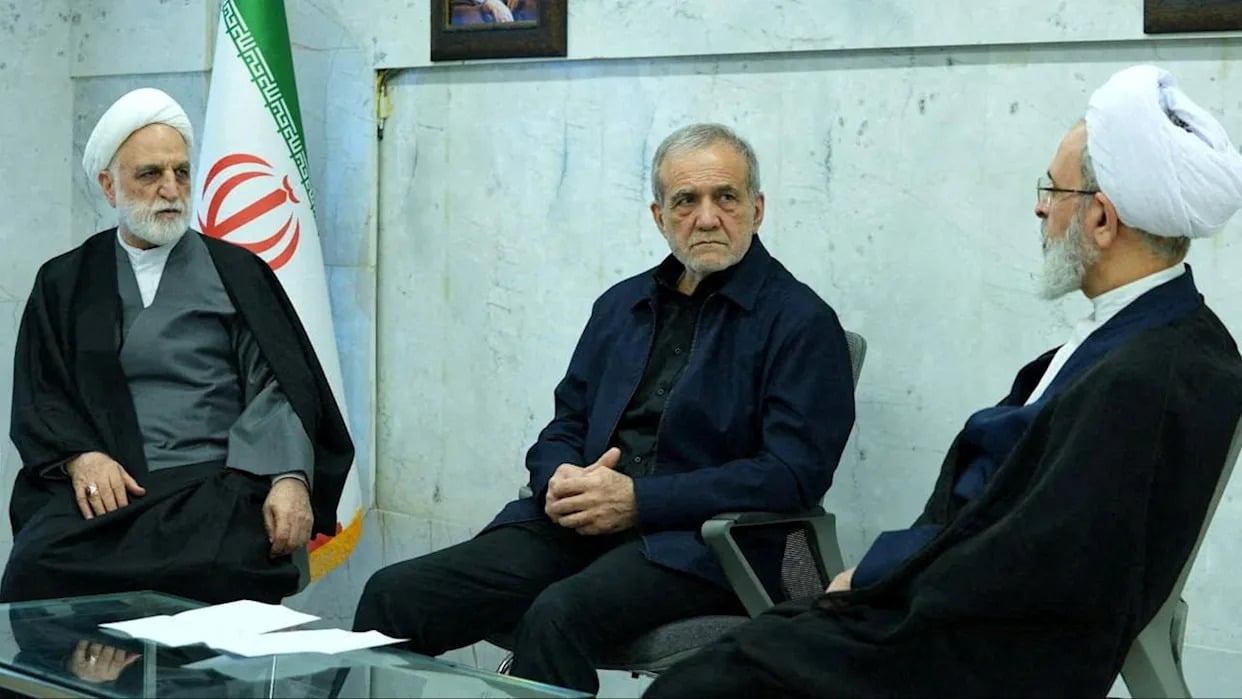
Iranian President Masoud Pezeshkian, Gholam-Hossein Mohseni-Eje’i, the head of the judiciary and Alireza Arafi, deputy chairman of the Assembly of Experts, attend the meeting of the interim leadership council of Iran in an unknown location, March 1, 2026. (Handout via IRIB/WANA)
Fuel depots targeted
The Israeli military confirmed bombing several Iranian fuel depots in Tehran Saturday evening, saying they served Iran’s military.
“The military forces of the Iranian terror regime make direct and frequent use of these fuel tanks to operate military infrastructure. Through them, the Iranian terror regime distributes fuel to various consumers, including military entities in Iran,” the IDF said in a statement.
The strike “constitutes an additional step in deepening the damage to the military infrastructure of the Iranian terror regime,” the IDF said. It had earlier announced the day’s second wave of airstrikes on regime targets in Tehran.
An Iranian oil ministry source cited by the Fars news agency said three oil depots in western Tehran were struck by Israeli fighter jets. The report said the depots were struck in the Kuhak and Shahran areas of the capital and in the nearby city of Karaj.
Another look at the absolutely massive cloud of smoke pouring out from the Tehran oil depot that was recently targeted in the Iran conflict.
Oil prices have surpassed $92pic.twitter.com/1DXAJD3hL8
— The ₿itcoin Therapist (@TheBTCTherapist) March 7, 2026
In a statement Saturday evening, IDF Spokesman Brig. Gen. Effie Defrin said the military had in recent days “moved to the next stage of the operation; we have expanded strikes on the regime’s main production sites.”
Defrin said that on Thursday, IDF strikes hit infrastructure at the Parchin military complex, south of Tehran, adding that the targets included “factories for the production of explosives for ballistic missile warheads; complexes for the production of unique raw materials for missile engines; a facility for mixing and casting missile engines; and a complex used for research, development, assembly, and production of advanced cruise missiles.”
In another strike overnight in the Shahrud area, the IDF said it hit an IRGC ballistic missile production site, where Defrin said “most of the missiles fired at Israel were manufactured.”
Hundreds of Israeli Air Force fighter jets struck the sites in Parchin and Shahrud, said Defrin.
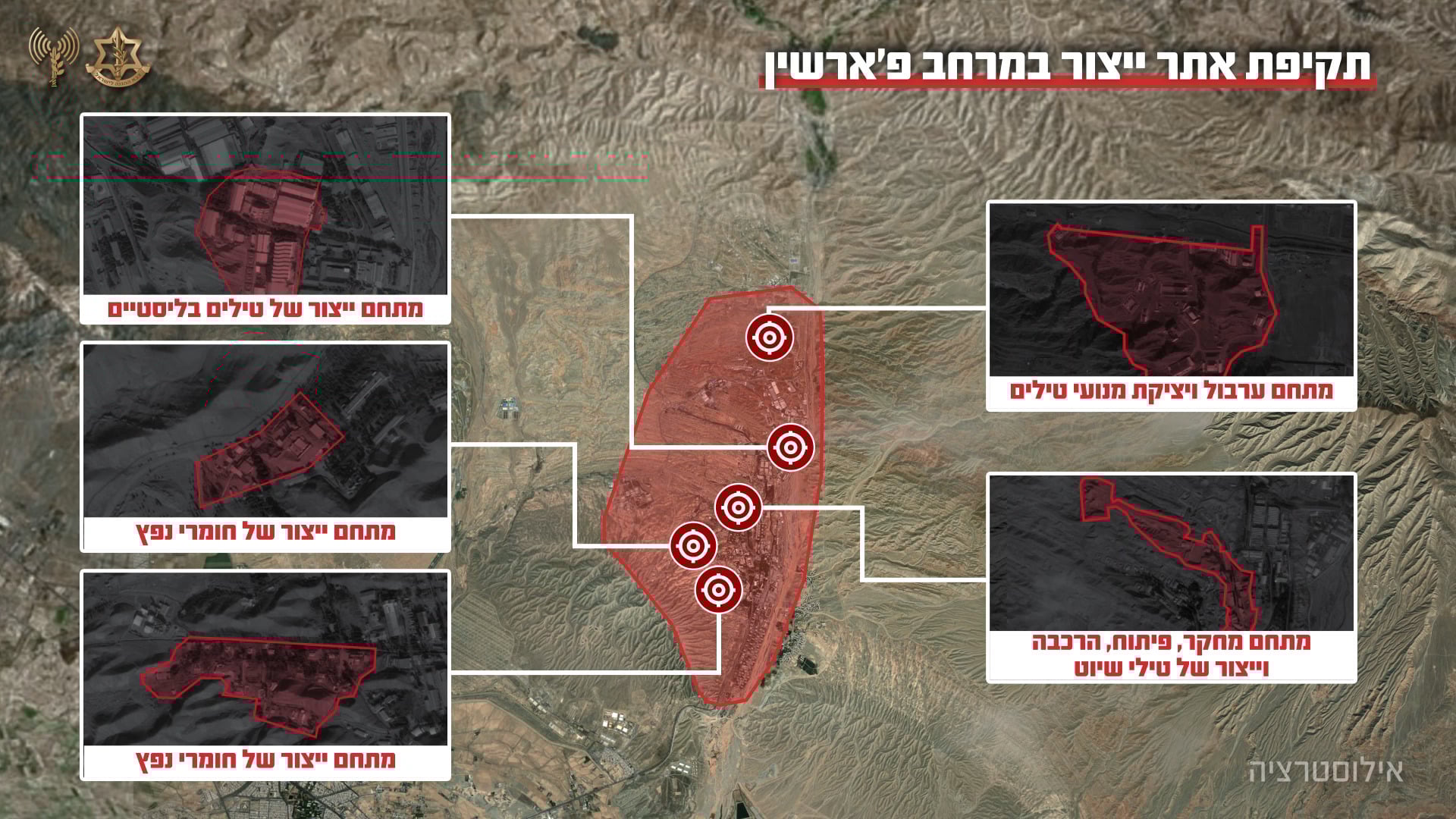
An IDF infographic showing Iranian missile production sites at Parchin that were recently struck, published March 7, 2026. (Israel Defense Forces)
In the months before the war, Iran had invested significant efforts to restore its missile production capabilities, manufacturing dozens of projectiles per month, said Defrin.
The production rate was on an “upward trend” and was expected to reach hundreds of ballistic missiles per month, according to the military. But the IDF assesses that the strikes in Parchin and Shahrud caused significant damage to Iran’s missile production capabilities and set the country back years.
Iran’s ability to re-arm its proxies has also been harmed, as those terror groups rely heavily on the Iranian supply of drones, anti-tank missiles, and naval weapons, according to IDF intelligence officials.
In total, the Israeli Air Force has in the past week dropped over 7,500 bombs on Iran, twice the number of munitions Israel dropped on Iran during last June’s 12-day war, Defrin said. The IAF has carried out over 3,400 strikes in Iran over the past week, he said.
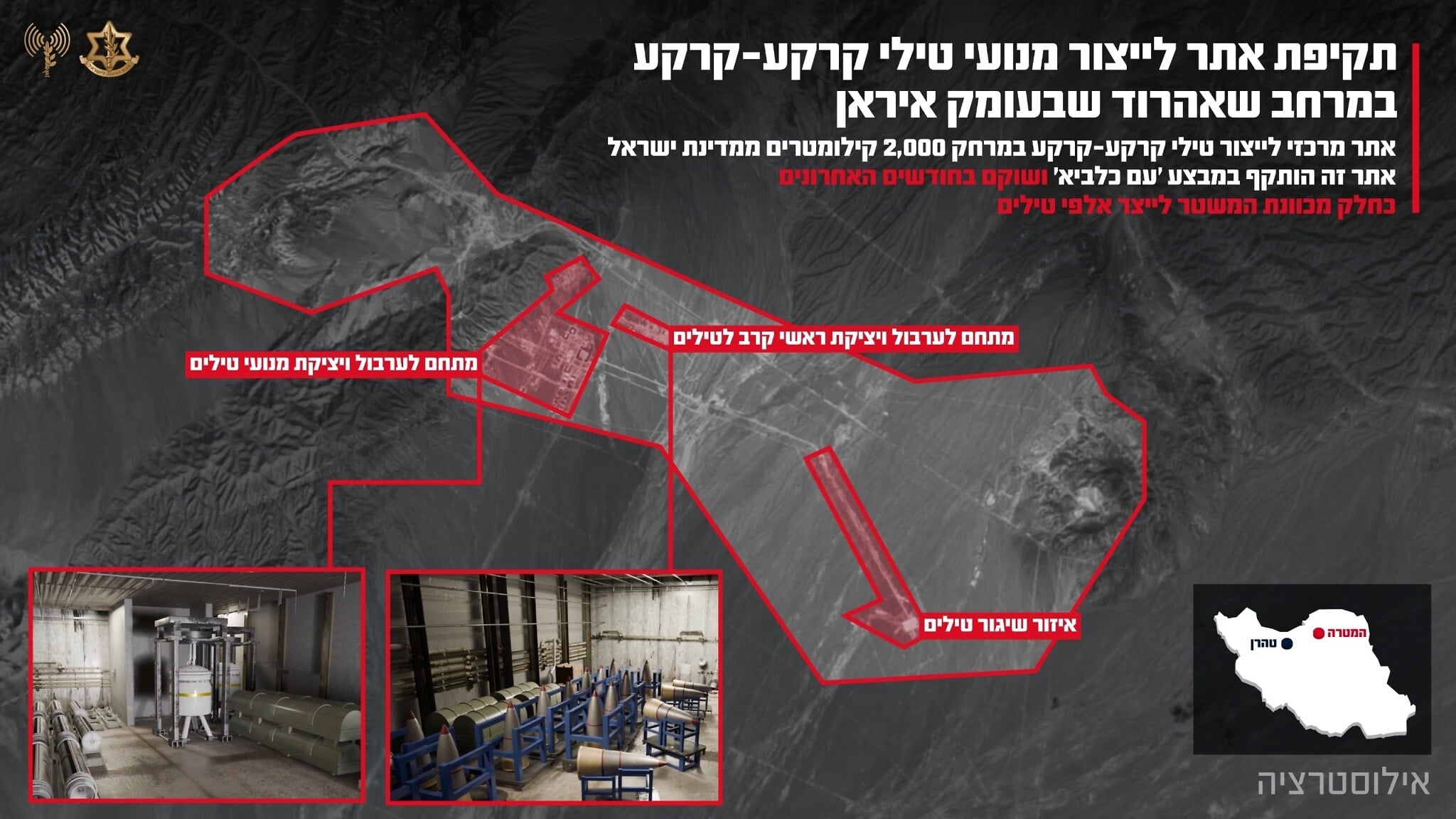
An IDF infographic showing Iranian missile production sites at Shahrud that were recently struck, published March 7, 2026. (Israel Defense Forces)
Trump: ‘Look at October 7’
The US military, for its part, has “knocked out” 42 Iranian navy ships and much of the Iranian air force, Trump told Latin American leaders during his Shield of Americas Summit in Florida on Saturday.
“We are doing very well in Iran, you see the result,” he said. “It’s been amazing, we’ve knocked out 42 navy ships, some of them very large, in three days. That was the end of the navy.”
“We knocked out their air force, we knocked out their communications,” said Trump, adding of Iran’s leaders that “they are bad people, they’re just bad people.”
“They were very close to a nuclear weapon,” he said, claiming Iran would have reached nuclear capabilities eight months ago if not for the US strikes on their nuclear sites during the 12-day war.
“They are crazy, and they would have used it,” he said. “So we did the world a favor.”
While Iran, whose leaders have sworn to destroy Israel, denies seeking nuclear arms, it has enriched uranium to levels that have no peaceful application, obstructed international inspectors from checking its nuclear facilities, and expanded its ballistic missile capabilities.
“When you look at October 7 and beyond October 7, when you look at all the killing they’ve done for 47 years, this had to be done,” said Trump.
He echoed that comment later on Saturday when asked about Iran’s criticism of the US allegedly targeting a desalination plant, highlighting Iran’s support for Hamas, which carried out atrocities on October 7.
“They are among the most evil people ever on earth. They cut babies’ heads off. They chop women in half — take a look at October 7. Take a look at one they’ve done over the last 47 years,” Trump told reporters aboard Air Force One, appearing to conflate Iran and Hamas.
“I know nothing about a desalination plant. They’re complaining about a desalination plant. We complain about the fact that they shouldn’t be chopping babies’ heads off,” Trump added.
While there was initial testimony of babies beheaded on October 7, it was never verified by Israeli authorities.
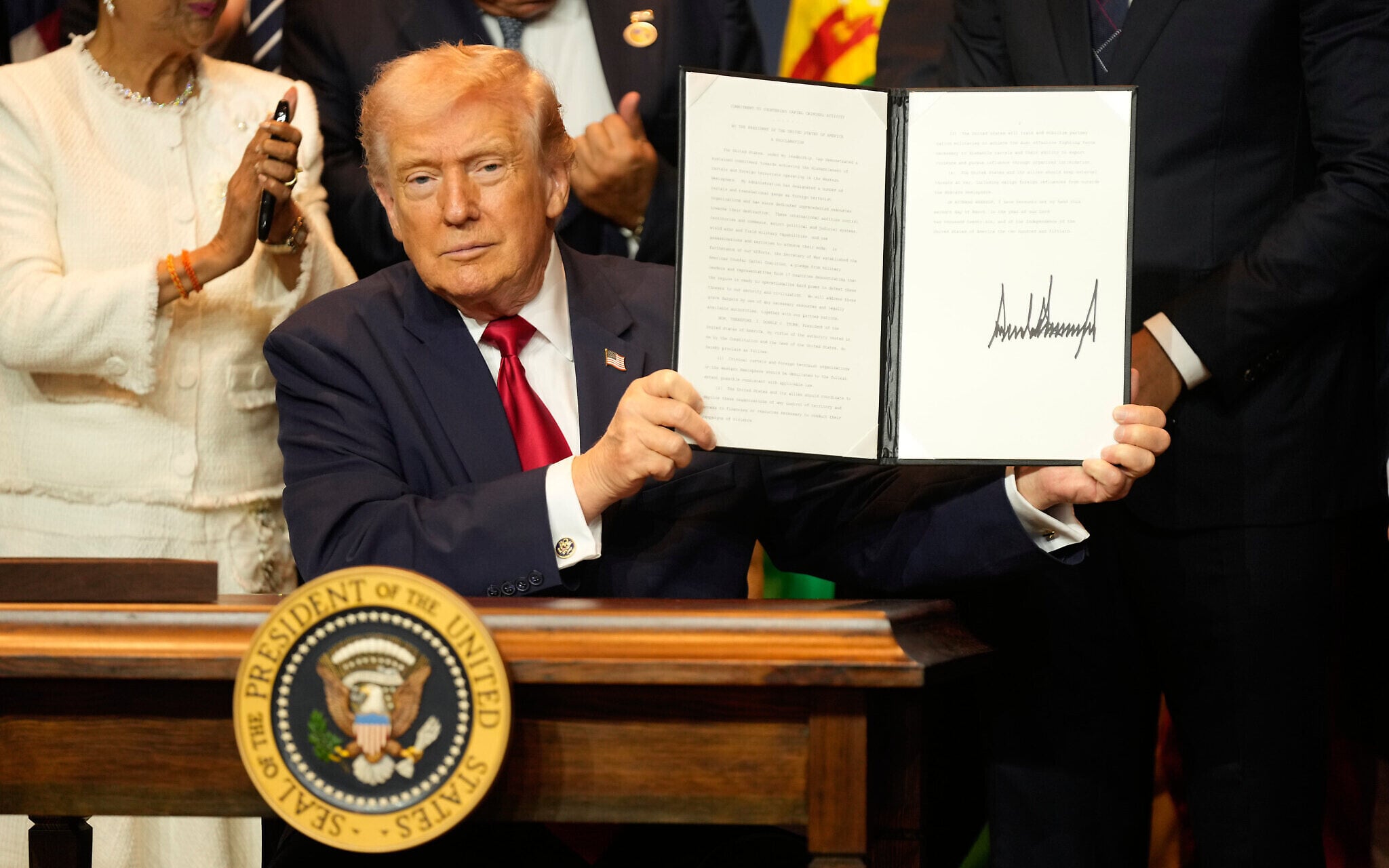
US President Donald Trump signs a proclamation at the Shield of the Americas Summit, at Trump National Doral Miami in Doral, Florida, March 7, 2026. (AP Photo/Mark Schiefelbein)
One killed in Dubai as Iran continues to hit region
Iran fired multiple ballistic missile barrages at Israel on Saturday, forcing millions of people into bomb shelters. No injuries were reported from the Iranian attacks.
The IDF Home Front Command said Saturday that nationwide wartime restrictions would remain in place until at least Monday, despite the slowing rate of missile fire from Iran.
As part of the current guidelines, educational activities are prohibited, except for a number of outlined exceptions; gatherings of up to 50 people are permitted, provided a shelter can be reached in time; and workplaces can operate under the same conditions.
Iran on Saturday also kept firing on Gulf countries, even after Pezeshkian, the Iranian president, apologized to those countries, saying they would no longer be targeted unless strikes against Iran were launched from their territory.
Hours after Pezeshkian’s apology, however, Iran said it would continue conducting strikes on sites in Gulf countries which were “at the disposal of the enemy.”
Loud explosions were heard in the United Arab Emirates, Qatar and Bahrain, while attacks were later reported in the UAE, Saudi Arabia, Qatar and Kuwait, where the national oil company announced a “precautionary” cut to production.
UAE authorities said a person of Asian nationality was killed by debris from a ballistic missile interception while driving in Dubai’s Al Barsha area Saturday evening.

Israelis take cover at an underground parking lot in Tel Aviv as a siren sounds warning of incoming ballistic missiles fired from Iran, March 7, 2026. (Avshalom Sassoni/Flash90)
Earlier in the day, Dubai closed its main airport — the world’s busiest for international traffic — after authorities said an unidentified object was intercepted nearby.
The UAE, a US ally and home to American military installations, has been the most heavily targeted nation in the Gulf during the war.
At least 221 missiles and over 1,300 drones have been fired at the nation from Iran since the start of the war, according to the Emirati defense ministry.
Flights from Dubai’s main airport had partially resumed on Monday despite daily drone attacks targeting sites in the country.
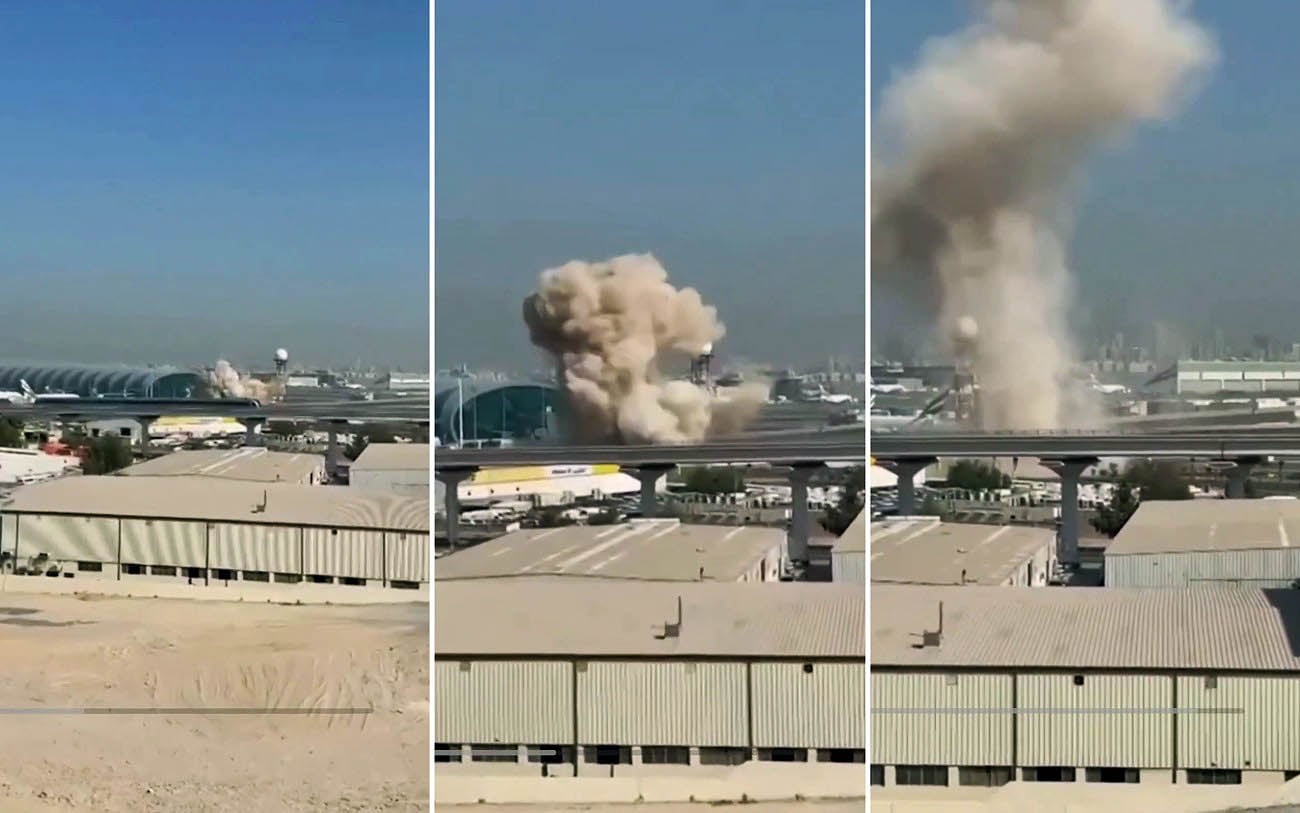
Screenshots from a video posted on social media on March 7, 2026 shows an impact and smoke rising from the Dubai International Airport. (Social media, used in accordance with Clause 27a of the Copyright Law)
Last Saturday, four employees were injured and an airport terminal was damaged.
In a rare televised address on Saturday, UAE President Mohammed bin Zayed Al Nahyan said the Emirates were in “a period of war” and “will emerge stronger” from it.
Elsewhere in the Gulf on Saturday, Qatar’s defense ministry said its military had intercepted two missile attacks targeting the country.
In Saudi Arabia, the defense ministry said it had destroyed three ballistic missiles heading towards Prince Sultan Air Base, which hosts American troops, as well as 17 drones over the Shaybah oil field in the southeast.
Kuwait also reported intercepting a drone, while the country’s national oil company announced a “precautionary” cut to its production of crude due to Iranian attacks and threats to the Strait of Hormuz, a key transit point for Gulf hydrocarbons.
Farther north, Jordan accused Iran of directly targeting sites in the kingdom, saying Tehran had fired 119 missiles and drones at it in the past week.
“These missiles and drones were targeting vital installations inside Jordan and were not passing through our territories,” said military spokesman Brigadier General Mustafa Hayari.
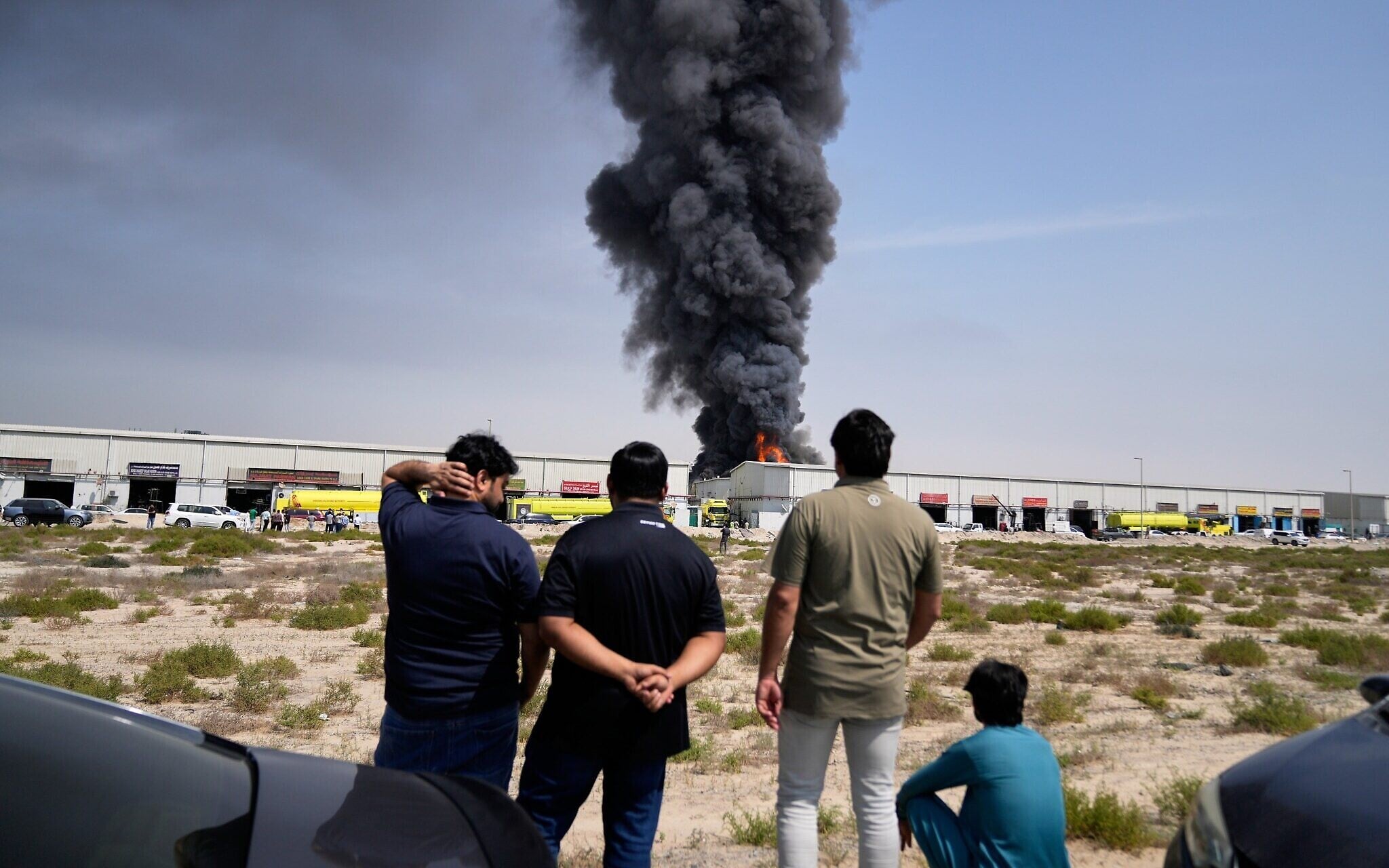
Residents watch as the flames and a black plume of smoke rises from a warehouse at the industrial area of Sharjah City in the United Arab Emirates following reports of Iranian strikes in Dubai, United Arab Emirates, Sunday, March 1, 2026. (AP Photo/Altaf Qadri)Iranian attacks have also hit Abu Dhabi airport, the upmarket Palm Jumeirah development and the Burj Al Arab luxury hotel over the past week, while drone debris caused a fire at the US consulate in Dubai on Tuesday.
Much of the region’s airspace has been closed due to the US-Israeli bombing campaign and Iran’s attack. The closure left hundreds of thousands of passengers stranded worldwide.
On Saturday, the US State Department said 28,000 US citizens had safely returned from the Middle East since the outbreak of hostilities, not including “many Americans” who had found shelter in other countries or were still in transit to the US. There are hundreds of thousands of US citizens in the region.
PM: ‘Many nations’ turning to Israel due to Iran’s attacks
Netanyahu, in his address, said Israel “stands with” the other countries that have been attacked by Iran, and declared that “everyone now understands that the ayatollahs’ regime endangers the world.”
He claimed “many nations” are turning to Israel, requesting cooperation, “because we are strong, because we are right, because we are fighting.”
He slammed the United Nations for what he called its lack of criticism of Iran and said Western leaders, too, had also shown “weakness and flaccidity” by abandoning Iran’s people. Rights groups say the regime killed thousands in a crackdown on mass protests last month.
“Where was the UN? Where were many states in the West? And where was the international media that denounces us relentlessly with fake news? They were nowhere; they simply disappeared,” he claimed, adding that “many countries see today exactly who they can count on… Israel is a beacon of power and hope.”
Thanks to that power, Netanyahu continued, “we can widen the circle of security, peace and economic flourishing in the future to levels we have never seen.”
“But right now,” he said, addressing Israeli citizens, “we are still in the midst of a hard campaign. We won’t cease to hit the dictators in Iran… without compromise.”