
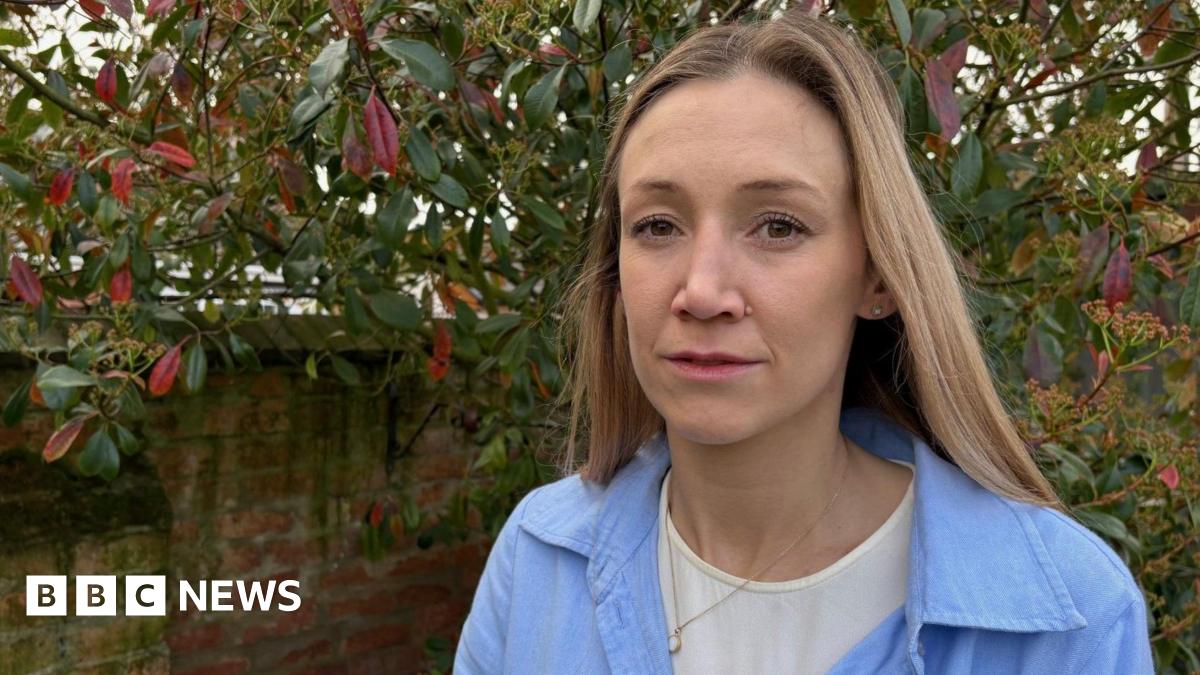
Laura explained she had gone to hospital in February 2024 for a scan, and was told there was no heartbeat.
She said she had wanted a miscarriage with medical help in Bassetlaw Hospital, where she was a patient, but was told there were no slots for several weeks so she would have to go home and wait.
Two weeks later she began to bleed.
She said she asked to come into the hospital again, but was again told there was no space.
“I was told… just try as best as you can,” she said. “There was nothing fit for purpose.
“I felt like I didn’t matter, and my baby didn’t matter.”
NHS guidelines state, external that if a person has had three or more miscarriages in a row, further tests are often used “to check for any underlying cause”.
Laura said she wanted to collect the remains to help with these tests, and also because she did not want the child she had been expecting “flushed down the toilet”.
As she was at home, she said she had to use a kitchen sieve to collect the remains, and then store them in a takeaway tub in the fridge to bring to the hospital three days later, as she was told the hospital unit was out of hours.
“It was really important to me, emotionally and practically, to collect baby,” she said.
“For me when I first got those two blue lines, that’s a whole life, and you start imagining this entire life built around these two lines.
“So to then have the end of that journey be flushed down the toilet is really traumatising, it’s really hard to reconcile with.”
She said she was impressed by the individual staff, but was “failed” by the system.
In response to Laura’s case, Lois Mellor, director of midwifery at Doncaster and Bassetlaw Teaching Hospitals NHS Foundation Trust – which runs Bassetlaw Hospital – said staff followed national guidance and “work hard to provide compassionate, supportive and respectful care”.
She added: “We continue to review how we can best support women’s choices around dignity, remembrance and care at what is an incredibly difficult time.”