
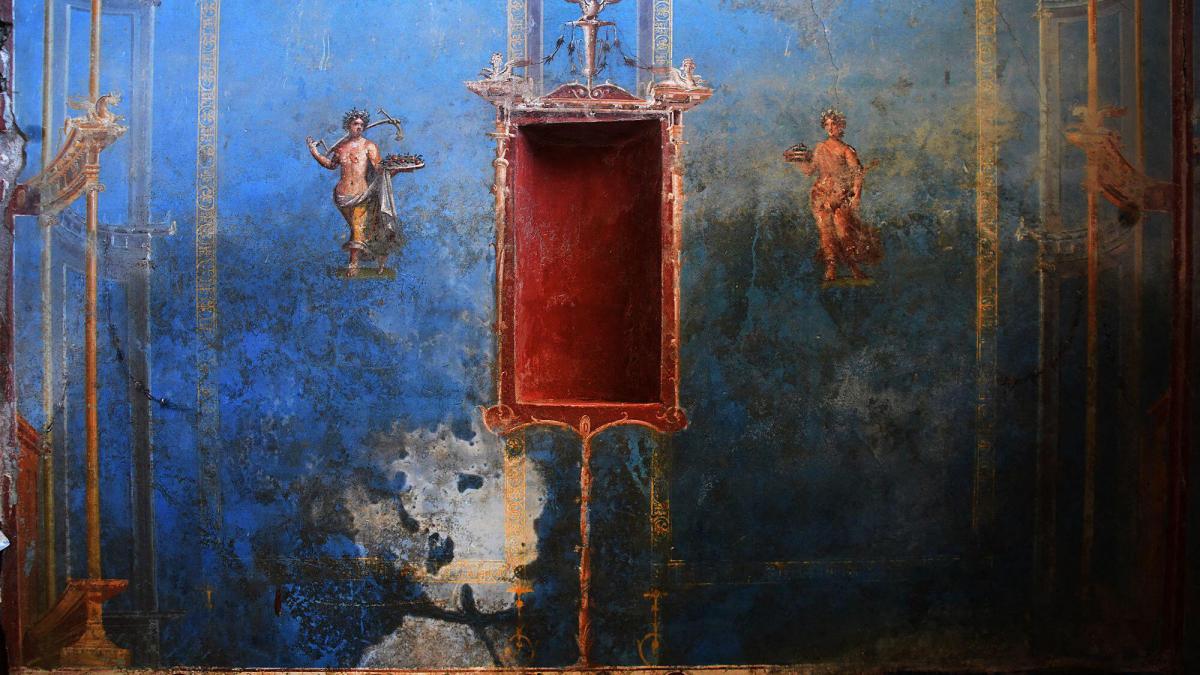
When a wealthy family in Pompeii decorated a small sacrarium entirely blue, it was at the height of fashion.
The prized synthetic pigment was imported from ancient Egypt, and the owners were following a trend started after the defeat of Cleopatra and Marc Antony at the hands of the future Emperor Augustus.
Research has estimated the cost of the pigment used to decorate the room in the first century AD at up to 168 denarii, twice the annual salary of a Roman foot soldier. The study led by the Pompeii archaeological park and Boston’s MIT underlines how much the wealthiest were willing to pay for the latest trends.
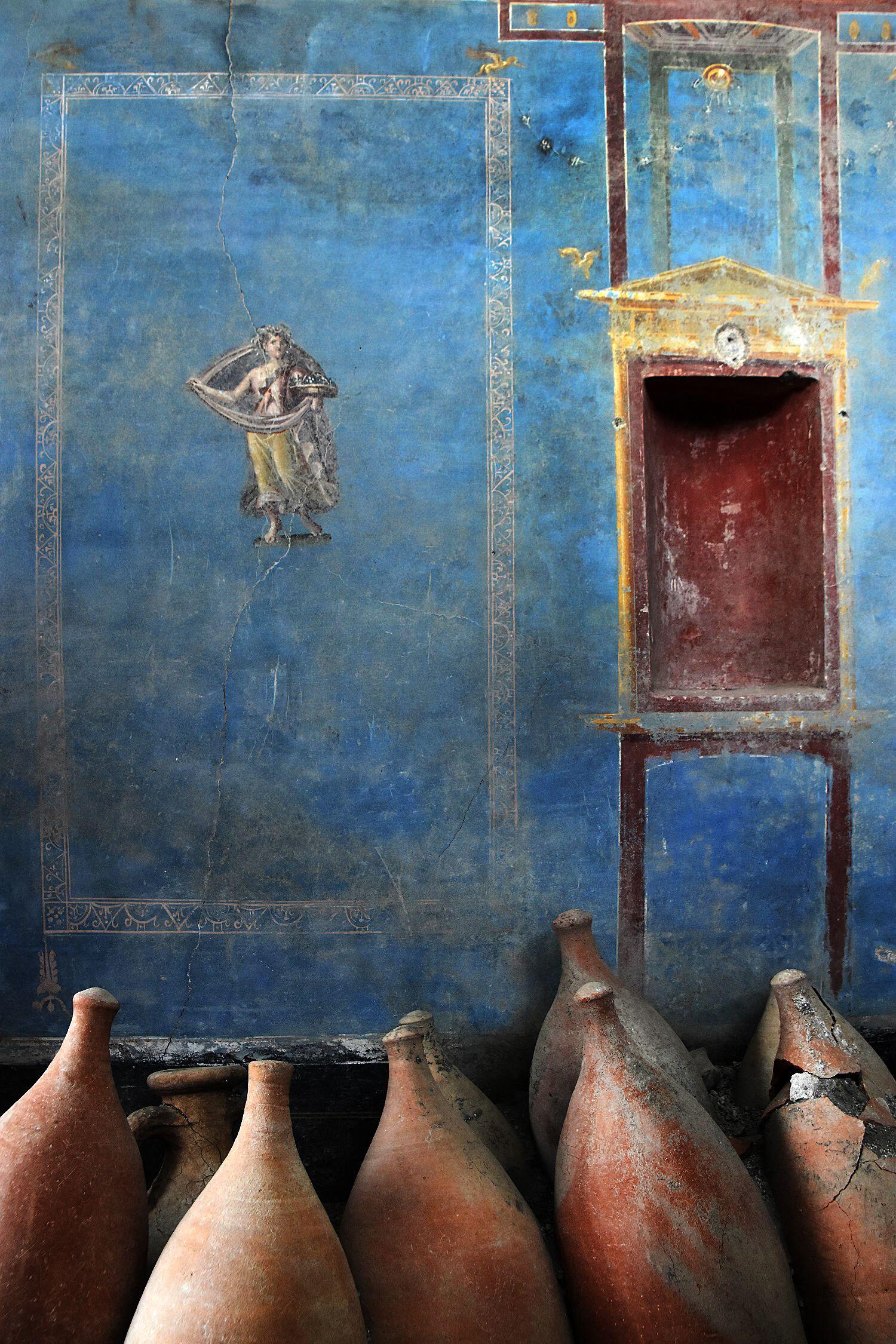
“Egypt mania was rife, as the profusion of Egyptian blue shows,” said Marco Nicola, a pigment expert at Turin University who worked on the study. “Blue had become a status symbol.”
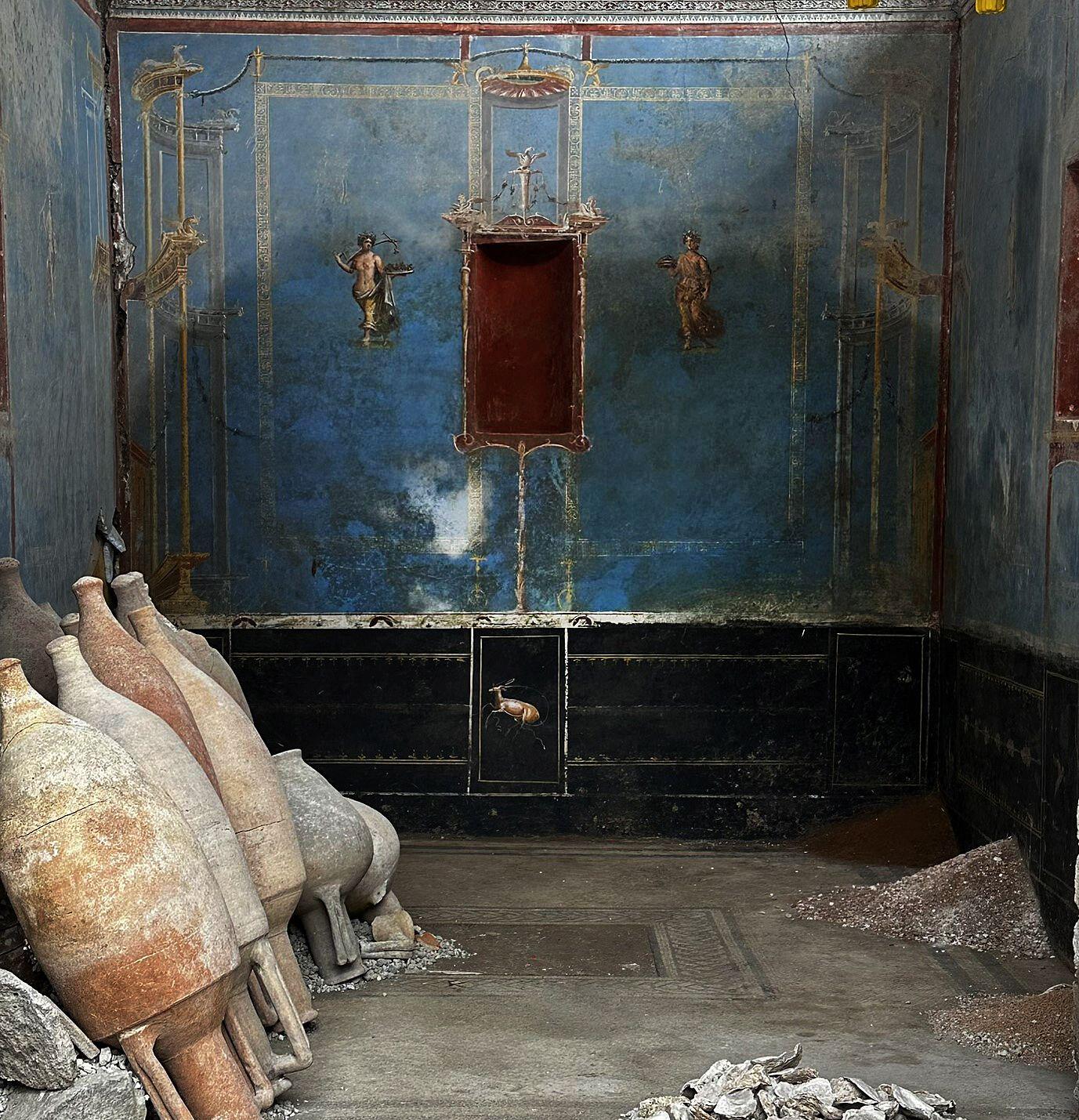
The research followed the discovery in 2024 of an 8.5 sq m sacrarium, still filled with amphorae when Vesuvius erupted in AD79.
Part of a two-storey domus with a thermal bath complex, central garden courtyard and banquet hall, its walls were entirely painted blue, with red niches flanked by inward-facing allegorical goddess figures representing the four seasons, agriculture and pastoralism.
“The quality of the decoration is unbelievable … It’s very rare, even unique, to find a completely blue sacrarium,” said Admir Masic, an associate professor at MIT who co-led the project. “These owners were really very, very wealthy.”
• Scientists reveal dirty truth about ancient Rome’s public baths
Less affluent inhabitants would have favoured red or yellow, sourced from iron oxides, which were far cheaper, Nicola said.
Egyptian blue, the world’s first synthetic pigment that provided a cheaper alternative to lapis lazuli, was made using sand, ash, copper minerals and bronze shavings heated in a furnace. Production spread to the Phlegraean Fields, near Pompeii, in the first century AD.
Egyptian blue emits near-infrared luminescence when illuminated. Researchers exploited this using adapted night-vision goggles and photography, alongside chemical analysis, to confirm that the pigment covered the shrine walls.
To estimate how much pigment was used, the team multiplied the walls’ surface area by the average thickness of the paint layers and by consulting historical sources, they were able to translate this into a cost estimate.
• Mystery of doomed romance in newly discovered Pompeii graffiti
Building materials found in the sacrarium suggest it was being renovated after Pompeii was hit by an earthquake in AD 62, fifteen years before Vesuvius erupted, researchers said.
“Pompeii offers something really special,” he said. “It is some sort of a time capsule where everything is preserved in almost shocking detail.”