
Hanan Abdullah (52) was at home in Beirut’s southern suburbs with her husband and teenage children when the war in Lebanon began. Suddenly there was “bombing, fire”.
The family went out on the street, then “ran and walked” towards safety. They approached a mosque, seeking help, but it was closed. “Then, a stranger from Sudan said there’s a shelter here, so we came.”
Her family is among roughly 160 people who have found shelter in the premises of St Joseph Catholic Church in Monot – an affluent area of Beirut considered relatively safe from Israeli air strikes. The church became a shelter during the last war, in 2024, and has once again opened its doors.
“When I heard the air strikes in the middle of the night, I knew when I woke up people would be here,” said American priest-in-training Michael Petro, who has just been appointed as the Jesuit Refugee Service’s emergency shelter director.
At least 517,000 people were displaced across Lebanon in the first week of war, according to Lebanon’s social affairs minister Haneen Sayed. In all, 117,228 of them are in government shelters.
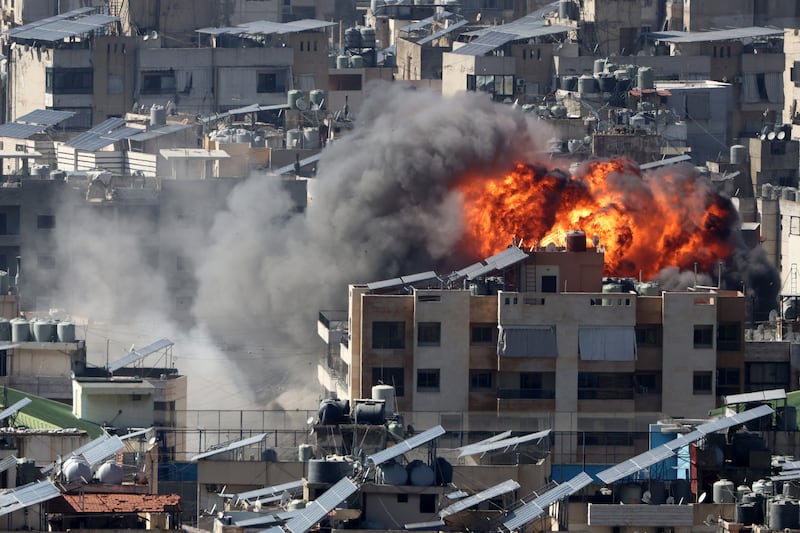 Israel’s defence forces have attacked Lebanon after Hizbollah launched rockets and drones into Israel following United States and Israeli attacks on Iran. Photograph: Ibrahim Amro/Getty
 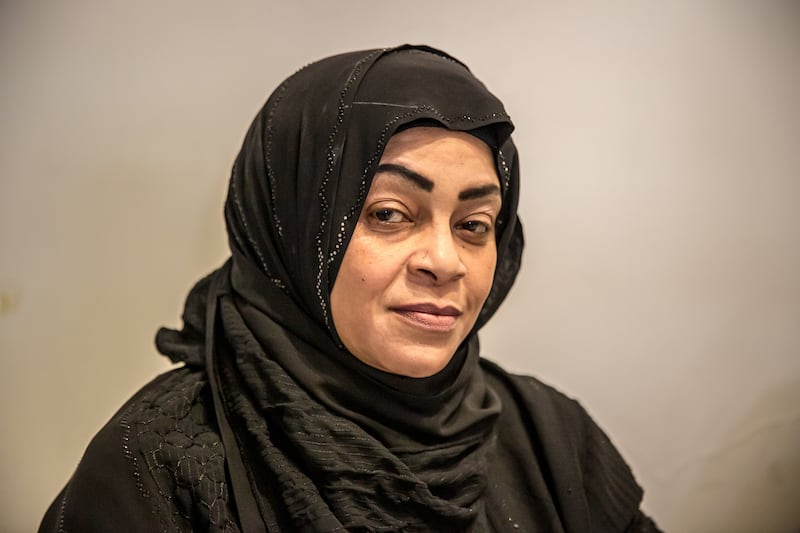 Hanan Abdullah fled Dahiyeh with her husband and two children. Photograph: Sally Hayden
But this Catholic church is filling a gap: Lebanon’s migrant workers, as well as its refugee population, are largely denied entry to official shelters – at first because of not being Lebanese and then because the shelters became full to capacity.
There are thought to be more than 170,000 migrant workers across Lebanon and more than one million refugees.
Petro said 140 people showed up at the church on the first day of the war, some of whom sheltered there between September and November 2024 during the last war between Israel and Hizbullah.
The church is housing two heavily pregnant women, and between 60 and 70 children, including 30 under the age of three.
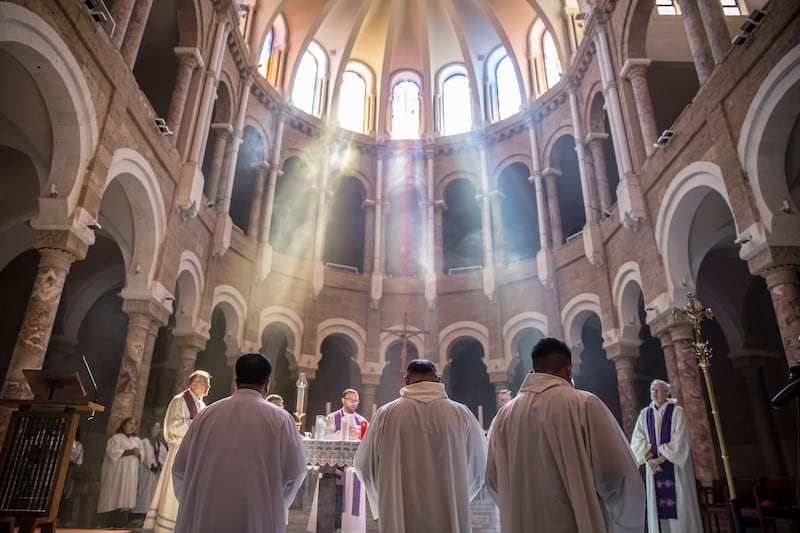 St Joseph Catholic Church in Monot, Beirut, is sheltering 160 displaced people – migrant workers and their families. Photograph: Sally Hayden
 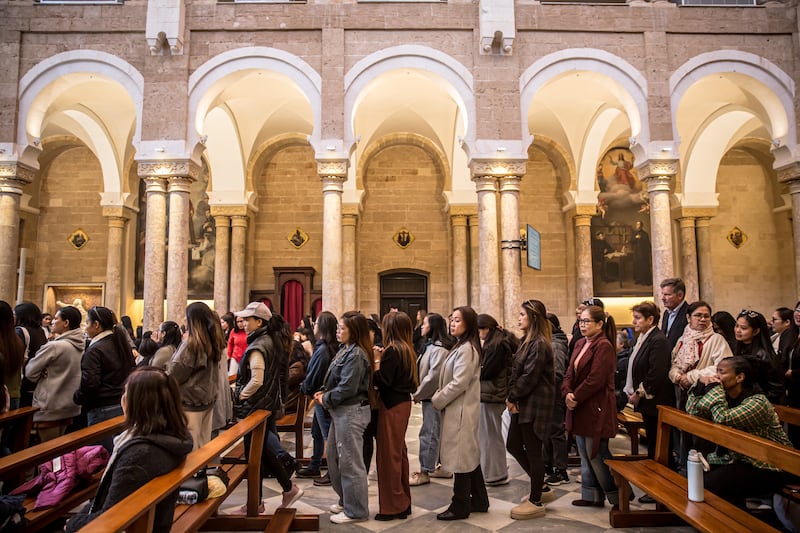 Mass goers queue for Communion at St Joseph’s Catholic Church in Monot. Photograph: Sally Hayden
“We didn’t have a chance to recover from the last war,” Petro said. “When people got here this year the first thing they said is we can’t believe this is happening again. People are tired … even the kids are tired and they’re the source of energy and joy in the shelter.”
This time everyone has more experience, Petro said. “We had a team already in place.” But the church is already housing double the number of people as last time with half the funding, he said. By the second full day of the war, they had to turn people away – an experience he described as very painful. Around 50 people began sleeping in the car park. “We still have people showing up every day,” he said.
He said they have structures to make the shelter work, including protection workers and mental health staff, while other NGOs have stepped in to help with meals. They are planning around remaining open for six months, Petro said, though no one knows how long the war will last.
It is a difficult time to respond to emergencies, he said, when many organisations in Lebanon were struggling due to the global crisis in humanitarian funding.
Most people sheltering in the church now were Muslim, Petro said, but there were also Christians, Hindus and Buddhists. They were marking Lent and Ramadan together.
Mass on Sunday was celebrated in the main part of the church, separate from the areas where the displaced are staying. During the service, there were prayers for the displaced and repeated messages about peace.
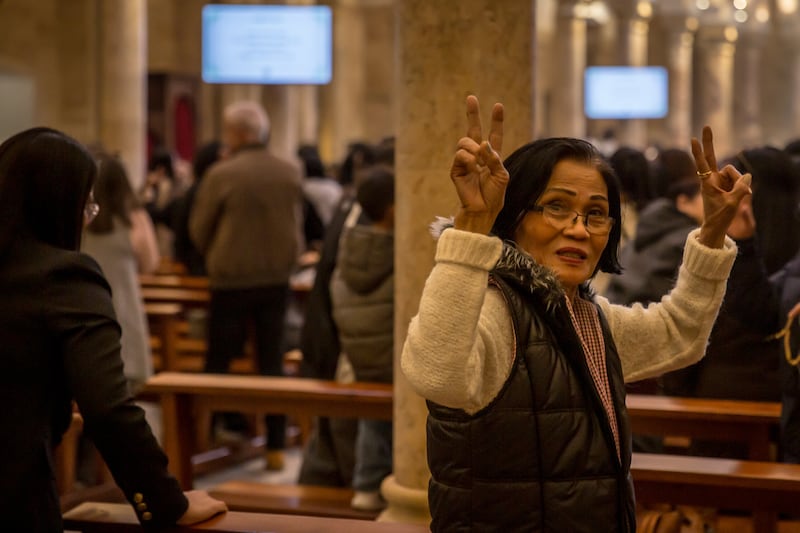 A woman makes peace signs during Mass in St Joseph Catholic Church in Monot. Photograph: Sally Hayden
“In these days, when there are so many in the shelter offered by the Jesuits … is it time for disputes … or is it time for dialogue?” one priest asked the congregation.
“For us it’s always the question of creating the kingdom of God and refusing to let the mentality of the world and the mentality of the war teach us something else.”
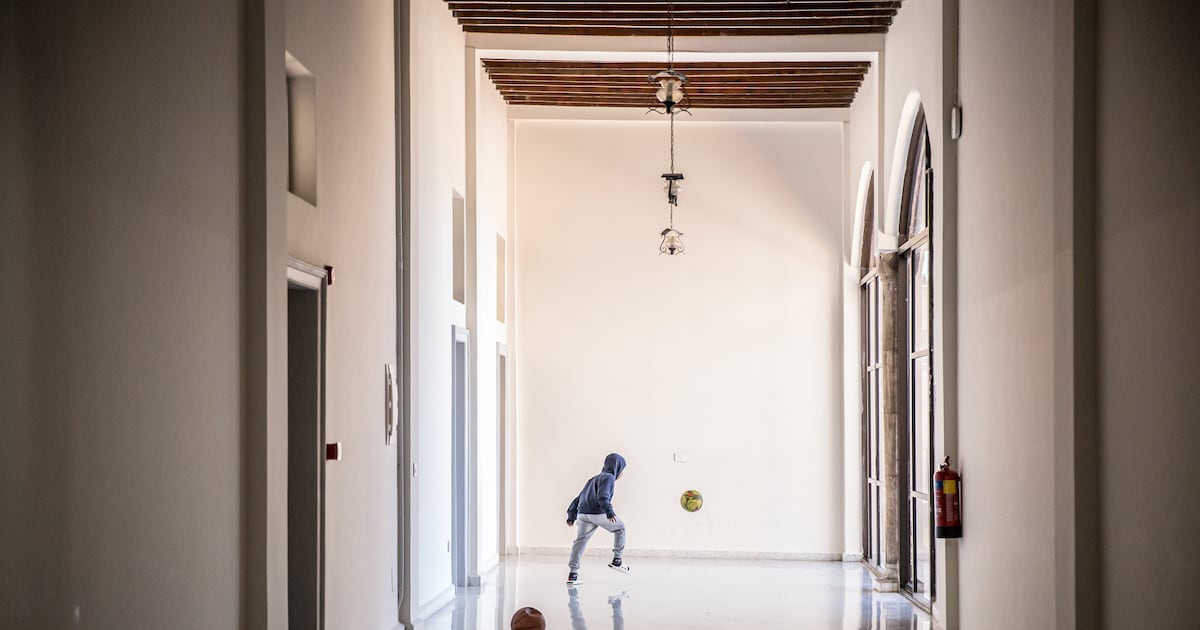
Upstairs, women were sleeping on mattresses laid out on the floor. One hung wet clothes on balcony railings to dry. A small boy kicked a football in a hallway. The noise of an Israeli drone was audible in the sky above.
Abdullah said her family was registered with the United Nations Refugee Agency (UNHCR), but she had received no answer from the organisation about whether any assistance would be available. Her husband was from Sudan where there was war too. The family was hoping to be resettled to the UK, but have received no updates for years. “I want my voice to get to the UN, so they can help us more,” Abdullah said.
Beside her sat an Ethiopian 29-year-old, who just gave her first name as Azeb. She was “asleep when the fire started” and escaped Burj al-Barajneh, a municipality in Dahiyeh, with her four-year-old child and husband. She said they slept in the street on the first night, before arriving at the church the following morning. Azeb has lived in Lebanon for eight years and said she was also struggling to get any response from UNHCR. The agency did not respond to a request for comment.
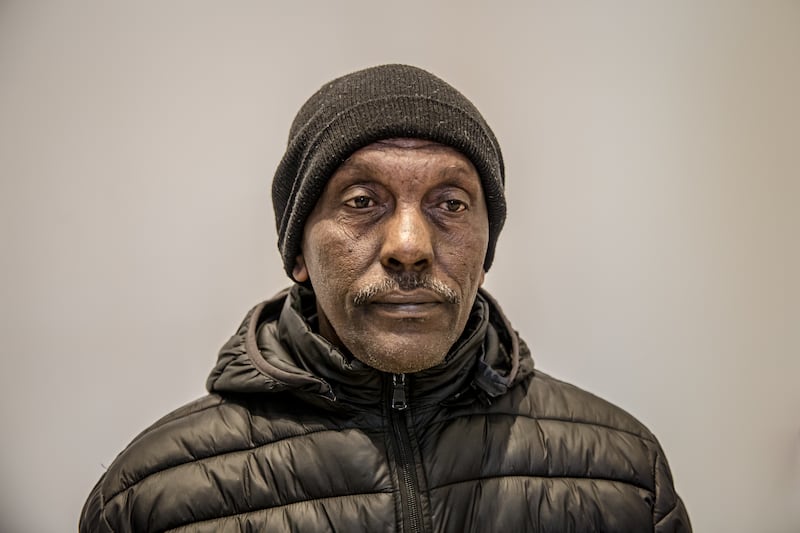 Ismail, from Sudan, is among those displaced by the war in Lebanon. Photograph: Sally Hayden
Ismail Mamoun Adam Matar, from Sudan, said he fled from Nabatieh, a city 75km away. “Our house was bombed there,” he said. “We don’t have a place to go … Everything is bombed.”
In Nabatieh, he said there was “every day, shelling, shelling, shelling … After the war, we will see what will happen. But I don’t know what I will do.”