
Your support helps us to tell the story
From reproductive rights to climate change to Big Tech, The Independent is on the ground when the story is developing. Whether it’s investigating the financials of Elon Musk’s pro-Trump PAC or producing our latest documentary, ‘The A Word’, which shines a light on the American women fighting for reproductive rights, we know how important it is to parse out the facts from the messaging.
At such a critical moment in US history, we need reporters on the ground. Your donation allows us to keep sending journalists to speak to both sides of the story.
The Independent is trusted by Americans across the entire political spectrum. And unlike many other quality news outlets, we choose not to lock Americans out of our reporting and analysis with paywalls. We believe quality journalism should be available to everyone, paid for by those who can afford it.
Your support makes all the difference.Read more
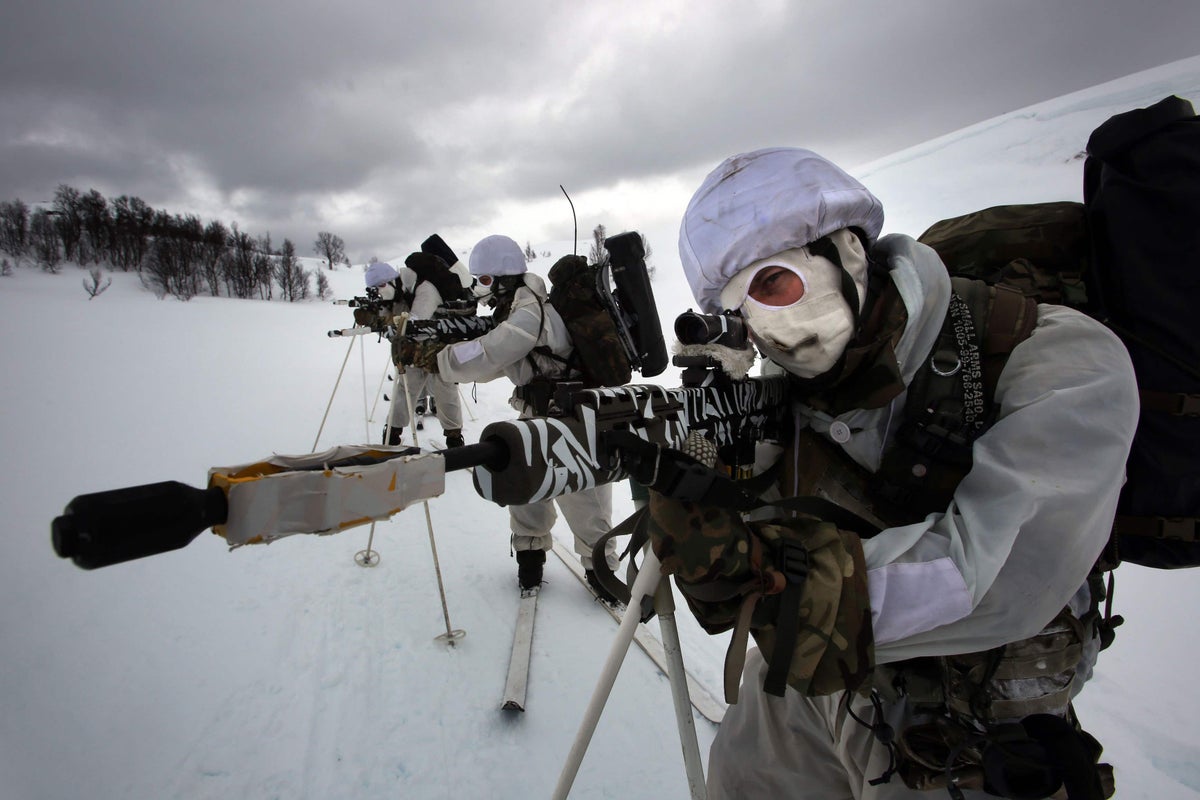
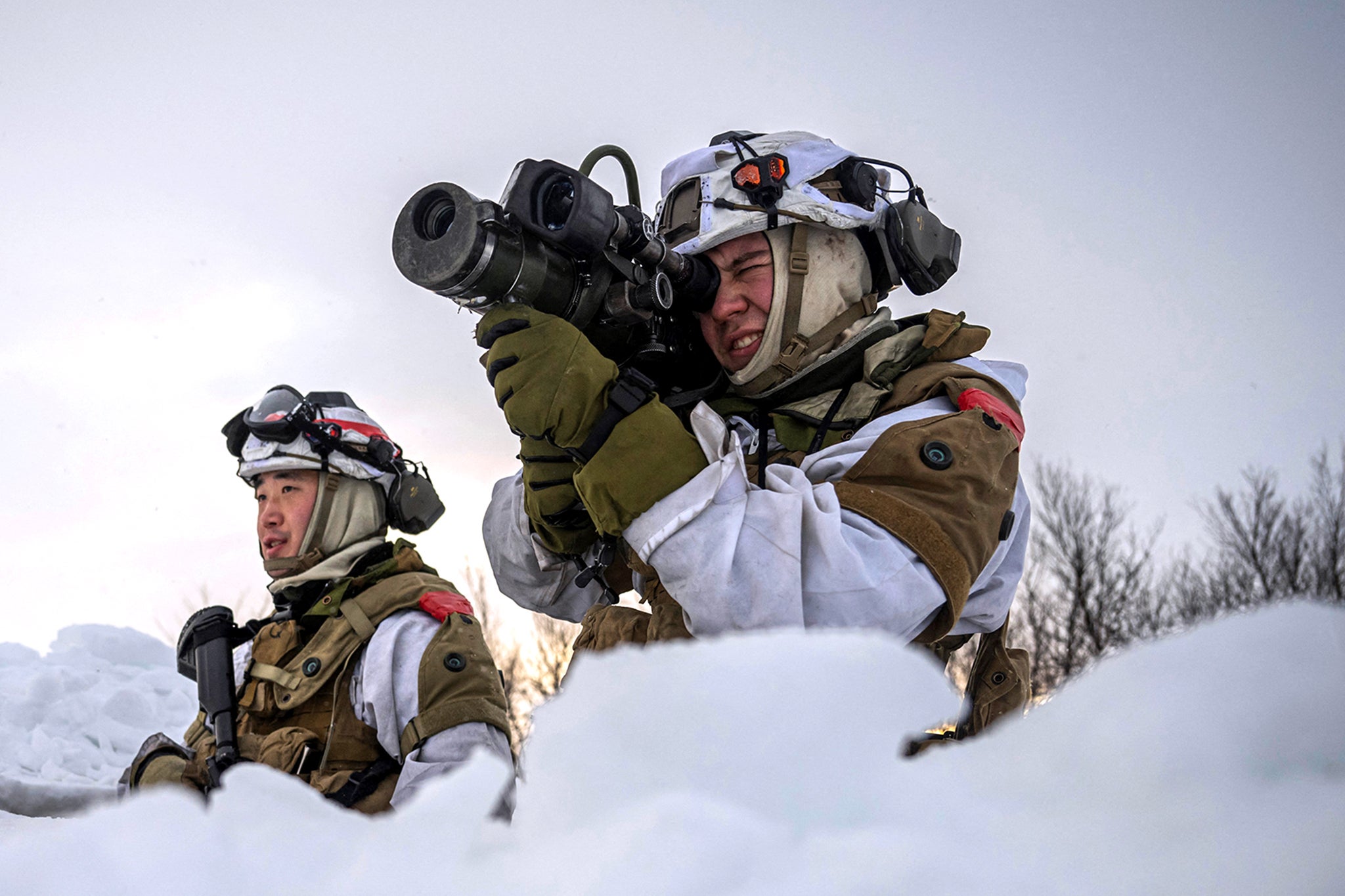
NATO has commenced its biennial Arctic drills, placing an unprecedented emphasis on the role of civilians in supporting military operations, amidst heightened tensions surrounding US President Trump’s ambition to acquire Greenland from fellow alliance member Denmark.
The exercises, dubbed Cold Response, are designed to bolster the alliance’s defensive capabilities in the European Arctic. Running from 9 to 19 March, they are primarily staged across northern Norway and Finland, nations that share a border with Russia. This year’s drills have been integrated into Arctic Sentry, a NATO initiative launched to strengthen its presence in the polar region and, notably, to de-escalate friction with President Trump over Greenland.
President Trump has asserted that the US requires Greenland to counter perceived threats from Russian and Chinese interests in the Arctic, suggesting Denmark cannot adequately ensure its security. However, both the Danish and Greenlandic governments have unequivocally stated that the island is not for sale.
Approximately 25,000 troops from 14 nations, including the US and Denmark, are participating in Cold Response, with the US contributing around 4,000 personnel.
open image in gallery
(AFP/Getty)
Ahead of the exercise, the U.S. military withdrew one squadron of F-35 fighter jets from the exercise. It declined to say whether the war in the Middle East played a role in the decision.
“The U.S. military is a globally deployed force and it is not abnormal for forces to be dynamically re-tasked or reallocated for a host of reasons,” a spokesperson for the U.S. Marine Corps Forces Europe told Reuters.
Norway has declared 2026 the year of “total defence”, which puts emphasis on boosting the readiness of civilians, businesses and public institutions to cope with war and other catastrophes, the latest move by a Nordic nation to boost civilian preparedness.
open image in gallery
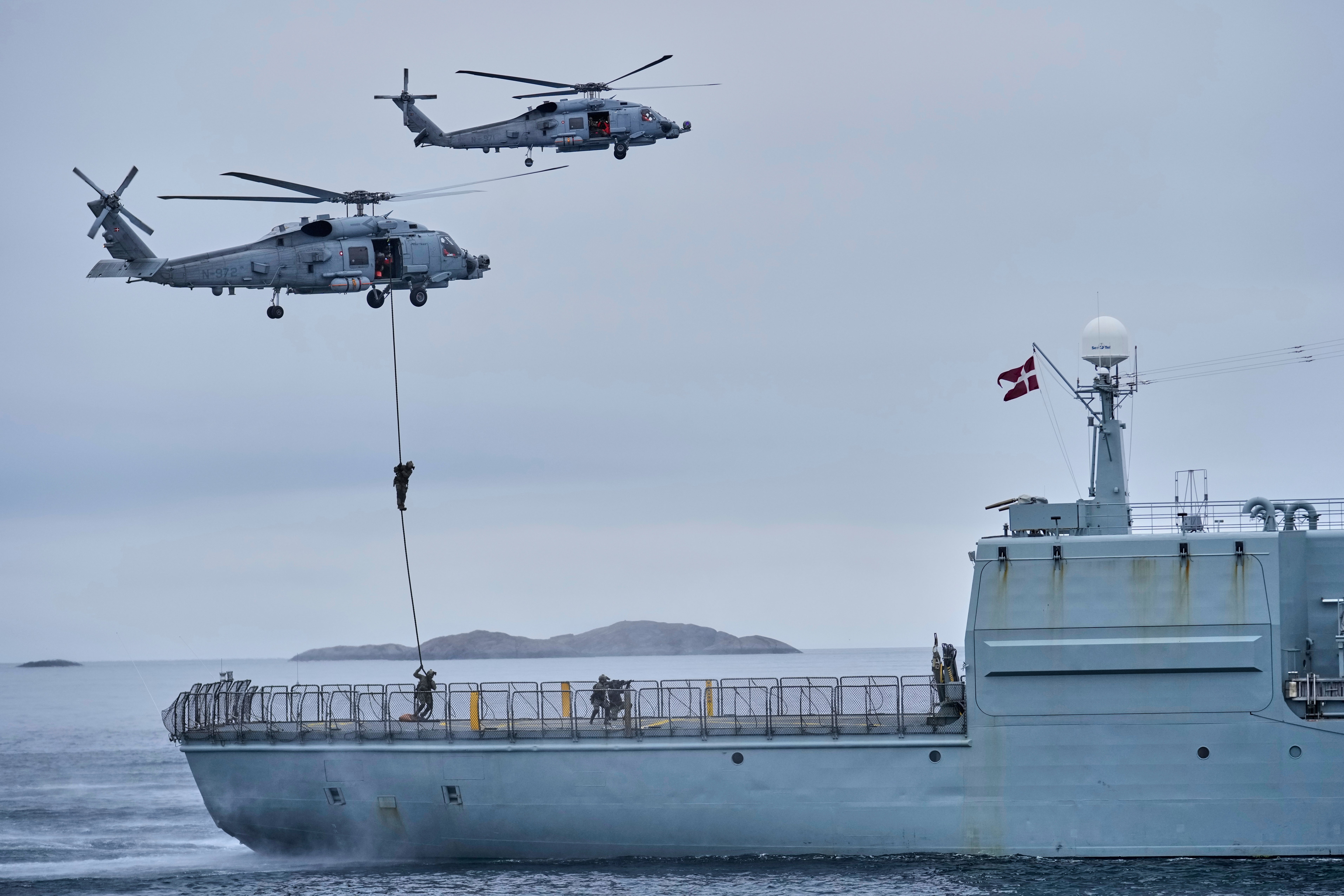
Danish military forces participate in an exercise with hundreds of troops from several European NATO members in the Arctic Ocean in Nuuk, Greenland, Monday, Sept. 15, 2025. (AP Photo/Ebrahim Noroozi, File) (Copyright 2025 The Associated Press. All rights reserved)
“We want our military to do its job of defending the country. To do that, we are completely reliant on most aspects of society functioning as normal,” Major-General Lars Lervik, head of the Norwegian Army, told Reuters.
“This is also an opportunity to rehearse specifically where civilians can give direct support to the military effort, for instance with the health service treating a higher number of injured soldiers, Norwegian or from allied forces, than usual.”
On Thursday, the military will run a scenario testing the ability of hospitals in northern Norway to treat a high number of casualties being transported from an imaginary frontline in Finland.