
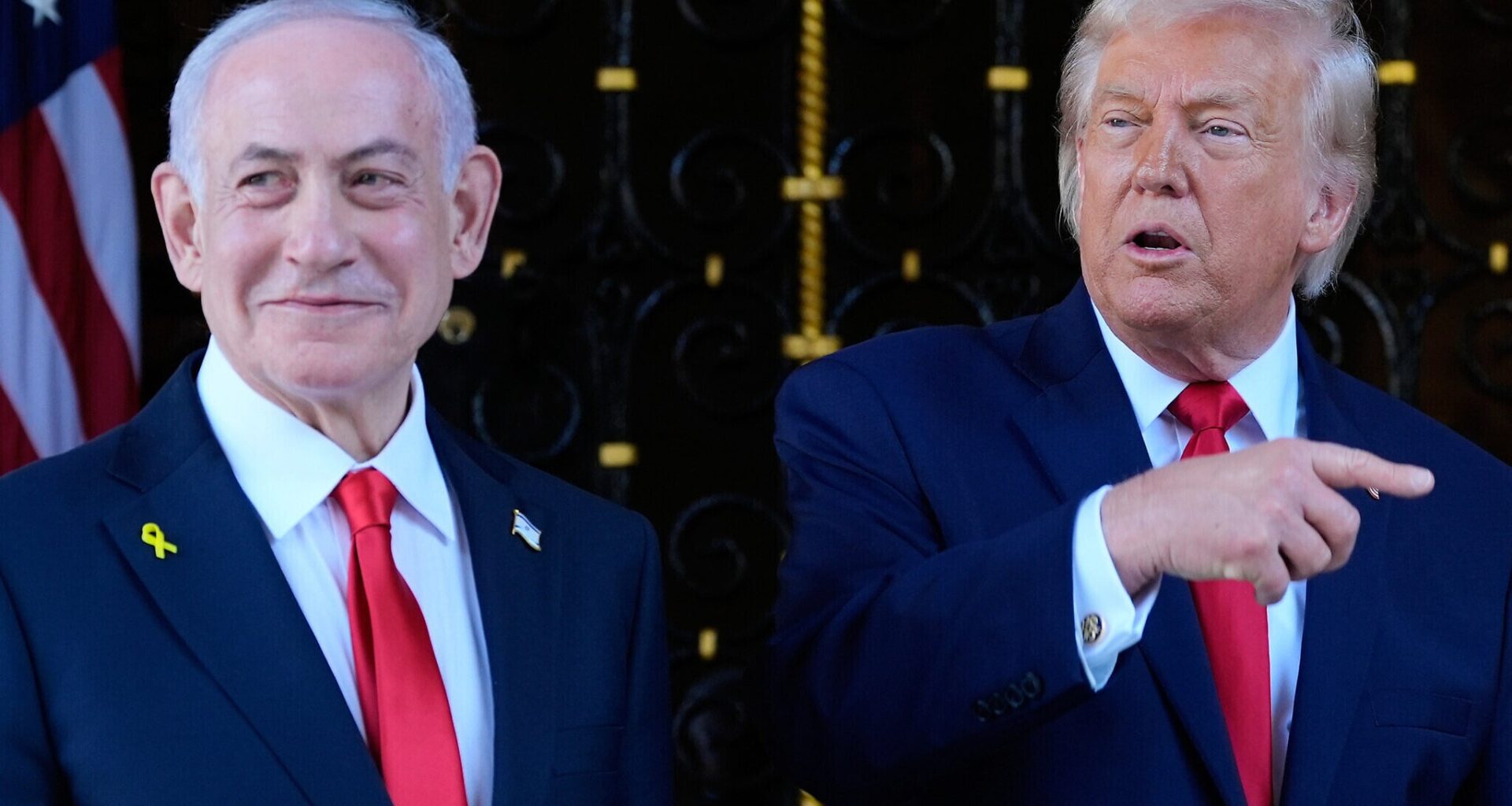
Ten days after attacking Iran together, the United States and Israel have seen a public divergence, with US President Donald Trump facing political pressure and not sharing Israel’s long-term goals.
The allies face a stark divide in how their publics view the war, with historically low support by Americans for an offensive enthusiastically backed by most Israelis.
With the price of oil spiking, a warning sign in US politics, Trump told CBS News on Monday that the war was “pretty much” over, despite his earlier vows with Prime Minister Benjamin Netanyahu to pursue weeks, if not months, of attacks.
US officials voiced unease after Tehran residents woke up Sunday to apocalyptic scenes of black smoke blocking out the sun and choking them, following an Israeli attack on fuel depots that the IDF said served the Iranian military.
Even Senator Lindsey Graham, a hawkish Republican ally of Trump who has urged war on Iran for years, called on Israel to “please be cautious about what targets you select.”
Get The Times of Israel’s Daily Edition
by email and never miss our top stories
By signing up, you agree to the terms
“Our goal is to liberate the Iranian people in a fashion that does not cripple their chance to start a new and better life when this regime collapses,” Graham wrote on X.
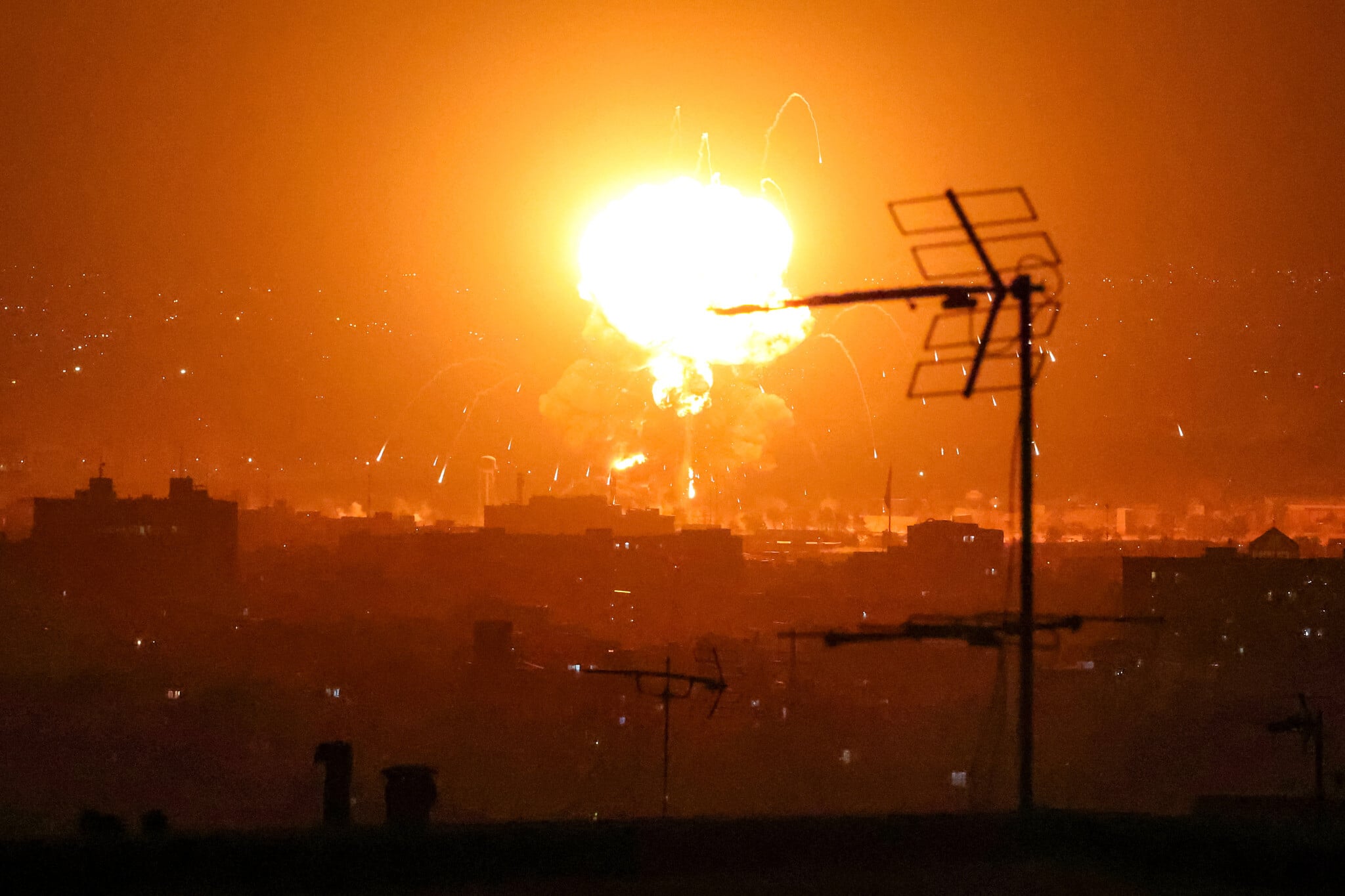
Flames rise from an oil storage facility south of the capital Tehran as strikes hit the city during the US–Israel military campaign, Iran, March 7, 2026 (Photo by ATTA KENARE / AFP)
The US and Israel launched a bombing campaign on Iran on February 28 following a massive US military buildup in the region and repeated threats by Trump to strike Iran, first over its bloody crackdown on anti-regime protesters in January and more recently over its nuclear program.
While Iran denies seeking nuclear arms, it has enriched uranium to levels that have no peaceful application, obstructed international inspectors from checking its nuclear facilities, and expanded its ballistic missile capabilities.
Iran’s clerical regime is sworn to destroy Israel, and supports a network of anti-Israel proxies, including Gaza’s Hamas, Lebanon’s Hezbollah and Yemen’s Houthi rebels.
Iran has responded to the US-Israeli strikes with missile and drone attacks on Israel and other countries and US bases across the region, as well as by choking off the world’s most vital waterway for oil, the Hormuz Strait, sending oil prices soaring. Hezbollah also launched rockets at Israel for the first time since November 2024, triggering massive Israeli strikes in Lebanon.
Israel wants Iran ‘permanently weakened,’ says analyst
Michael Singh, managing director of the Washington Institute for Near East Policy, said that US and Israeli goals in the conflict with Iran were mostly similar — but not identical.
He said that Israel wants Iran to be “permanently weakened” — a strategy Israel has pursued across the region, notably in repeatedly bombing its historic adversary Syria despite a change in government.
“The US may not have as much of an appetite for a long conflict, especially because we have priorities in other theaters that Israel obviously doesn’t have, and we can pack up and go home, whereas Israel can’t,” said Singh, who served as the top White House advisor on the Middle East under former president George W. Bush.
Both Netanyahu and Trump have spoken favorably of the Iranians overthrowing the Islamic Republic, which faces widespread opposition and ruthlessly suppressed protests in January, but neither has made it an explicit goal.
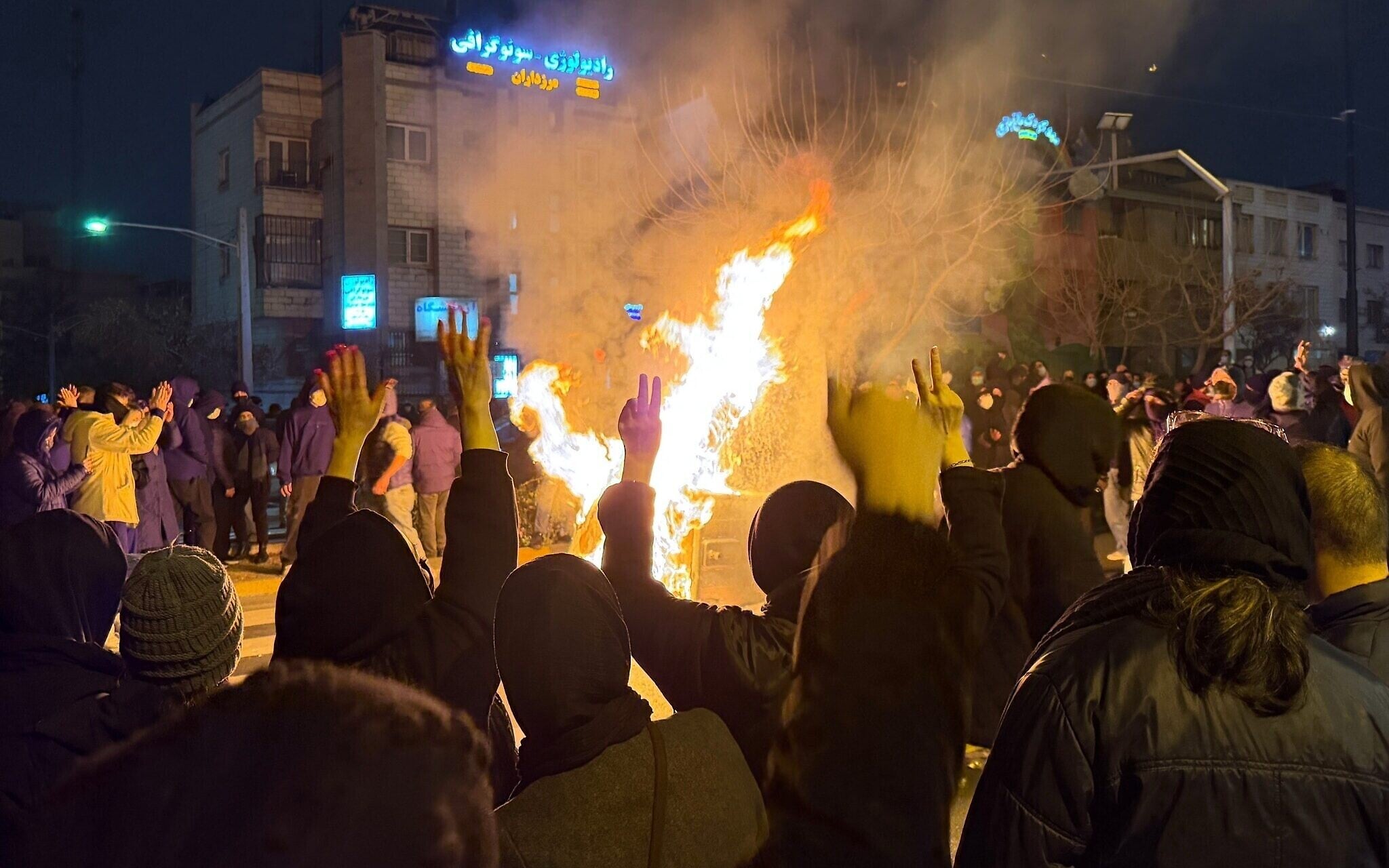
In this photo obtained by The Associated Press, Iranians attend an anti-government protest in Tehran, Iran, January 9, 2026. (UGC via AP)
Trump — who for years denounced US interventionism in the Middle East as wasteful and misguided — has offered different explanations for attacking the country of 90 million people, mostly focusing on degrading its military.
But US Secretary of State Marco Rubio raised eyebrows when he told reporters that the “imminent threat” faced by the United States — a key legal threshold as Congress constitutionally has the power to declare war — was that Israel had already decided to attack Iran, which would have then retaliated against US forces.
Growing partisan gap
Israel retains strong support within Trump’s Republican Party, but the rival Democratic Party — and a few prominent voices on the right — have accused Trump of blindly following Israel into a regional war.
A Quinnipiac poll released Monday found that a narrow majority of Americans were against military action in Iran — 53 percent, a striking level of opposition just days into a war — and that 44 percent believed the United States was too supportive of Israel.
A recent Gallup poll found that for the first time, more Americans sympathized with the Palestinians than the Israelis in their conflict, after Israeli bombardment reduced much of Gaza to rubble in the war sparked by the Hamas-led onslaught of October 7, 2023.
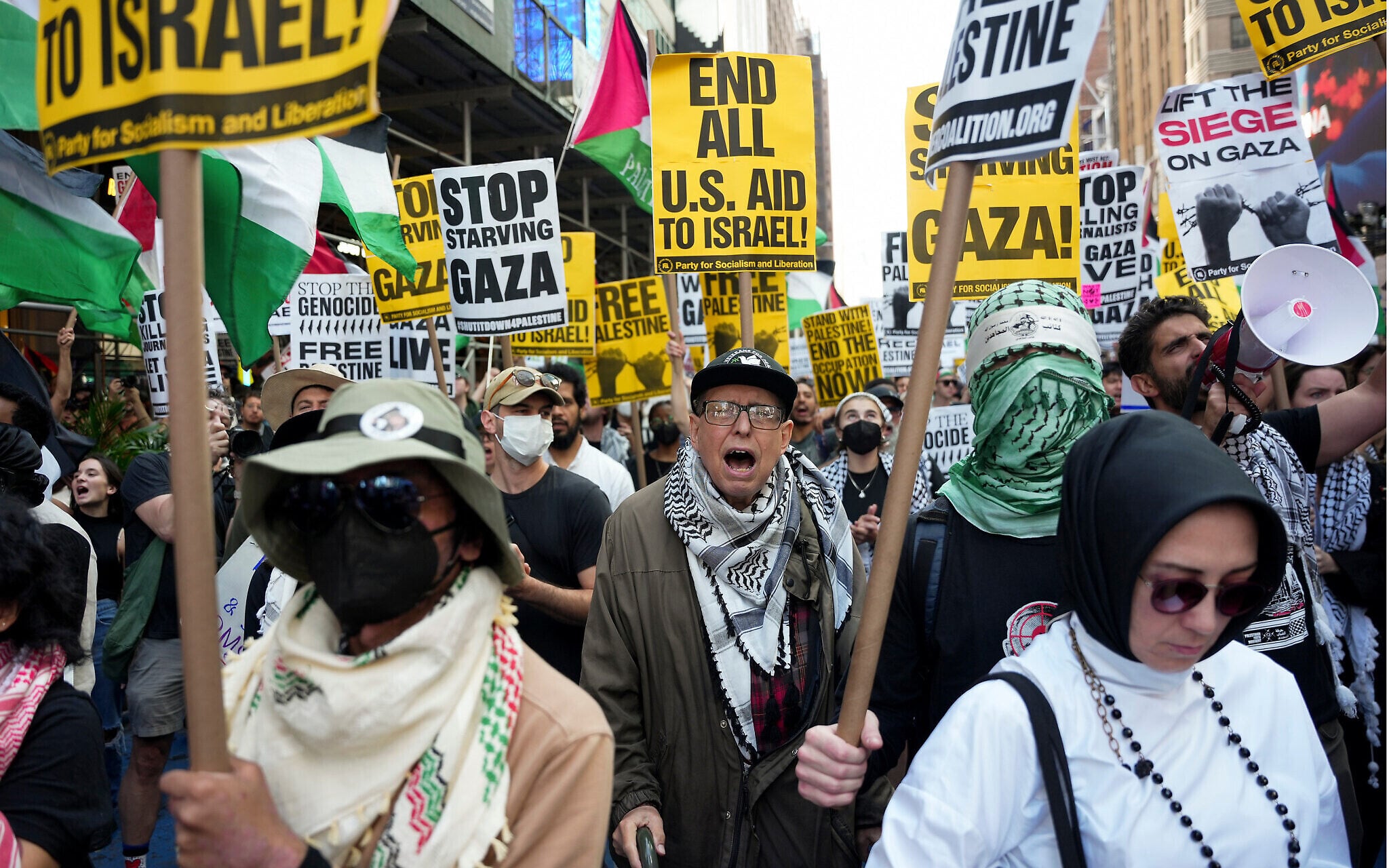
Anti-Israel protesters rally in New York’s Times Square, September 26, 2025. (AP Photo/Angelina Katsanis)
California Governor Gavin Newsom, considered a likely Democratic candidate for US president in 2028, recently questioned US aid to Israel and agreed that its treatment of Palestinians showed it to be an “apartheid state” — a characterization strongly resented by Israelis and once unthinkable for a leading American political contender.
Aaron David Miller, a veteran US negotiator on the Middle East who is now a senior fellow at the Carnegie Endowment for International Peace, said Netanyahu has become even more dependent on Trump as Israel this year holds elections, in which the veteran prime minister will want to show he has the US president’s support.
“When Donald Trump says stop, this is going to stop, no matter whether the Israelis feel it’s mission accomplished or not, because the degree of leverage that Trump has over Netanyahu is unprecedented in the history of a president’s relations with Israeli prime ministers,” Miller said.
You appreciate our wartime journalism

You clearly find our careful reporting of the Iran war valuable, at a time when facts are often distorted and news coverage often lacks context.
Your support is essential to continue our work. We want to continue delivering the professional journalism you value, even as the demands on our newsroom have grown dramatically during this ongoing conflict.
So today, please consider joining our reader support group, The Times of Israel Community. For as little as $6 a month you’ll become our partners while enjoying The Times of Israel AD-FREE, as well as accessing exclusive content available only to Times of Israel Community members.
Thank you,
David Horovitz, Founding Editor of The Times of Israel