
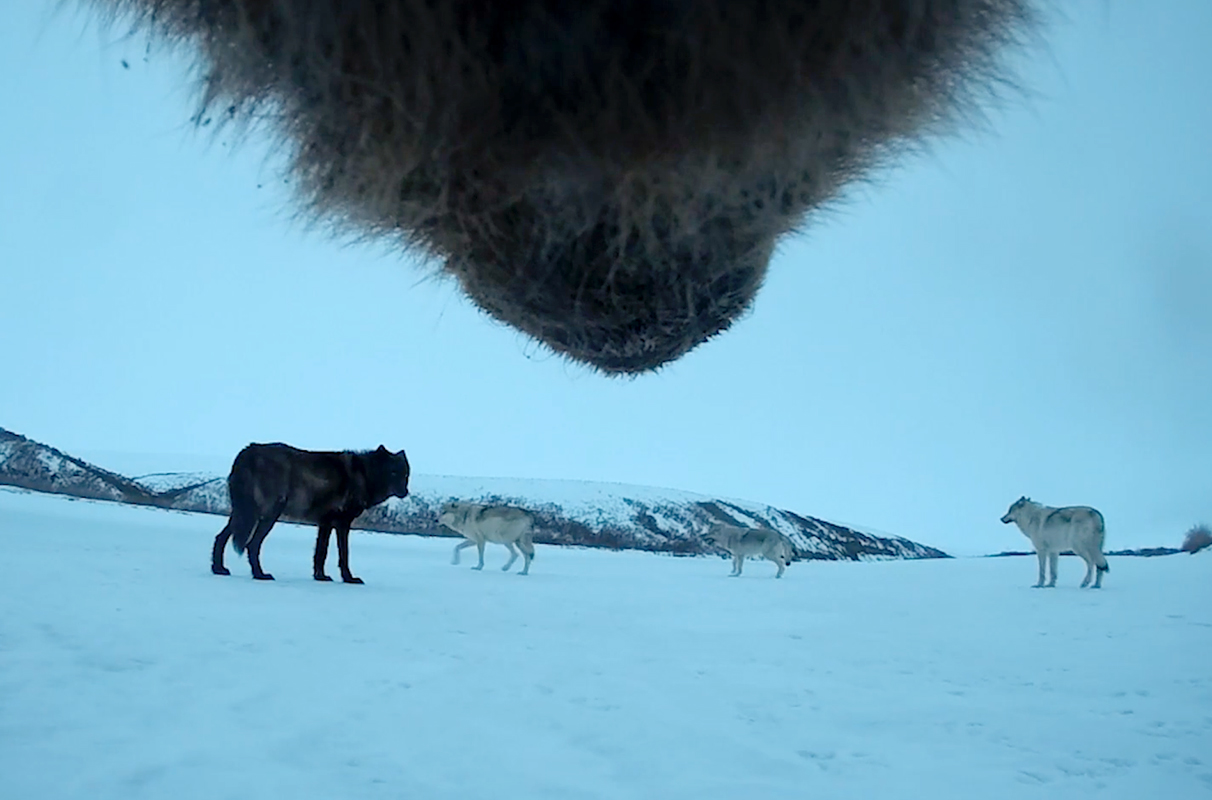
WSU researchers recently attached video cameras to existing GPS-enabled collars on several grizzly bears living in the Arctic. The footage could be crucial to understanding how a warming climate will impact polar bears (video courtesy of WSU).
Nature documentaries often show grizzly bears diving into streams or digging into a caribou carcass. But those activities have never been seen from the bear’s point of view.
To better understand the large omnivores, Washington State University researchers recently attached video cameras to existing GPS-enabled collars on several grizzly bears living in the Arctic. The resulting footage is unprecedented, but also scientifically valuable.
“With only GPS, we had to infer what the bears were doing at a specific location,” said Ellery Vincent, a WSU graduate student conducting the ongoing study. “Video allows us to see their behaviors, what they’re eating, and how often they interact with other bears. It’s opened an entirely new window of opportunity that other collection methods don’t allow.”
The researchers’ observations of the grizzlies could be crucial to understanding how a warming climate will impact polar bears. As sea ice shrinks due to climate change, concern over polar bear survival has gained attention. The scientific community is divided: Most predict major problems for polar bears, but some say they will adapt to living on land in the Arctic as permanent ice melts.
WSU scientists wanted to explore whether there is enough food available for polar bears to survive on land compared to their existing diet. Several years ago, an initial three-week study on the northern coast of Alaska, near Prudhoe Bay, showed evidence that land-locked polar bears lost weight, while grizzlies in the area gained weight.
“Some scientists say that polar bears can eat caribou, berries, and native waterfowl,” said Charles Robbins, professor in WSU’s School of the Environment and founder of the WSU Bear Research, Education, and Conservation Center. “But they don’t mention that grizzlies who live in that area are much smaller than adult polar bears. The foods available on shore in the Arctic in the summer and fall when polar bears come onshore are of relatively low quality or quantity for polar bears.”
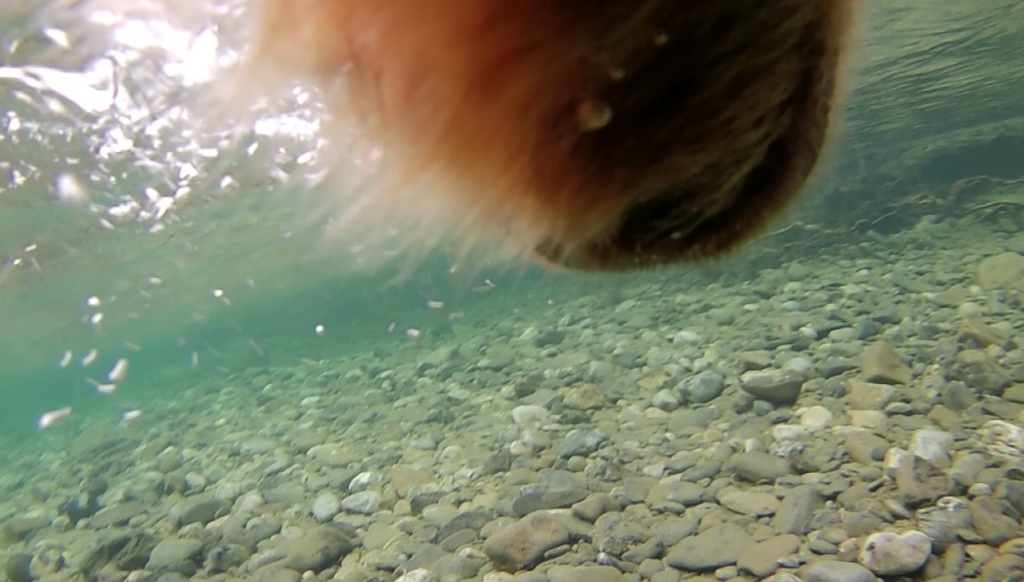
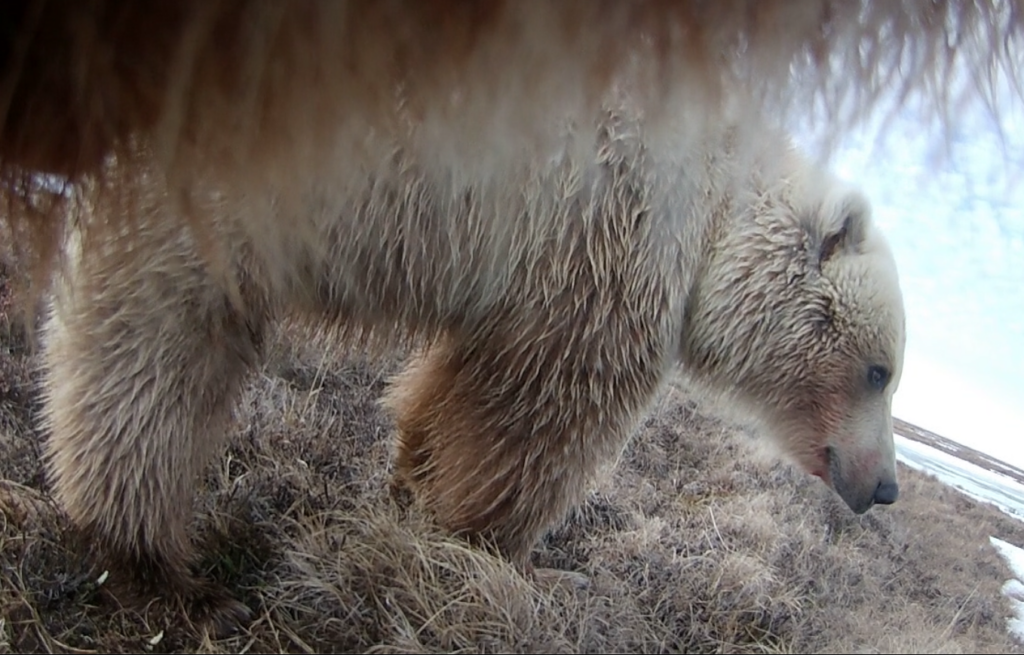
Each collar can record 17 hours of footage, and each bear received two collars, resulting in 400-plus hours of footage to view and categorize (photos courtesy of WSU).
To unlock additional data, WSU and the Alaska Department of Fish and Game are conducting a three-year study on the active seasons of Arctic grizzly bears.
Except for winter, Arctic seasons pass quickly. So Vincent, who led the first field study in 2025, collected data in May, August, and October. Grizzlies that far north can hibernate for up to eight months. She plans to return to northern Alaska later this year and again in 2027.
Vincent collected videos from 12 bears last year. Each collar can record 17 hours of footage, and each bear received two collars, resulting in 400-plus hours of footage to view and categorize.
Vincent, who is working toward a PhD in biology, is leading a team of undergraduate students when not in the field. She and the students are viewing every minute of the footage to assign different behaviors and foods eaten. She, Robbins, and others use the results from those viewings to identify important foods, habitats, and behavioral patterns that enable the grizzlies to live in such a harsh environment.
The plan is to collar 12 new bears each year to avoid collecting data from the same bear twice and maximize the opportunity to see different behaviors.
“With grizzlies, understanding the degree of individual variation is interesting,” Vincent said. “They each have different personalities and quirks, and their unique behaviors will ultimately be the factor that decides how well these bears can adapt to climate change. On a large scale, the climate is warming quickly in the Arctic, and we want to show how grizzlies interact with the entire ecosystem as resources change.”
They plan to collect enough data from grizzlies to show whether the land can provide enough resources for polar bears to survive.
“It’s an ambitious goal, but important to helping both kinds of bears continue to live and thrive in the Arctic,” Vincent said.
Student research part of larger grizzly bear project
Alex Rieflin wants to spend her career working with large animals, helping ensure they’re healthy and thriving. The Washington State University senior is starting that path now with an internship researching grizzly bears in Alaska.
Rieflin, who grew up in Bothell and Snohomish, Washington, is watching and categorizing videos captured by collar cameras on Alaskan grizzlies, then using the collected data to develop a research project.
“I want to go to graduate school at some point,” said Rieflin, a wildlife ecology and conservation major. “This internship is providing me skills to improve my research, learn how to come up with manageable ideas, and go through the scientific process to produce new, useful information.”
WSU’s College of Agricultural, Human, and Natural Resource Sciences (CAHNRS) goal of providing students with the prospect of hands-on learning experiences. The CAHNRS faculty and staff-led internship program is part of this goal.
“I’m really grateful for this opportunity,” Rieflin said. “The internship program can help students like me figure out what we may want to do after we graduate. And I’m especially excited that I get to work closely with and learn from knowledgeable WSU experts.”
Rieflin plans to present her research project, which focuses on wild grizzly diet content, behaviors, and energy usage in northern Alaska, at WSU’s annual Showcase for Undergraduate Research and Creative Activities in late March.