
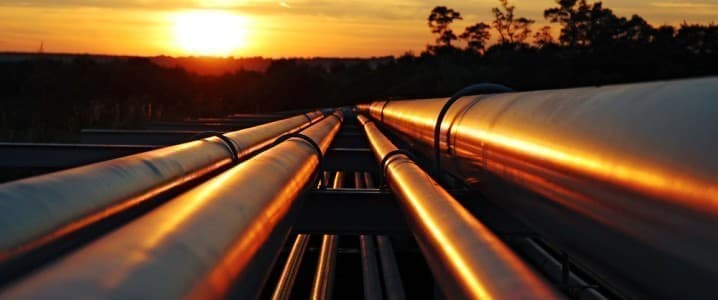
An oil pipeline crossing the Canada-US border may be back on government agendas, as the proponent, South Bow Corp (TSX:SOBO), looks to revive the long-dead project.
TC Energy (TSX:TRP) spun the oil pipeline component of its business out to South Bow in 2024 to concentrate on natural gas and power.
The rationale for Keystone was a way to bring together booming US oil production, and to a lesser extent, production from the oil sands in Northern Alberta, to Gulf Coast refineries that were facing declining imports from Mexico and Venezuela. The project was first proposed in 2008 and was supposed to begin carrying 830,000 barrels a day in 2012.
But the Obama administration struck it down on environmental grounds. President Trump then revived it during his first term, before Joe Biden killed it again by revoking the pipeline’s permit on his first day as president in 2021.
A network of pipelines called the Keystone Pipeline already exists and moves oil within the United States. The pipeline expansion would allow more oil sands crude to flow to the US Gulf Coast, cutting through Montana, South Dakota, and Nebraska before heading south.
Earlier this month, CBC News reported that a proposal by South Bow to revive parts of the canceled pipeline could increase Canada’s crude exports by 12%. However, it would need a green light from President Trump, and additional links to US refining hubs are required.
Canadian Prime Minister Carney reportedly brought up the pipeline’s revival in a conversation with Trump in October.
Just over a year ago, Trump pledged easy regulatory approvals for the project, saying in a Truth Social post, “We want the Keystone XL Pipeline built.”
The new pipeline, renamed Prairie Connector, would take a different route through the US than the previous Keystone XL project. CBC says South Bow is considering reviving some of the line that was already built in Alberta and has the necessary permits.
Related: Little-Known US Company Lands Important Pentagon Contract in Rare Earth Race
The 450,000?barrel?per?day line is planned to extend from Hardisty, AB, to several US delivery hubs, including Cushing, Oklahoma, and the Gulf Coast. The original alignment followed the existing Foothills natural?gas system owned by TC Energy, which carries Alberta natural gas to the US border.
South Bow is reportedly “getting its ducks in a row” by approaching farmers and ranchers in southwest Saskatchewan to re-survey land that lies along the original Keystone XL pipeline route.
The Calgary-based firm said March 5 it has launched an open season for its proposed Prairie Connector pipeline, running until March 30, after which it will assess commercial support.
During an earnings call last Friday, South Bow’s CEO Bevin Wirzba declined to give a cost estimate or timeline for the potential pipeline, but said that working within a pre-invested corridor ups the chances of quickly advancing construction, the Globe and Mail reported.
Saskatchewan, the Western Canadian province next to Alberta, announced in February 2025 that it would consider all permits crossing its territory as “pre-approved”.
The part of the project within the United States is being spearheaded by Bridger Pipeline, which recently filed a proposal with Montana for a 1,038-kilometer pipeline with capacity for 550,000 barrels per day. The line would begin near the Canadian border in Phillips County, Montana, and terminate in Guernsey, Wyoming.
Additional spurs would then be bolted onto the pipeline to reach refining hubs such as Cushing, OK, and the Gulf Coast.
However, it remains unclear who would be willing to take on the risk.
According to the Globe and Mail, quoting the founder of Plainview Energy Analytics, Matthew Lewis, the biggest challenge would be getting permits, and building a new pipeline would likely face environmental challenges that could tie up the project in court.
Bridger is proposing in its application that the Montana-to-Guernsey leg be built along existing pipeline infrastructure, making it easier to obtain the required permits. A presidential permit would be required for the segment that crosses the US-Canada border.
The Canadian government hasn’t ruled out the possibility of a renewed Keystone XL. A spokesperson for former Natural Resources Minister Jonathan Wilkinson said last year the government is “open to having a productive conversation” about advancing the project.
A December 2025 Ipsos poll found that 75% of Canadians are in favor of constructing new pipelines.
By Andrew Topf for Oilprice.com